




Online Consultation
Please accurately enter the information below.
Quick Cost Consultation
Quick Consultation & Reservation
Cases finding
similar to my profile






Cases finding
similar to my profile
Customer Diagnostics
Postpartum Abdominal Sagging and Rectus Diastasis Restoring the Waistline with Mini Abdominoplasty (Mini Abdominoplasty | Postpartum Belly Sagging | Umbilical Floating | Lower Abdominal Skin Laxity | Post-Pregnancy Tummy |4-Month Results | Seoul Gangnam P
2026-03-10
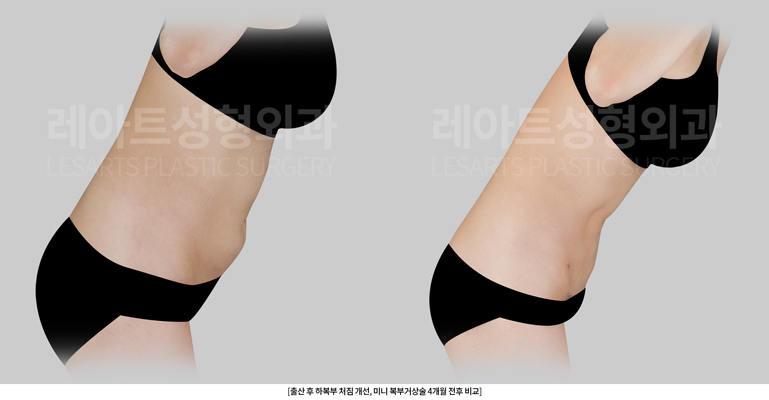
When Postpartum Abdominal Changes Persist
If the abdominal shape changes after pregnancy,
the cause is not always simple weight gain.
Even with weight control and regular exercise,
some individuals continue to experience:
-Persistent abdominal sagging
-Structural abdominal protrusion
-Uneven abdominal contours
In these cases, the underlying cause may involve structural changes
such as loss of skin elasticity or rectus diastasis,
rather than fat accumulation alone.
When such conditions persist for an extended period after childbirth,
a medical evaluation can help determine the appropriate solution.
The patient presented in this case had long-standing lower abdominal skin laxity and
rectus diastasis affecting both the upper and lower abdomen.
Through surgical correction,
she was able to restore a waistline similar
to her pre-pregnancy contour.

Preoperative Condition
Abdomen with Postpartum Rectus Diastasis
Preoperative examination revealed:
- Significant skin laxity centered in the lower abdomen
-Protrusion of the lower abdominal contour
-Upper abdominal bulging caused by rectus diastasis
-Irregular overall abdominal contour
These findings indicated that structural correction of the abdominal wall
would be necessary in addition to contour refinement.
Surgical Plan
1. S-Type Mini Abdominoplasty with Umbilical Floating
- Upper abdominal sagging was minimal
- Excess skin and laxity concentrated in the lower abdomen
- Surgical correction focused on the lower abdominal skin
- Incision planned as low as possible in the lower abdomen
- Approximately 1 cm adjustment of umbilical position
2. Rectus Muscle Plication (Upper & Lower Abdomen)
- Separated rectus muscles were brought back together
- Restoration of abdominal wall support
- Umbilical floating approach allowed simultaneous
correction of upper and lower abdominal diastasis
3. Abdominal Liposuction
- Additional contour refinement of the abdomen
- Improvement of overall abdominal silhouette
This combined approach addressed both structural and
aesthetic components of the abdominal contour.
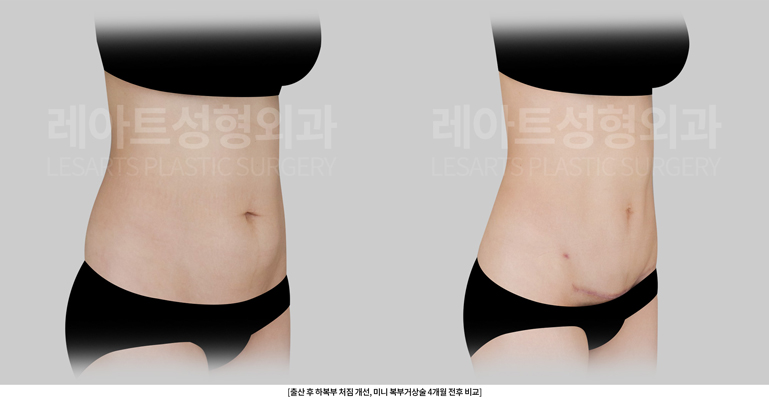
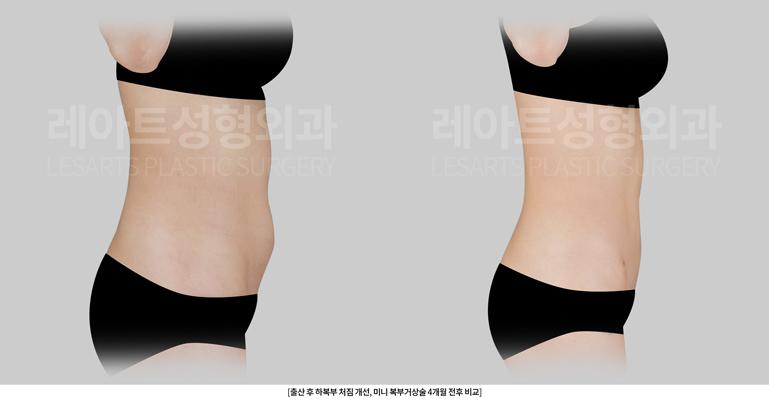
4-Month Postoperative Results
Lower Abdominal Sagging Correction
Before surgery:
-Lower abdominal skin sagging was prominent beneath the navel
-The abdomen appeared protruded and uneven
-Upper abdominal bulging from
rectus diastasis created irregular contours
After surgery:
-Sagging lower abdominal skin was lifted and tightened
-The abdominal contour became flatter and smoother
-Rectus diastasis correction restored abdominal wall stability
-Upper and lower abdominal lines now appear continuous and balanced
The overall abdominal silhouette
now appears firmer and more structured.
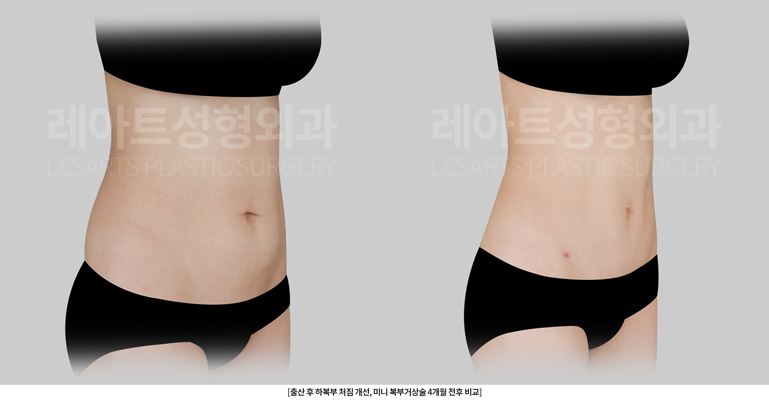
Incision Placement
Scar Hidden Within the Underwear Line
During consultations, many patients
are concerned about the length and visibility of surgical scars.
In abdominoplasty procedures:
-The incision is designed to remain within the underwear line
-The scar is generally concealed during everyday clothing
However, the exact position and length of the incision
depend on individual factors such as skin laxity and tissue condition.
Therefore, a personalized diagnosis is necessary to determine
the most appropriate surgical plan.
At 4 months post-op:
-Both abdominal contour and scar healing appear stable
-Mild swelling, tissue firmness, or temporary numbness may still be present
-These symptoms typically improve gradually as healing progresses
With continued follow-up care and adherence to recovery guidelines,
the results are expected to stabilize further over time.
#Abdominoplasty
#S-type
#Abdominal liposuction(S)


Cases finding
similar to my profile
Customer Diagnostics


Select the surgery and
area you are interestedto see real
before andafter changes.


we
make you,
the art
Clinic hours
MON - FRI
10 am – 7pm
SAT
10 am – 4pm
Holiday
SUN, HOLIDAY
Location
Lesarts Moon Clinic Tower 4-5F, 40, Nonhyeon-ro 168-gil,
Gangnam-gu, Seoul, Republic of Korea

Medical institution name Lesarts Plastic Surgery
Address Lesarts Moon Clinic Tower 4-5F, 40, Nonhyeon-ro 168-gil, Gangnam-gu, Seoul, Republic of Korea
Representative Moon sung jun
