




Online Consultation
Please accurately enter the information below.
Quick Cost Consultation
Quick Consultation & Reservation
Cases finding
similar to my profile






Cases finding
similar to my profile
Customer Diagnostics
Loose Lower Abdomen and Belly Button Deformity After Pregnancy Changes 3.5 Months After Abdominoplasty at a Plastic Surgery Clinic in Gangnam, Seoul, Korea
2026-04-10
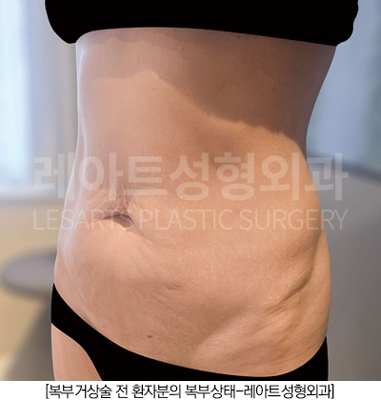
Among patients considering abdominoplasty,
many are concerned not only about loose abdominal skin,
but also about changes in the shape of the belly button.
When the skin begins to sag from the upper abdomen,
the tissue around the belly button can also become distorted,
making the overall abdominal appearance look less smooth and less natural.
In particular, when the center of the belly button becomes covered
by skin and starts to sag in an uneven shape,
the belly button may appear lower than the waistline.
This can make the legs look shorter and the waist look wider.
This patient had also been dealing with lower abdominal sagging and
an uncomfortable belly button
shape for a long time after a twin cesarean delivery.
For this reason, she underwent abdominoplasty
with belly button correction to improve the overall abdominal
contour at our plastic surgery clinic in Gangnam, Seoul, Korea.
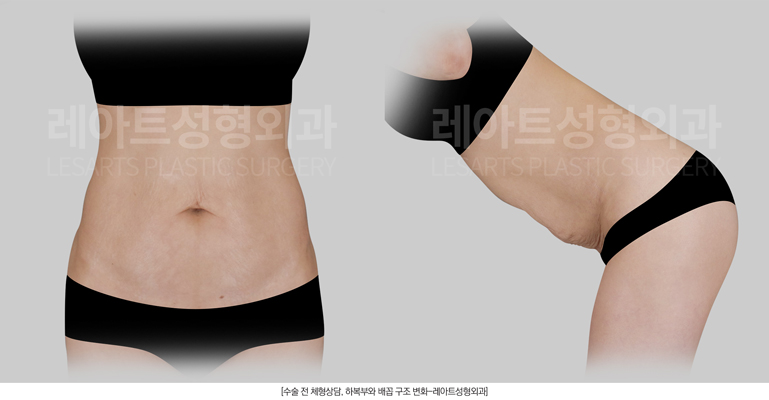
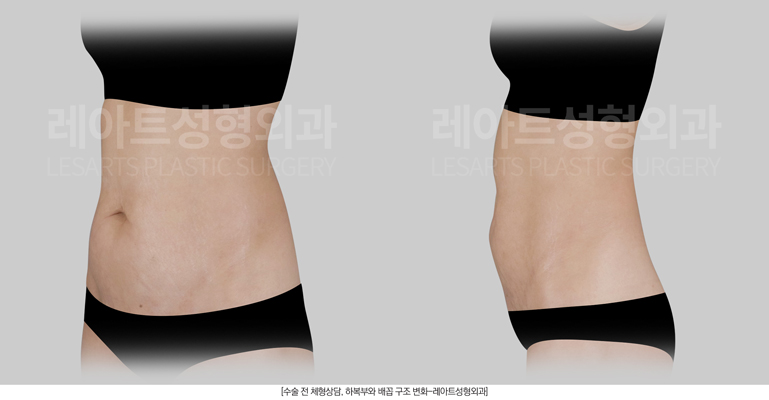
Pre-Surgery Evaluation
Structural Changes in the Lower Abdomen and Belly Button
Based on the preoperative examination,
the following findings were observed:
- Skin laxity starting from the upper abdomen
- Wrinkling and sagging in the lower abdomen
- Clear skin sagging and lower abdominal wrinkling
when bending forward
- Stretch marks distributed across the abdomen
- A shallow belly button with outward bulging deformity
- Findings suggestive of an umbilical hernia,
which made belly button correction necessary
- Rectus diastasis extending from the upper abdomen
- The patient did not have a large amount of abdominal fat,
but some contour refinement was still needed
- The previous C-section scar was positioned very low,
which limited the incision design
These findings showed that the concern was not limited to loose skin alone.
The case also involved abdominal wall weakness,
belly button deformity, and postpartum structural changes.
Surgical Plan
Full Abdominoplasty with Muscle Repair and Belly Button Reconstruction
Based on the examination findings,
the following surgical plan was established:
M-Type Abdominoplasty
An M-type full tummy tuck was planned to improve skin
sagging from the upper abdomen down to the lower abdomen.
Rectus Muscle Repair
Because the patient had rectus diastasis, muscle repair
was included to strengthen the abdominal wall and
improve the forward-pushing contour of the abdomen.
Belly Button Reconstruction
The deformed belly button was redesigned and
repositioned to create a clearer and
more natural shape in a more ideal location.
Abdominal Liposuction
Although the patient did not have a large amount of abdominal fat,
abdominal liposuction was performed together with abdominoplasty
to refine the contour and maximize the overall effect of surgery.
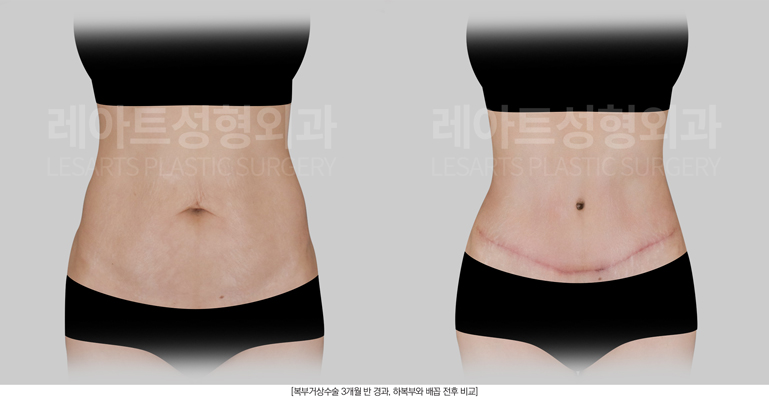
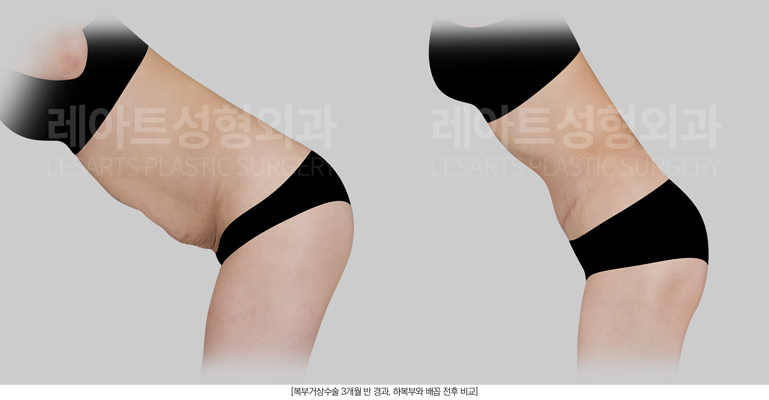
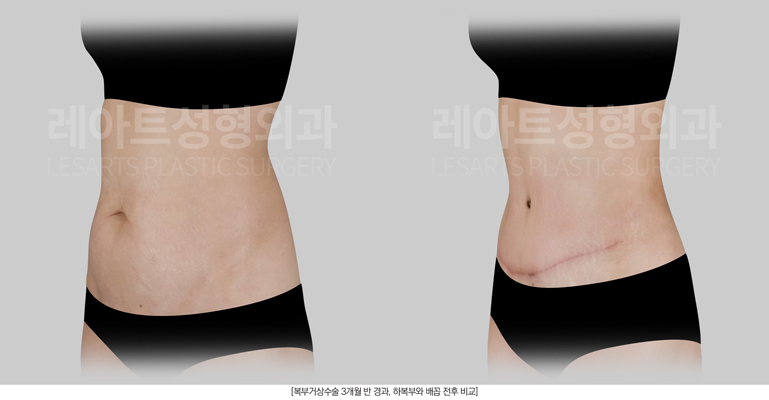
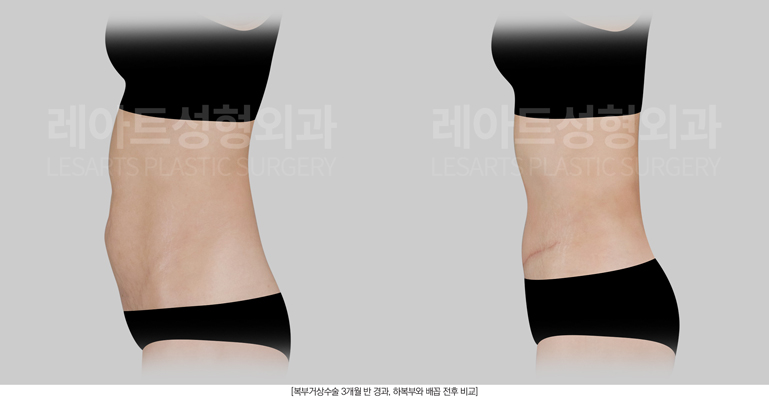
3.5-Month Results After Abdominoplasty
Lower Abdomen and Belly Button Before and After Comparison
When comparing the before and after photos,
the changes are clear.
Before surgery:
- The abdominal skin had
lost elasticity and sagged downward
- The shape around the belly button looked distorted and
unnatural because of the loose upper abdominal skin
- From the side view, the abdominal wall pushed outward,
creating an uneven front abdominal contour
After 3.5 months, the results show:
- The loose and overlapping skin was lifted
- The front abdominal line became flatter and smoother
- The belly button shape became clearer and more defined
- The belly button was corrected to
match the waistline position more naturally
- The abdominal wall that had been pushing outward
was also repaired and now looks firmer and more stable
Overall, the abdominal contour now appears much smoother
and more balanced than before surgery.
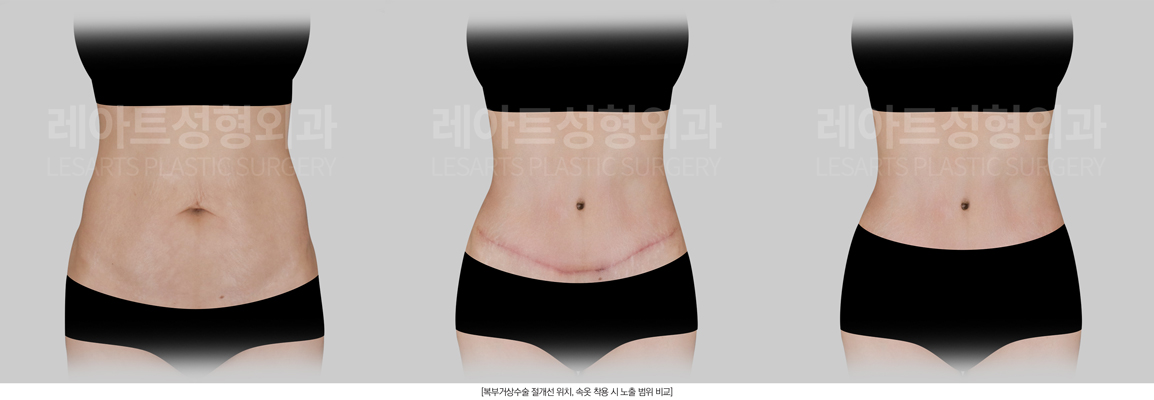
Scar Placement After Tummy Tuck
Low Incision Designed to Stay Hidden Under Underwear
The incision for abdominoplasty was designed
as low as possible in the lower abdomen.
As a result, when the patient wears underwear,
the scar remains naturally covered,
helping reduce concern about visible scar exposure in daily life.
Current Recovery Stage
3.5 Months After Surgery
At this point, the patient is just over 3 months after surgery,
which means recovery is still ongoing.
At this stage:
- Some swelling may still remain
- Mild firmness in the tissues can still be present
- The scar is still in the early healing stage
Because of this, continued aftercare is very important.
The patient was advised that, over time:
- The skin surface will continue to soften
- Sensation will gradually recover
- The scar color will change more naturally
She was also encouraged to continue following the recommended
recovery instructions and follow-up care closely.
Why Careful Diagnosis Matters in Postpartum Abdominal Cases
This case shows that after pregnancy and cesarean delivery,
abdominal concerns may involve more than just loose skin.
When a patient has:
- Lower abdominal sagging
- Belly button deformity
- Rectus diastasis
- Weak abdominal wall support
- A very low previous C-section scar
the surgery must be planned carefully
to improve both the surface contour and
the underlying structure.
At our plastic surgery clinic in Gangnam, Seoul, Korea,
each tummy tuck procedure is designed based on the patient’s anatomy,
skin condition, and recovery needs to create a smoother,
firmer, and more natural abdominal result.
#Abdominoplasty
#M-type


Cases finding
similar to my profile
Customer Diagnostics


Select the surgery and
area you are interestedto see real
before andafter changes.


we
make you,
the art
Clinic hours
MON - FRI
10 am – 7pm
SAT
10 am – 4pm
Holiday
SUN, HOLIDAY
Location
Lesarts Moon Clinic Tower 4-5F, 40, Nonhyeon-ro 168-gil,
Gangnam-gu, Seoul, Republic of Korea

Medical institution name Lesarts Plastic Surgery
Address Lesarts Moon Clinic Tower 4-5F, 40, Nonhyeon-ro 168-gil, Gangnam-gu, Seoul, Republic of Korea
Representative Moon sung jun
