




Online Consultation
Please accurately enter the information below.
Quick Cost Consultation
Quick Consultation & Reservation
Cases finding
similar to my profile






Cases finding
similar to my profile
Customer Diagnostics
Tummy Tuck Scar Hidden Under Underwear Line: 4-Month Results | Best Plastic Surgery Clinic in Gangnam, Seoul, Korea
2026-05-08
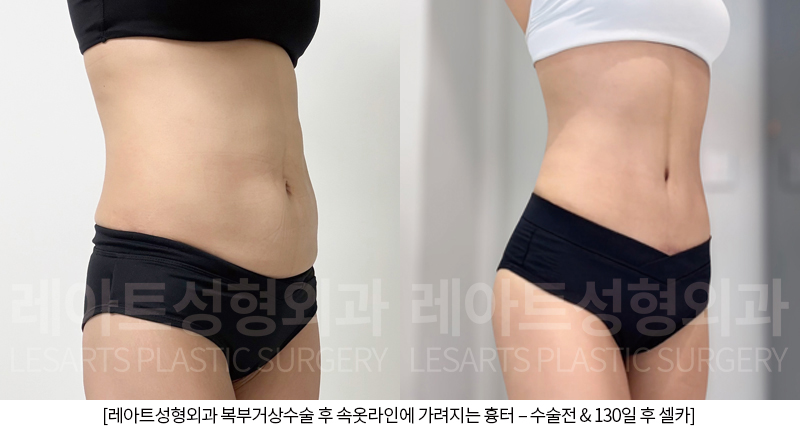
When people think about a tummy tuck,
they often imagine severe loose skin or a heavily sagging abdomen.
However, not every tummy tuck case looks extreme.
In real consultations,
some patients do not have a large amount of abdominal fat,
but still have concerns such as:
Fine wrinkles on the upper abdomen
Loose skin around the navel
Mild lower belly sagging
An abdomen that does not look smooth or firm
These changes are often related to major weight changes,
pregnancy, childbirth, or reduced skin elasticity.
Even if the current body weight is stable,
loose skin around the upper and lower abdomen
can still be noticeable in daily life.
In this case, the patient had been consistently managing
her body through exercise.
However, the loose skin around the abdomen
could not be improved with exercise alone,
so she decided to undergo tummy tuck surgery
at a plastic surgery clinic in Gangnam, Seoul, Korea.
Patient Information
Age: 44
Height: 166 cm
Weight: 55 kg
BMI: 20
Childbirth history: 1 natural delivery
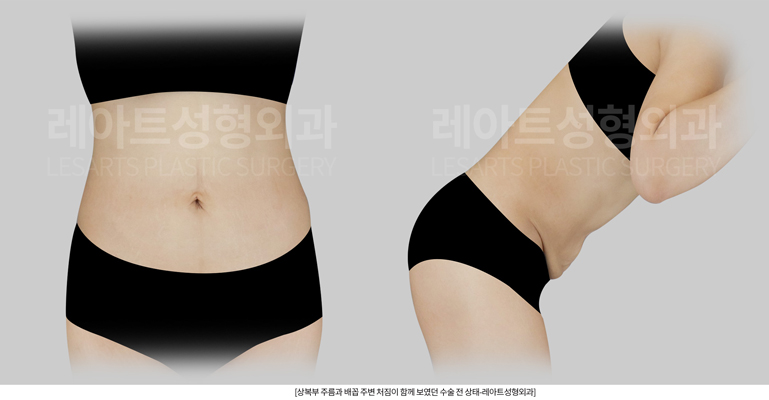
Before Surgery Analysis
Before surgery, the patient did not have a body type
with a large amount of abdominal fat.
However, the abdominal skin was not tightly attached,
and loose skin was visible both above and below the navel.
The main concerns were:
- Loose skin around the navel
- Fine wrinkles on the upper abdomen
- Lower abdominal skin laxity
- A less firm-looking abdominal contour
The patient also had rectus diastasis,
which means separation of the abdominal muscles.
In addition, she had a history of lower abdominal liposuction,
so possible adhesion from the previous surgery also needed to be considered.
One of the patient’s major concerns was the location of the tummy tuck scar.
She wanted the incision to be placed as low as possible.
After examination,
the skin laxity was judged to be suitable for a relatively low incision line,
allowing the scar to be naturally hidden under underwear.

Surgical Plan
Based on the diagnosis, the surgical plan included:
- M-type full tummy tuck (full abdominoplasty)
- Adhesion release from the previous surgery area
- Rectus muscle repair
- Umbilical reconstruction (navel surgery)
The goal was to improve:
- Upper abdominal wrinkles
- Loose skin around the navel
- Lower abdominal laxity
- Overall abdominal firmness
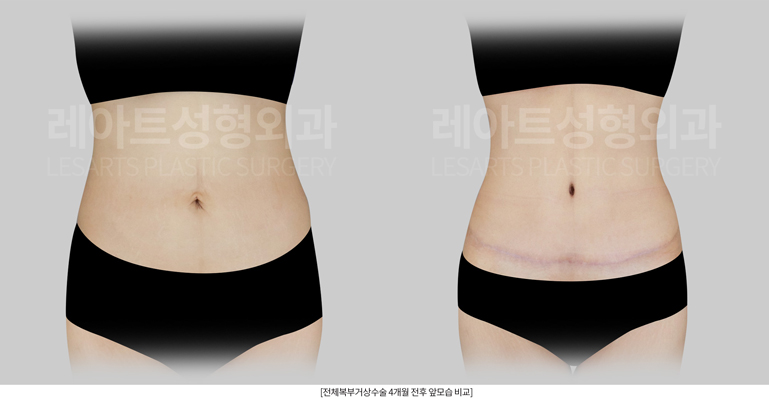
4-Month After Surgery Results
✔ Front View Changes
At 4 months after full tummy tuck surgery,
the loose skin around the navel was clearly improved.
Before surgery,
the abdominal center looked loose and lacked firmness.
After surgery, the skin looked smoother,
and the abdominal line appeared much more stable.
The navel was also redesigned into a more vertical shape,
which helped make the waist look slimmer and more refined.
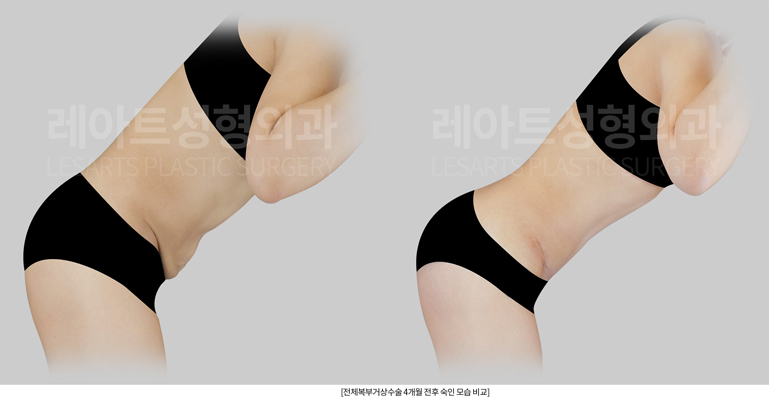
Bending View Changes
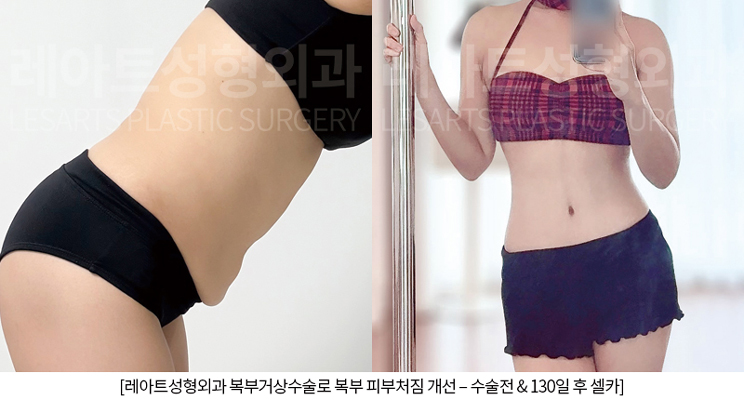
When bending forward,
the improvement became even more noticeable.
Before surgery, loose skin and abdominal wall weakness
caused the abdomen to fold and push forward.
After surgery:
- Excess skin was removed
- The abdominal wall was tightened
- The front abdominal line looked cleaner and more stable
Although this patient did not have a large amount of abdominal fat,
the loose skin and abdominal wall laxity
made the abdomen look less firm with movement.
Through tummy tuck surgery and rectus muscle repair,
this concern was improved, creating a lighter and cleaner abdominal appearance.
Side View Changes
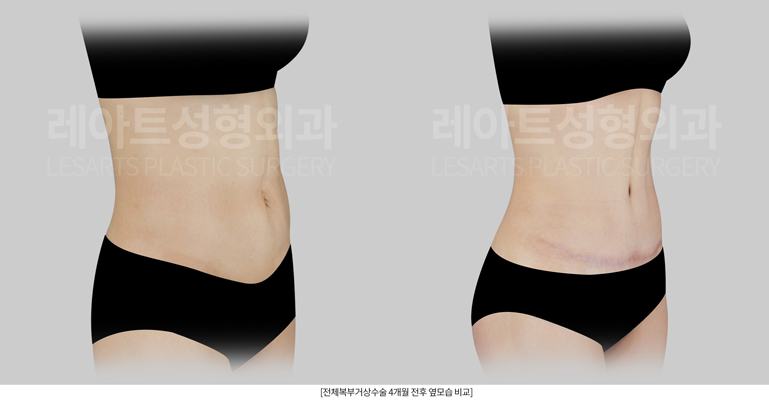
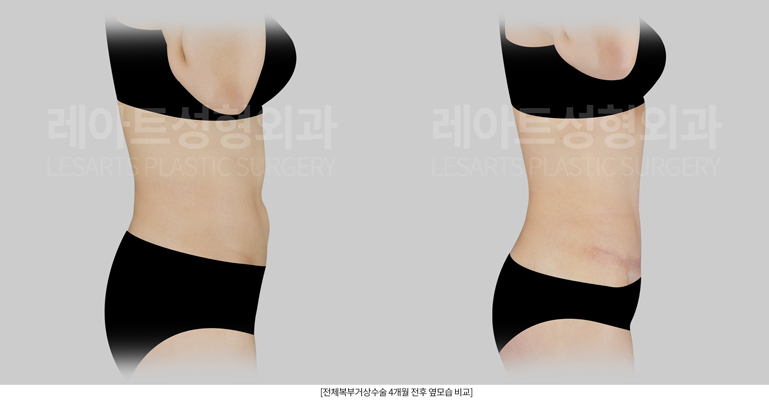
From the side view, the lower abdomen that previously
looked uneven and slightly bumpy became much smoother.
After surgery:
- Loose skin around the navel was corrected
- The fold at the lower abdomen disappeared
- The irregular contour below the navel became smoother
- The abdominal line looked more natural and refined
Tummy Tuck Scar Location
For many patients,
scar placement is one of the most important concerns
when considering a tummy tuck.
This is especially true for patients
who often wear clothes that reveal the waistline or lower abdomen.
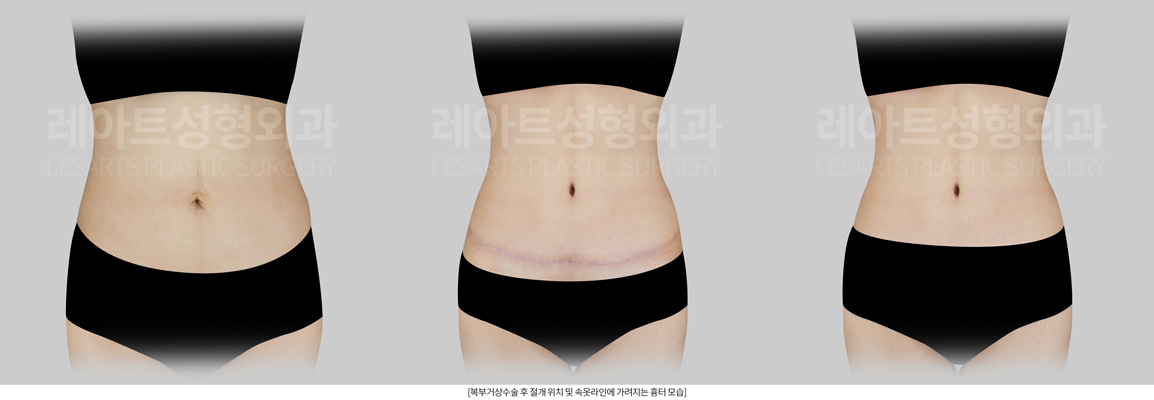
In this case, the incision was placed as low as possible in the lower abdomen,
so it could be naturally hidden under underwear.
This allowed the patient to feel more comfortable wearing daily
outfits without worrying too much about visible scarring.
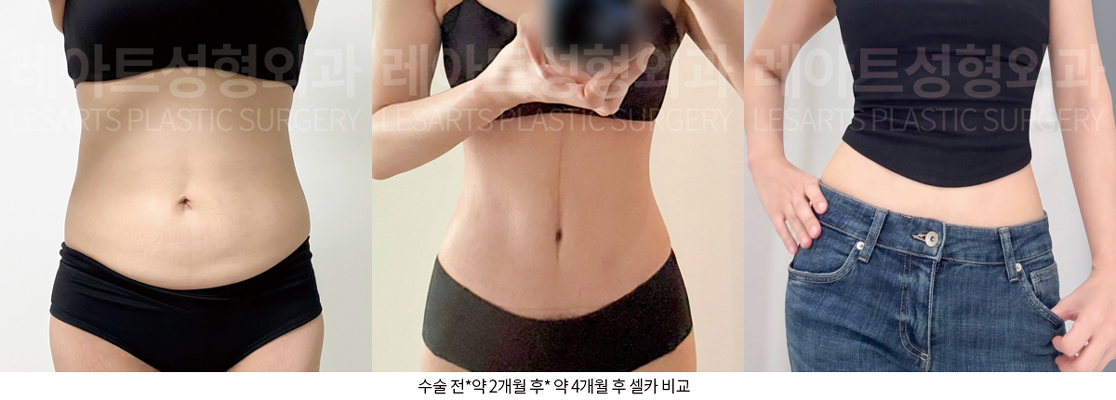
Selfie Comparison After Surgery
In the patient’s own photos taken before surgery,
around 2 months after surgery,
and around 4 months after surgery,
the scar was not noticeable under the underwear line.
The loose abdominal skin that had been her main concern was improved,
and the waistline looked slimmer and firmer.
When wearing clothes that reveal the abdominal line,
the overall silhouette appeared more polished and refined.
Recovery & Scar Care
At 4 months after tummy tuck surgery, scar care is still in the early stage.
Over time:
- The scar will gradually fade
- Tissue firmness will soften
- Sensation will continue to recover
- The abdominal contour will look more natural
The patient was advised to continue proper scar care and
maintain healthy lifestyle habits for better long-term results.
Conclusion
Even if a person is slim and exercises regularly,
loose abdominal skin may not improve with exercise alone.
If there are concerns such as:
- Upper abdominal wrinkles
- Loose skin around the navel
- Lower belly sagging
- Rectus diastasis
then tummy tuck surgery at a trusted plastic surgery clinic
or hospital in Gangnam, Seoul, Korea may be a helpful option.
For patients worried about scars,
the incision location should be discussed carefully during consultation.
With a personalized surgical plan,
the scar can often be placed low enough to be hidden under underwear.
#Abdominoplasty
#M-type
#Abdominal liposuction(M)


Cases finding
similar to my profile
Customer Diagnostics


Select the surgery and
area you are interestedto see real
before andafter changes.


we
make you,
the art
Clinic hours
MON - FRI
10 am – 7pm
SAT
10 am – 4pm
Holiday
SUN, HOLIDAY
Location
Lesarts Moon Clinic Tower 4-5F, 40, Nonhyeon-ro 168-gil,
Gangnam-gu, Seoul, Republic of Korea

Medical institution name Lesarts Plastic Surgery
Address Lesarts Moon Clinic Tower 4-5F, 40, Nonhyeon-ro 168-gil, Gangnam-gu, Seoul, Republic of Korea
Representative Moon sung jun
