




Online Consultation
Please accurately enter the information below.
Quick Cost Consultation
Quick Consultation & Reservation
Cases finding
similar to my profile






Cases finding
similar to my profile
Customer Diagnostics
Simon Grade 2A Gynecomastia Surgery: Chest & Areola Size Change After 3.5 Months | Best Plastic Surgery Clinic in Gangnam, Seoul, Korea
2026-05-28
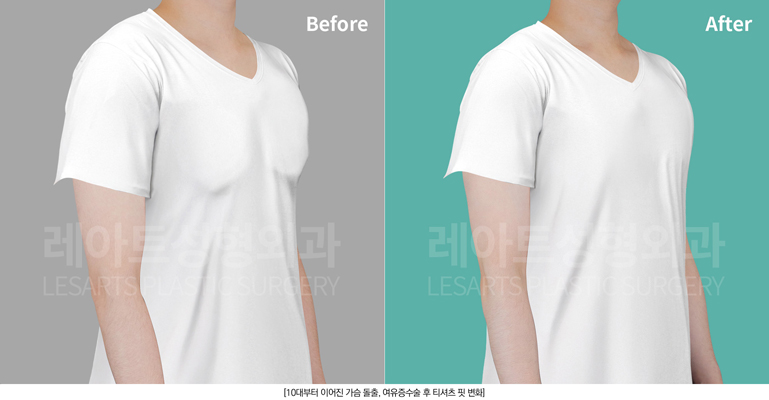
Some men experience chest enlargement and protrusion,
but do not receive an accurate diagnosis right away.
Instead, they may think it is simply a body shape issue and
leave the symptoms untreated for a long time.
In many cases, the areola becomes puffy and
the area around the nipple looks raised.
Because of this, some patients try to hide the chest shape
by wearing compression garments or using nipple covers.
However, gynecomastia surgery can reduce the chest size
and improve the overall upper body shape
through accurate diagnosis and precise surgical treatment.
If chest protrusion causes stress in daily life,
it may be helpful to visit a trusted plastic surgery clinic in Gangnam,
Seoul, Korea for proper evaluation.
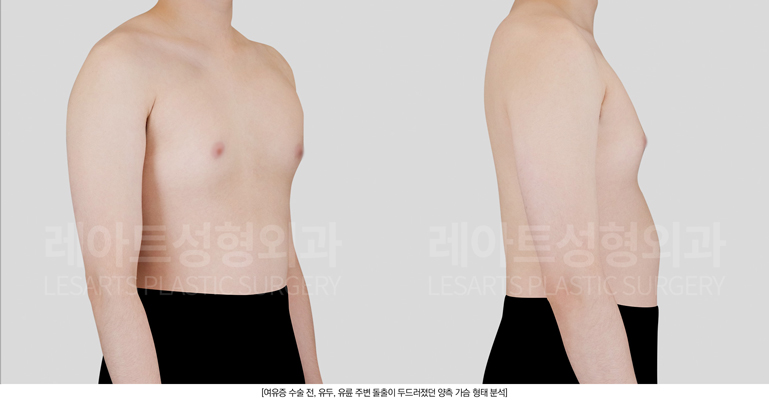
This case shows a patient who first developed gynecomastia symptoms during
his teenage years and received treatment in his mid-20s.
Surgical Plan
The surgical plan included:
- Removal of glandular tissue
- Chest liposuction
- Tissue reshaping
- Anti-adhesion care
- Chest contour correction for a natural male chest line
After removing the glandular tissue and fat,
tissue reshaping was performed
to reduce the risk of uneven adhesion or indentation.
The goal was to create a smooth, firm,
and masculine chest contour.
3.5-Month After Gynecomastia Surgery Results
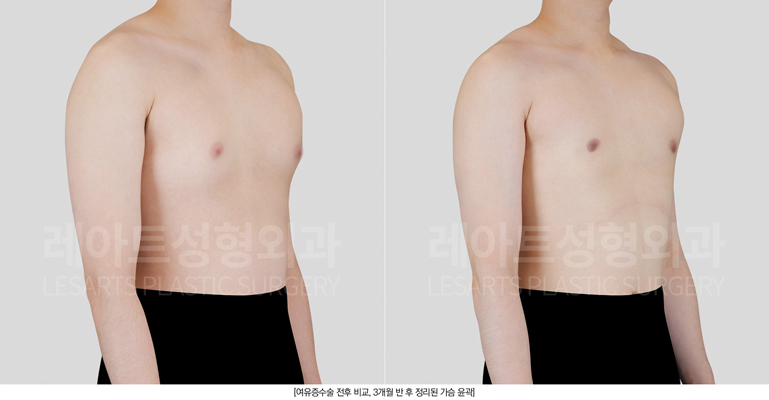
When comparing before and 3.5 months after surgery,
the change in the chest and areola area is clearly visible.
After surgery:
- The overall chest size was reduced
- The central chest protrusion became smoother
- The nipple and areola area looked more stable
- The areola size also appeared smaller
as the stretched skin decreased
Before surgery,
the areola and nipple area projected
forward in a pointed shape.
After surgery, this area became naturally flatter,
creating a smoother line from the upper chest to the upper abdomen.
Side View Change
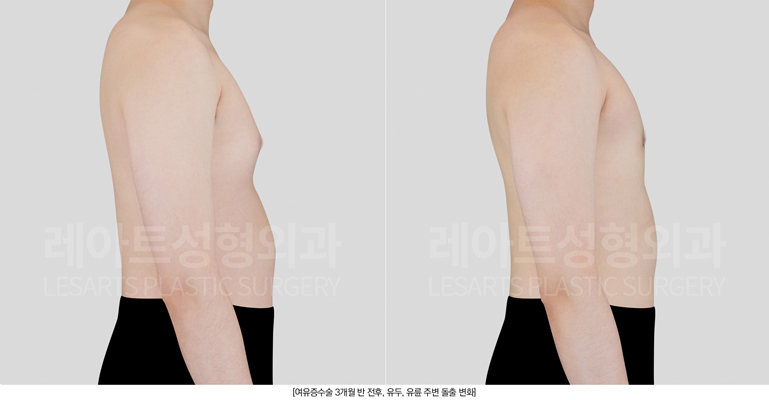
From the side view, the improvement
in chest protrusion is even more noticeable.
Before surgery, the nipple and areola area
protruded forward from the center of the chest.
After surgery, this projection was naturally corrected,
and the chest line became flatter and more balanced.
Because tissue reshaping was performed after glandular tissue removal and liposuction,
the chest changed into a firm contour without visible indentation or abnormal adhesion.
The result gives the impression of a more athletic
and masculine upper body.
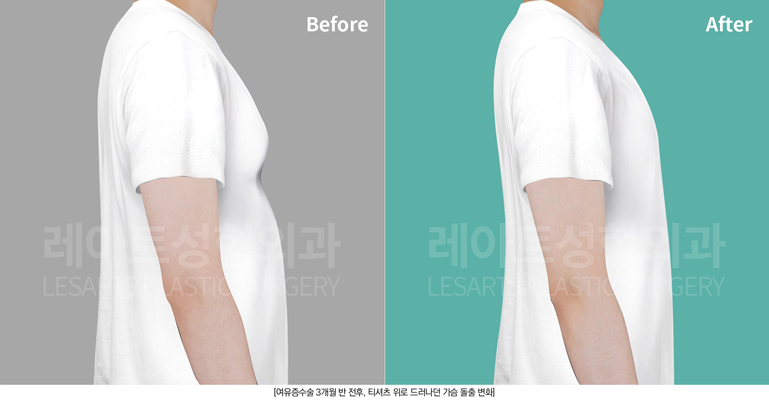
T-Shirt Fit Improvement
One of the biggest changes was the improvement in T-shirt fit.
Before surgery, the patient felt self-conscious
whenever he wore clothes
because the central chest protrusion and puffy areola were visible.
After gynecomastia surgery,
the chest line looked much smoother under a T-shirt.
The patient shared that he felt more confident in daily life and no longer felt uncomfortable
when exercising or being in situations where the upper body may be more visible.
Why Diagnosis Matters
Gynecomastia should not be judged only by appearance.
If the chest is enlarged, the areola is puffy, or the nipple area protrudes,
the cause may not be simple fat.
It may be true gynecomastia caused by glandular tissue growth.
In that case, exercise or weight loss alone
may not fully improve the chest shape.
A proper diagnosis, including ultrasound examination,
can help determine whether surgical treatment is needed.
Conclusion
If gynecomastia symptoms started
during the teenage years and continued into adulthood,
it may be difficult to improve them through self-management alone.
When the chest and areola remain enlarged despite exercise or weight control,
consultation at a trusted plastic surgery clinic or hospital in Gangnam, Seoul,
Korea can help identify the exact cause and create the right treatment plan.
With proper gynecomastia surgery, it is possible to improve chest protrusion,
reduce puffy areola appearance, and create a flatter, smoother,
and more masculine chest line.
#Male body contouring
#Gynecomastia
#Grade2-A #true gynecomastia


Cases finding
similar to my profile
Customer Diagnostics


Select the surgery and
area you are interestedto see real
before andafter changes.


we
make you,
the art
Clinic hours
MON - FRI
10 am – 7pm
SAT
10 am – 4pm
Holiday
SUN, HOLIDAY
Location
Lesarts Moon Clinic Tower 4-5F, 40, Nonhyeon-ro 168-gil,
Gangnam-gu, Seoul, Republic of Korea

Medical institution name Lesarts Plastic Surgery
Address Lesarts Moon Clinic Tower 4-5F, 40, Nonhyeon-ro 168-gil, Gangnam-gu, Seoul, Republic of Korea
Representative Moon sung jun
