




Online Consultation
Please accurately enter the information below.
Quick Cost Consultation
Quick Consultation & Reservation
Cases finding
similar to my profile






Cases finding
similar to my profile
Customer Diagnostics
Hollow Under Eyes & Tired-Looking Face: Facial Fat Grafting and Cheek Liposuction Results After 2 Months | Best Plastic Surgery Clinic in Gangnam, Seoul, Korea
2026-06-10

Some people look tired even
when they are not actually tired.
This can happen when the area
under the eyes looks hollow, dark, or sunken.
Many people first think of dark circles,
skin tone, or fine wrinkles under the eyes.
However, a tired-looking face is
not always caused only by skin color or wrinkles.
If the area below the eyes is hollow,
it can create shadows.
If the front cheek area lacks volume,
the face may look flat and less lively.
This is why it is important to evaluate the overall facial line and
volume balance before deciding on treatment.
In this case, the patient visited a plastic surgery clinic in Gangnam, Seoul, Korea
because she wanted to improve her hollow under-eye appearance,
flat mid-face, and tired-looking impression through facial fat
grafting and cheek liposuction.
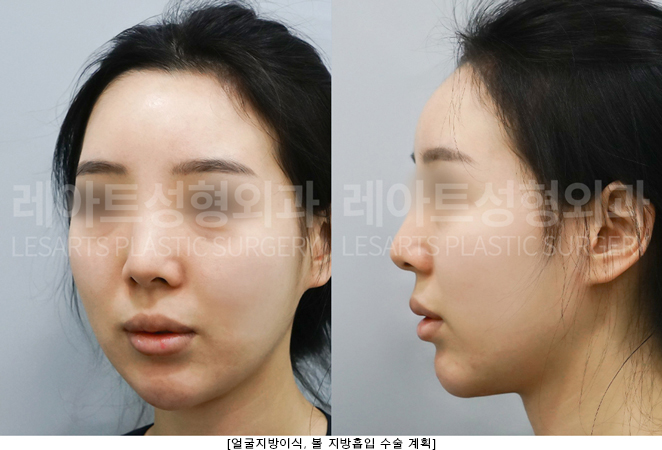
Before Surgery Analysis
Before surgery, the patient had a naturally slim
facial bone structure.
However, the front cheek area lacked volume,
which made the mid-face look flat.
At the same time, there was some excess cheek fat
around the outer cheekbone area.
Because of this, the face looked wider than
her actual facial bone structure.
The main concerns included:
- Hollow-looking under-eye area
- Flat front cheeks
- Shadows around the nasolabial fold area
- Tired and slightly aged-looking impression
- Cheek fat around the outer cheekbone line
- Face looking wider than the actual bone structure
The lack of volume from the under-eye area to the front cheek
made the mid-face look less smooth.
Also, the shadow around the nasolabial fold area
made the face look more tired.
Because the issue was not just one hollow area,
the surgical plan had to improve both volume
balance and facial contour.
Surgical Plan
The goal was not simply to fill the face with fat.
The plan was to add volume only where needed and
reduce unnecessary cheek volume where the face looked wide.
The surgical plan included:
- Facial fat grafting
- Under-eye and front cheek volume correction
- Nasolabial fold fat grafting
- Cheek liposuction
- Facial contour refinement
- Balance correction based on the patient’s natural facial bone structure
Fat grafting was planned for the front cheek and
nasolabial fold area to create a softer and more lively facial impression.
Cheek liposuction was planned for the outer cheek area
to refine the facial outline and help the face look slimmer.
The goal was to create a face that looked less tired,
more dimensional, and naturally balanced.
2-Month After Facial Fat Grafting Results
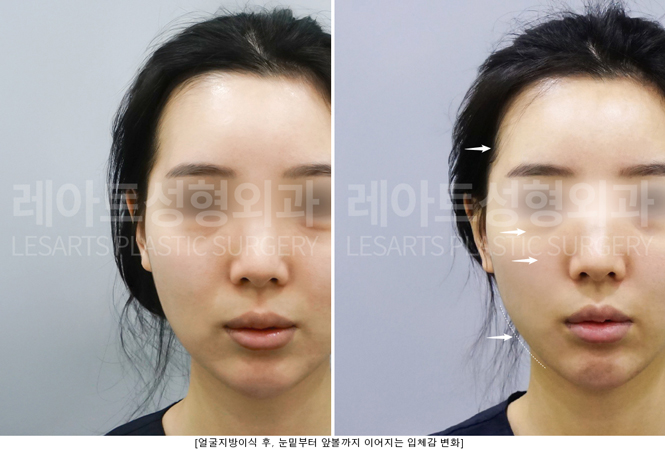
At 2 months after surgery,
the change in the mid-face volume was clearly visible.
Before surgery, the area from the under-eyes
to the front cheeks looked flat and hollow.
After surgery:
- The under-eye hollowing looked softer
- The front cheek area gained natural volume
- The mid-face looked more three-dimensional
- The tired-looking impression improved
- The face looked smoother and more lively
The volume was not excessive.
Instead, the result looked natural because the fat
was added mainly to areas that needed better balance.
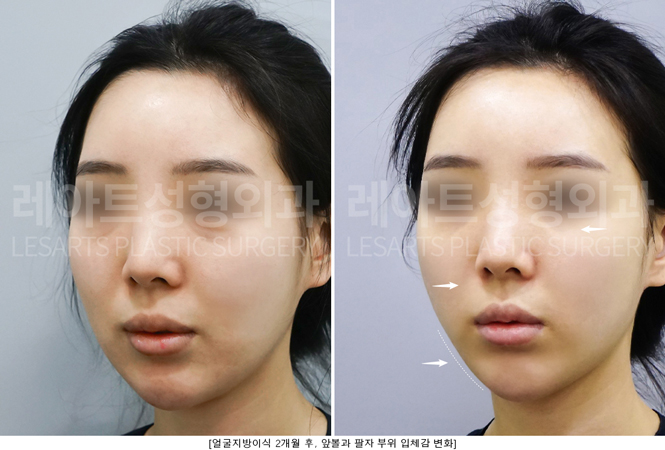
Front Cheek & Nasolabial Fold Changes
Before surgery, the front cheek area looked flat,
and the shadow around the nasolabial fold made the face look tired.
After facial fat grafting,
the front cheek gained soft volume.
The nasolabial fold shadow also looked less noticeable,
which helped the face look younger and more refreshed.
The facial line from the under-eye area to the front cheek became smoother
, creating a more balanced mid-face contour.
Cheek Liposuction & Facial Line Refinement
In this case,
cheek liposuction was also important.
Before surgery,
the patient’s actual facial bone structure was slim.
However, cheek fat around the outer cheekbone area
made the face look wider.
After cheek liposuction:
- The outer cheek line looked slimmer
- The facial outline became more refined
- The mid-face looked less wide
- The overall face shape looked smoother
- The natural bone structure became more visible
By combining facial fat grafting and cheek liposuction,
the surgery improved both facial volume and facial contour.
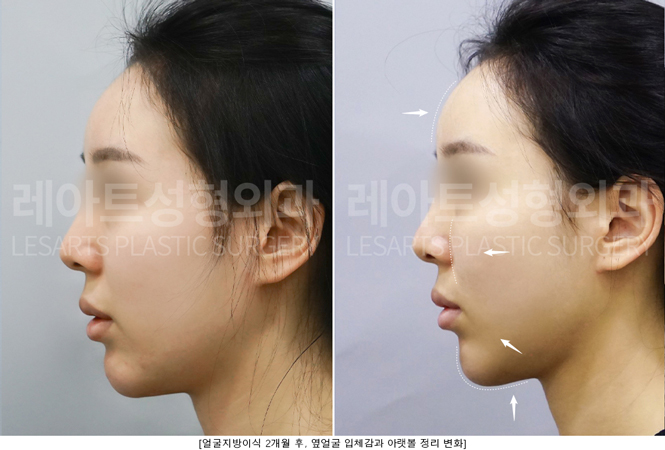
Side View Changes
From the side view, the improvement in facial depth
and lower cheek line was also noticeable.
Before surgery, the front cheek line looked flat,
and the face lacked three-dimensional volume.
After surgery, the front cheek area
looked naturally lifted and fuller.
At the same time, cheek liposuction helped
refine the lower cheek and side facial line.
This created a smoother balance from the forehead,
under-eye area, front cheek, and chin line.
Why Combination Treatment Was Helpful
This case was not simply about filling hollow areas.
The patient needed two different types of correction:
Adding volume to the front cheek and nasolabial fold area
Reducing excess cheek fat around the outer cheek line
If only fat grafting had been performed,
the face could have looked fuller but still wide.
If only cheek liposuction had been performed,
the tired-looking hollow area could have remained.
By combining the two procedures,
the face became more dimensional, slimmer,
and naturally balanced.
Patient Satisfaction
The patient was satisfied because the hollow and
tired-looking impression improved.
She also felt that her facial outline looked smaller,
smoother, and more refined than before.
The result was not an artificial-looking volume change.
Instead, the face looked more lively
while still matching her natural facial bone structure.
Conclusion
A tired-looking face is not always caused by dark circles or skin tone.
In some cases, hollow under-eyes, flat front cheeks, nasolabial fold shadows,
and cheek fat distribution can all affect the overall facial impression.
If the face looks tired, flat, or wider than expected,
it is important to check both facial volume and facial contour.
Through accurate diagnosis at a trusted plastic surgery clinic
or hospital in Gangnam, Seoul, Korea,
a customized plan such as facial fat grafting and
cheek liposuction can help create a smoother,
more lively, and more refined facial line.
#Liposuction #Etc
#Face fat graft


Cases finding
similar to my profile
Customer Diagnostics


Select the surgery and
area you are interestedto see real
before andafter changes.


we
make you,
the art
Clinic hours
MON - FRI
10 am – 7pm
SAT
10 am – 4pm
Holiday
SUN, HOLIDAY
Location
Lesarts Moon Clinic Tower 4-5F, 40, Nonhyeon-ro 168-gil,
Gangnam-gu, Seoul, Republic of Korea

Medical institution name Lesarts Plastic Surgery
Address Lesarts Moon Clinic Tower 4-5F, 40, Nonhyeon-ro 168-gil, Gangnam-gu, Seoul, Republic of Korea
Representative Moon sung jun
