Tummy Tuck | Lower Abdominal Skin Sagging & Diastasis Recti: 7-Month Changes After a Full Tummy Tuck
the lower belly can look convex and form multiple layers of wrinkles when moving.
and the condition of the rectus muscles together.
people consider a tummy tuck when sagging skin remains on the lower belly creating a bulging line,
and forms wrinkles every time they move.
due to diastasis recti.
In this post, through the case of a patient who visited us for changed abdominal shape
to her 7-month progress after a full tummy tuck.
[Patient Information]
Age: 40s
Height: 158 cm
Weight: 50.2 kg
BMI: 20.1
Deliveries: 2
Examining the patient's abdomen before surgery,
although fat volume itself was not large,
her waistline was not clearly defined.
Due to separated rectus muscles and stretched skin,
her entire abdomen visibly looked loose and sagging.
Moreover, as skin sagging started from the upper abdomen,
her belly button was also deformed into a horizontal shape.
Upon direct palpation, skin sagging toward the lower abdomen
and relaxed rectus muscles were even more clearly confirmed,
and skin elasticity was also poor.
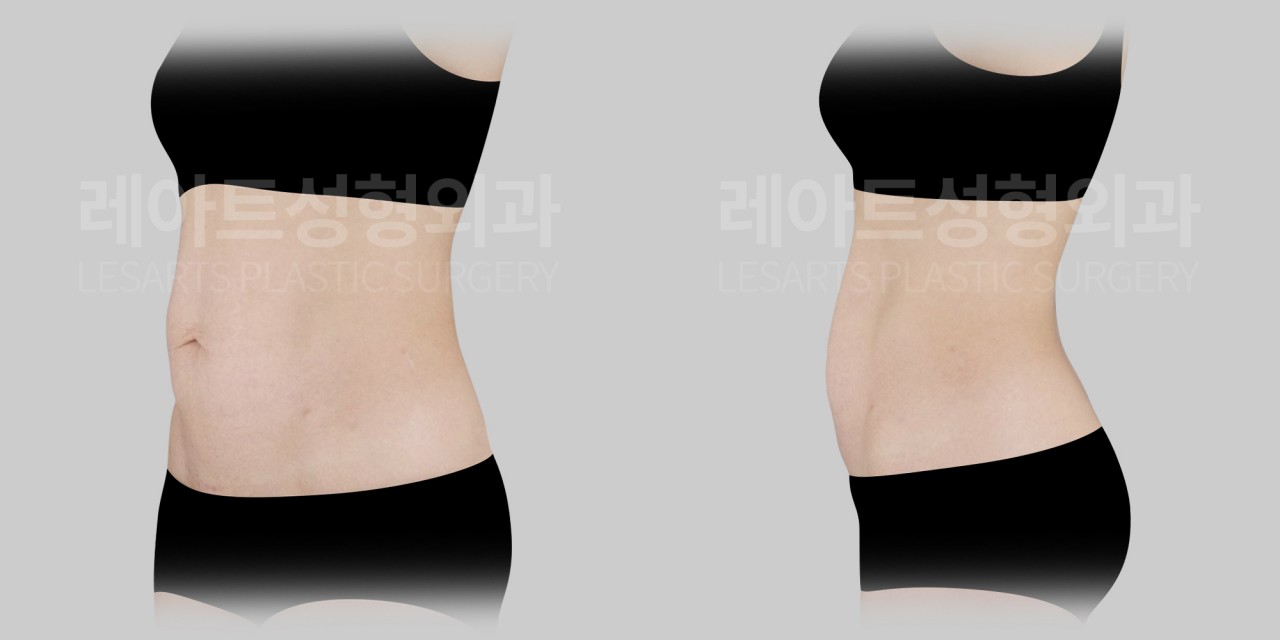
[Before Tummy Tuck: Full Tummy Tuck Plan Considering Lower Abdominal Skin Sagging and Abdominal Wall Separation]
From the side view, these abdominal changes
were even more clearly visible.
Even without much subcutaneous fat, as the abdominal wall pushed forward,
her lower belly protruded convexly,
and with decreased skin elasticity, the abdominal surface
was not smooth.
Upon diagnosis, skin sagging was not limited to the lower abdomen,
but extended from the upper abdomen, and diastasis recti was also confirmed.
Therefore, we planned an M-type full tummy tuck
to correct both the skin sagging extending from the upper abdomen
and diastasis recti together.
Along with this, we set the surgical direction to also refine locally remaining fat
with the goal of improving overall abdominal firmness
and contour.

[7 Months After Tummy Tuck: Front-View Changes in Lower Abdominal Skin Sagging and Belly Button Shape]
Let's compare her appearance before surgery and 7 months after.
Before surgery, due to decreased skin elasticity, her front abdomen
sagged loosely and looked spread apart overall.
After surgery, with this excess skin removed,
you can see her front abdominal line refined much more firmly.
Her belly button, which had been horizontally deformed due to upper abdominal skin sagging,
was newly created into a vertical shape and positioned at her waistline height.
As the stretched skin was tightened, abdominal firmness returned,
and at the same time, her waistline became noticeably more defined
than before.

[7 Months After Tummy Tuck: Oblique-View Changes in Lower Belly Protrusion and Waistline]
Changes in the abdomen are also clear from the oblique view.
Before surgery, due to separated rectus muscles,
the abdominal wall pushed forward,
making her lower belly look convex.
By plicating the rectus muscles during surgery to restore abdominal wall support,
the forward-protruding abdomen was also smoothed out together.
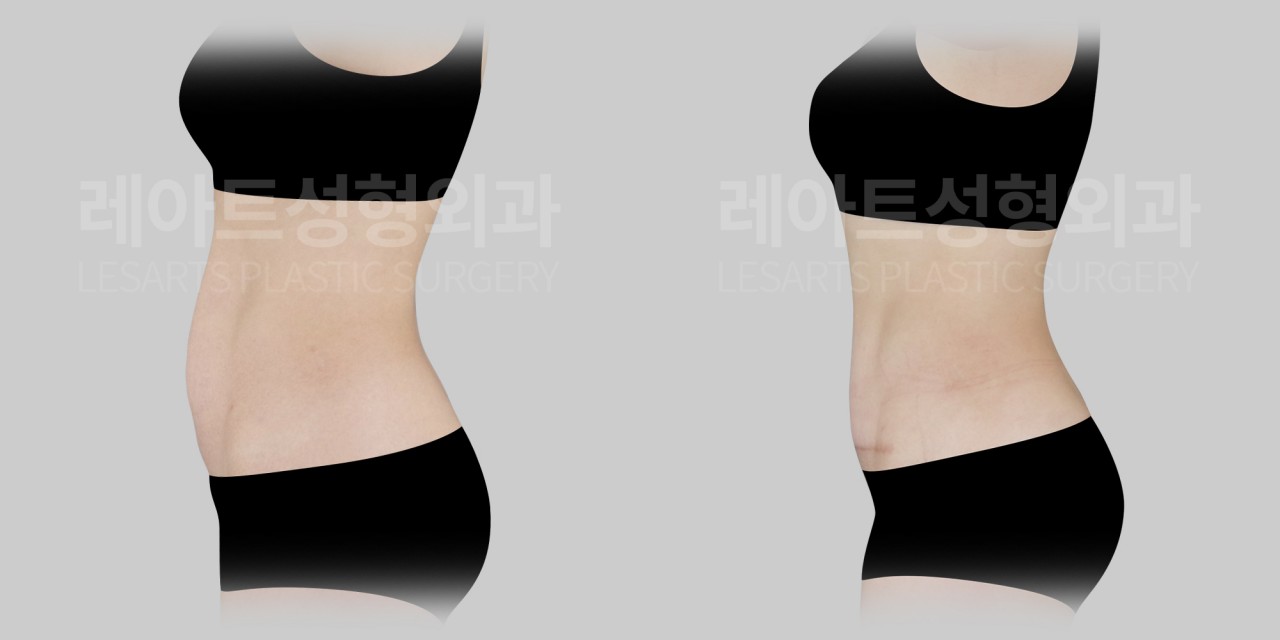
[7 Months After Tummy Tuck: Side-View Changes in Lower Belly Protrusion]
From the side view, the change in the abdominal wall is revealed even more clearly.
While before surgery the abdominal wall pushed forward loosely,
creating a protruding abdominal shape,
after surgery, with the abdominal wall supported much more firmly than before,
you can see the front abdomen flowing flatly.
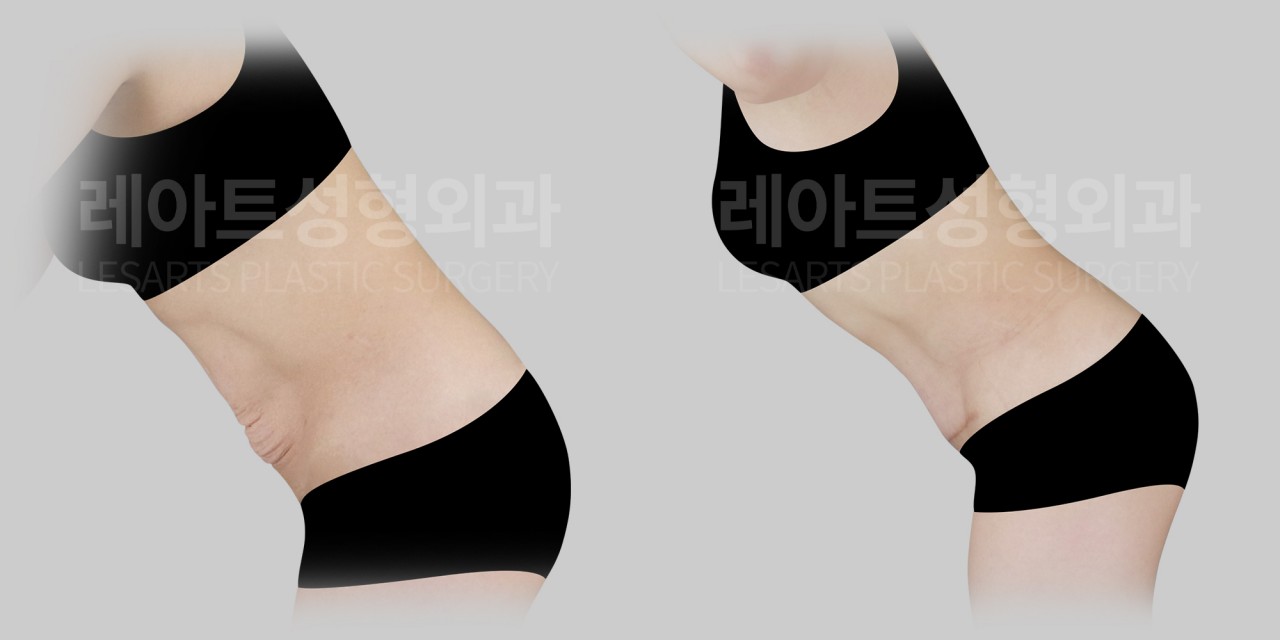
[7 Months After Tummy Tuck: Changes in Lower Abdominal Skin Folding When Bending Forward]
Before surgery, even slight movement or bending forward
caused the lax lower abdominal skin
to fold into multiple layers and form wrinkles.
After surgery, with this skin smoothed out,
even in a forward-bending posture, her abdomen stays firm
without pushing forward loosely or protruding with movement,
and the skin that used to create multiple layers of wrinkles is gone,
maintaining a flat front abdominal line.
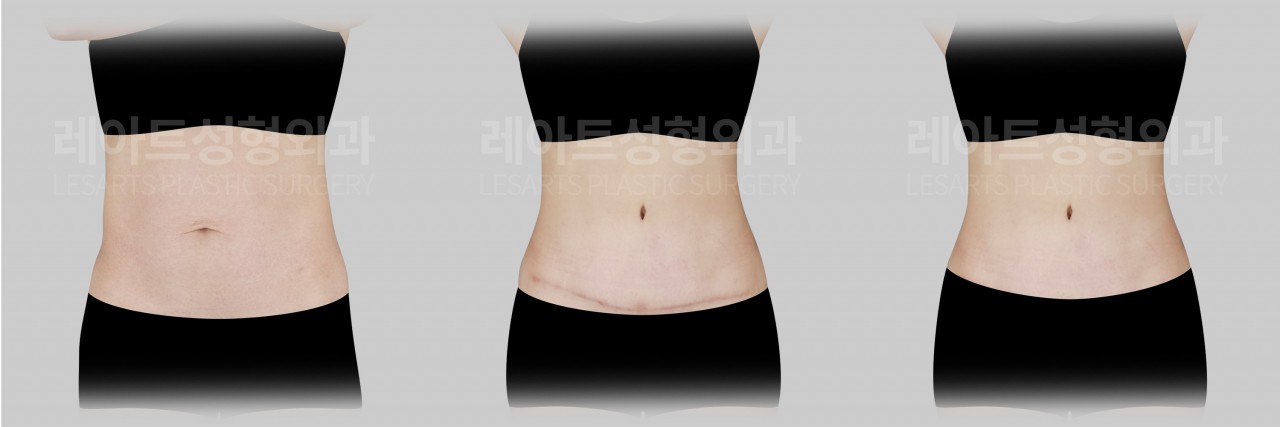
[7 Months After Tummy Tuck: Lower Abdominal Incision Scar and Recovery Status]
Seven months after surgery, the tummy tuck incision scar
shows a healing process where the redness noticeable early on
is gradually fading.
So far, it is healing stably without any raised areas
or firm lumps.
Because the incision line is located low on the lower abdomen,
it is naturally covered when wearing underwear.
The patient also shared that she does not
really notice the scar in daily life.
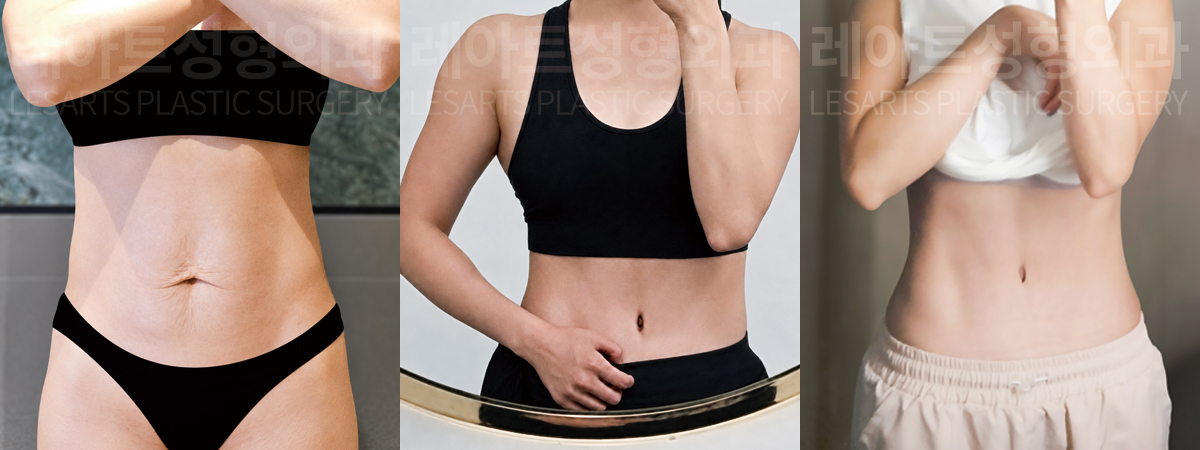
[Selfie Comparison: Before vs. 2 Months & 6 Months After Surgery]
In photos taken by the patient herself before surgery, at 2 months, and at 6 months,
you can also see the process of front abdominal skin wrinkles
and the overall abdominal line gradually smoothing out.
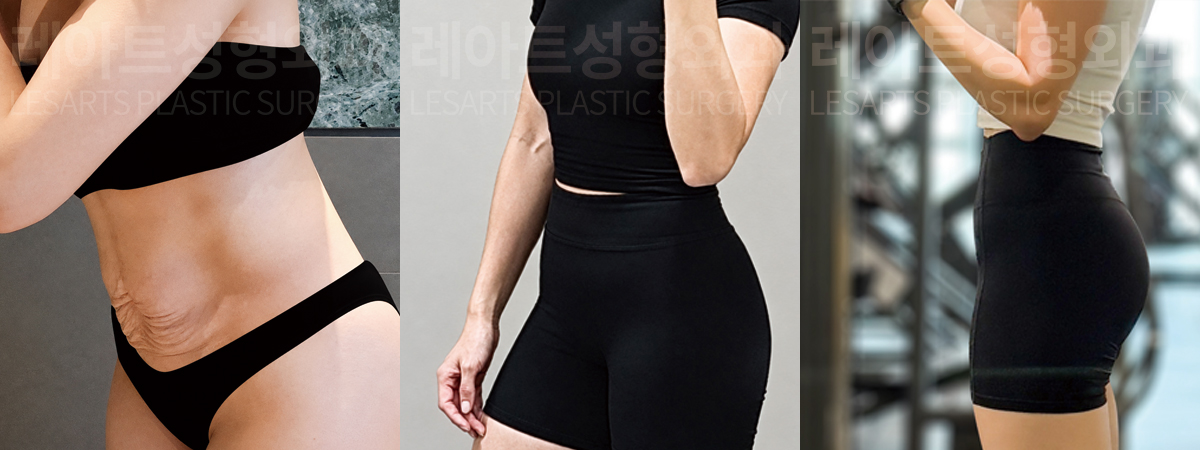
[Selfie Comparison: Before vs. 4 Months & 6 Months After Surgery]
The patient shared that many things in her daily life
have also changed after the tummy tuck.
Before surgery, her biggest concerns were her multi-layered wrinkled lower belly
and the loose, convex abdominal line that remained
even with dieting.
After surgery, as these areas were firmly refined,
her confidence grew when wearing fitted workout clothes
or outfits that reveal her waist,
and she left a review expressing satisfaction
that she feels far fewer restrictions when choosing clothes.
Some people worry after childbirth because lower abdominal skin sags
or a stretched abdominal wall protrudes forward,
preventing the abdominal line from flowing smoothly.
In such cases, you should not decide on a surgical method
simply by looking at where visible lower belly skin sagging
or wrinkles are located.
It is necessary to check together whether skin sagging starts from the upper abdomen
and how much the rectus muscles have separated,
weakening abdominal wall support.
In this case as well, although her body weight and abdominal fat volume were not large,
skin was stretched starting from the upper abdomen,
and forward protrusion of the abdominal wall
due to diastasis recti was also confirmed.
Accordingly, through an M-type full tummy tuck, we corrected both the loose skin
and diastasis recti together while refining
locally remaining fat.
Seven months after surgery, her previously loose, sagging front abdomen was firmly refined,
and her horizontally deformed belly button was newly created in a vertical shape.
We could also see clear improvement in the multi-layered skin folding
and forward-pushing abdominal wall
when bending forward.
If you are considering a tummy tuck due to postpartum abdominal skin sagging
or abdominal wall protrusion,
it is important to accurately check the current extent of skin sagging and rectus muscle condition
first, and consult on the surgical method needed.
Tummy Tuck Q&A
Q1. Can a tummy tuck be needed even if I don't weigh much?
Even if body weight or abdominal fat volume is not large,
if skin elasticity decreased after childbirth leaving sagging
or the abdominal wall protrudes forward due to diastasis recti,
a tummy tuck can be considered.
Q2. Can a full tummy tuck be needed even if only the lower belly looks saggy?
Even if lower abdominal sagging is most noticeable externally, if an actual exam shows
that skin sagging starts from the upper abdomen,
a full tummy tuck may be needed.
The extent of skin sagging must be accurately checked first.
Q3. Can diastasis recti make the lower belly look convex?
When the rectus muscles separate and abdominal wall support weakens,
the abdominal wall can push forward even without much fat,
making the abdomen look convex.
Q4. Can the belly button shape also change after a tummy tuck?
During a full tummy tuck, a new belly button can be created
considering the position and shape of the existing belly button.
The necessary method varies depending on the extent of skin sagging
and current belly button condition.
Q5. Is the tummy tuck scar still visible after 7 months?
Around 7 months after surgery, the incision scar
is still in the process of healing
and some redness may remain.
It gradually fades over time,
and the degree of scar recovery varies from person to person.









 [Before Tummy Tuck: Lower Abdominal Skin Sagging and Abdominal Wall Separation Confirmed Together]





