




Online Consultation
Please accurately enter the information below.
Quick Cost Consultation
Quick Consultation & Reservation
Cases finding
similar to my profile






Cases finding
similar to my profile
Customer Diagnostics
Inner Thigh and Saddlebag Liposuction: 3-Month Thigh Gap and Straight Leg Results | Best Liposuction Clinic in Gangnam, Seoul, Korea
2026-09-23
Thigh Liposuction | Inner Thigh Fat & Saddlebags: Thigh Gap Changes at 3 Months
Concerned About Inner Thigh Fat and Saddlebags? Will Liposuction Create a Thigh Gap? 3-Month Before & After Comparison
Q. Can liposuction of inner thigh fat and saddlebags create a thigh gap?
A. If sufficient fat is distributed on the inner thighs,
the space between the legs can become more clearly visible after liposuction.
However, because the thigh line is influenced not only by inner thigh fat and saddlebags,
but also by the muscle shape of the front and back thighs and bone structure,
it is important to adjust the suction range and depth while considering the overall connection.
[ Learn More About Lesarts Thigh Liposuction Cases ]
Among those considering thigh liposuction,
many say they want to slim down their leg line
by refining inner thigh fat and saddlebags.
In particular, when fat is concentrated in the upper thighs,
the lower body feels thicker than one's actual frame,
and the starting point of the legs appears lower,
making the legs look shorter relative to height.
In such body types, rather than simply removing only the visible inner thigh fat
and saddlebags,
it is important to refine overall proportions by considering
how the front thighs, back thighs, and buttocks connect together.
In this post, we will look at an actual case of a patient in her 20s
who was most concerned about inner thigh fat and outer saddlebags.
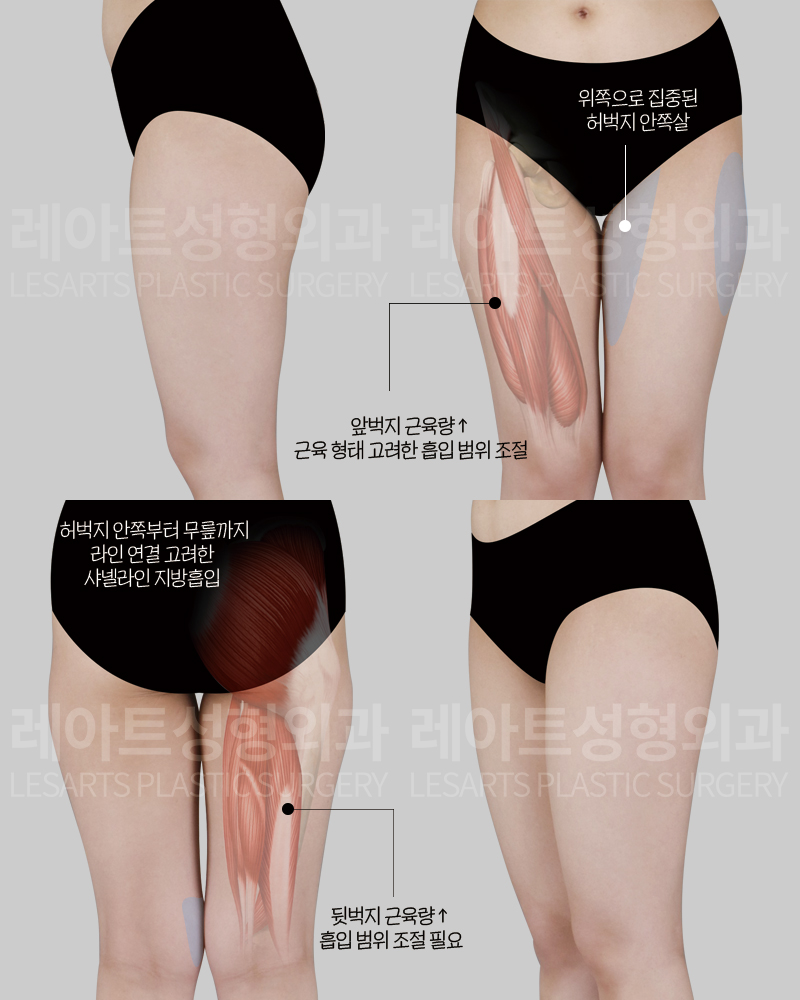
[Before Thigh Liposuction: Body Type Analysis of Inner Thigh Fat and Saddlebags Concentrated in the Upper Thighs]
[Patient Information]
Age: 20s
Height: 150 cm
Weight: 45.1 kg
BMI: 20
The patient wanted most to refine the volume
of her inner thigh fat and saddlebags.
Although she already had a slight thigh gap when standing with legs together,
her upper thighs touched each other,
making it unclear where the inner line of her legs began.
Because of this, the inner starting point of her legs appeared lower,
making her overall lower body feel short and heavy.
On the outside, her saddlebags protruded
further outward than her hip line.
Not only did the horizontal width of her thighs look wide,
but it also felt as though her legs started from the protruding outer thighs
rather than directly
from her hips.
On her front and back thighs, muscle had a greater influence
than fat.
Because aggressively reducing fat in these areas
could make existing muscle lines stand out more,
it was necessary to adjust the suction direction
and depth by area while considering muscle shape.
Therefore, while prioritizing the refinement of inner and outer thigh volume—
the patient's biggest concerns—
we designed the surgery so that it would connect smoothly
with the front and back thighs as well.
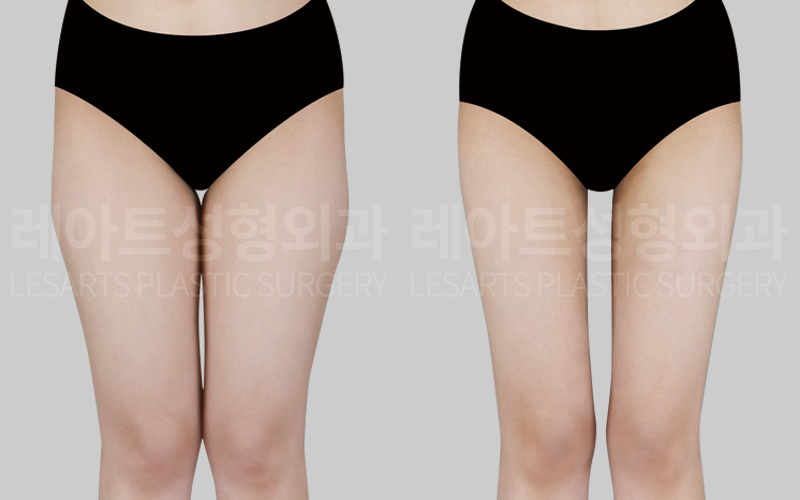
[Before & 3 Months After Thigh Liposuction Comparison]
This comparison shows her before thigh liposuction and 3 months after surgery.
Before surgery, because the upper inner thighs touched,
the space between her legs appeared to start lower down.
After surgery, as inner volume decreased,
the space extends up to the upper thighs,
clearly revealing the starting point of the inner leg line.
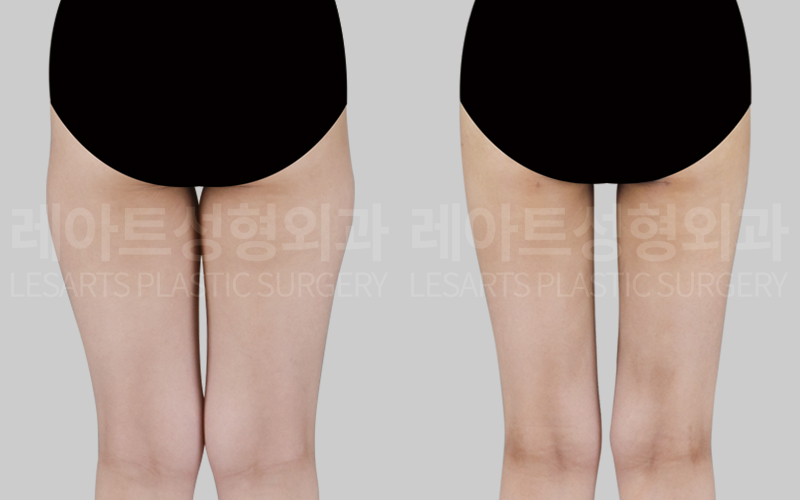
[Changes in Saddlebag Volume and Outer Thigh Line]
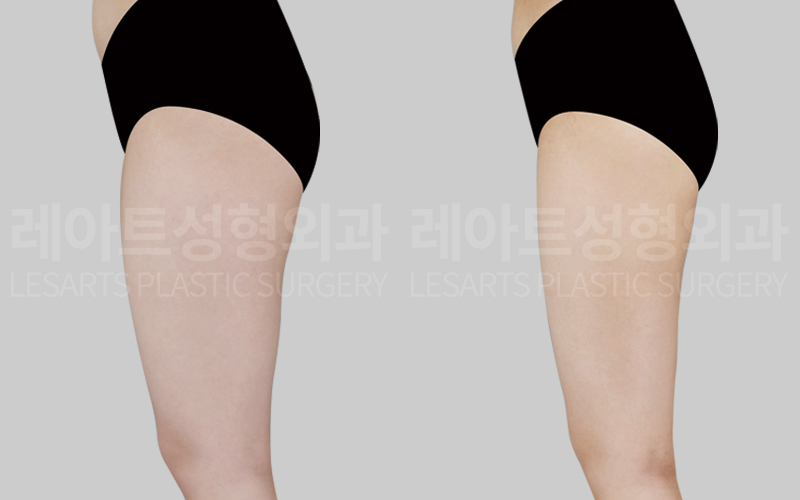
[Side-View Changes in Front & Back Thigh Thickness]
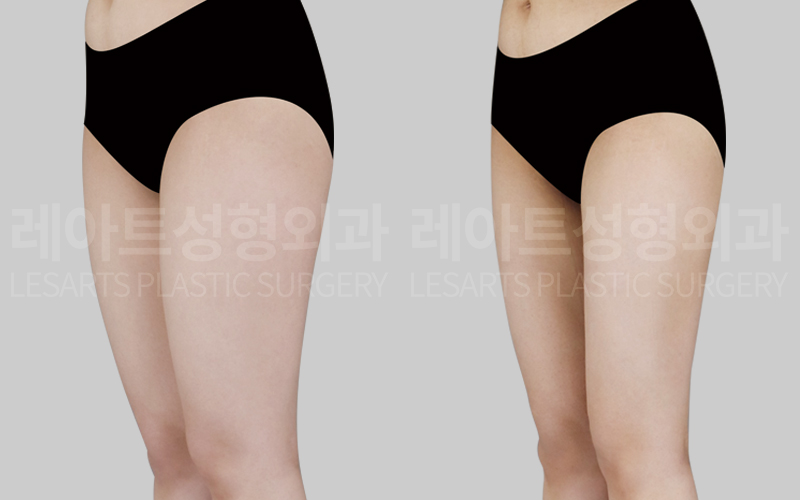
[Oblique-View Changes in Saddlebags and Outer Thigh Line]
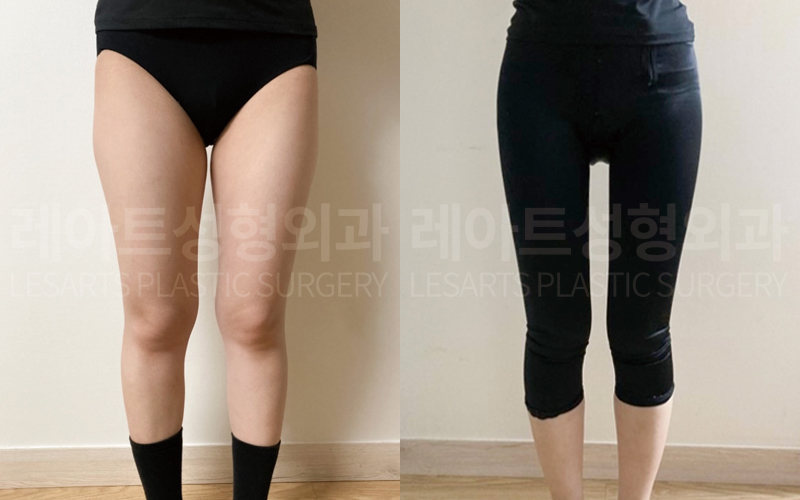
[Comparison of Patient's Self-Taken Photos: Before vs. 3 Months After Surgery]
#Liposuction
#Thigh
#BMIbelow20(thigh)


Cases finding
similar to my profile
Customer Diagnostics


Select the surgery and
area you are interestedto see real
before andafter changes.


we
make you,
the art
Clinic hours
MON - FRI
10 am – 7pm
SAT
10 am – 4pm
Holiday
SUN, HOLIDAY
Location
Lesarts Moon Clinic Tower 4-5F, 40, Nonhyeon-ro 168-gil,
Gangnam-gu, Seoul, Republic of Korea

Medical institution name Lesarts Plastic Surgery
Address Lesarts Moon Clinic Tower 4-5F, 40, Nonhyeon-ro 168-gil, Gangnam-gu, Seoul, Republic of Korea
Representative Moon sung jun
