




Online Consultation
Please accurately enter the information below.
Quick Cost Consultation
Quick Consultation & Reservation
Cases finding
similar to my profile






Cases finding
similar to my profile
Customer Diagnostics
Can Arm Liposuction Create Right-Angle Shoulders for Women? + Armpit Wrinkle Improvement Timeline
2022-12-15
158cm / 56.7kg / bmi 22.7
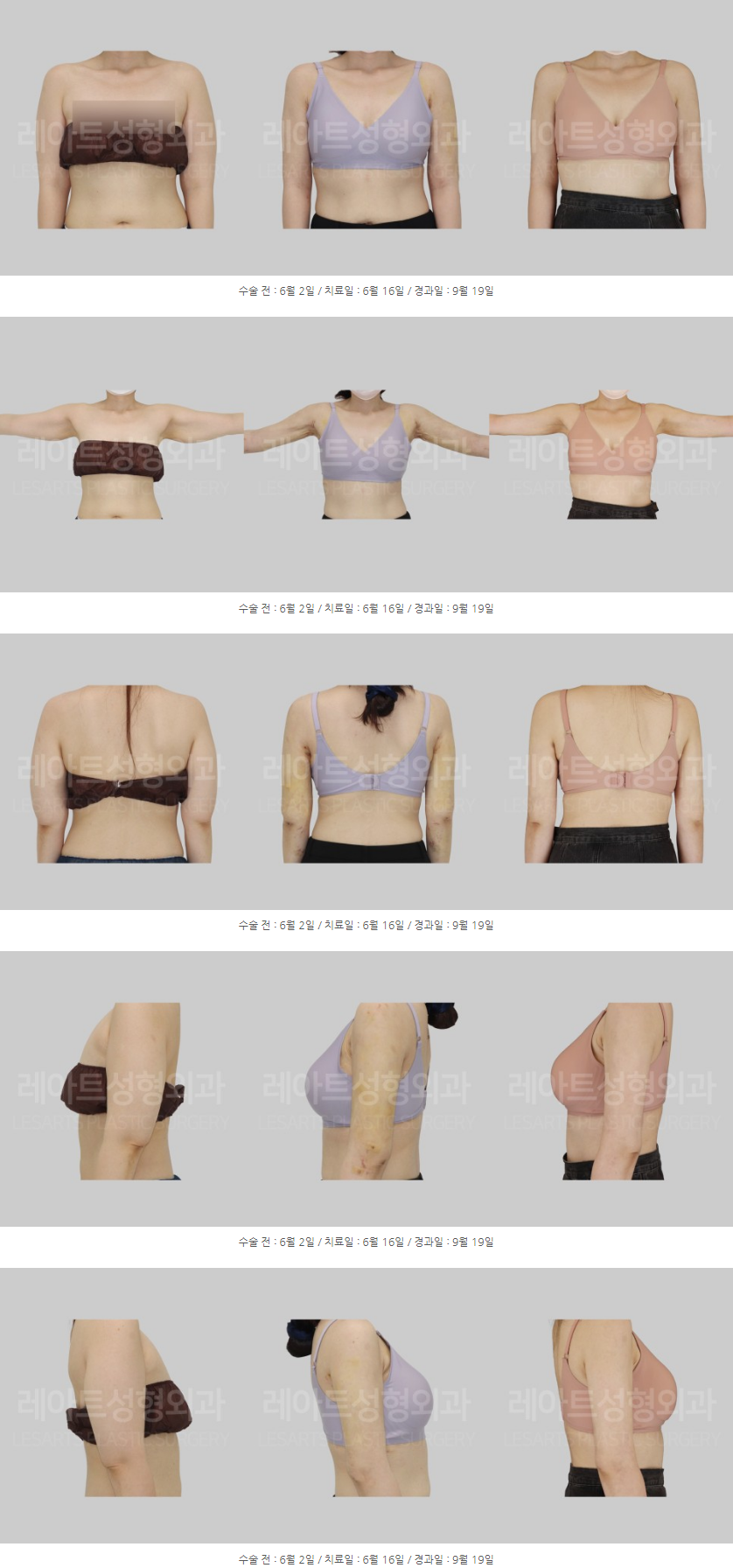
The upper arms are one of the most stubborn areas
for fat accumulation, and at the same time,
one of the hardest to slim down with general methods.
Starvation-based diets won’t
specifically remove upper arm fat first,
and they often lead to loss of muscle and moisture,
not actual fat—posing health and skin elasticity risks.
While exercise may help,
improper training can actually make the arms look bulkier
due to increased muscle mass.
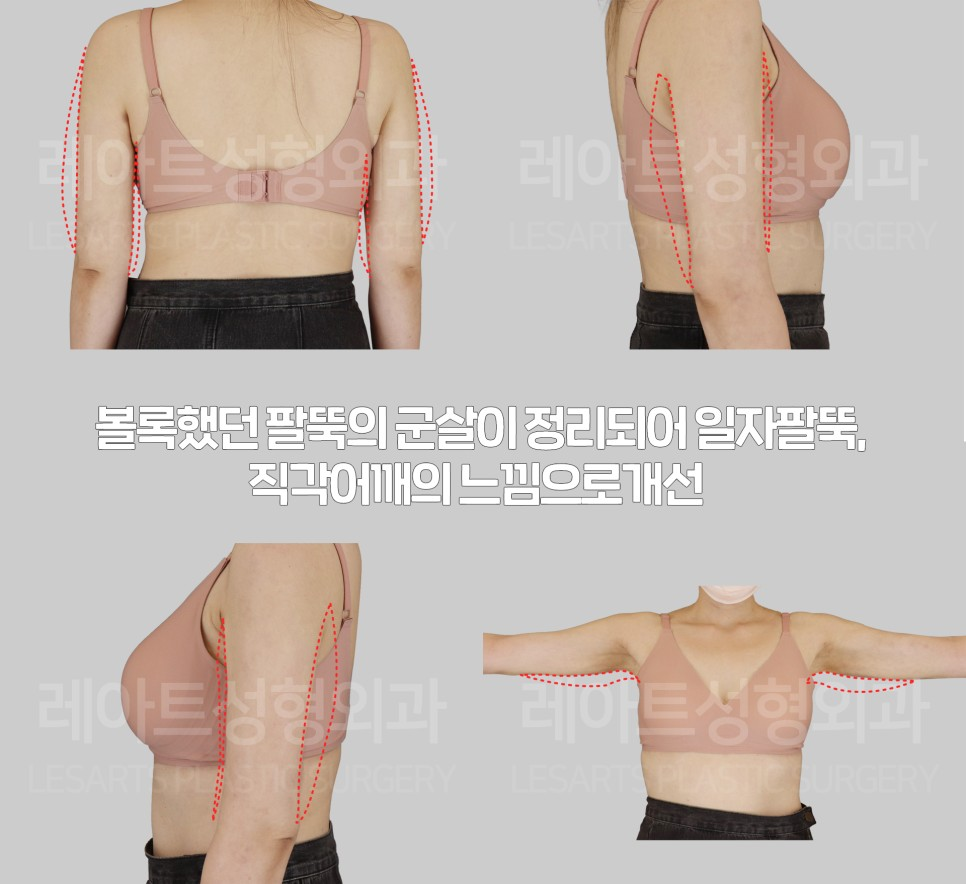
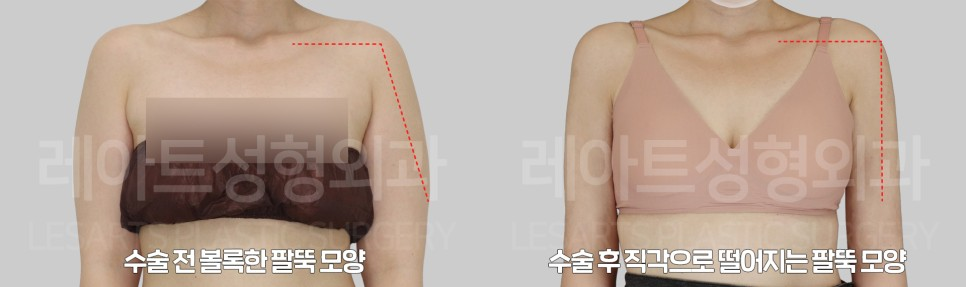
Most patients visiting for arm liposuction
hope to achieve slim, straight upper arms
and right-angle shoulders.
Of course, it would be ideal if everyone could achieve
the exact same sculpted results.
But surgery must be carefully planned
based on the patient’s individual body structure,
muscle volume, and skin elasticity.
This patient had significantly reduced skin elasticity,
which is a key factor in determining
how smooth the arms will appear after surgery.
When skin lacks firmness,
it can lead to loose or wrinkled areas post-op.
While this may improve over time,
achieving completely smooth arms
can be difficult in such cases.
To minimize sagging,
we tailored the liposuction plan
to help the skin retract more effectively.
Although the patient had a good amount of fat,
the poor elasticity made this a challenging case.
Her goal was to achieve slimmer arms,
and even moderate improvement would be satisfactory.
We expected clear improvement after surgery
and performed the procedure with strategies
to prevent visible sagging as much as possible.
However, we advised the patient that
postoperative care and follow-up
would be important for optimal results.
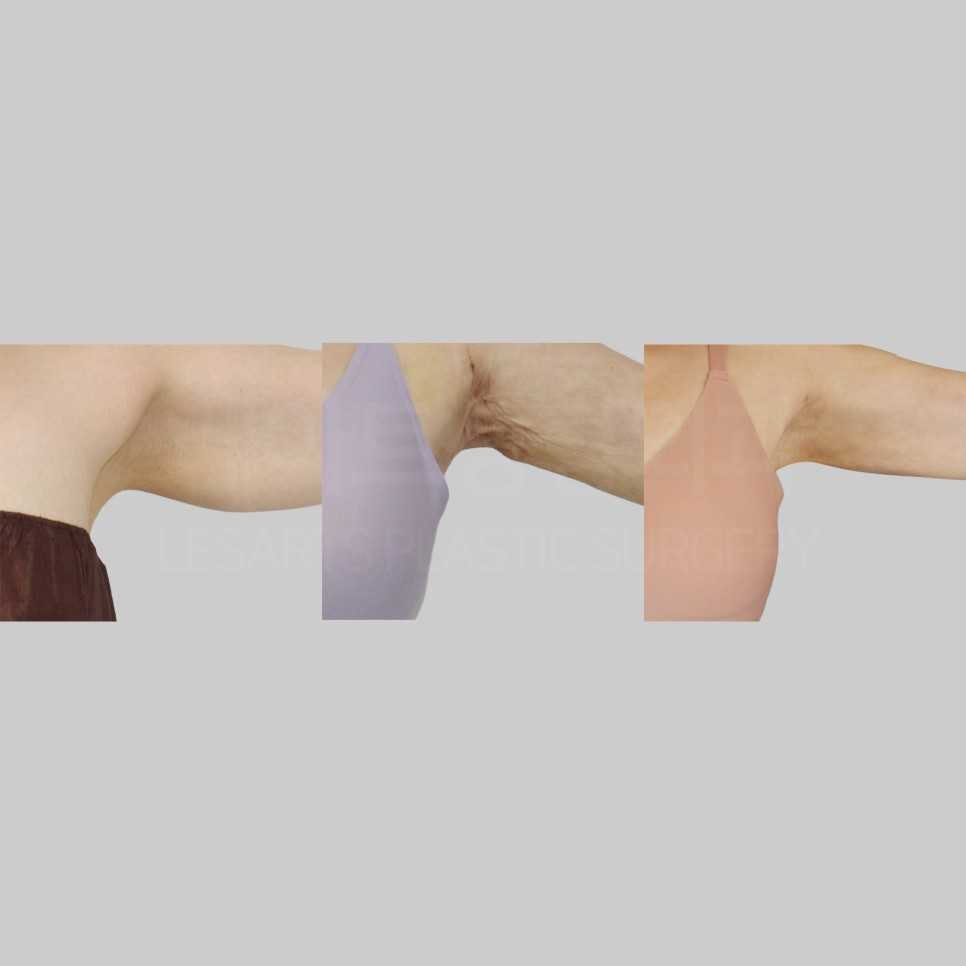
As mentioned earlier,
this patient had a good amount of arm fat,
but also severely reduced skin elasticity.
At 2 weeks post-op,
visible wrinkling near the armpit area occurred
due to excess skin and reduced tension.
When examining the close-up of the underarm folds,
you can clearly see pigmentation,
wrinkling, and bio-bond formation
where fat had been removed and skin remained loose.
For home care, we emphasized the importance of
consistently wearing compression garments
and practicing intensive moisturizing
to help improve pigmentation.
In addition, we performed radiofrequency treatments
at the clinic to manage swelling and bio-bond buildup.
By the 3-month follow-up,
the underarm wrinkling and bio-bond issues
had significantly improved,
and pigmentation also appeared to be fading.
While arm liposuction can be done on its own,
if there is a significant amount of fat in surrounding areas,
it is often performed in combination
to create a more balanced and synergistic result.
As mentioned earlier,
this patient had a good volume of fat,
not only in the upper arms
but also in the accessory breast area
and armpit region.
So, we performed simultaneous liposuction
on all these areas for optimal results.
Despite the patient’s low skin elasticity,
her 3-month recovery showed visible improvement.
In most cases, however,
it is ideal to wait around 6 months
to assess final skin recovery and texture.
Recovery time may vary depending on the case,
but most postoperative symptoms improve
significantly with time.
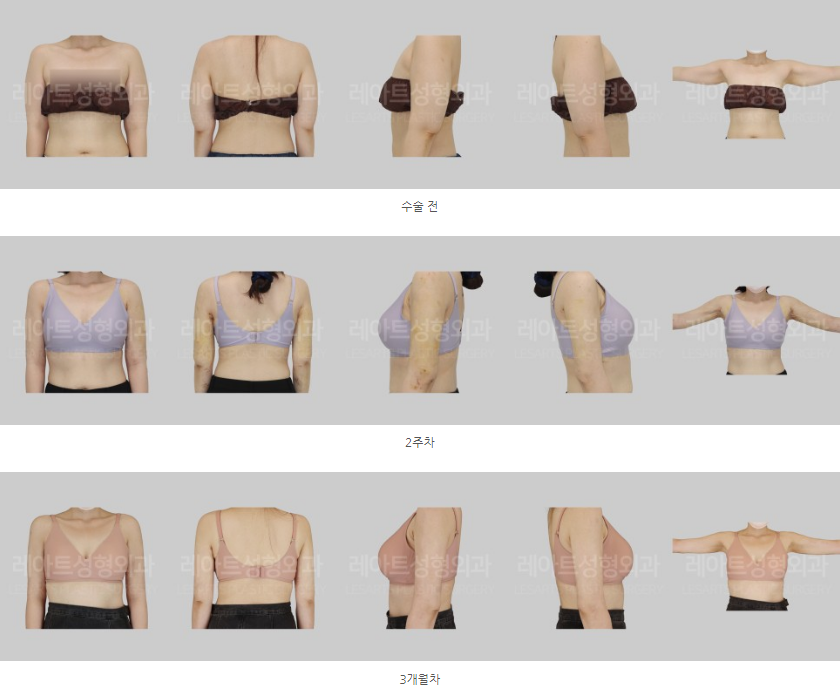
The patient had a body type of
158cm / 56.7kg / BMI 22.7,
and a total of 1,750cc of fat
was removed from the arms,
accessory breast area,
and armpit region.
#Liposuction
#Arm #Etc
#Straight Arm #BMIbelow30(Arm) #Axilla #Accessory breast


Cases finding
similar to my profile
Customer Diagnostics


Select the surgery and
area you are interestedto see real
before andafter changes.


we
make you,
the art
Clinic hours
MON - FRI
10 am – 7pm
SAT
10 am – 4pm
Holiday
SUN, HOLIDAY
Location
Lesarts Moon Clinic Tower 4-5F, 40, Nonhyeon-ro 168-gil,
Gangnam-gu, Seoul, Republic of Korea

Medical institution name Lesarts Plastic Surgery
Address Lesarts Moon Clinic Tower 4-5F, 40, Nonhyeon-ro 168-gil, Gangnam-gu, Seoul, Republic of Korea
Representative Moon sung jun
