




Online Consultation
Please accurately enter the information below.
Quick Cost Consultation
Quick Consultation & Reservation
Cases finding
similar to my profile






Cases finding
similar to my profile
Customer Diagnostics
How to Fix Banana Fold with Thigh Liposuction
2023-01-17
158cm / 62.7kg / bmi 25.1
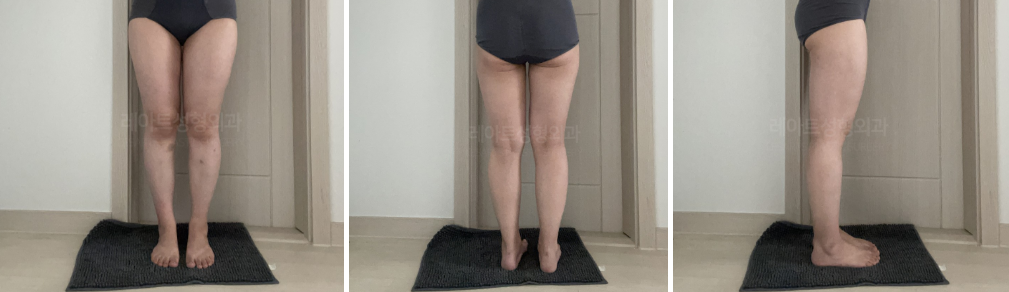
Before Surgery
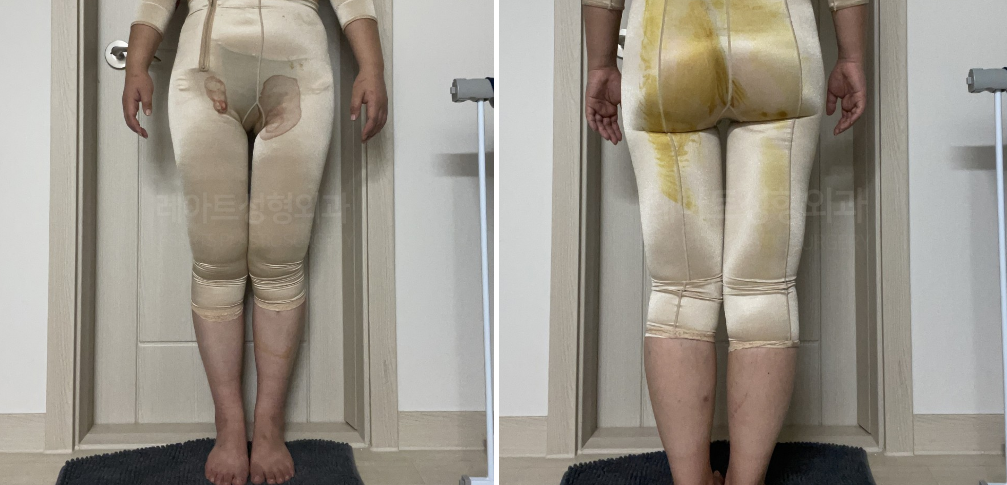
Post-op Day 1
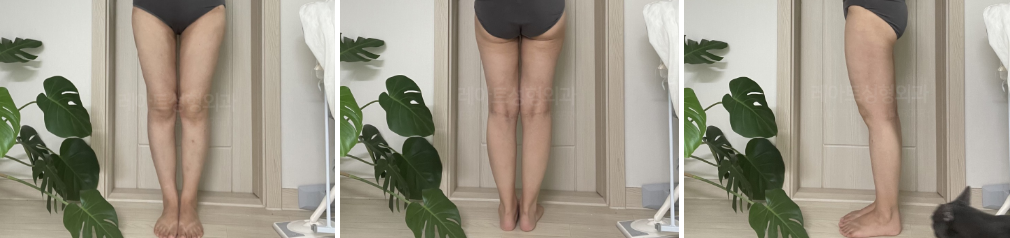
Post-op Day 60
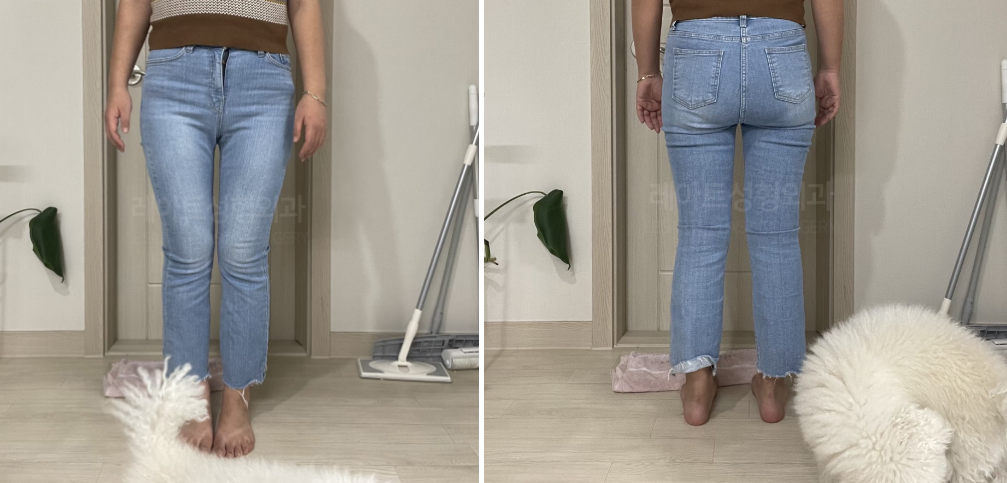
Post-op Day 100
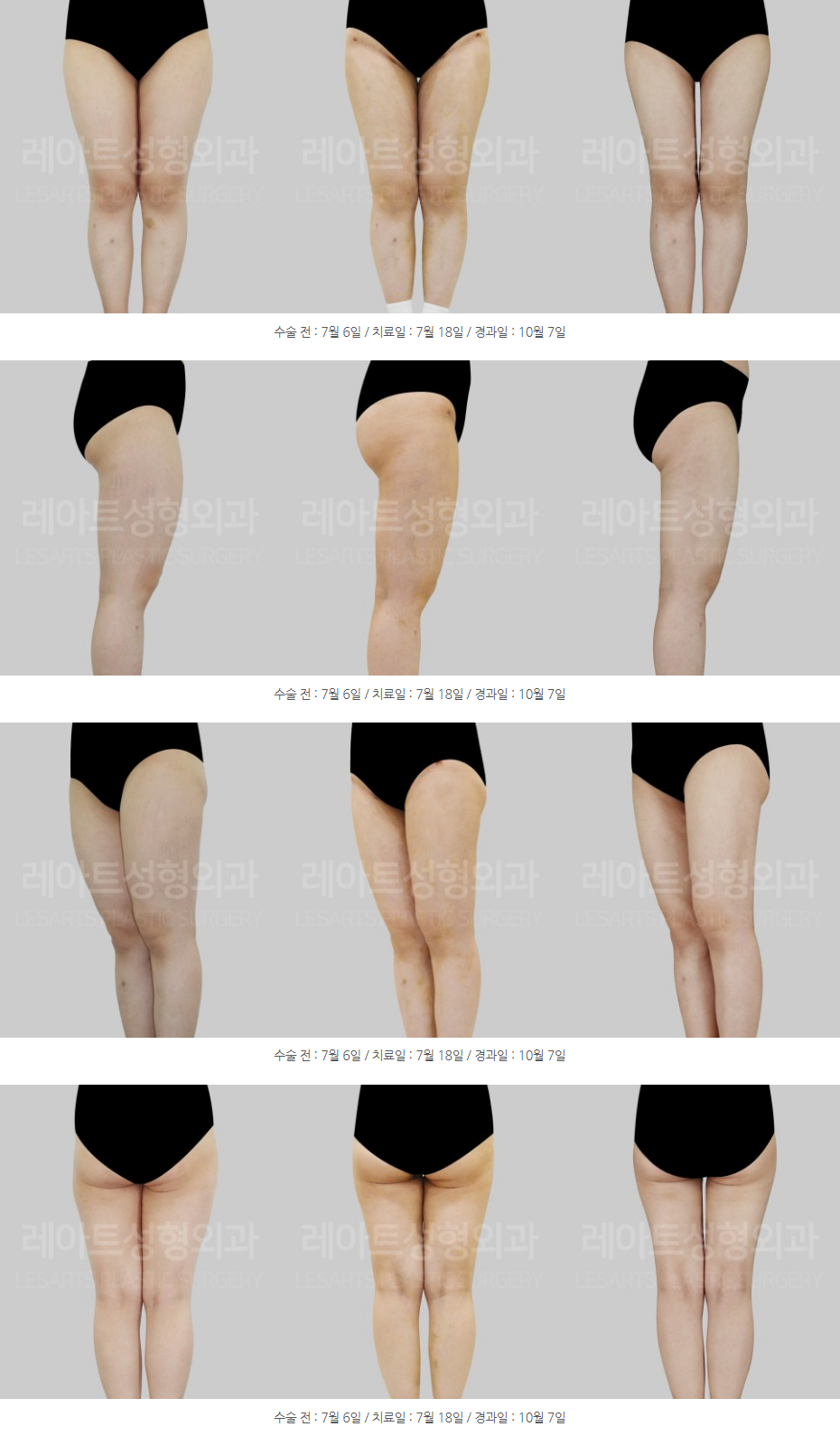
Thigh liposuction is often chosen to remove stubborn fat
that doesn’t respond to simple management like diet or exercise.
One of the most important factors in deciding on thigh liposuction
is the patient’s skin elasticity.
Even if you have low muscle mass and a significant amount of fat,
it’s difficult to perform aggressive liposuction
if the skin lacks the elasticity to support the change.
This often leads to the formation of a banana fold.
Banana folds appear under the buttocks when the buttocks are too heavy,
when there is prolonged poor posture,
or when liposuction is performed improperly.
In this case, the patient was undergoing their first surgery,
but already had multiple creases under the buttocks
and an uneven, bumpy fat distribution in the lower buttock area.
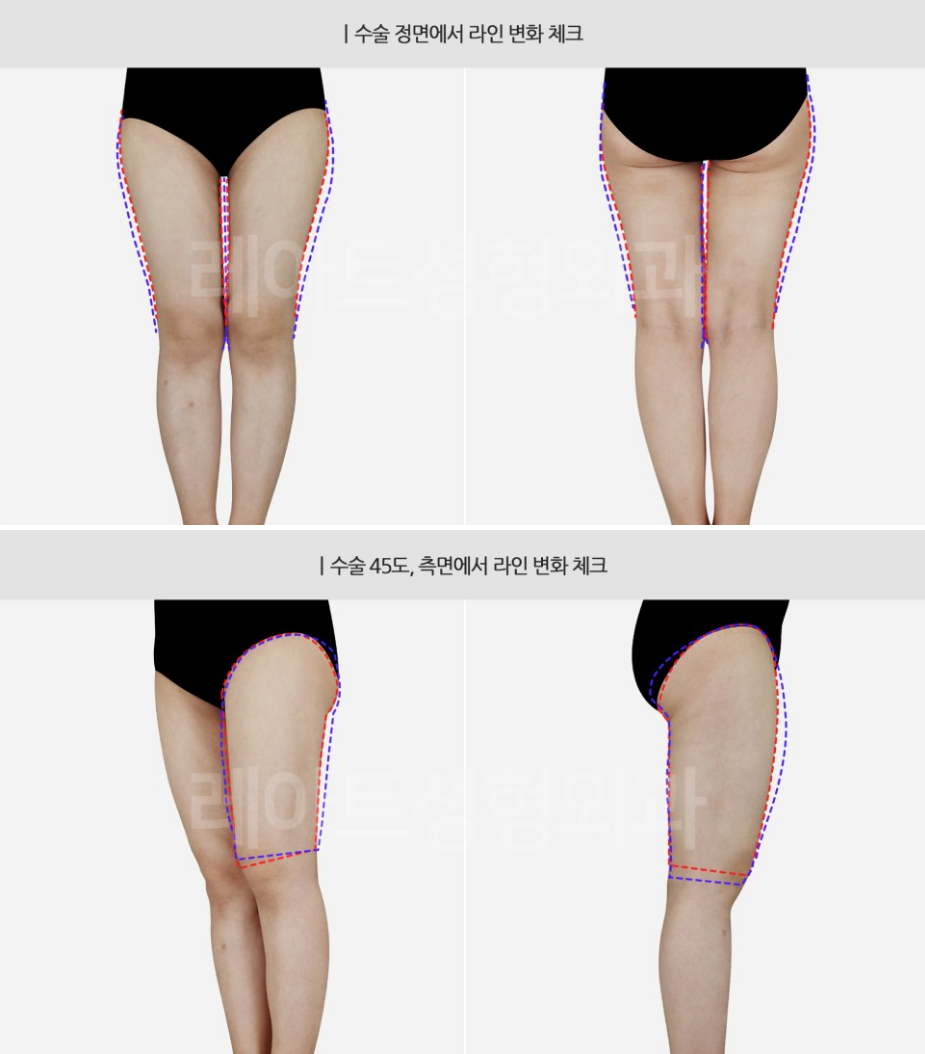
Although the patient had not undergone full liposuction previously,
they had received injectable treatments on the inner thighs.
Despite the treatment, residual fat remained and
the line had become uneven and irregular.
We explained that we would make every effort to correct the area,
but due to preexisting adhesions,
it might be difficult to achieve a perfectly smooth contour after surgery.
As for the front of the thighs,
the patient had both fat and large muscle mass,
so instead of creating a completely slim look,
we planned a procedure focused on volume reduction
and contour refinement.
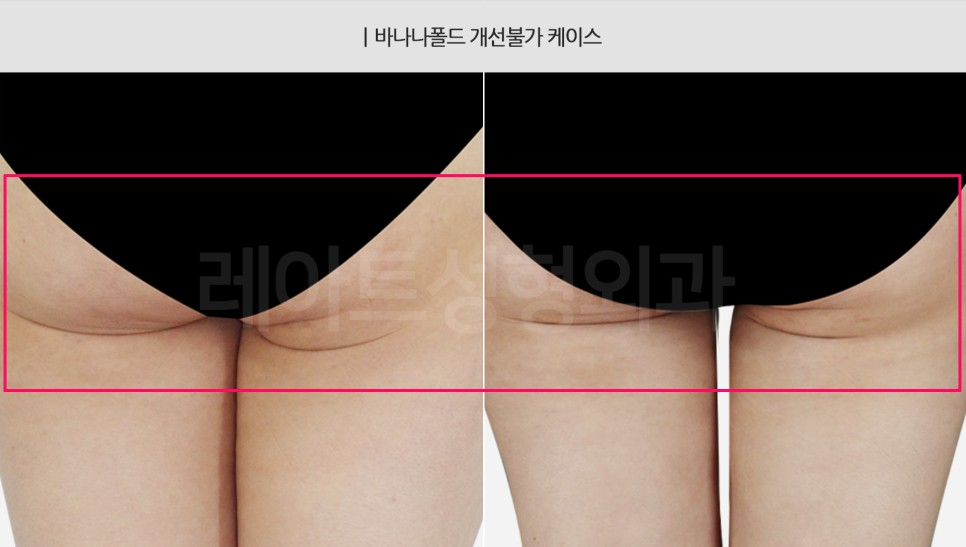
One important point to focus on in this case is the banana fold.
Even before surgery, this patient already had
multiple creases and sagging under the buttocks.
When a banana fold has been present for a long time,
it is impossible to completely eliminate it
through liposuction or fat grafting alone.
Depending on the patient’s needs,
some choose to undergo fat grafting beneath the buttocks
to help reduce the severity of the fold.
However, in this case,
the patient was fully aware of the existing creases
and did not want additional grafting.
To prevent further sagging,
we preserved as much fat as possible beneath the buttocks during surgery.
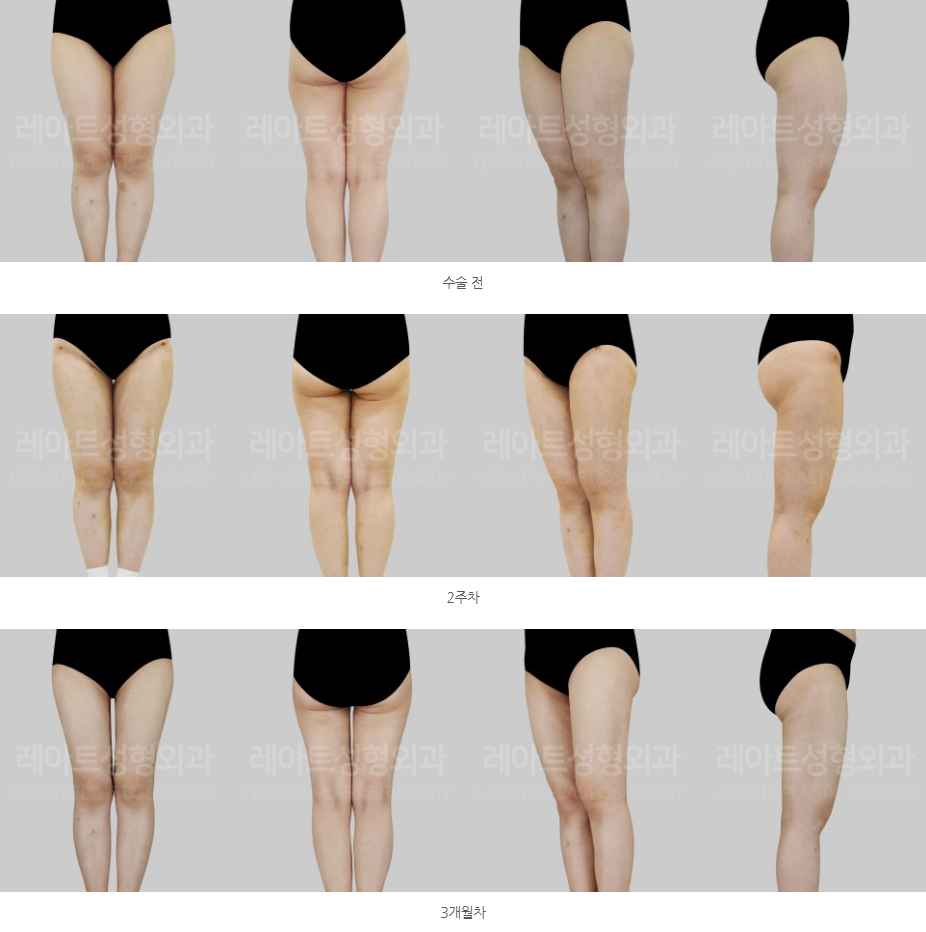
The patient understood that the liposuction
would focus on refining the leg contour,
but she hoped for a “skinny bone-leg” look if possible.
However, due to adhesions from previous injection treatments
and her muscular body type,
we chose a safe approach without over-suctioning,
while aiming for maximum line refinement.
In severe banana fold cases like this,
there are two surgical options:
1.Fat grafting under the buttocks to slightly fill and smooth the area.
2.Preserving fat under the buttocks to avoid further sagging.
This patient opted for the second method,
leaving fat under the buttocks to reduce the risk of sagging
without additional grafting.
These decisions should always be made
after a thorough consultation with a qualified surgeon,
who can explain both realistic outcomes and surgical strategies.
This patient was 158cm and 62.7kg,
with a BMI of 25.1,
and had suffered from lower body obesity since childhood.
A total of approximately 3900cc of fat was removed
through thigh liposuction in this case.
#Liposuction
#Thigh
#Muscle type #Thigh Gap #Lateral thigh #BMIbelow30(thigh)


Cases finding
similar to my profile
Customer Diagnostics


Select the surgery and
area you are interestedto see real
before andafter changes.


we
make you,
the art
Clinic hours
MON - FRI
10 am – 7pm
SAT
10 am – 4pm
Holiday
SUN, HOLIDAY
Location
Lesarts Moon Clinic Tower 4-5F, 40, Nonhyeon-ro 168-gil,
Gangnam-gu, Seoul, Republic of Korea

Medical institution name Lesarts Plastic Surgery
Address Lesarts Moon Clinic Tower 4-5F, 40, Nonhyeon-ro 168-gil, Gangnam-gu, Seoul, Republic of Korea
Representative Moon sung jun
