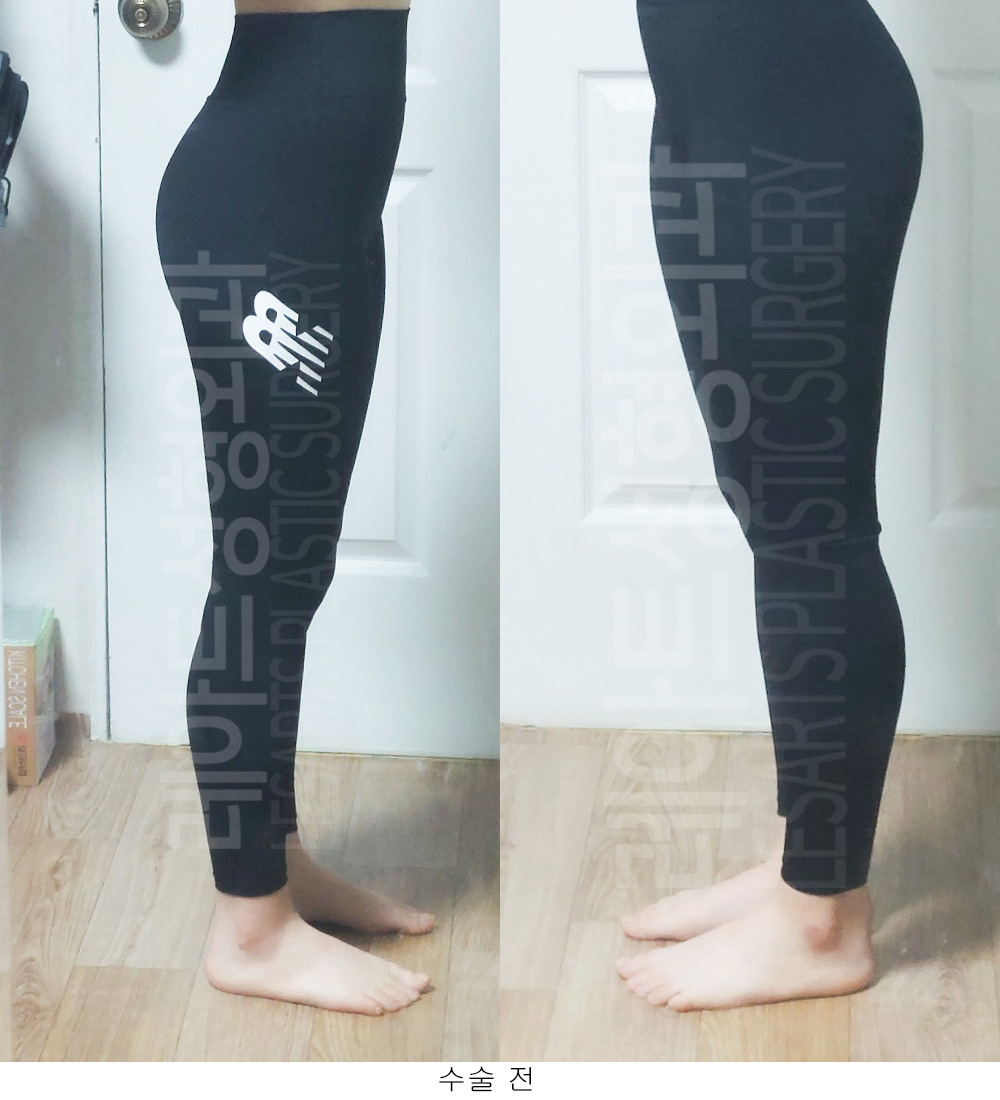
This patient was 162 cm tall,
weighed 53.4 kg, and had a BMI of 20.3.
She had high muscle mass and good skin elasticity,
as a college student with a regular fitness routine.
Although her muscle-to-fat ratio was high,
she still had noticeable fat accumulation,
especially around the saddlebag area,
where we expected dramatic improvement
through targeted liposuction.
Because her upper thighs held most of the fat,
we recommended including the area beneath the buttocks
for a more comprehensive contour.
When fat is removed from the thighs,
the gluteal area may lose structural support,
and if the buttocks remain heavy,
this can lead to deeper or longer fold lines,
which can create a visually sagging effect.
To prevent this, we recommended combining
thigh and infragluteal liposuction,
then designed the procedure
by analyzing her hip curve, calves, and muscle structure.
Since her leg bones were naturally straight,
we expected a high level of satisfaction post-surgery.
The projected fat removal volume
for her thigh liposuction was approximately 4,000cc.

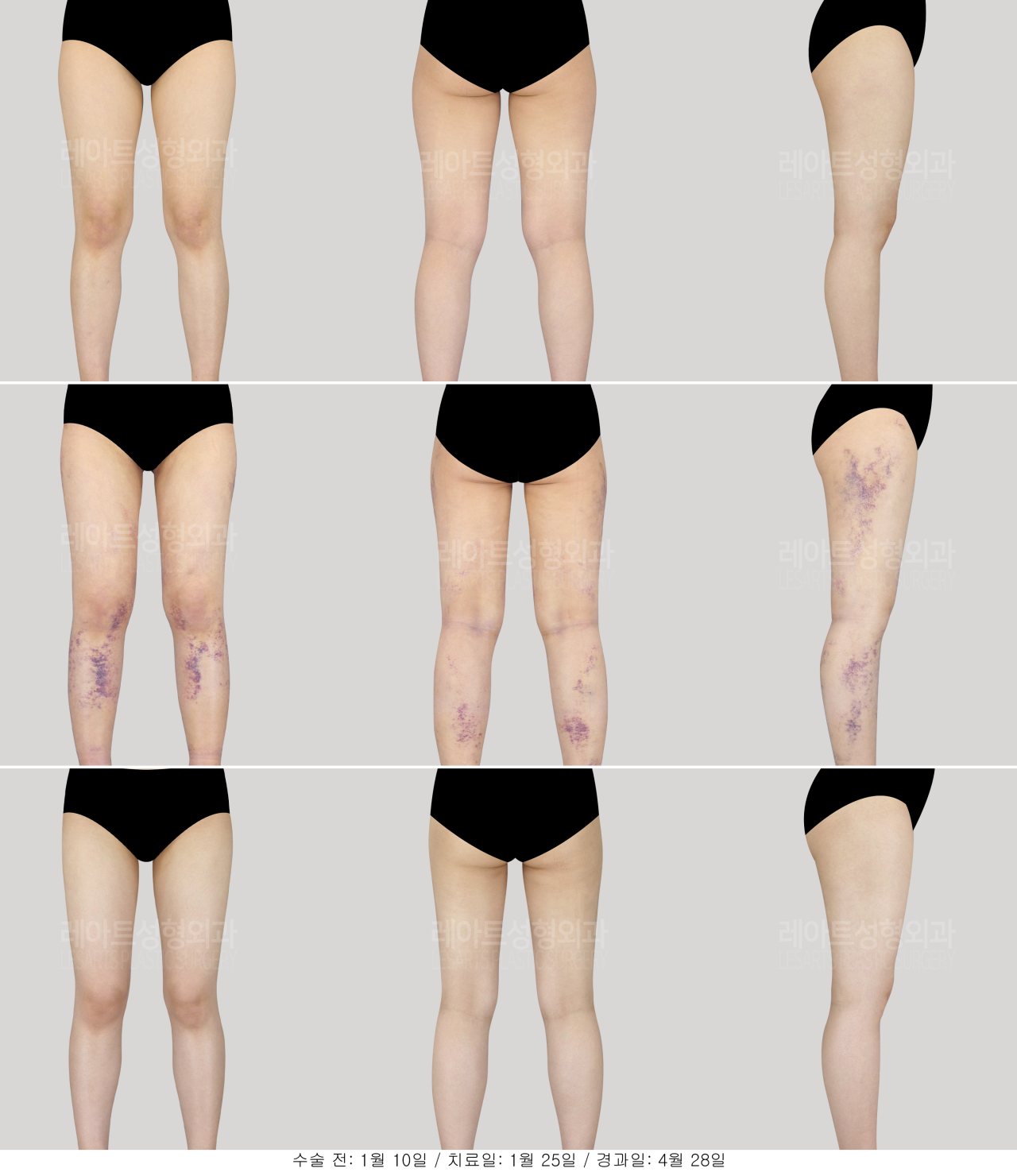
Before thigh liposuction,
this patient had visible fat deposits
in the saddlebag area and the upper inner thighs,
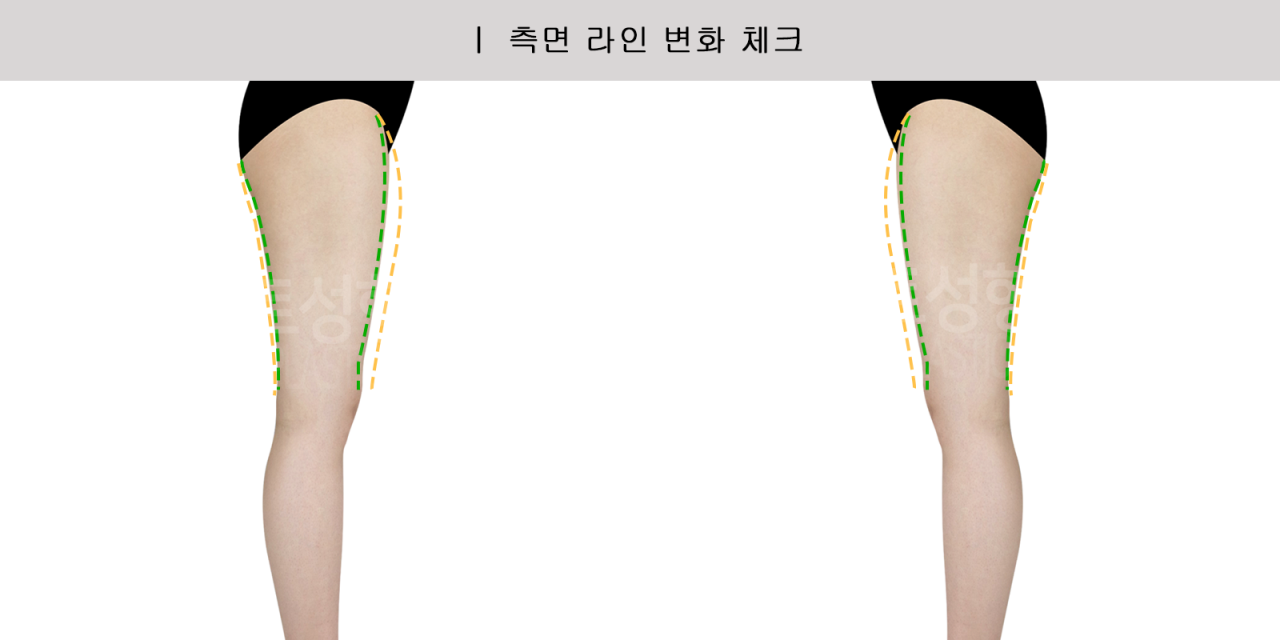
which disrupted the vertical leg line.
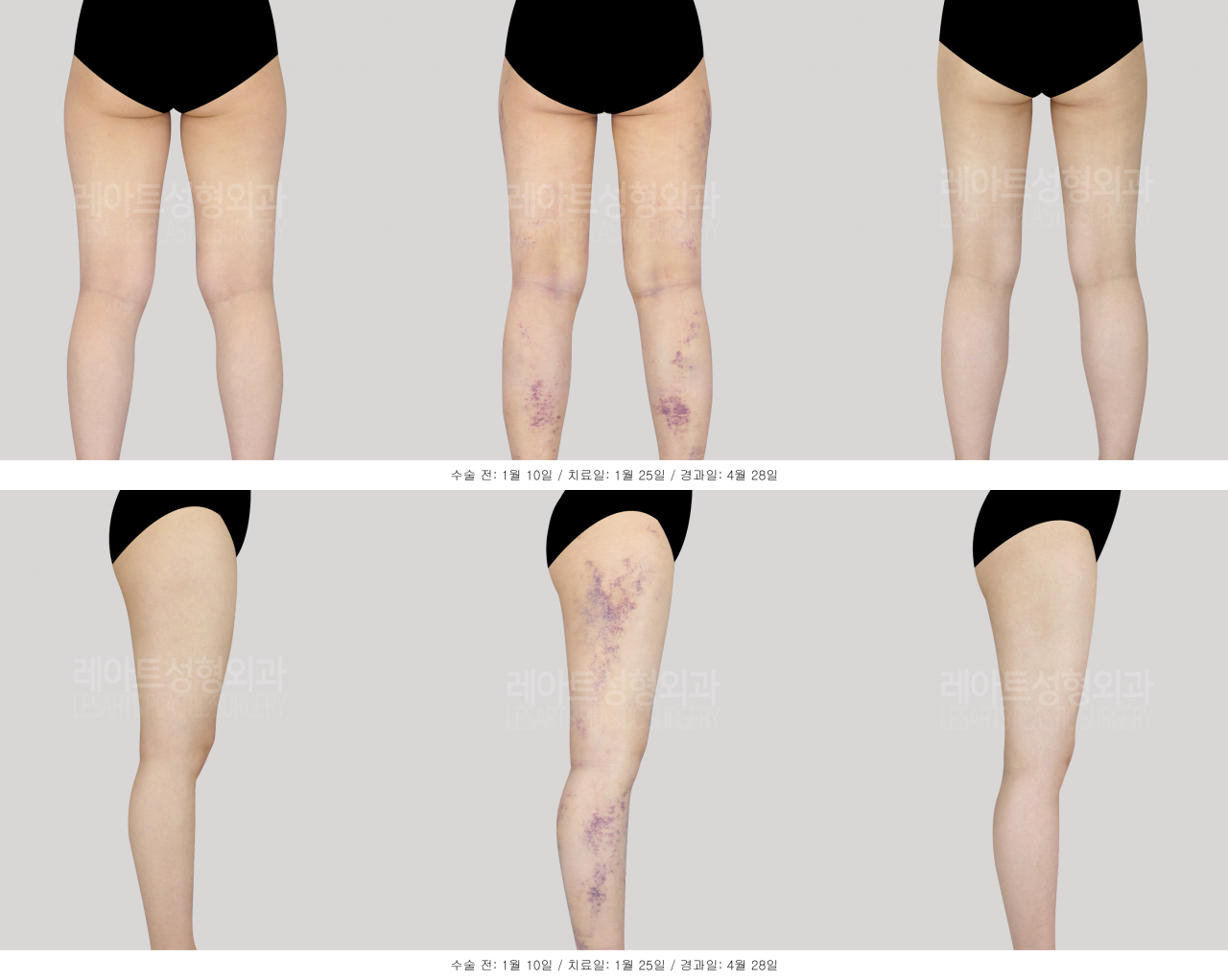
At 15 days post-op,
swelling and bruising had moved down
to the lower legs due to gravity,
even though the calves weren’t treated.
Still, a noticeable reduction in fat volume
was already seen in the saddle zone
and inner thigh areas.
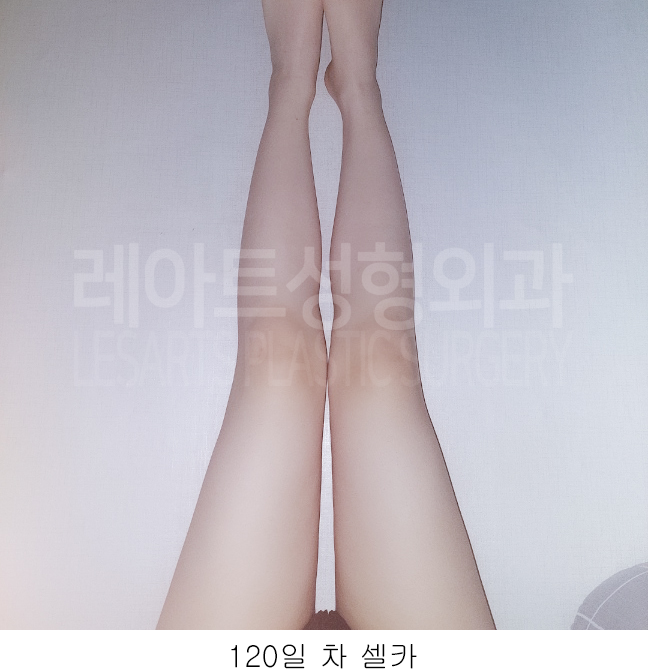
By the 4-month mark,
the swelling and discoloration had mostly resolved,
and her leg shape had become much closer to the target line.
With the saddlebag fat removed,
her legs now appeared longer and straighter,
enhancing her overall lower body silhouette.
Let’s take a look at this patient’s
real experience after thigh liposuction.
She mentioned that even on the day of surgery,
she checked her thighs at home
and could already see reduced volume.
She jokingly said she regretted
spending so much time doing personal training
just to slim her thighs—
because the result from liposuction was so immediate.
She told us that getting thigh liposuction
was probably the best decision she made this year.
At her 2-month follow-up,
when we explained that her legs would continue to refine
and become even straighter as swelling resolved,
she asked in disbelief,
“Can I really get this slim in just a few months?”
At 4 months post-op,
her bruising and swelling had fully resolved,
and she was now able to fit into XS-size pants.
She said she was thrilled to be able to return
to her regular workouts with slimmer, straighter legs.
This patient was a college student
who actively practiced hapkido,
yet struggled to slim down her thighs.
Despite taking additional personal training sessions,
her thigh volume did not improve,
which led her to consider thigh liposuction
as a more effective solution.
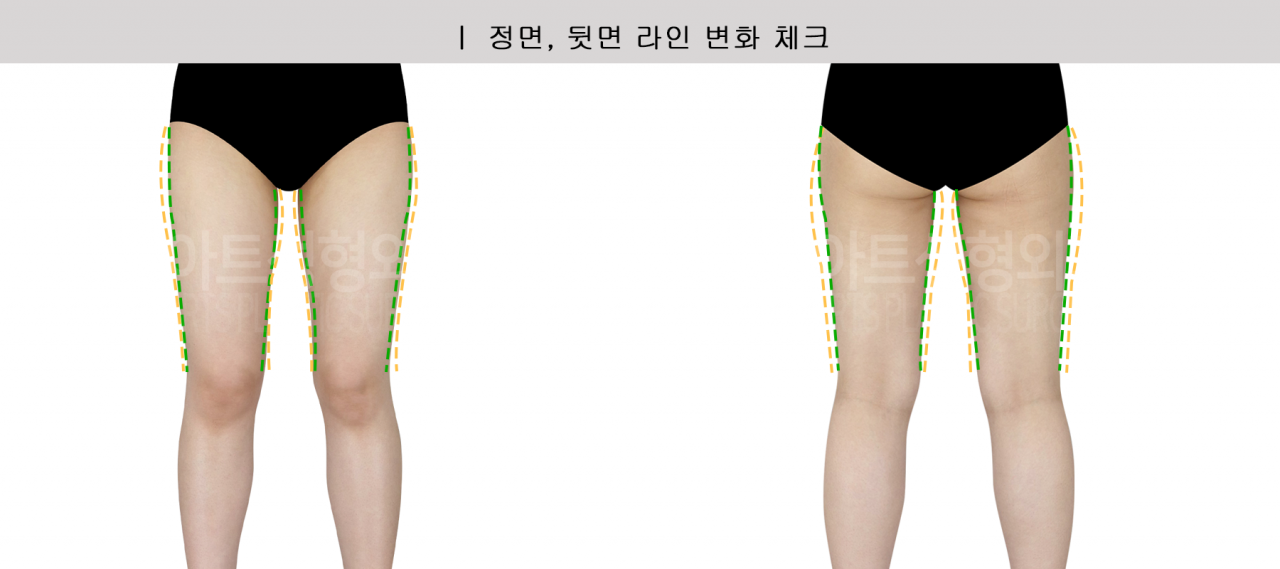
Through detailed surgical planning,
we designed a procedure to target
her areas of concern and create a straight leg line.
As a result, she was highly satisfied
with the transformation and contour improvement.
Before starting a diet,
it's helpful to know whether you have
a muscle-dominant body type or a fat-dominant body type.
Here’s a simple way to check it yourself:
Relax your arms or thighs completely
and stand in a neutral posture.
Gently feel the thickness of the soft tissue.
Then, contract your muscles slightly
or hold a firm position,
and check the thickness again.
– If there is little difference in thickness,
it’s likely a fat-dominant body type.
– If the difference is significant,
you may have a muscle-dominant body type.
Please keep in mind:
This is only a self-check method,
and a precise diagnosis should be made
by a qualified medical professional.
If you are preparing for a diet,
understanding your body composition
can help you make better choices
and set more realistic goals.

If you’ve already tried dieting
after identifying your body type,
but haven’t seen visible changes,
you may want to consider thigh liposuction.
Unlike dieting, liposuction removes fat cells directly,
which means even a single procedure
can bring you much closer to your ideal body line.
Since liposuction is still a surgical procedure,
it’s important to choose a clinic with
experienced medical professionals,
proven body contouring expertise,
and a comprehensive care system.
At Lesarts Plastic Surgery,
we support our patients every step of the way—
from consultation to surgery to post-op care—
with responsibility and precision.