Many people struggle
with waistlines that don’t return
even long after childbirth.
When the skin folds repeatedly,
and the waist and pelvis
don’t connect smoothly,
it may indicate structural changes
in the abdominal area—
not just a matter of weight.
If the rectus abdominis muscles have separated,
or skin elasticity has diminished,
the abdominal center collapses,
leading to visible folds and sagging.
And if volume in the pelvic area is lacking,
the curve from waist to pelvis breaks,
making the silhouette look flat
and featureless overall.
In today’s post,
we’ll walk through a case
where these structural issues occurred together
and explain how body contouring surgery
brought about visible transformation
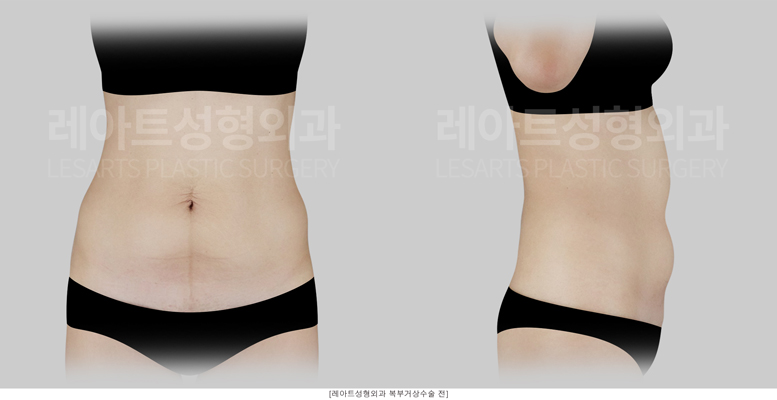
This patient is a woman in her 40s
who had two vaginal deliveries
and maintained a stable weight over time.
However, she experienced folding skin
in the lower abdomen,
and from the front,
the waistline appeared uneven
as it flowed down to the pelvic area—
creating a sunken, unbalanced shape.
She also expressed dissatisfaction
with how her clothing fit due to hip dips
and the influence on her buttock lines.
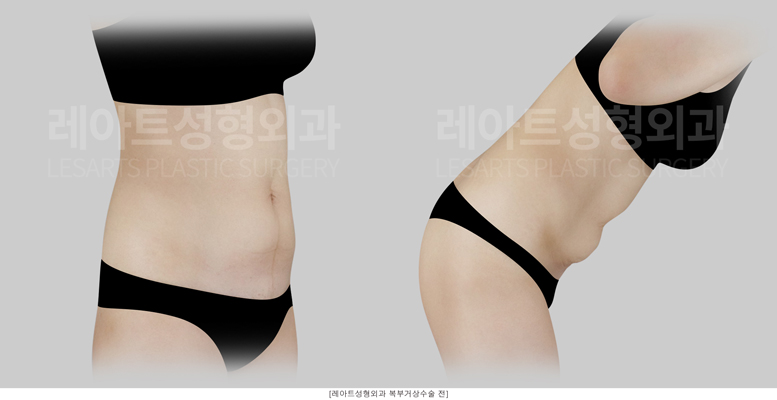
From the side view,
sagging lower belly skin was even more prominent.
After realizing that exercise or diet alone
couldn’t resolve this,
she began considering tummy tuck surgery
and pelvic fat grafting together.
Before surgery,
her abdominal fat volume was not excessive.
However, the skin around the navel
sagged and folded,
especially when bending forward,
with deep creases forming—
despite not having much actual fat.
This sagging volume
affected the waistline significantly.
In addition, she had diastasis recti,
causing the abdominal center
to push forward slightly.
Upon palpation,
a noticeable difference in elasticity
between upper and lower abdomen was observed.
As she herself noted,
the waistline lacked definition,
and sunken pelvic lines
made the waist-to-hip transition unnatural,
leading to a flat and uneven silhouette.
To address these combined concerns,
we proposed the following surgical plan:
1. S-type Tummy Tuck with Rectus Diastasis Repair
We planned an S-type abdominoplasty
to tighten sagging lower abdominal skin
and correct the muscle separation.
A navel floating technique was also used
to repair the upper abdominal diastasis.
2. Abdominal & Thigh Liposuction
To collect fat for grafting and contour the abdomen,
liposuction was performed
on the entire abdomen, inner thighs, and saddlebags.
3. Pelvic Fat Grafting (Hip Dips)
Some of the fat collected
was injected into the sunken hip dip areas,
to enhance the curve
from waist to pelvis.
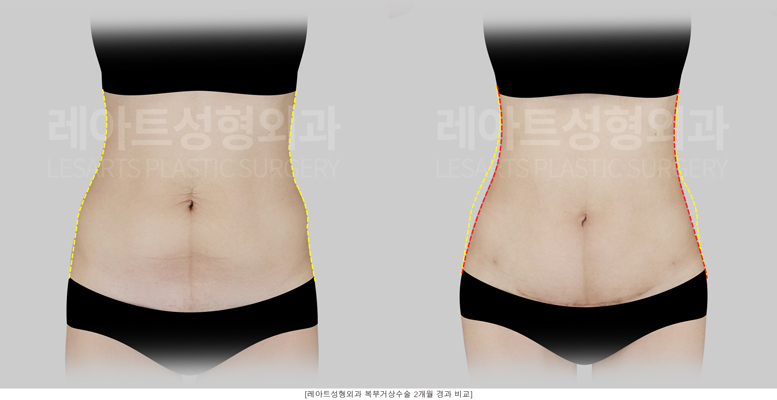
Let’s look at the post-op results
2 months after surgery.
Before surgery,
even with little fat,
her skin sagged under the navel
and the abdominal center had collapsed.
The waist lacked definition,
and pelvic dips made her shape
look flat and underdefined.
After surgery, the tummy tuck
corrected the loose skin,
and the upper rectus diastasis was repaired,
firming the center and smoothing the flow
from waist to pelvis with more dimension.
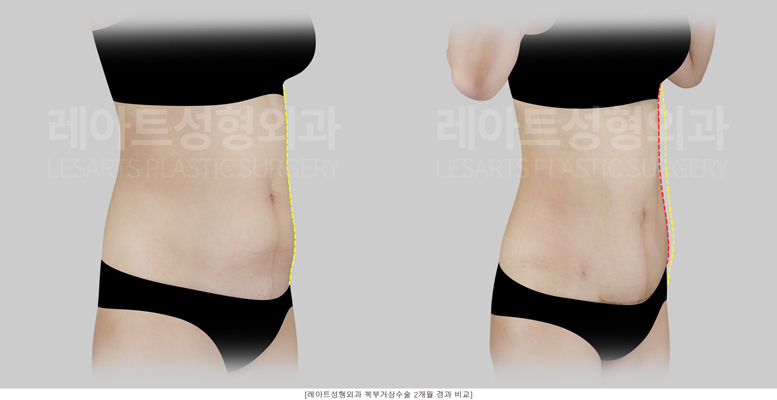
In the oblique view,
her abdomen previously appeared droopy
with weak side contours.
Post-op, the rectus muscles were repaired,
the lower skin lifted,
and the waist curves became more defined
and visible.
The improved connection from abdomen to pelvis
made her side profile significantly more elegant
than from the front view alone.
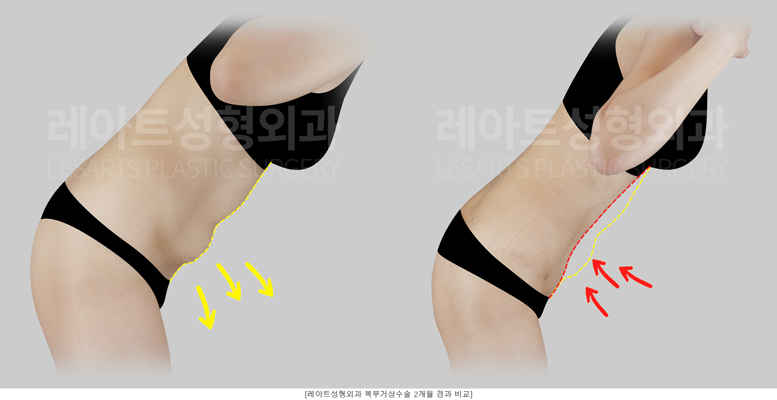
In the bent-over posture,
her belly previously showed
2 or more folds under gravity,
with the skin pulling downward.
After surgery, both the sagging skin
and muscle separation were corrected,
resolving those issues.
In her case,
the rectus diastasis extended
all the way to the upper abdomen,
and the lower belly skin folds
caused the abdominal center to collapse.
Combined with pelvic volume loss,
this resulted in upper body imbalance.
With the help of a tummy tuck,
muscle repair,
liposuction, and pelvic fat grafting,
we were able to not only
address her structural issues
but also enhance body balance.
Her recovery progressed well overall.
Scars blended with skin tone,
and the abdominal tissues softened steadily
as they settled into position.