After pregnancy and childbirth,
general condition may recover with time—
but loose belly skin often doesn’t return
as easily as expected.
This loss of elasticity tends to persist
or worsen over time,
leading to discomfort in daily life.
No matter how much effort is made,
body changes caused by pregnancy
and childbirth—skin looseness,
muscle separation, shape distortion—
are difficult to reverse
without surgical help.
Tummy tuck surgery (abdominoplasty)
can be one of the few effective ways
to restore body shape
by improving elasticity and skin tightness.
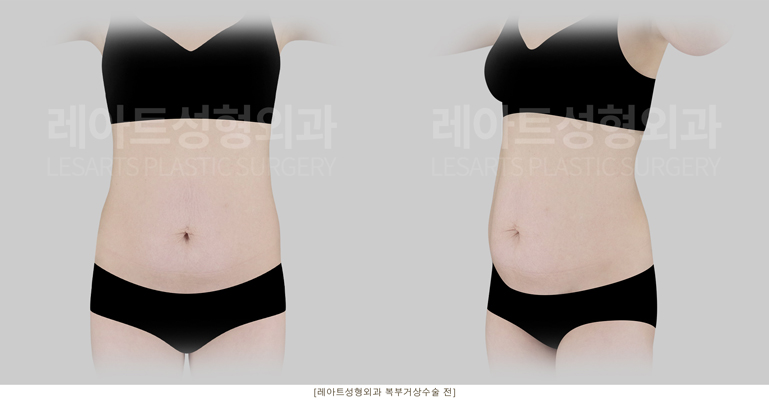
This patient was in her 40s
and had experienced two natural deliveries.
She had maintained her weight well,
but sagging skin in the lower belly
caused folds to form.
Additionally, the central abdomen
appeared pushed outward
rather than simply gaining fat,
causing her great stress when dressing.
After meals,
she felt her belly protruded even more—
making pants feel tight and
distorting her desired silhouette.
Recognizing that this issue
was structural, not just fat-related,
she visited our clinic
to receive a proper diagnosis—
including evaluation for diastasis recti.

Upon consultation,
we found that her abdominal skin
had lost significant elasticity—
and stretch marks were widely visible
on the upper belly.
Also, her abdominal muscles
had separated significantly,
causing the entire belly
to bulge forward.
Due to skin sagging,
her navel had shifted lower,
throwing off body proportions.
Both the external sagging
and internal wall bulge
needed to be addressed together.
Thus, we planned the following:
1. M-Type Tummy Tuck
To address skin sagging and stretch marks
from the upper abdomen,
we chose M-type abdominoplasty
for strong lifting and reshaping.
We reconstructed the belly button position,
which had dropped due to sagging,
to restore ideal midline balance.
Since her abdominal muscles
had separated significantly,
we used the Triple Lock method
to suture the rectus muscles,
correcting the bulge and
restoring a slimmer waistline.
2. Abdominal Liposuction
Although she didn’t have much fat overall,
we added waist and flank liposuction
to refine side lines
and enhance contouring.
Let’s now examine
her waistline transformation
from 1 to 3 months post-op.
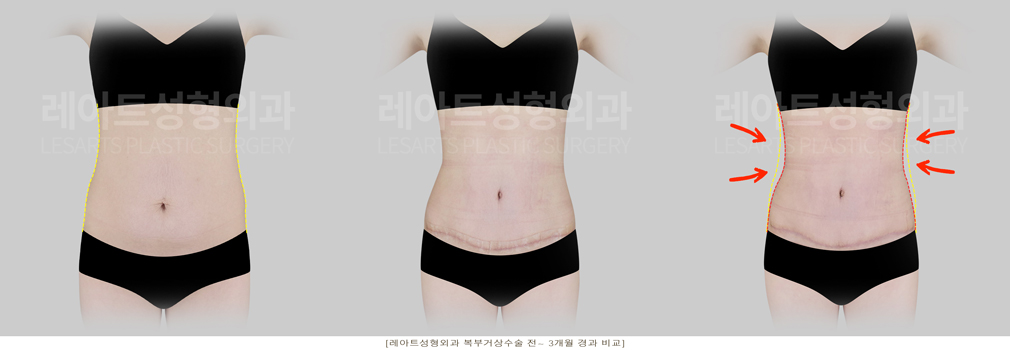
Before surgery,
the lower belly skin drooped and folded,
and weight concentrated downward,
creating a heavy look.
By 1 month post-op,
the abdomen had lifted
and the navel realignment
helped define the waistline.
As swelling reduced further,
the belly became noticeably flatter.
The formerly protruding abdominal wall
was now corrected,
and the lateral waist transitioned smoothly
into a firmer silhouette.
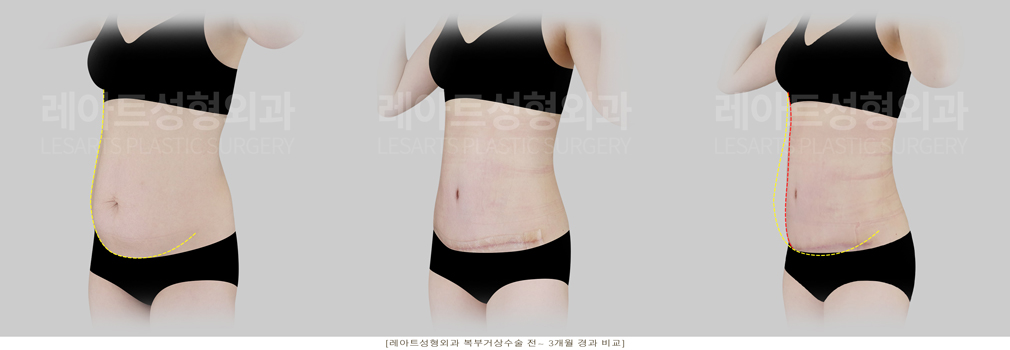
In the semi-side view before surgery,
the abdomen appeared heavy
with both a forward bulge
and skin sagging.
Post-op, after muscle correction,
the midsection was pulled inward,
and the lower belly fold disappeared—
reducing heaviness and improving shape.
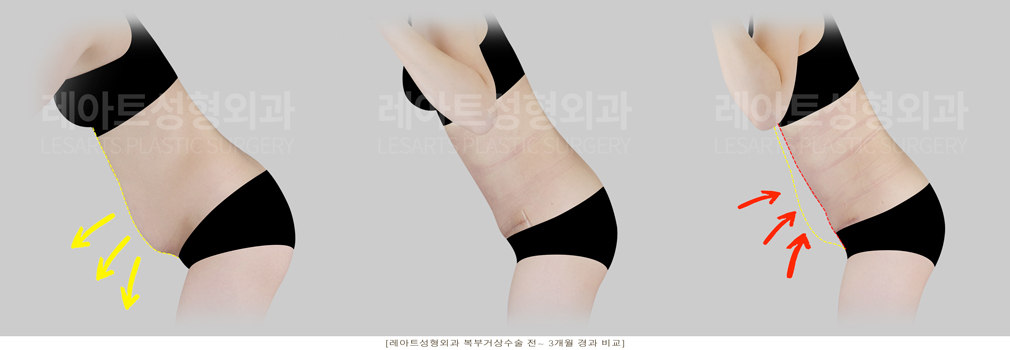
When bending over,
previously the sagging skin
would hang down under gravity,
but post-surgery it lifted tightly—
showing no folds even when leaning forward.
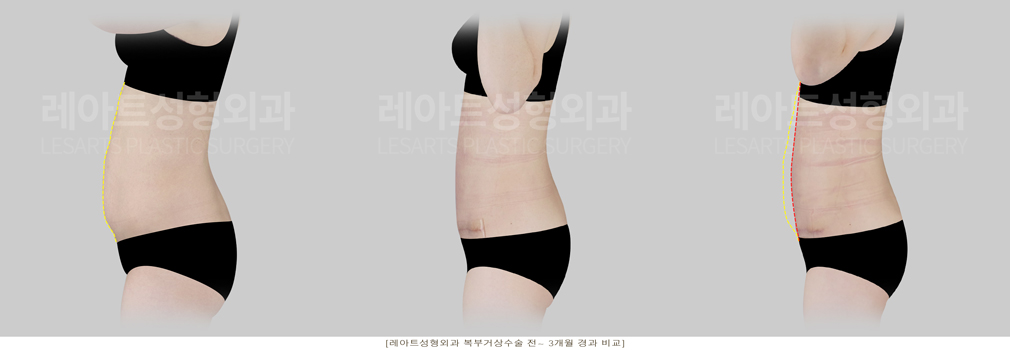
From the full side view before surgery,
the mid-abdomen bulged forward
in an uneven, unstable shape.
This was especially due to
upper belly sagging
that extended downward—
adding to the weighty appearance.
After surgery, the separated muscles
were re-stitched,
eliminating the abdominal wall bulge,
and the sagging skin was lifted—
resulting in a flat, firm frontal line.
Even with consistent efforts
through diet and exercise,
structural issues like stretched skin
and muscle weakening
are difficult to resolve without surgery.
This patient was able to achieve
visible improvements
only after surgical intervention.
She is now recovering stably
without complications,
and we’ve emphasized the importance
of continuous care—
including scar care strips,
moisturizing,
and self-care at home.
A tummy tuck isn’t just for cosmetic reasons.
It improves both function and shape,
so proper aftercare can help ensure
long-lasting, satisfying results.












