Signs of aging in body shape
often appear first in the abdomen
before other areas.
As skin loses elasticity
and muscle layers become loose,
the abdominal center may protrude
or the lower belly can sag,
disrupting body balance.
Even if your weight hasn’t increased much,
abdominal muscle separation (diastasis recti)
or loose skin can make the connection
between waist and hips awkward,
causing the abdomen to stand out more.
If you are experiencing
internal and external abdominal issues like this,
tummy tuck (abdominoplasty) or
muscle correction procedures
may be necessary.
Today’s case features a woman in her 40s
who experienced two pregnancies.
Though she managed her weight well afterwards,
she struggled with:
-
Sagging at the abdominal center
-
Wrinkles due to decreased skin elasticity
-
Noticeable waistline distortion
She tried abdominal workouts
to strengthen core muscles,
but wrinkles above the navel remained,
and the central bulge (protruding abdominal wall)
did not improve.
She shared that her biggest concern
was how the abdomen stood out
in her overall figure.
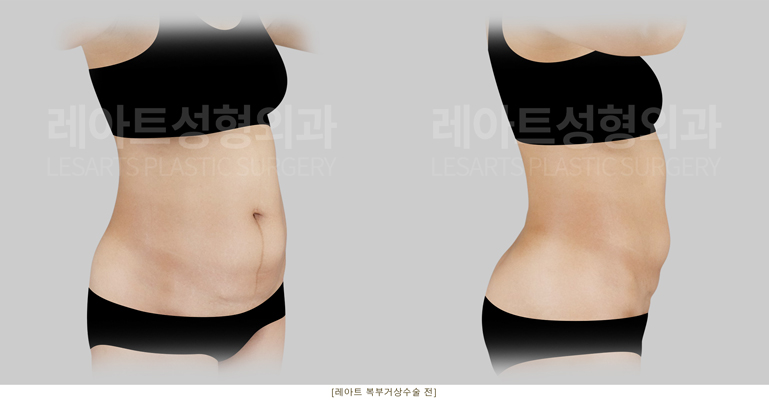
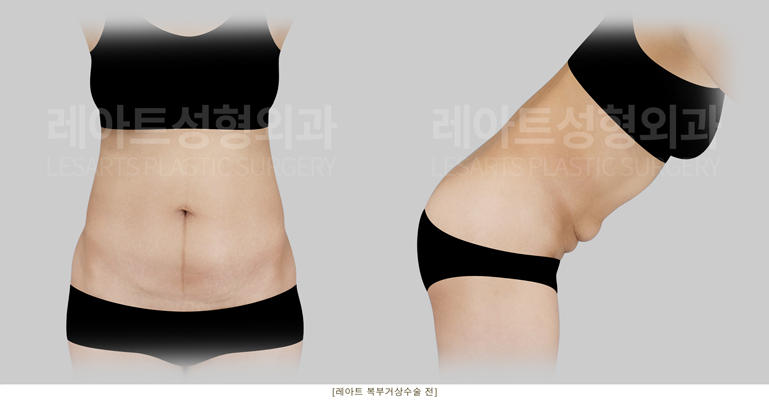
Pre-op photos showed that
her central abdomen had sagged due to lost elasticity,
and the skin was thin and loose,
causing the belly to fold in two
when bending forward.
Pressing slightly above the navel,
we found the abdominal muscles were separated,
and the abdominal wall protruded slightly
as it failed to hold the center in.
There was also a clear difference
in elasticity between the upper and lower abdomen.
This combination of sagging skin, wrinkles,
and diastasis recti not only disrupted outer shape
but also caused functional discomfort.
So we planned surgery focusing on the following:
1. S-Type Tummy Tuck
To correct both sagging skin
and abdominal muscle separation,
we planned an S-type abdominoplasty.
We used the belly button floating technique
to correct upper abdominal muscle separation,
and planned to use the patient’s
existing C-section scar line for the incision.
2. Abdominal Liposuction
To refine the overall abdominal line,
we also planned full abdominal liposuction.
Let’s take a closer look
at the changes and recovery
three months after surgery.
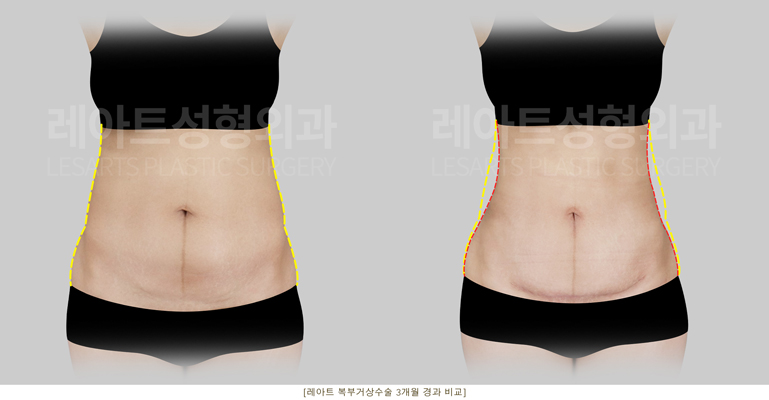
Before surgery,
the central abdominal skin was drooping,
folding under the navel,
and the connection from waist to hip
lacked smoothness.
But three months post-op,
the sagging skin was tightened,
the rectus muscles were secured,
and the entire abdominal line was lifted.
The curve from waist to pelvis
now connects more naturally,
creating a more youthful figure
than her 40s might suggest.
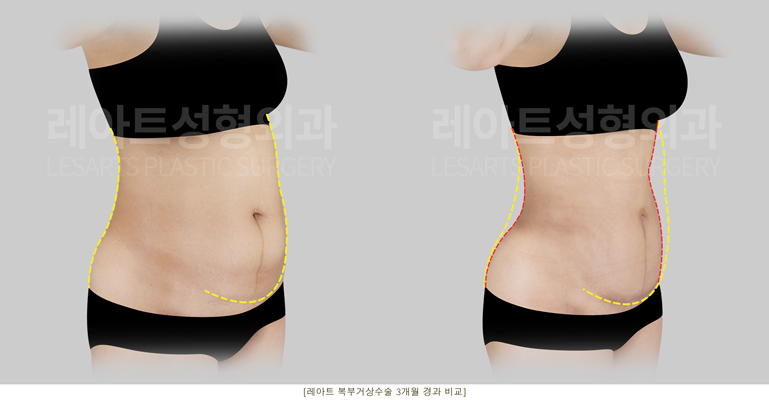
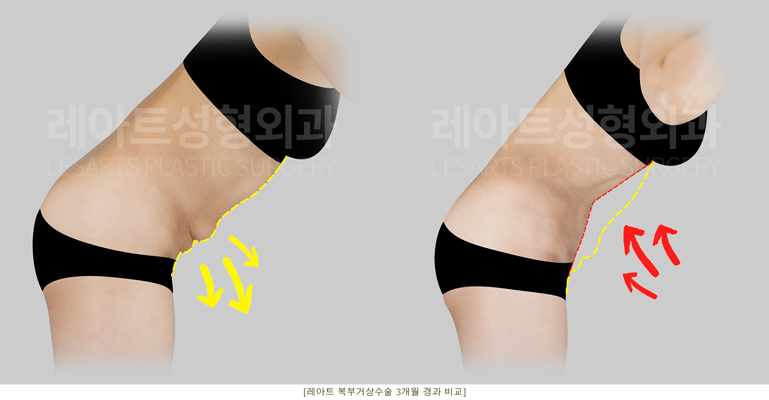
Seen from the oblique side,
her lower belly previously sagged downward,
and the center protruded outward—
giving a heavy, unstable appearance.
Three months after surgery,
the wrinkled and sagging belly
has been lifted,
the waistline cinched inward,
and the body has taken on
a more defined, three-dimensional look.
Even when bending forward,
the change is very clear.
Before surgery,
the sagging lower abdomen
created deep folds,
making the lower stomach
look heavy and stuffy.
After tummy tuck surgery,
the skin is pulled tightly,
and even when leaning forward,
there are no creases—
the abdominal line remains smooth and stable.
With diastasis recti corrected,
the previously bulging abdominal wall
is now flat and toned,
with no sagging or unevenness.
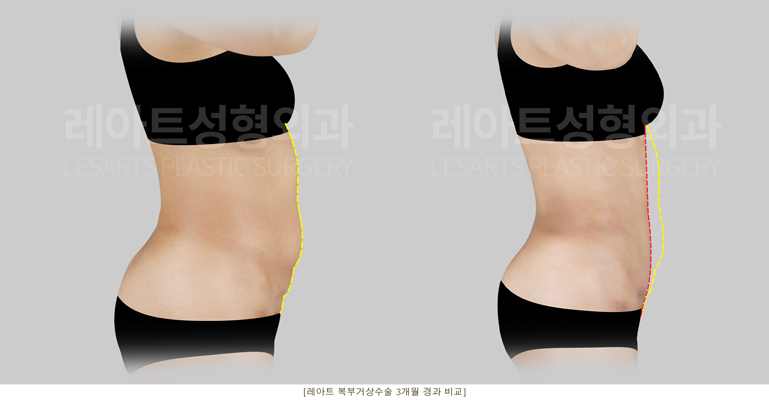
From the side view before surgery,
her abdomen looked lumpy
due to stretched skin and a bulging core.
The lower belly also had wrinkles
and sagged downward,
creating a heavy silhouette.
After tummy tuck and muscle repair,
the abdominal center became firm,
the loose skin was lifted,
and the side profile now stays flat.
This patient had
abdominal muscle laxity caused by fat
and major skin elasticity loss,
which caused her shape imbalance.
With functional discomfort from overstretched muscles,
she decided on surgery.
Therefore, not only aesthetic satisfaction,
but also functional correction
was critical in her case—
and surgical intervention provided
complete resolution of her discomfort.
Fortunately, she followed
post-op care instructions well,
entered recovery quickly,
and continues with self-care
in her daily life.