ALL MENU

Online Consultation

Online Consultation

kakaoTalk

NaverTalk

INSTAGRAM

YOUTUBE

Cases finding similar to my profile

Cases finding
similar to my profile

Customer Diagnostics

#Male body contouring

Chest protrusion that doesn't improve with diet— Is gynecomastia surgery the answer?

2025-06-25
Men who experience visible physical changes
different from their peers during adolescence
often become sensitive about their body shape.
A typical example is protrusion of the chest,
especially in the upper body,
which can cause extreme self-consciousness
and even impact personality—
often leading to withdrawn behavior.
This is because such changes
affect not only how others view them,
but also their own self-confidence.
Given that this chest condition in men
is called "gynecomastia,"
if hormonal imbalance is the cause,
then it's a medical condition
that requires proper recognition and treatment.


Chest protrusion that doesn't improve with diet— Is gynecomastia surgery the answer? photo 1
 
The patient featured today is in his mid-20s
and had experienced childhood obesity,
which caused him to notice
chest protrusion from an early age.
Although he managed to lose overall weight
through dieting,
he said the volume of his chest
and the protrusion around the nipples
did not improve.
As with many gynecomastia patients,
he was most stressed about everyday life,
especially how his upper body looked
when wearing light clothing or T-shirts—
as the chest would bulge out like female breasts.
He also reported feeling a firm mass
under the areola.
Realizing it was not just a result of weight gain,
he visited our clinic for an accurate diagnosis
and surgical treatment.
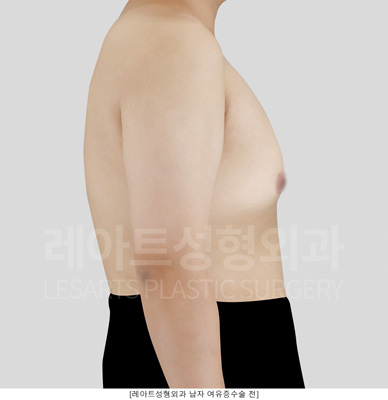
Chest protrusion that doesn't improve with diet— Is gynecomastia surgery the answer? photo 2
 
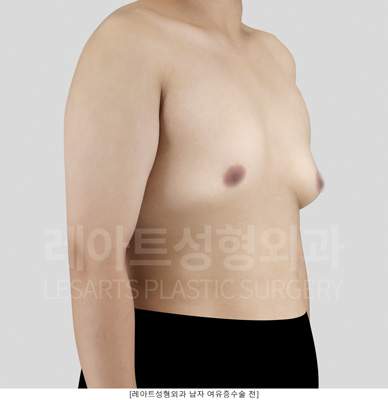
Upon examination, the patient had
a clear protrusion centered around the nipples,
with volume and contour extending below the chest—
making it appear even more pronounced.
His areolas were wide and thick,
and a firm lump could be felt beneath the nipple.
Ultrasound revealed excessive glandular tissue,
leading to a diagnosis of true gynecomastia,
classified as Simon Grade 2B.

We explained the following surgical treatment options:

  1. Glandular Tissue Excision
    An incision around the areola is used
    to remove the glandular tissue causing protrusion,
    reducing chest volume and correcting nipple bulge.
  2. Liposuction
    Fat around the lower and side chest
    is removed to supplement the reduction
    and create a smooth chest contour
    beyond gland removal alone.
  3. Adhesion Prevention and Inversion Control
    To prevent nipple depression or skin adhesions
    after tissue removal,
    we performed deep tissue repositioning
    along with anti-adhesion procedures.
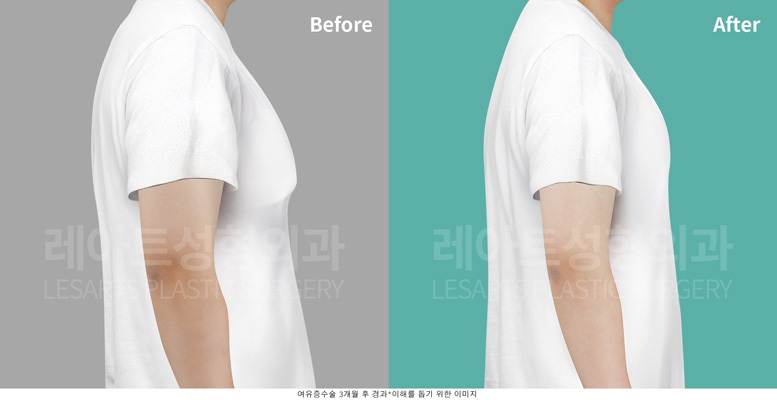

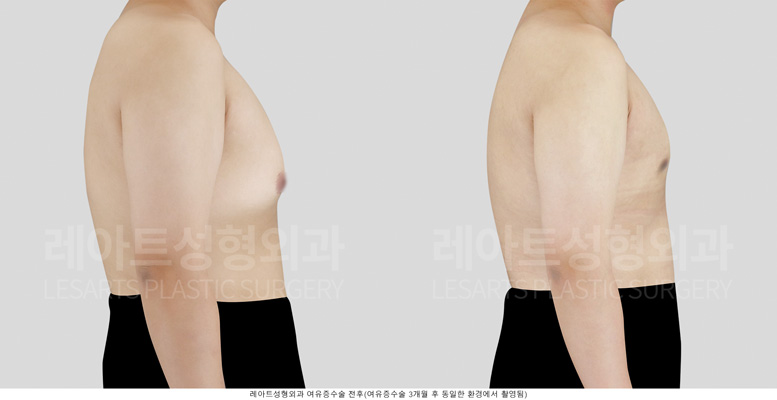
Let’s take a look at the patient’s recovery
and contour changes three months after surgery.
Chest protrusion that doesn't improve with diet— Is gynecomastia surgery the answer? photo 3
Chest protrusion that doesn't improve with diet— Is gynecomastia surgery the answer? photo 4

In the comparison photos,
the nipple-centered chest protrusion
has been significantly reduced,
and the overall upper body line
now appears much more tidy and smooth.
The previously bulging shape
extending below the chest
was flattened after surgery,
resulting in a more masculine chest wall.
Since the surgery included both gland excision
and liposuction around the lower and side chest,
the overall body shape improved
and the redistributed tissue helped create
a solid chest appearance—
as if the patient had been working out.

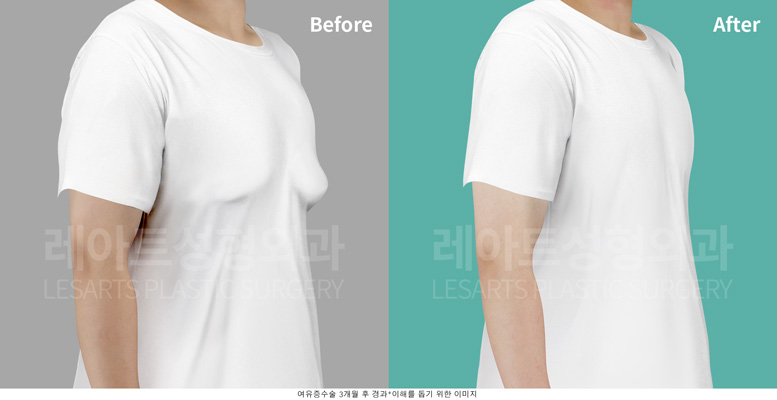
Chest protrusion that doesn't improve with diet— Is gynecomastia surgery the answer? photo 5
Chest protrusion that doesn't improve with diet— Is gynecomastia surgery the answer? photo 6

When comparing the T-shirt fit,
the previously bulging nipple area
was flattened,
eliminating the awkward look
that caused embarrassment.
Gynecomastia surgery is not only about
removing visible chest protrusion.
More importantly, it’s about achieving
a balanced and defined upper torso
after surgery.
In this case, the glandular tissue
was centered around the nipple,
and excess fat was stored
in the lower and side chest,
creating a large and sagging chest—
which gave the upper body a heavy appearance.
Thus, combining glandular excision
with liposuction,
not only reduced chest size
but also reshaped the overall chest contour—
which required plastic surgical techniques.
Although this is medically necessary treatment,
simply removing glandular tissue
can lead to an awkwardly flat or dented chest.
There’s also a risk of nipple depression or hollowing.
By carefully planning a comprehensive approach,
we were able to achieve an ideal result
with high patient satisfaction.
 

#Male body contouring 

#Gynecomastia 

#Grade2-A #true gynecomastia #Side chest liposuction

Previous post

Contour blurred by facial fat? Refining the jawline with facial liposuction

Next post

Upper body slimming: Abdominal & arm workouts vs. liposuction