




Online Consultation
Please accurately enter the information below.
Quick Cost Consultation
Quick Consultation & Reservation
Cases finding
similar to my profile






Cases finding
similar to my profile
Customer Diagnostics
Why Is It Important to Diagnose True Gynecomastia in Men with Enlarged Chests?
2025-07-23
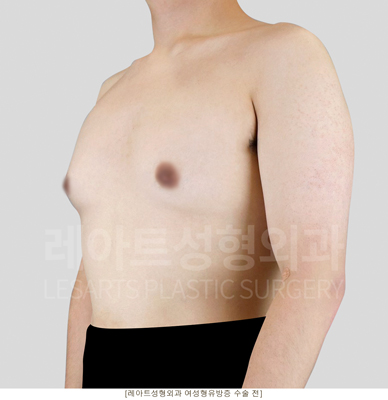

1. Glandular Tissue Excision
2. Liposuction
3. Adhesion and Depression Prevention
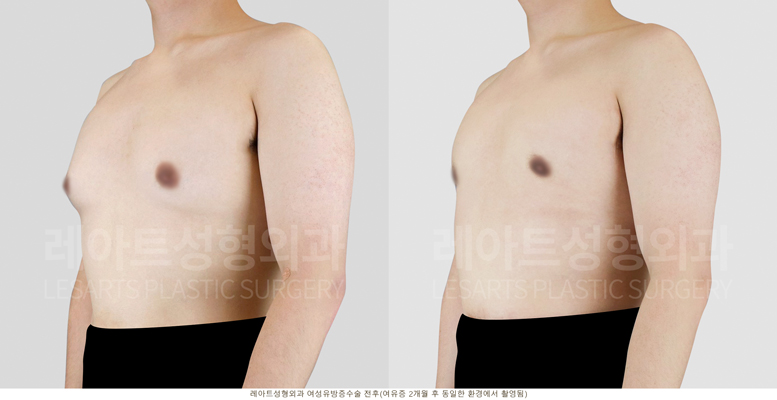
Before surgery,
firm glandular tissue was widely distributed
under both nipples,
making the entire chest large and protruded.
Volume extended from the center chest
to the side and front armpits,
making the chest appear even bigger
and heavier.
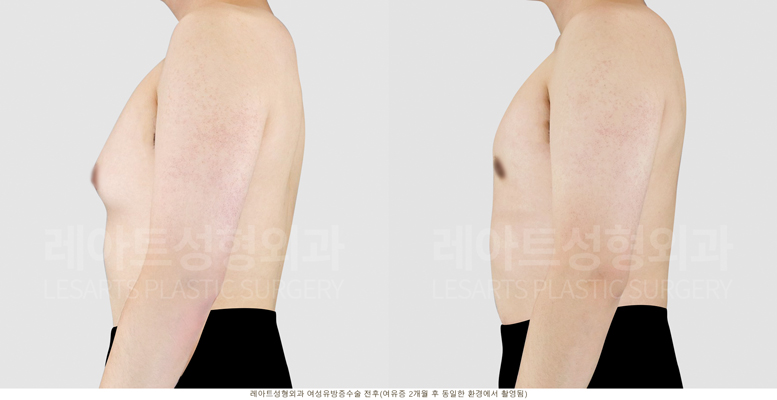
But 2 months after male breast reduction surgery,
the nipple protrusion was corrected,
and the chest was reduced naturally—
resulting in a firm and refined look.
Prior to surgery, the upper chest
was overly emphasized due to the bulging shape.
After surgery, the lower and side chest
were reshaped,
giving the torso a much neater
and more masculine silhouette.
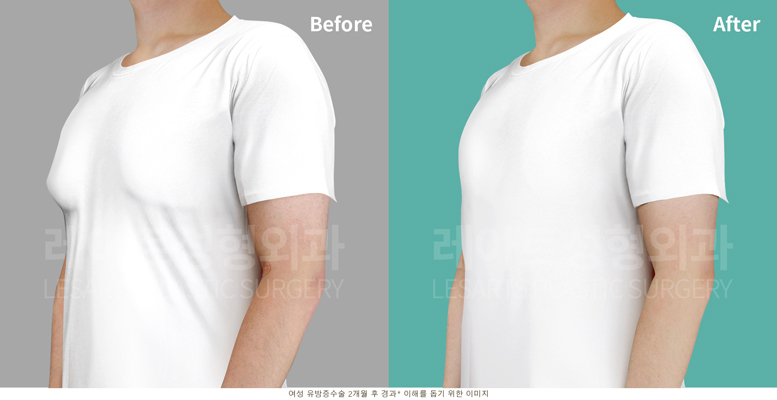
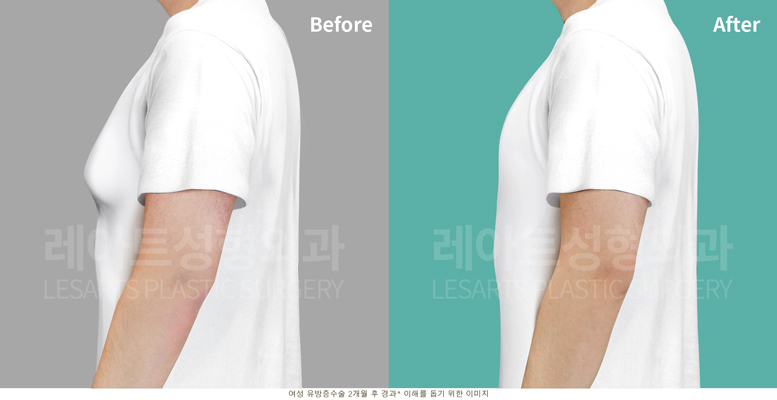
Comparing his appearance in a T-shirt,
you can see that before surgery,
the garment was awkwardly shaped
around the chest bulge,
with the nipple protrusion standing out clearly.
Two months after surgery,
the chest protrusion was reduced,
and even in a single T-shirt,
he looked clean and athletic.
The patient said he felt highly satisfied—
not only because his chest size had decreased,
but also because the chest pain and pressure
he experienced daily
disappeared after surgery.
He especially appreciated
how the area that once bothered him
whenever he wore thin clothes
was now completely gone.
This greatly improved his quality of life.
As we’ve seen, in cases of true gynecomastia
caused by glandular development,
the condition can lead not only
to chest enlargement and nipple shape changes,
but also to discomfort, pain,
and posture-related issues.
In such cases, accurate diagnosis
and surgical treatment can be truly helpful.
If you’ve been struggling with a similar concern,
we recommend consulting a medical professional
before it becomes more difficult to address.
#Male body contouring
#Gynecomastia
#Grade2-A


Cases finding
similar to my profile
Customer Diagnostics


Select the surgery and
area you are interestedto see real
before andafter changes.


we
make you,
the art
Clinic hours
MON - FRI
10 am – 7pm
SAT
10 am – 4pm
Holiday
SUN, HOLIDAY
Location
Lesarts Moon Clinic Tower 4-5F, 40, Nonhyeon-ro 168-gil,
Gangnam-gu, Seoul, Republic of Korea

Medical institution name Lesarts Plastic Surgery
Address Lesarts Moon Clinic Tower 4-5F, 40, Nonhyeon-ro 168-gil, Gangnam-gu, Seoul, Republic of Korea
Representative Moon sung jun
