




Online Consultation
Please accurately enter the information below.
Quick Cost Consultation
Quick Consultation & Reservation
Cases finding
similar to my profile






Cases finding
similar to my profile
Customer Diagnostics
Can Certain Medications Cause Gynecomastia? What About Blood Pressure Drugs?
2025-07-31
The causes of gynecomastia (male breast enlargement) vary.
It may occur due to hormonal changes during adolescence or middle age,
endocrine disorders, or even as a side effect of certain medications.
Among the best-known examples is hair loss medication.
But some blood pressure medications,
such as spironolactone, may also contribute.
If you already have symptoms of gynecomastia,
it is important to tell your doctor about any medications you are taking.
These drugs can suppress male hormones and
enhance the effects of female hormones,
which may contribute to the growth of glandular breast tissue.
The patient we will discuss today was taking blood pressure medication,
so a thorough pre-surgical assessment was essential.
Although his blood pressure medication was not the direct cause,
we designed a careful surgery and treatment plan considering his overall health.

[Lesarts Plastic Surgery Clinic – Male Gynecomastia Pre‑Op Consultation]
This patient is an office worker in his 30s who had experienced
enlarged breasts and nipple protrusion since his teenage years.
His weight had been relatively stable,
and he maintained his physique with regular exercise.
However, the protruding chest shape did not improve,
and he felt a hard lump under the nipple,
which caused significant discomfort in daily life.
He visited Lesarts Plastic Surgery Clinic to confirm
the exact cause of his symptoms and to find out
if surgical treatment would be effective.
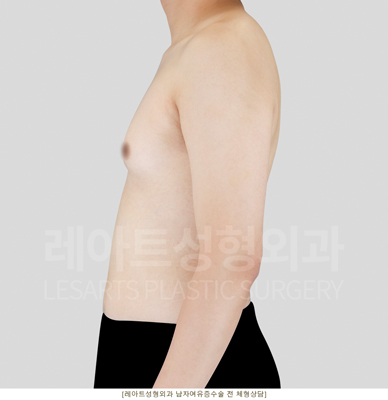
[Lesarts Plastic Surgery Clinic – Male Gynecomastia Pre‑Op Consultation]
On physical examination, the patient’s chest appeared enlarged
with a clearly protruding nipple area.
Palpation revealed the hard lump he had complained about.
Fat deposits were also present in the lower and side chest,
further contributing to the enlarged chest size.
To confirm the exact cause, we performed an ultrasound,
which showed clear overgrowth of glandular tissue in both breasts.
Based on these findings, he was diagnosed with true gynecomastia
(Simon Grade 2A), and we recommended surgical treatment.
Because the patient was taking blood pressure medication,
we carefully checked the type of drug he was using and
provided detailed guidance regarding blood pressure management and
bleeding prevention during surgery.
[Male Gynecomastia Surgery Plan – Office Worker in His 30s, Simon Grade 2A]
1.Glandular Tissue Removal
Through a minimal areolar incision,
we removed the glandular tissue that caused the enlarged chest,
reducing breast size and correcting nipple protrusion.
2.Liposuction of Lower and Side Chest
We performed liposuction in the lower and
side chest areas to refine the chest contour and
smooth any irregularities that could remain after glandular tissue removal.
3.Adhesion and Nipple Retraction Prevention
After removing glandular tissue,
we carefully repositioned the deep tissues and
applied anti‑adhesion measures to prevent nipple inversion or skin adhesion.
This helped maintain a natural and stable chest shape.
We will now look at how much his discomfort improved
two months after gynecomastia surgery.
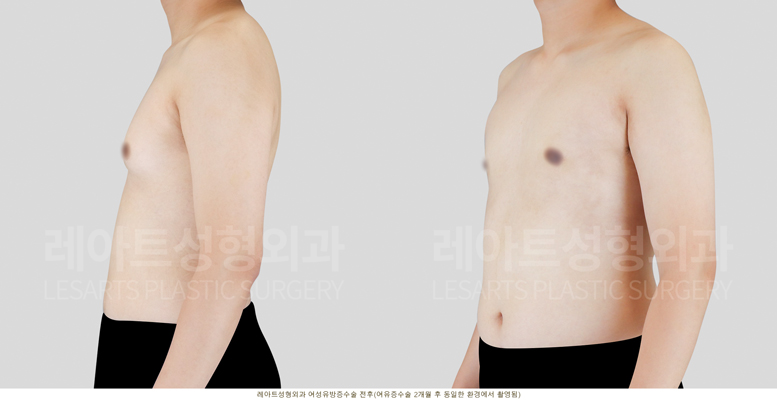
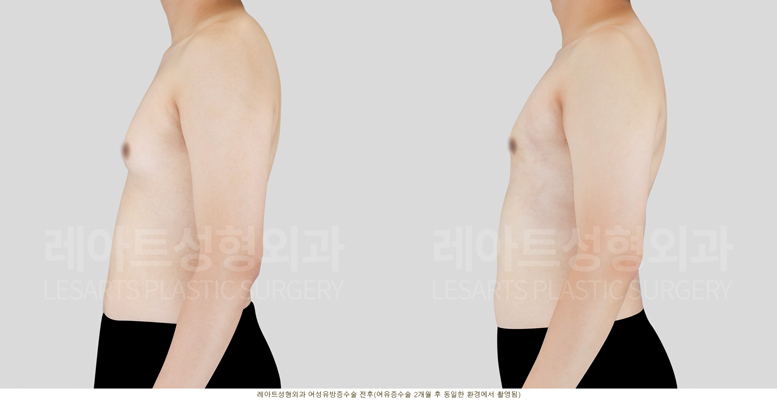
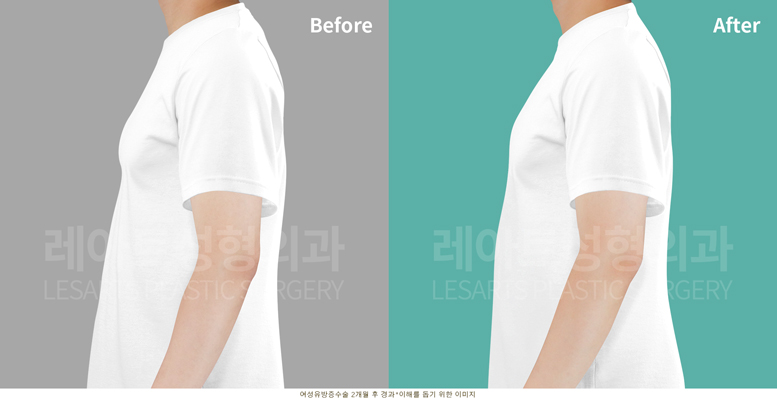
Gynecomastia 2‑Month Post‑Op Progress
(Photos for reference purposes)
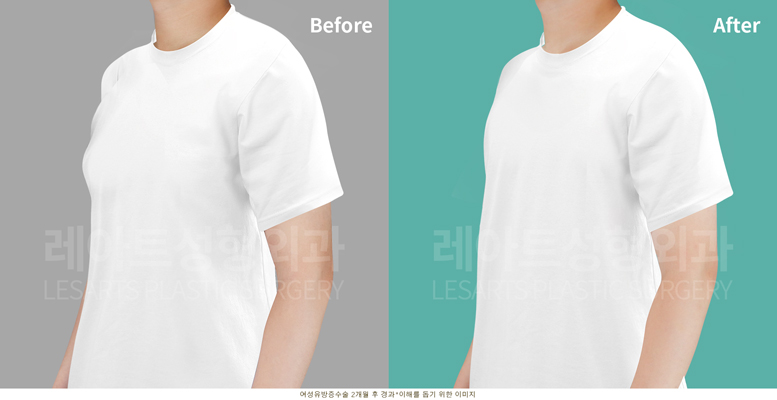
The difference was even clearer when comparing
his photos in a white T‑shirt before and after surgery.
Before surgery, the chest volume and
nipple protrusion created an awkward and embarrassing fit.
Two months after surgery, the reduced chest size resolved t
he unnatural line that appeared when wearing T‑shirts.
The once‑prominent nipple protrusion was corrected,
and the chest appeared firm and natural without any awkwardness.
The patient expressed high satisfaction,
not only with the visible improvement in chest size and
nipple projection but also with the disappearance of chest pain and pressure.
Because he was on blood pressure medication,
careful management was needed throughout the surgery
and recovery process.
Thanks to thorough preparation by our medical team,
the procedure was completed safely, and the patient has
now returned to daily life without any major discomfort.
This gynecomastia surgery provided
more than just cosmetic improvement.
It also relieved pain and the self‑consciousness
the patient had struggled with for years.
True gynecomastia caused by glandular tissue overgrowth
cannot be resolved by exercise or weight loss alone.
Accurate diagnosis and surgical treatment are essential.
As with this patient, a careful and personalized approach c
an bring safe and positive results.
If you are considering gynecomastia surgery,
we recommend visiting for a consultation to
discuss your treatment options.
#Male body contouring
#Gynecomastia
#Grade2-A #true gynecomastia #Side chest liposuction


Cases finding
similar to my profile
Customer Diagnostics


Select the surgery and
area you are interestedto see real
before andafter changes.


we
make you,
the art
Clinic hours
MON - FRI
10 am – 7pm
SAT
10 am – 4pm
Holiday
SUN, HOLIDAY
Location
Lesarts Moon Clinic Tower 4-5F, 40, Nonhyeon-ro 168-gil,
Gangnam-gu, Seoul, Republic of Korea

Medical institution name Lesarts Plastic Surgery
Address Lesarts Moon Clinic Tower 4-5F, 40, Nonhyeon-ro 168-gil, Gangnam-gu, Seoul, Republic of Korea
Representative Moon sung jun
