




Online Consultation
Please accurately enter the information below.
Quick Cost Consultation
Quick Consultation & Reservation
Cases finding
similar to my profile






Cases finding
similar to my profile
Customer Diagnostics
Still Have a Puffy Chest After Liposuction? Gynecomastia Surgery May Be the Real Solution – Best Male Breast Reduction in Gangnam, Seoul, Korea
2025-08-06
Many men consider male chest fat
reduction through liposuction or workouts,
but don’t always get the results they expected.
If the chest still looks large even after trying these methods,
it may be due to gynecomastia, a condition caused by
excess glandular tissue, not just fat.
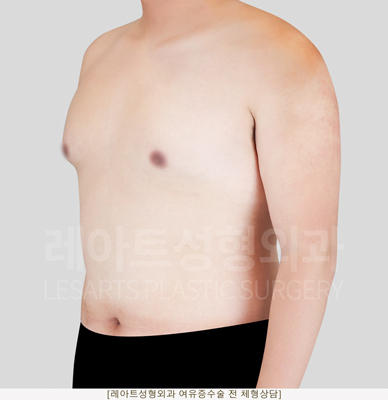
This patient is a prime example.
He had previously undergone chest liposuction but continued to
experience discomfort, including visible puffiness
around the nipples and palpable lumps.
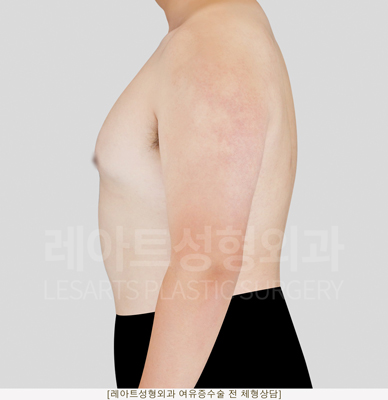
[Pre-Surgery Assessment – Lesarts Plastic Surgery]
The patient first noticed symptoms
of gynecomastia in his teenage years.
Despite undergoing liposuction,
the results were minimal, and the issue persisted.
He experienced daily discomfort and
stress due to the bulging around his nipples
—especially when wearing tight shirts.
He decided to seek a more definitive solution
and visited our clinic in Gangnam, Seoul.
Upon examination, we noted:
- Visible nipple protrusion and chest fullness
- Lumps (palpable glandular tissue)
beneath the nipples
- Remaining fat in the lower and side chest,
despite previous liposuction
Ultrasound revealed enlarged glandular tissue in both breasts,
leading to a diagnosis of Simon Grade 2A true gynecomastia.
[Surgical Plan for Grade 2A True Gynecomastia – Male, Late 20s]
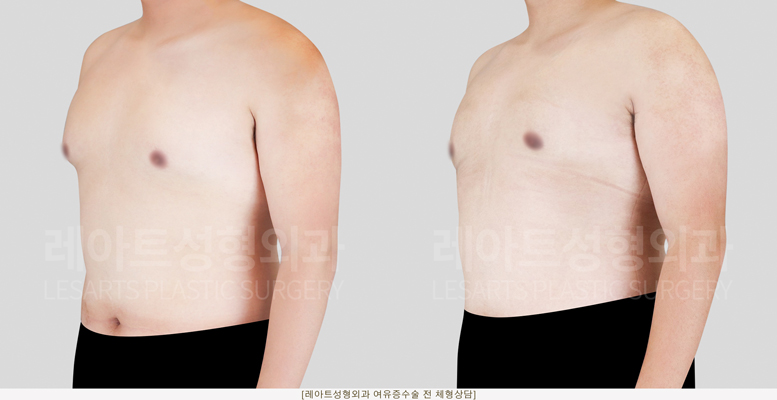
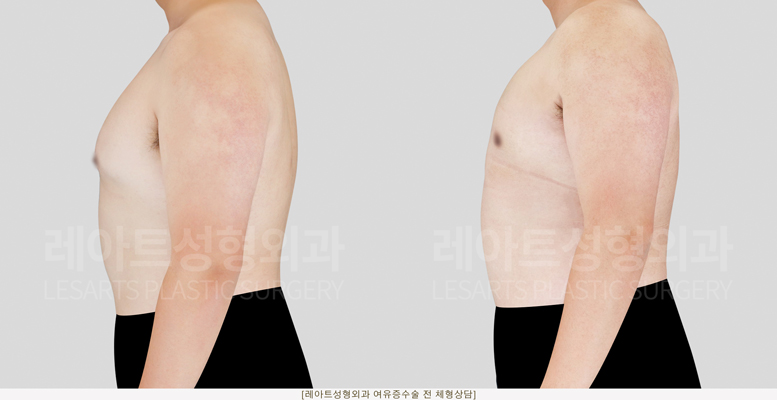
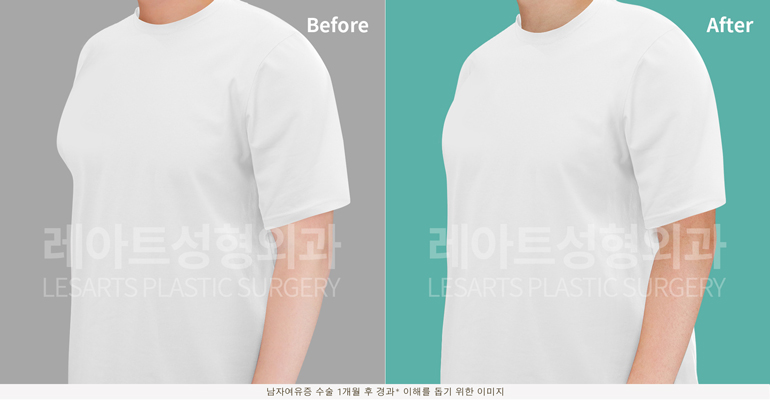
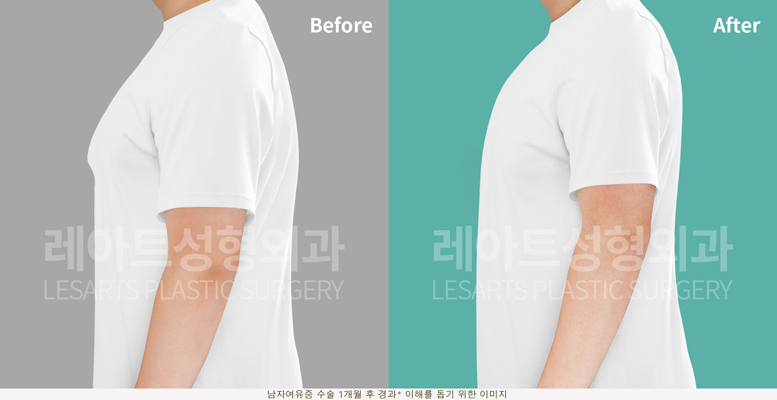
#Male body contouring
#Gynecomastia
#Grade2-A #true gynecomastia #Side chest liposuction


Cases finding
similar to my profile
Customer Diagnostics


Select the surgery and
area you are interestedto see real
before andafter changes.


we
make you,
the art
Clinic hours
MON - FRI
10 am – 7pm
SAT
10 am – 4pm
Holiday
SUN, HOLIDAY
Location
Lesarts Moon Clinic Tower 4-5F, 40, Nonhyeon-ro 168-gil,
Gangnam-gu, Seoul, Republic of Korea

Medical institution name Lesarts Plastic Surgery
Address Lesarts Moon Clinic Tower 4-5F, 40, Nonhyeon-ro 168-gil, Gangnam-gu, Seoul, Republic of Korea
Representative Moon sung jun
