




Online Consultation
Please accurately enter the information below.
Quick Cost Consultation
Quick Consultation & Reservation
Cases finding
similar to my profile






Cases finding
similar to my profile
Customer Diagnostics
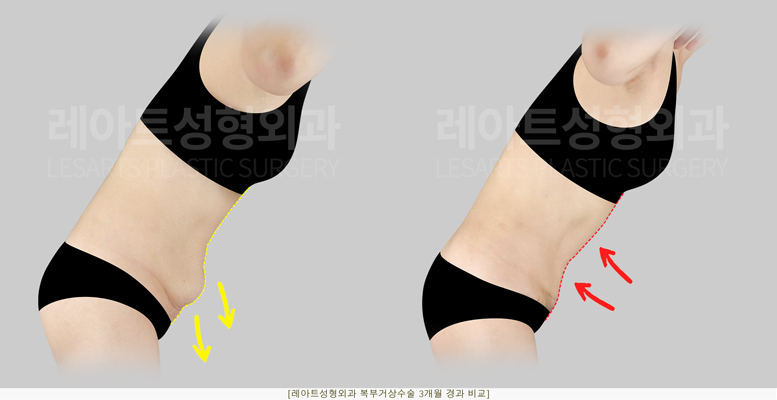
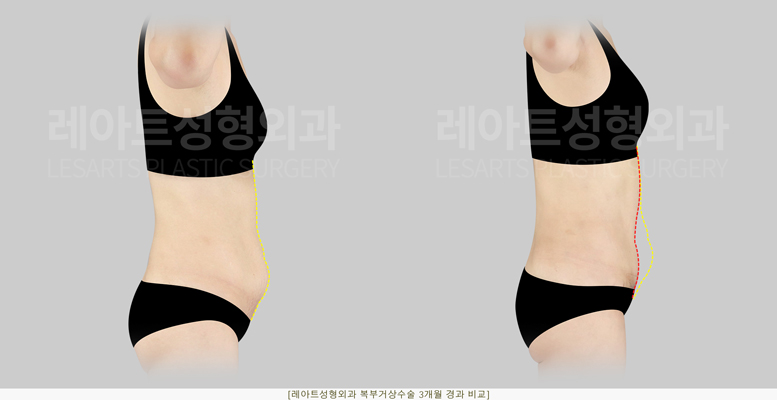
Lower belly sagging improved with a mini tummy tuck
2025-05-12
Many people experience
body shape concerns
that are unrelated to weight.
As regular readers of our blog know,
rectus diastasis and skin laxity
caused by pregnancy, childbirth,
or significant weight changes
are difficult to correct with diet alone.
For this reason, more people
are choosing medical help.
Today, we’ll share the method
and results of a mini tummy tuck
performed for a woman in her 40s
who visited Lesarts
to improve lower abdominal sagging.
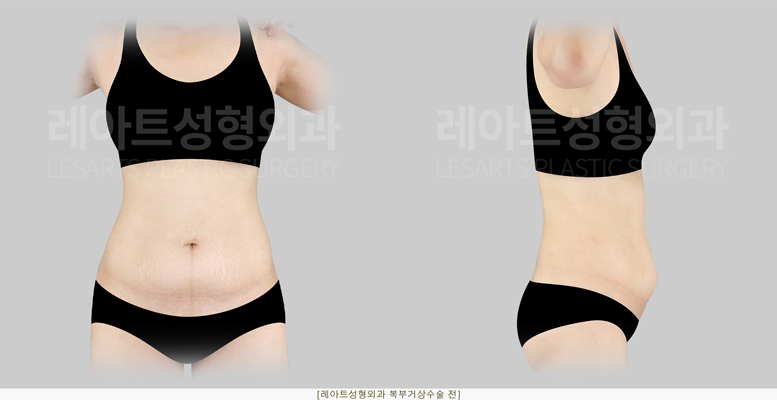
The patient, in her early 40s,
had experienced two natural deliveries.
She had maintained excellent
body shape and weight management.
However, her lower abdomen showed
skin sagging and rectus diastasis,
making the area look droopy and protruded.
This condition caused her waistline
to fold like wearing an inner tube,
and the lower belly bulge became visible
through clothing,
causing daily discomfort and stress.
Since this was not caused by excess fat,
liposuction alone
could not correct the issue.
She decided to undergo abdominoplasty
to repair the rectus diastasis
and improve skin laxity.
For this case, we planned an S-Type mini tummy tuck
(short-type),
combined with rectus muscle plication
and abdominal liposuction
to refine her waistline.
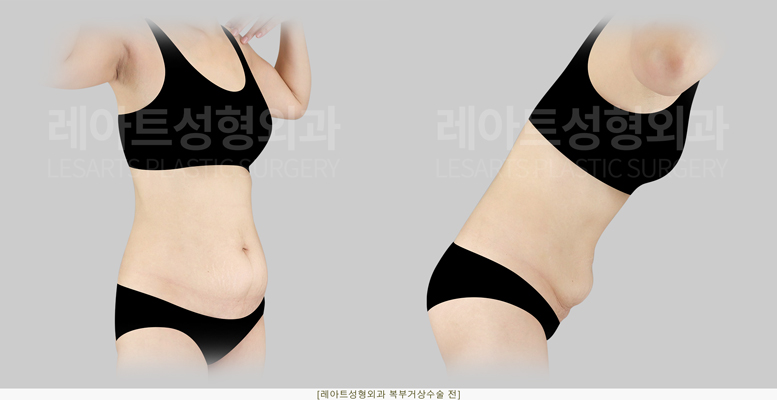
Through consultation,
we confirmed that the patient had
significant skin sagging
centered on the lower abdomen.
Subcutaneous fat had also accumulated
in the same area,
causing multiple skin folds
in the lower belly.
When standing, the sagging was noticeable,
but when bending forward,
gravity pulled the skin downward,
further elongating the folds
and making the entire abdomen
look heavy and unevenly protruded.
From both the front and side views,
the lower belly appeared not only protruded
but also drooped downward.
A distinct feature was that
the upper abdomen had a thin fat layer,
with the ribcage slightly visible,
while the lower abdomen bulged
due to rectus diastasis and overlapping skin.
This created a significant volume difference
between the upper and lower abdomen.
In addition, the waistline lacked definition
due to continuous fat distribution
from the flanks to the hip area,
making the waist look wide
and the overall body balance appear off.
To address these combined issues,
we planned the following procedures:
1. Mini Tummy Tuck
– Planned an S-Type (short-type) abdominoplasty
to improve skin sagging
focused on the lower abdomen.
2. Rectus Muscle Plication
– Tightened the separated rectus muscles
below the navel to restore core support
and correct the bulging.
3. Abdominal Liposuction
– Performed line-focused fat removal
on the waist, flanks, and pelvis
for smoother body contours.
4. Thigh Liposuction
– Targeted the inner thighs and Chanel line
to improve body proportion
and harmonize the upper and lower body.
This surgical plan aimed to correct
the abdominal wall,
lift and smooth the lower abdomen,
and restore overall body balance.
Below, we will review
the 3-month before-and-after comparison photos
following the tummy tuck,
rectus plication,
and liposuction procedures.
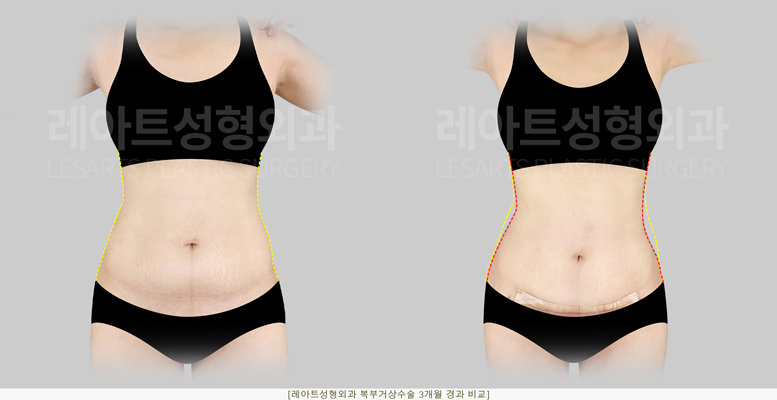
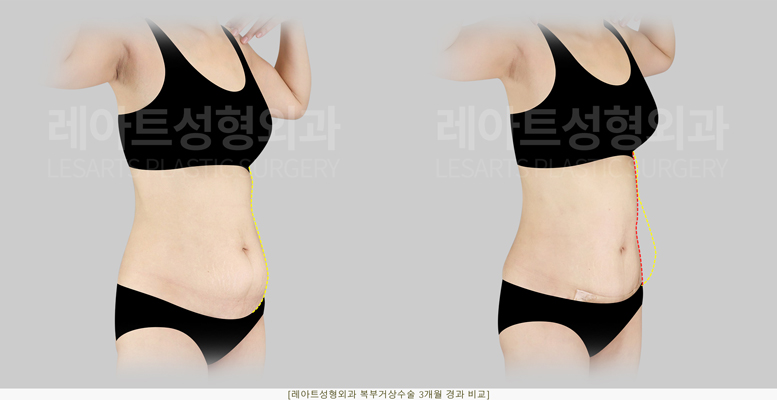
#Liposuction #Abdominoplasty
#Thigh #S-type
#Thigh Gap


Cases finding
similar to my profile
Customer Diagnostics


Select the surgery and
area you are interestedto see real
before andafter changes.


we
make you,
the art
Clinic hours
MON - FRI
10 am – 7pm
SAT
10 am – 4pm
Holiday
SUN, HOLIDAY
Location
Lesarts Moon Clinic Tower 4-5F, 40, Nonhyeon-ro 168-gil,
Gangnam-gu, Seoul, Republic of Korea

Medical institution name Lesarts Plastic Surgery
Address Lesarts Moon Clinic Tower 4-5F, 40, Nonhyeon-ro 168-gil, Gangnam-gu, Seoul, Republic of Korea
Representative Moon sung jun
