




Online Consultation
Please accurately enter the information below.
Quick Cost Consultation
Quick Consultation & Reservation
Cases finding
similar to my profile






Cases finding
similar to my profile
Customer Diagnostics
Gynecomastia Lumps & Chest Pain Before Surgery — (Gynecomastia Surgery | Chest Lump | Chest Pain | Puffy Nipple | True Gynecomastia | Simon Grade 2A | Gland Removal | Male Chest Contouring | T-Shirt Fit Improvement)
2026-02-10
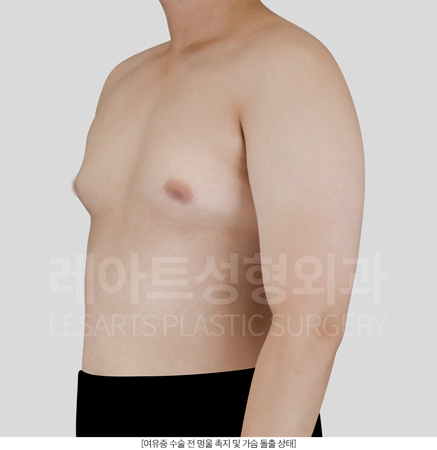
When people think of gynecomastia,
they often focus first on chest size or visible protrusion,
and how it affects clothing fit.
However, during real consultations,
many patients visit the clinic not only because of appearance concerns,
but also due to chest pain, tenderness, and palpable lumps.
Especially when a firm lump can be felt beneath or around the nipple,
or when intermittent pain occurs even at rest,
it is important to receive an accurate diagnosis
and clear treatment guidance.
If chest size does not decrease despite exercise or weight control
—and discomfort continues—
the issue may lie in the internal glandular tissue,
not fat alone.
Patient Information
- Age: Late 20s
- Height / Weight: 175 cm / 79 kg
- Gynecomastia Grade: Simon Grade 2A
- Type: True gynecomastia (glandular hypertrophy)
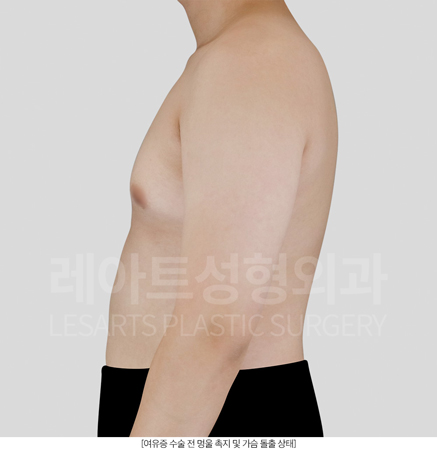
Preoperative Findings
This patient showed several classic
symptoms of gynecomastia:
- Increased chest volume
- Puffy, protruding areola
- Recurrent chest pain
- A firm lump palpable beneath the areola
These symptoms caused constant awareness
of the chest area in daily life.
Ultrasound Results & Diagnosis
On visual examination,
the chest appeared enlarged with noticeable nipple
–areola protrusion.
Palpation revealed firm nodular tissue,
and ultrasound confirmed overgrown glandular tissue
rather than simple fat accumulation.
Based on these findings,
the patient was diagnosed with Simon Grade 2A
true gynecomastia.
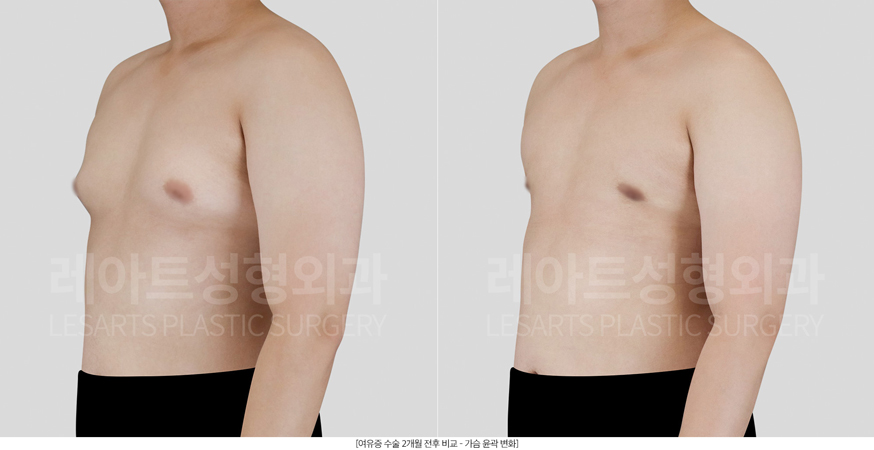
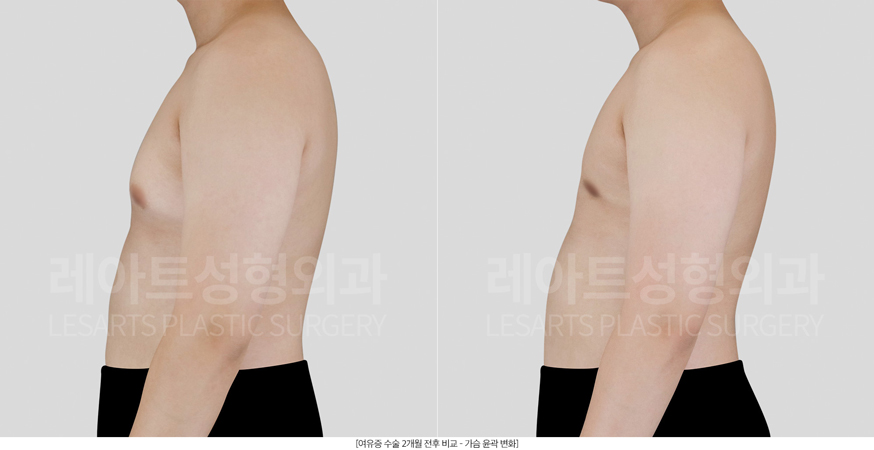
2-Month Before & After Comparison
Gynecomastia surgery was performed using
gland removal combined with tissue repositioning.
After surgery:
- The anterior chest contour became smooth and flat
- Protruding areas were corrected without indentation
- Chest volume and areola projection were significantly reduced
- The line from the upper chest to the center chest flows naturally
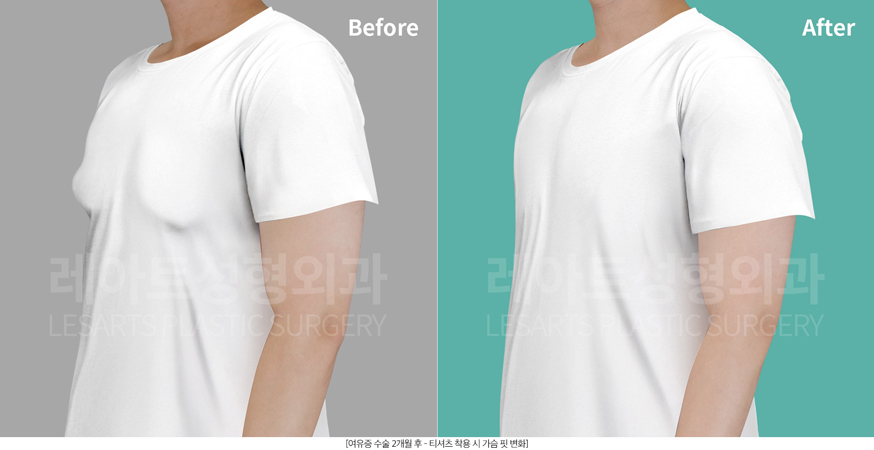
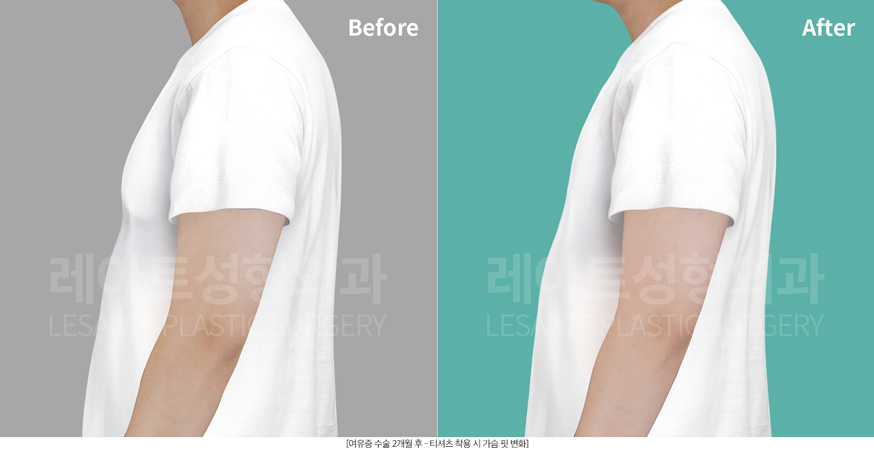
T-Shirt Fit After Surgery
When wearing a T-shirt:
-The chest no longer appears emphasized
-Shadows that previously highlighted protrusion are gone
-The upper body looks clean, firm, and masculine
Compared to before surgery, when the chest shape
was noticeable through clothing,
the patient now shows a much more
natural upper-body silhouette.
2 Months Post-Op
At two months after surgery, the chest contour
has settled into a balanced, exercise-like shape
without overcorrection.
Most importantly for this patient:
-The palpable lump beneath the areola disappeared
-Intermittent chest pain resolved
-Daily discomfort and constant awareness
of the chest area are gone
-Because both the appearance and
physical symptoms improved, overall satisfaction was high.
Final Thoughts
Gynecomastia symptoms such as lumps and chest pain
in addition to visible protrusion, should not be ignored.
Accurate diagnosis helps determine whether the cause
is glandular tissue—and whether surgery is appropriate.
With proper evaluation and treatment,
gynecomastia surgery can improve not only chest shape,
but also the physical discomfort and stress that
many patients experience in daily life.
#Male body contouring
#Gynecomastia
#Grade2-A #true gynecomastia #Side chest liposuction


Cases finding
similar to my profile
Customer Diagnostics


Select the surgery and
area you are interestedto see real
before andafter changes.


we
make you,
the art
Clinic hours
MON - FRI
10 am – 7pm
SAT
10 am – 4pm
Holiday
SUN, HOLIDAY
Location
Lesarts Moon Clinic Tower 4-5F, 40, Nonhyeon-ro 168-gil,
Gangnam-gu, Seoul, Republic of Korea

Medical institution name Lesarts Plastic Surgery
Address Lesarts Moon Clinic Tower 4-5F, 40, Nonhyeon-ro 168-gil, Gangnam-gu, Seoul, Republic of Korea
Representative Moon sung jun
