




Online Consultation
Please accurately enter the information below.
Quick Cost Consultation
Quick Consultation & Reservation
Cases finding
similar to my profile






Doctor's Note
Medical columns by our surgeons
Abdominoplasty | 1 Year and 2 Months Progress of Floating Umbilicoplasty Tummy Tuck
2026-08-11
Abdominoplasty | 1 Year and 2 Months Progress of Floating Umbilicoplasty Tummy Tuck
Q. If a protruding lower belly persists after childbirth despite exercise, can abdominoplasty be considered even if skin laxity is not severe?
A. Yes, even when skin laxity is mild, if the underlying rectus abdominis muscles have separated,
floating umbilicoplasty abdominoplasty can help correct lower abdominal protrusion.
When diastasis recti occurs due to pregnancy and delivery (such as C-sections), the lower abdomen may protrude forward when leaning over
or when viewed from the profile, regardless of weight management.
If skin laxity is not excessive, performing floating umbilicoplasty abdominoplasty—which plicates both upper and lower abdominal muscles without transposing the navel—combined with liposuction can be considered instead of a full tummy tuck (M-type), designed to minimize scarring and support an improved, smoother contour.
[Learn More About Lesarts Plastic Surgery Tummy Tuck]
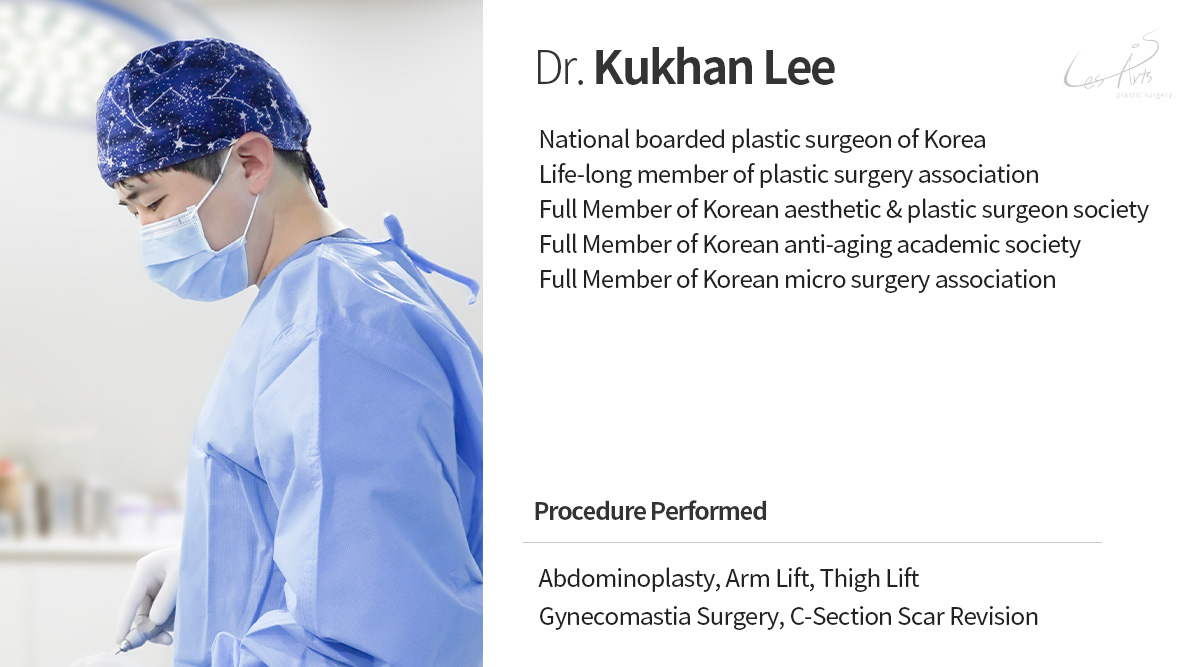
Hello, I am Dr. Kukhan Lee, Board-Certified Plastic Surgeon at Lesarts Plastic Surgery.
Skin laxity and contour changes in the abdominal region can develop due to various factors.
For women in particular, a very common contributing factor is pregnancy and childbirth.
Even when maintaining a normal body weight through dietary habits, regular aerobic exercise, and weight management following delivery,
there are many cases where patients visit our clinic because the overall shape and contour of the abdomen have not recovered as firmly as expected.
The clinical case presented today reviews a patient who experienced persistent central abdominal bulging and lower abdominal contour changes despite workouts and weight management,
undergoing customized floating umbilicoplasty abdominoplasty with follow-up observation at 1 year and 2 months post-op.
The patient was a female in her 40s with a history of two Cesarean deliveries,
consistently maintaining a height of 158 cm and a body weight of 51 kg.
She had maintained her physique well with regular resistance exercise,
and her body composition measurements also demonstrated a favorable balance between muscle and fat.
Nevertheless, what could not be resolved through personal effort was
a forward-protruding lower belly and an overall rounded, non-flat abdominal profile.
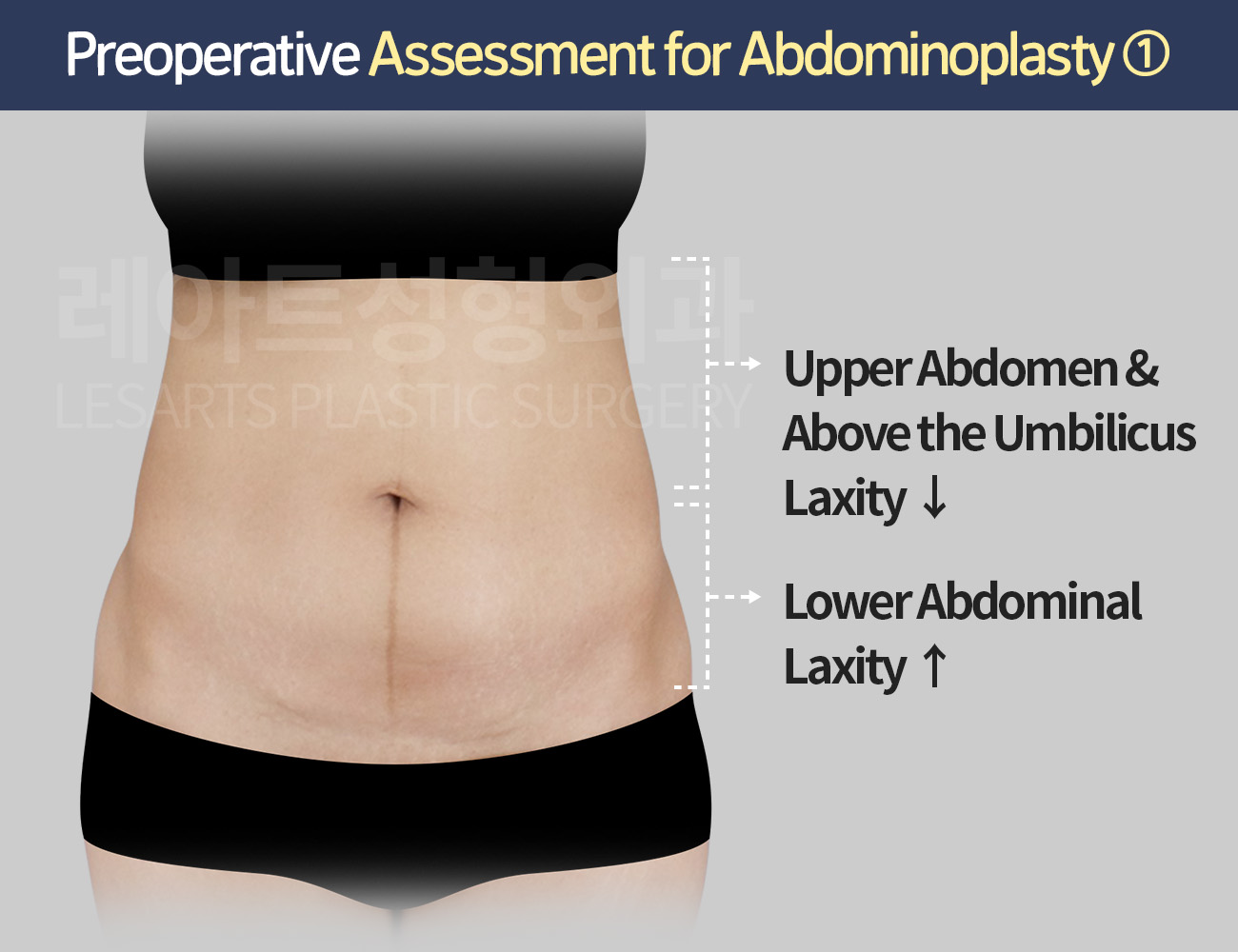
Her overall skin laxity was not excessively severe,
and in particular, loss of skin elasticity and sagging across the upper abdomen were minimal.
Skin laxity above the navel was also not severe,
and the patient herself did not feel significant concern regarding that area.
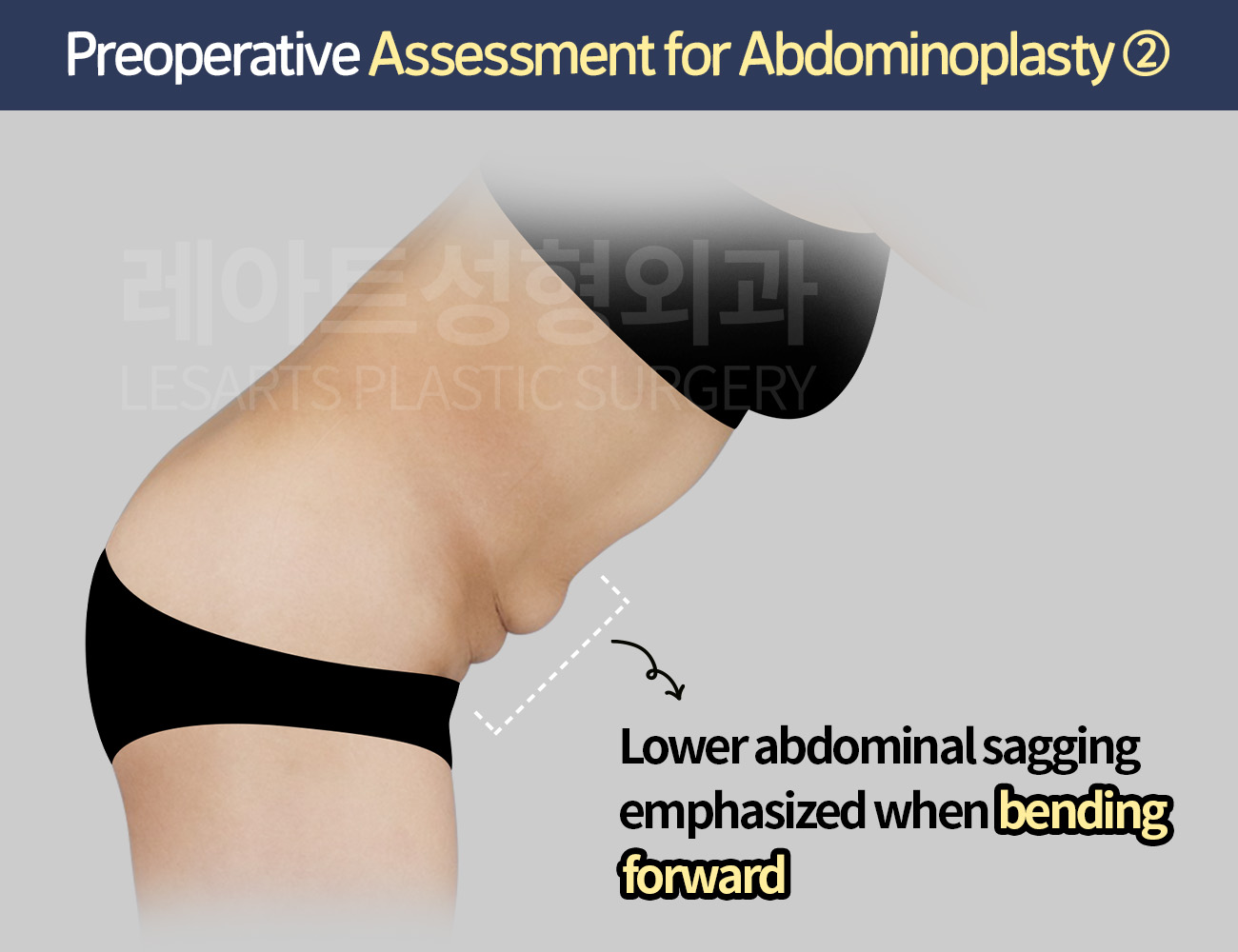
In contrast, skin laxity and redundant tissue were relatively more noticeable in the lower abdomen.
However, it was not so severe as to form a stepped overhang above the previous C-section scar,
and when bending forward, the forward projection of the lower belly became more accentuated.
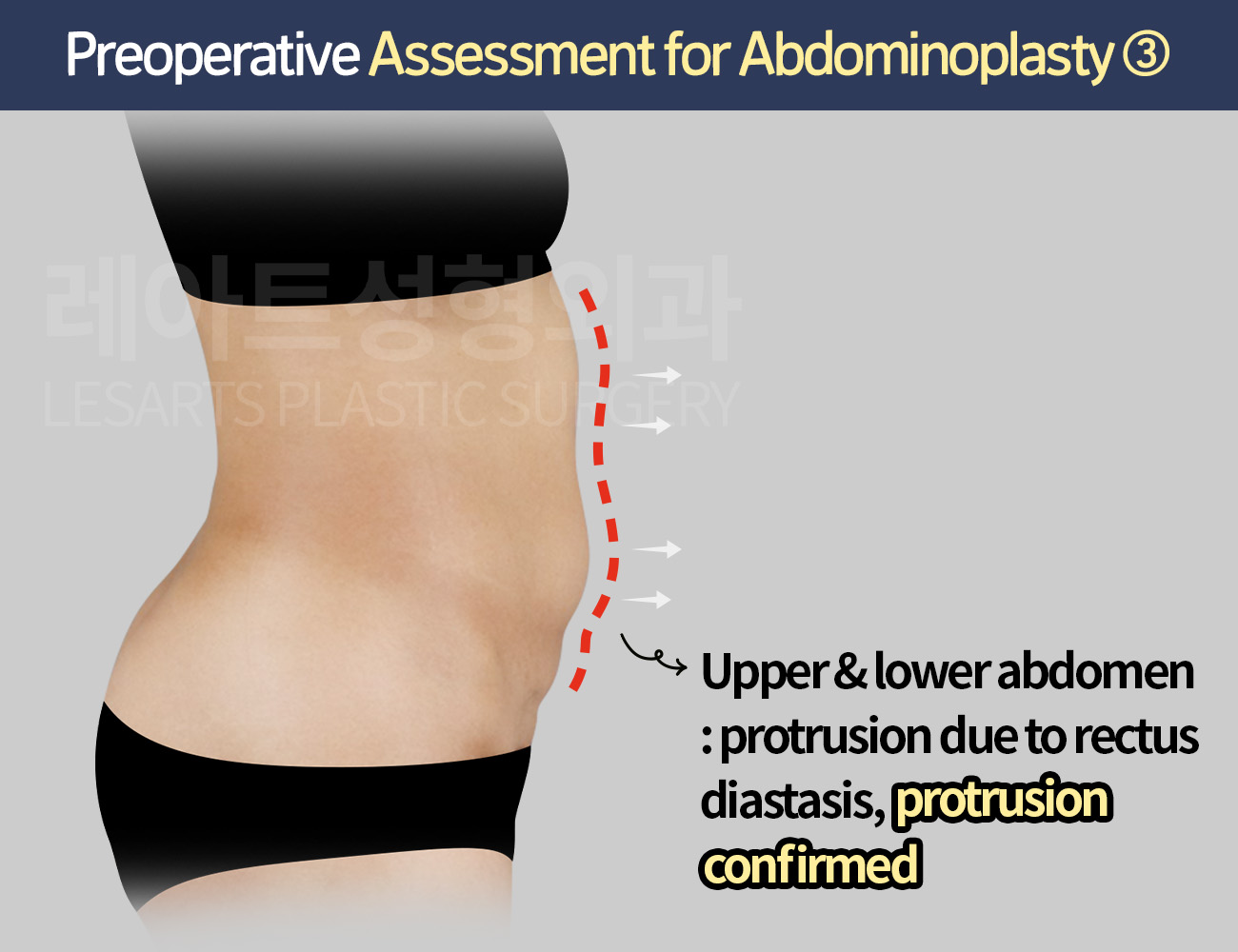
Diastasis recti was clearly identified across both the upper and lower abdomen,
with separation palpable during clinical manual examination.
When observing the rectus profile from the side or in a forward-bending posture,
due to fascial laxity of the rectus abdominis,
the entire abdomen presented an overall rounded and forward-bulging contour.
The pre-existing C-section scar was generally acceptable,
though placed somewhat high and oriented slightly obliquely.
Assessing her physical condition comprehensively, diastasis recti was present in both upper and lower regions,
yet the absolute degree of superficial skin laxity was not severe.
Because supraumbilical wrinkling and ptosis were not marked,
performing a full M-type abdominoplasty involving upper abdominal incisions was considered an unnecessarily extensive approach.
However, because muscle plication addressing diastasis recti up into the upper abdomen was necessary,
a standard S-type mini tummy tuck addressing only the lower abdomen was insufficient for full plication,
leading to the surgical plan of performing a floating umbilicoplasty abdominoplasty.
Additionally, abdominal liposuction was performed concurrently
to lightly trim subcutaneous fat deposits across the anterior abdomen that remained despite workouts and diet.
Here are the follow-up observations following floating umbilicoplasty abdominoplasty.
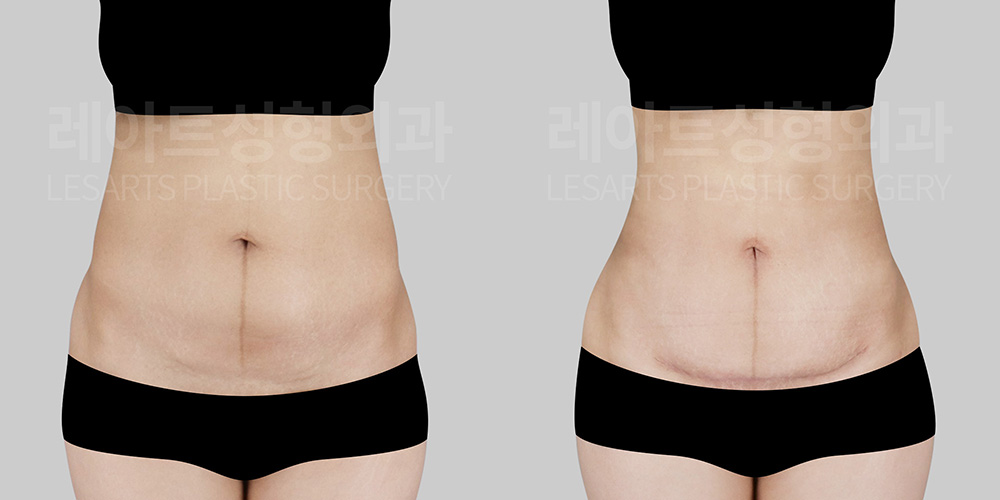
Floating Umbilicoplasty Tummy Tuck at 2 Months Post-Op
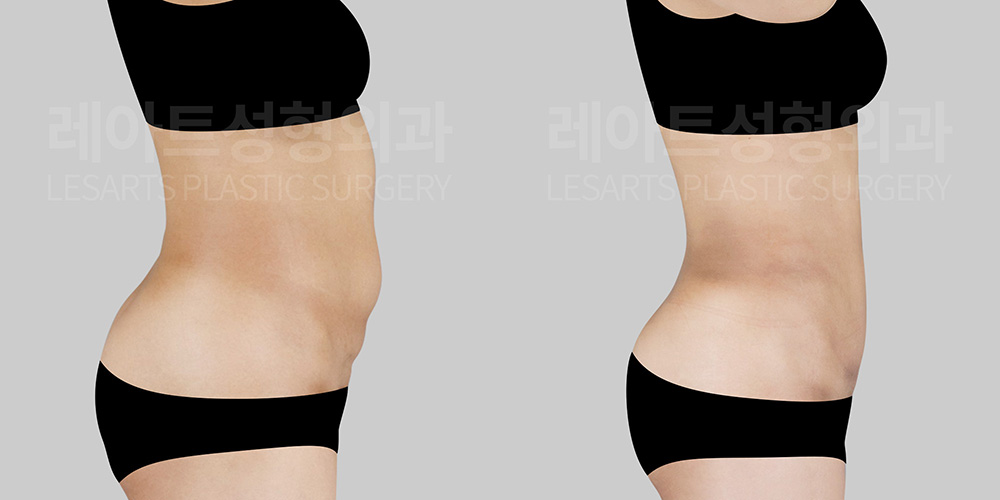
Abdominal Contour Changes Following Rectus Plication
At 2 months post-op, internal swelling has not completely subsided
and induration (bio-bond tissue firmness) remains present during this recovery phase.
Nevertheless, the central lower belly bulge that had caused the patient concern showed noticeable flattening.
At this stage, the incision line may appear relatively erythematous,
yet in this case it remained stable without hypertrophic widening or significant irregularity.
Common physical sensations reported around 2 months following abdominoplasty include
tissue firmness from internal healing, temporary hypoesthesia, and a tight pulling sensation across the abdomen.
These recovery symptoms tend to soften and gradually subside over time.
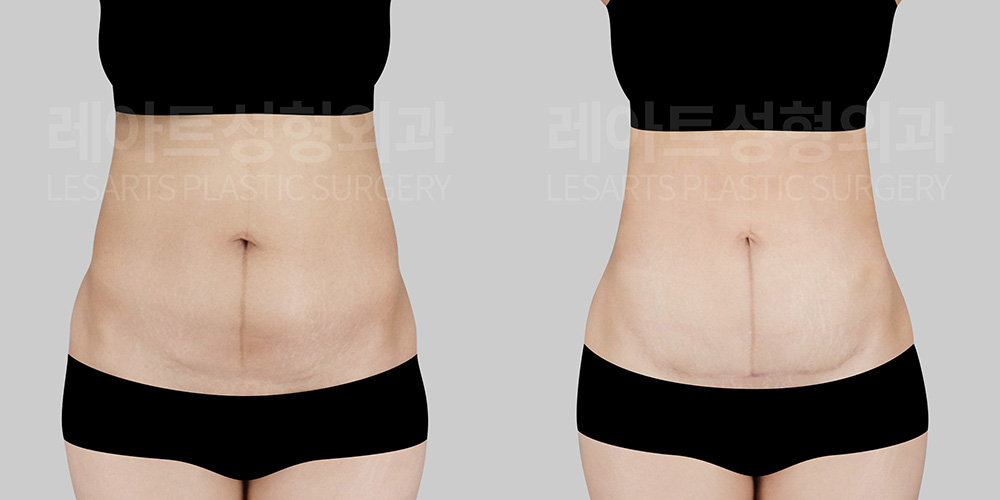
Abdominoplasty 1 Year and 2 Months Post-Op - Dr. Kukhan Lee, Lesarts
At the current 1 year and 2 months follow-up,
stable, favorable progress can be observed across treated areas.
While slight residual pigmentation may remain along the incision line, the overall redness has faded noticeably,
and is expected to continue settling more naturally over time.
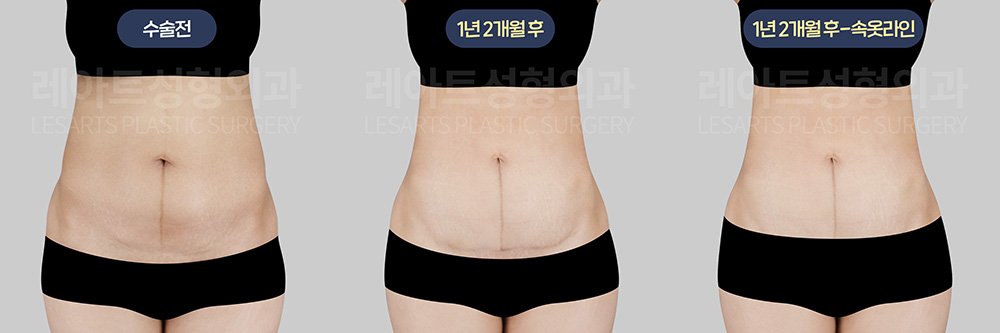
Tummy Tuck Scar Size and Placement - Lesarts Plastic Surgery
While the total scar length is somewhat longer than a standard C-section mark due to surgical design,
the incision was placed low enough below the underwear line,
which helps reduce visibility during daily activities or when wearing swimwear.
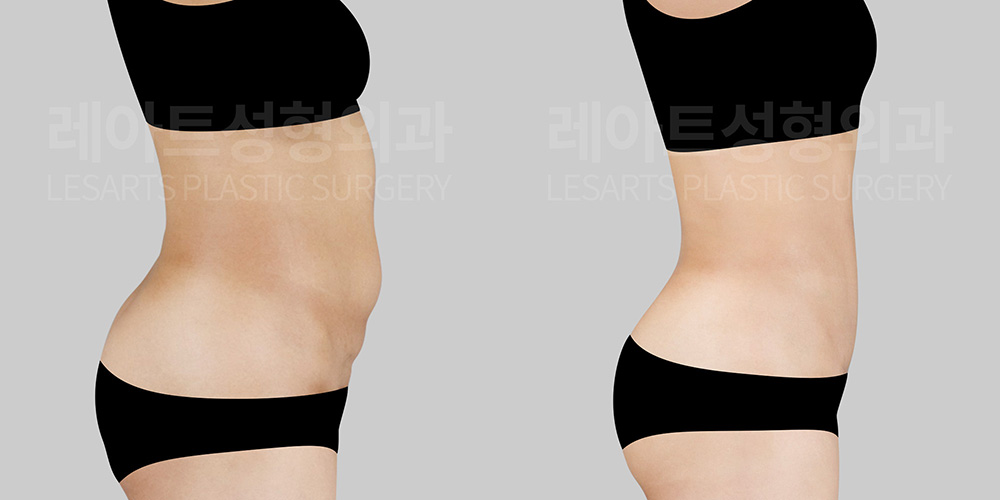
Rectus Plication and Abdominal Contouring Before & After Comparison

Floating Umbilicoplasty Tummy Tuck - Lesarts Plastic Surgery
The overall abdominal silhouette showed a smoother, more supportive contour compared to pre-op,
and the bulging contour observed when leaning forward or from the side
improved toward a more natural-looking, firmer line.
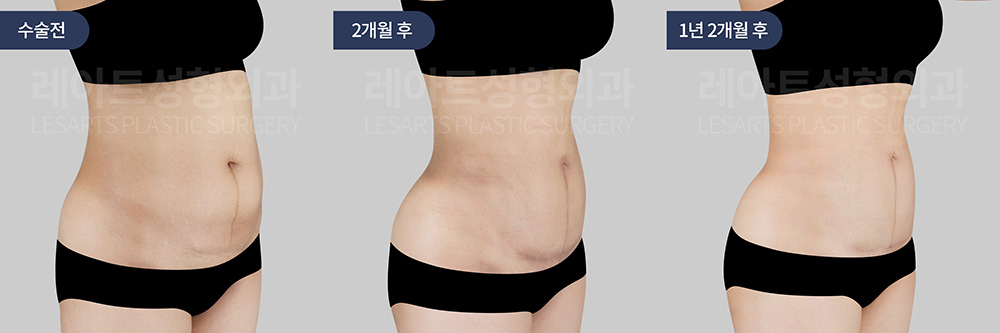
Abdominoplasty 1 Year Post-Op - Lesarts Plastic Surgery
Internal tissue firmness has also largely softened,
allowing comfortable daily activities without notable pulling sensations or stiffness.
Because internal tissue remodeling continues over an extended timeframe,
the scar line and contour may continue to stabilize further.
In addition, the patient's personal efforts with regular aerobic exercise, healthy lifestyle management,
and consistent scar aftercare played an important supportive role
in maintaining favorable progress over this 14-month period.
This case reflects that surgical care is not the sole end of body management, but rather a starting point for continued personal maintenance
to support long-term contour results.
Among those considering abdominoplasty,
concerns regarding the surgical scar placed near the underwear line
often lead to hesitation.
However, when postpartum abdominal changes affect daily confidence and lifestyle,
an anatomical evaluation and 1:1 consultation with a plastic surgeon can help clarify suitable options.
Because the most appropriate surgical approach can vary according to individual abdominal shape, degree of superficial skin laxity, and rectus muscle condition,
we recommend undergoing an in-depth consultation rather than hesitating alone.
We will carefully evaluate your current condition and explain tailored abdominoplasty options suitable for your frame.
Abdominoplasty FAQ
Q1. Why does the lower belly remain protruding after childbirth despite consistent workouts and weight management?
A. Rather than simple skin or fat issues, this is often related to 'diastasis recti,' a separation of the underlying rectus abdominis muscles.
When muscles stretched during pregnancy do not return together post-delivery, reduced supportive strength
can allow abdominal contents to push forward. Because this structural separation is difficult to resolve through diet or exercise alone,
surgically plicating the separated rectus muscles can help create a flatter abdominal profile.
Q2. How does 'floating umbilicoplasty abdominoplasty' differ from standard abdominoplasty (full or mini)?
A. It allows rectus plication from the upper to lower abdomen while preserving the natural navel position without transposition.
It is considered when a full tummy tuck (M-type)—which transposes or reconstructs the navel—may be excessive regarding incision length and scar burden.
By temporarily mobilizing (floating) the umbilicus, surgical access is secured to plicate upper rectus diastasis that a standard mini tummy tuck (S-type) cannot readily reach,
designed to limit incision length while extending the functional repair area.
Q3. When do post-operative tissue firmness and tightness subside after a tummy tuck?
A. Induration is often most noticeable around 2 months post-op, and gradually softens over time.
During early recovery (around 2 months), internal healing can cause firmness, mild sensory changes, or a tight pulling sensation.
These are recognized physiological phases of tissue recovery that tend to soften over the course of a year or more,
allowing contours to settle more comfortably, though individual recovery rates vary.
Q4. How does an existing C-section scar change if I undergo abdominoplasty?
A. The procedure is typically planned along or utilizing the previous C-section scar line, which gradually fades in color as it settles.
While the incision may extend laterally beyond the original C-section mark, it is placed low within the underwear or bikini line to reduce visibility during daily wear.
After 1 year or more, post-operative redness typically diminishes into a more subtle appearance, although final scar appearance varies by skin type.
Q5. Is liposuction unnecessary if I undergo abdominoplasty?
A. Abdominoplasty and liposuction are frequently combined to improve overall contour harmony.
Abdominoplasty primarily focuses on excising redundant skin and plicating separated rectus muscles.
Addressing residual localized subcutaneous fat deposits via liposuction helps create a smoother, continuous transition
across both the upper and lower abdomen.
Dr. Kukhan Lee


Cases finding
similar to my profile
Customer Diagnostics


Select the surgery and
area you are interestedto see real
before andafter changes.


we
make you,
the art
Clinic hours
MON - FRI
10 am – 7pm
SAT
10 am – 4pm
Holiday
SUN, HOLIDAY
Location
Lesarts Moon Clinic Tower 4-5F, 40, Nonhyeon-ro 168-gil,
Gangnam-gu, Seoul, Republic of Korea

Medical institution name Lesarts Plastic Surgery
Address Lesarts Moon Clinic Tower 4-5F, 40, Nonhyeon-ro 168-gil, Gangnam-gu, Seoul, Republic of Korea
Representative Moon sung jun
