




Online Consultation
Please accurately enter the information below.
Quick Cost Consultation
Quick Consultation & Reservation
Cases finding
similar to my profile






Doctor's Note
Medical columns by our surgeons
One Week After Mini Liposuction (Liposuction Injections): Recovery Mechanisms and Essential Care Guidelines
2026-08-18
One Week After Mini Liposuction (Liposuction Injections): Recovery Mechanisms and Essential Care Guidelines
Q. What recovery mechanisms occur in the body during the first week following mini liposuction (fat extraction injections),
and what core post-procedure care helps support an improved, natural-looking contour?
A. Because this is a healing phase where bruising and swelling shift downward with gravity and temporary tissue firmness (bio-bond) begins,
it is essential to adhere to puncture protection, balanced nutrition, and strict avoidance of smoking and alcohol.
[ Learn More About Mini Liposuction (Micro-Fat Extraction) ]
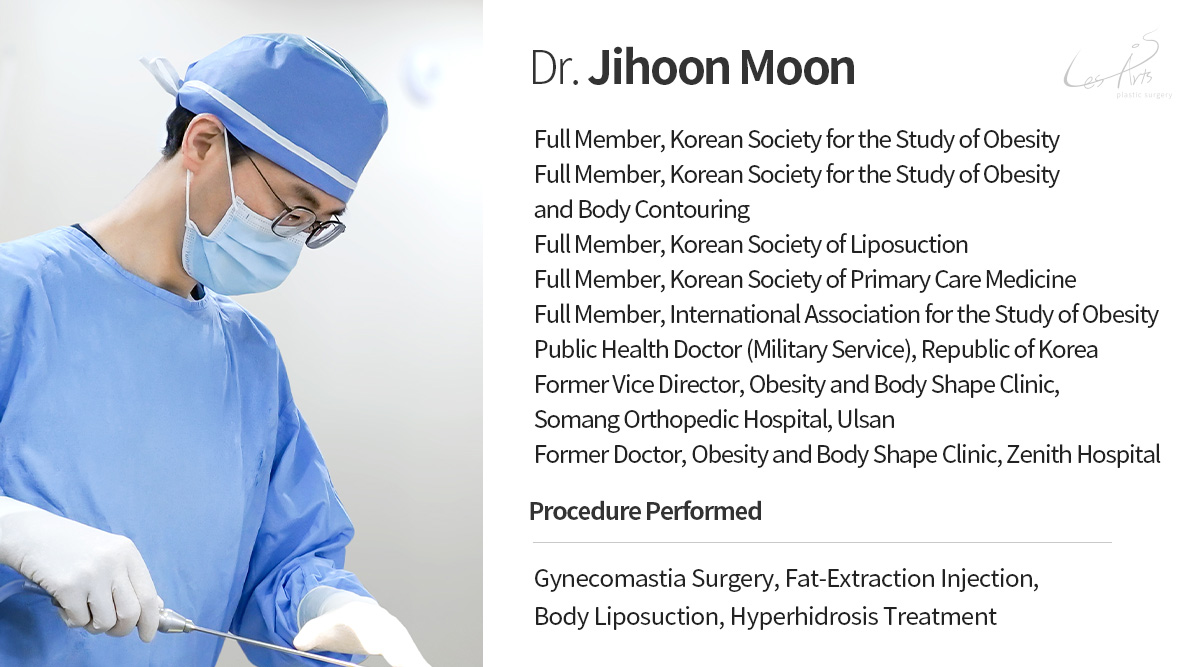
Hello, I am Dr. Jihoon Moon, Board-Certified Plastic Surgeon at Lesarts Plastic Surgery.
Mini liposuction via fat extraction injection is a specialized body contouring procedure
that directly aspirates localized fat while supporting the natural breakdown of surrounding residual subcutaneous layers.
The first week post-procedure represents a dynamic recovery window where the body adapts to its refined contour
and stimulated subcutaneous tissues actively undergo internal healing.
It is also the stage where many patients begin to feel that their circumference has already started to decrease,
noticing early positive changes firsthand.
Today, I will detail the physiological recovery mechanisms observed around day 7 post-procedure
and explain key aftercare guidelines designed to support a smoother, more defined final outcome.
1. One Week Post-Mini Liposuction (Fat Extraction Injections): Physiological Body Changes
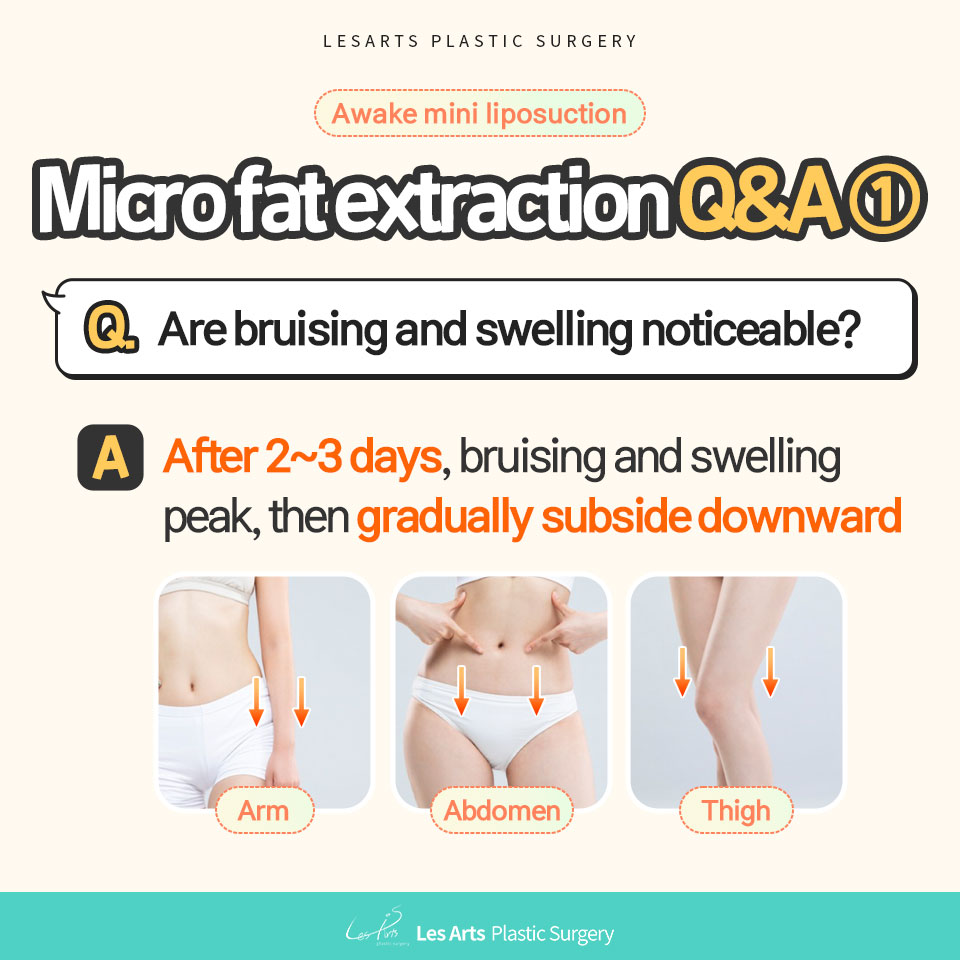
Swelling After Fat Extraction Injections - Lesarts Plastic Surgery
Progression of Bruising and Swelling, and the Natural Effect of Gravity
Typically, bruising and swelling peak around days 2 to 3 after mini liposuction, becoming most noticeable during this window.
After passing this peak, they begin to subside gradually,
yet a certain degree of residual edema remains within the tissue around day 7.
An expected physiological pattern is that bruising and swelling do not remain strictly localized to the treatment site, but migrate downward with gravity.
If the upper arms were treated, bruising and fluid shift toward the elbow;
for the thighs, they shift toward the knee perimeter;
and for the abdomen, they gradually travel toward the pelvis and groin.
This downward descent occurs as interstitial lymph fluid and micro-hematoma components migrate inferiorly under gravity while being absorbed by the body,
representing a normal, healthy phase of physiological recovery.
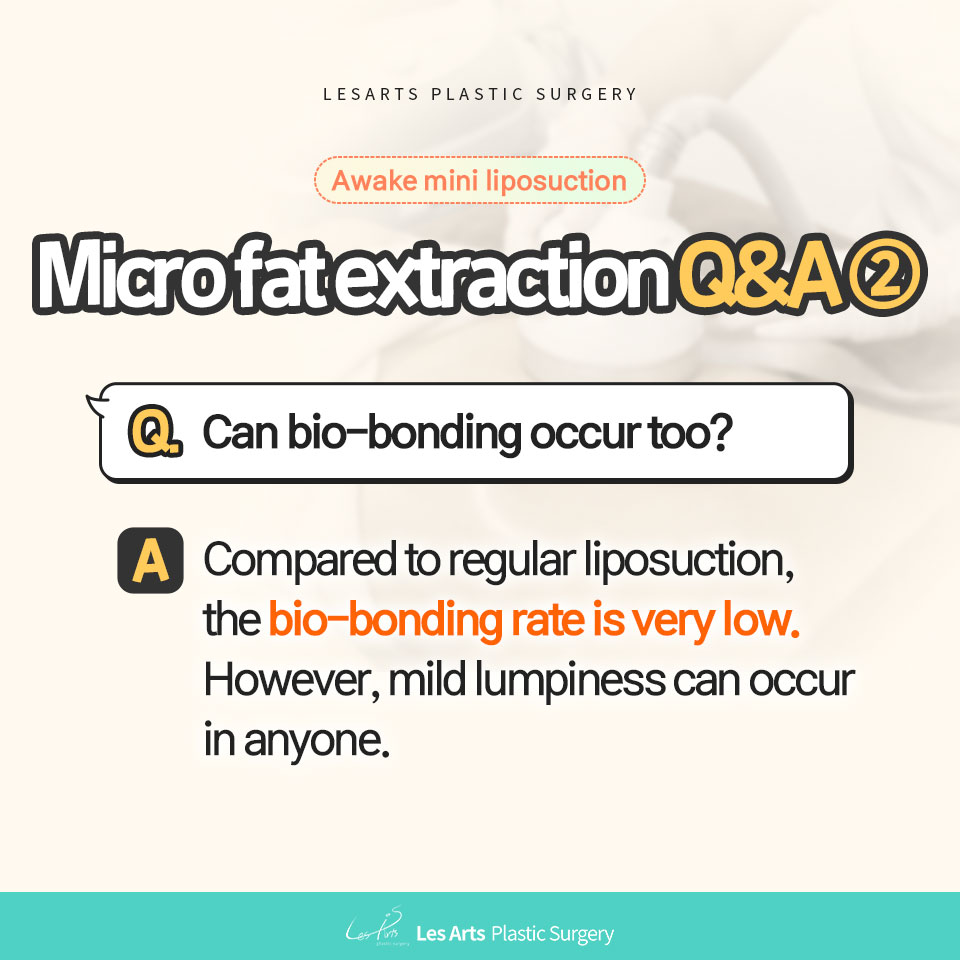
Bio-Bond After Fat Extraction Injections - Dr. Jihoon Moon, Lesarts
Understanding 'Bio-Bond' Tissue Firmness and Its Physiological Mechanism
During follow-up visits, patients frequently ask,
“Why does the treated area feel firm, lumpy, or tight to the touch?”
This palpable, temporary firmness in the subcutaneous layer is clinically known as 'bio-bond.'
As fibroblasts populate the subcutaneous tunnels created by micro-cannula aspiration
and produce collagen to repair disrupted tissue planes,
a temporary state of natural internal fibrosis and tissue adherence develops.
Compared to extensive high-volume liposuction requiring wider dissection,
the intensity and extent of bio-bond formation after localized mini liposuction is noticeably milder.
However, subtle induration and tightness can occur in anyone during normal recovery,
serving as a positive indication that the skin is adapting and adhering firmly along the newly contoured plane.
※ Aftercare TIP: Incorporating radiofrequency (RF) aftercare around weeks 2 and 4 according to individual healing speed
can help stimulate local microcirculation and accelerate the softening of firm, indurated tissue.

Mini Liposuction Recovery Timeline - Dr. Jihoon Moon, Lesarts
Traditional Liposuction vs. Mini Liposuction Injections: Recovery and Swelling Resolution
Compared to conventional high-volume liposuction involving general anesthesia or sedation and surgical incisions,
fat extraction injections typically involve substantially less bruising and swelling, allowing for a much faster return to daily routines.
Because it is performed awake under local anesthesia, everyday activities can be resumed from the day of the procedure,
and by approximately 4 weeks post-procedure, the vast majority of residual swelling subsides, allowing the refined silhouette to become visibly defined.
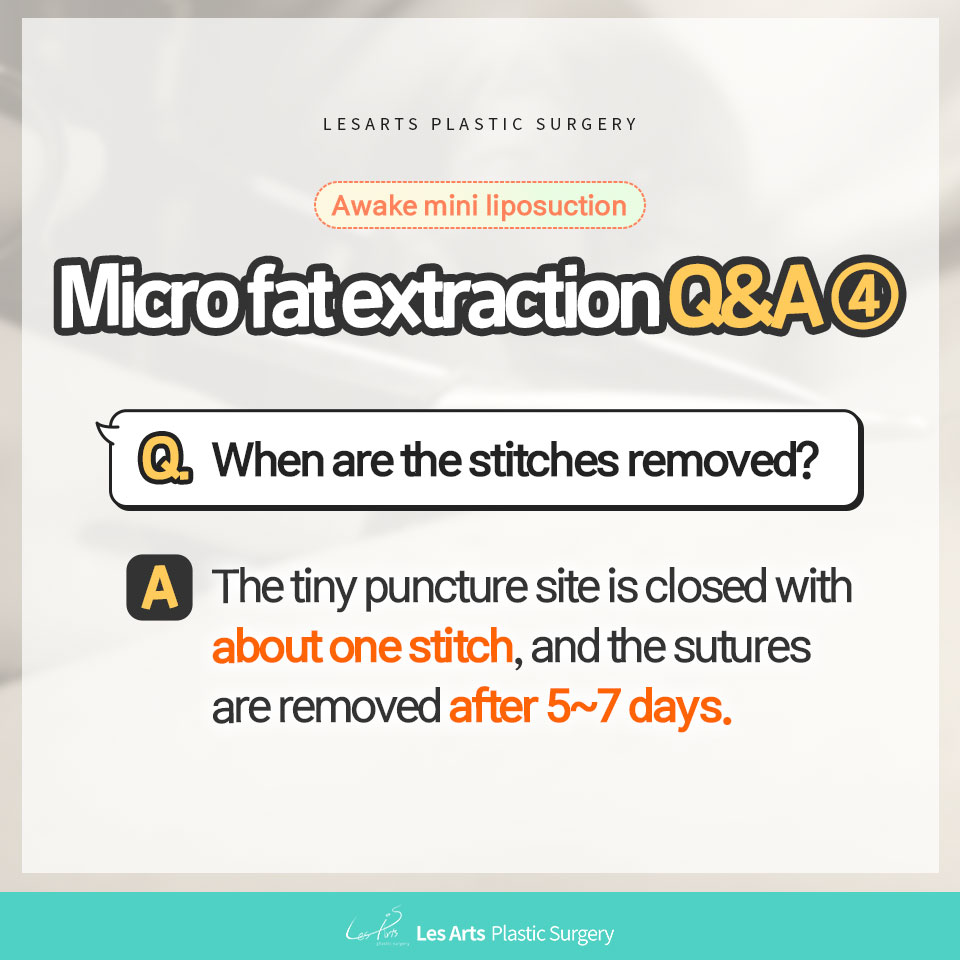
Suture Removal After Fat Extraction Injections
2. Wound and Puncture Management: Timely Suture Removal and Sun Protection
At our clinic, each micro-puncture through which the ultra-fine cannula was inserted
is closed with a delicate single-point suture to support clean, tidy epidermal healing.
Suture removal is scheduled approximately 5 to 7 days post-procedure.
Because the entry point is tiny with minimal tissue trauma, one week provides sufficient healing,
and removing sutures on schedule is designed to minimize visible suture marks on the skin.
However, the epidermal surface around the puncture site remains temporarily sensitive following cannula movement.
Therefore, applying a hydrocolloid adhesive dressing (such as DuoDERM) for approximately 1 to 2 weeks
after suture removal is recommended.
This helps maintain an optimal moist wound environment that supports skin re-epithelialization,
while shielding the vulnerable skin from UV rays to help prevent post-inflammatory hyperpigmentation.
Because prolonged exposure to strong outdoor sunlight as well as intense indoor fluorescent lighting
can contribute to pigment deposition during healing,
applying broad-spectrum sunscreen consistently until the puncture site stabilizes is advised.
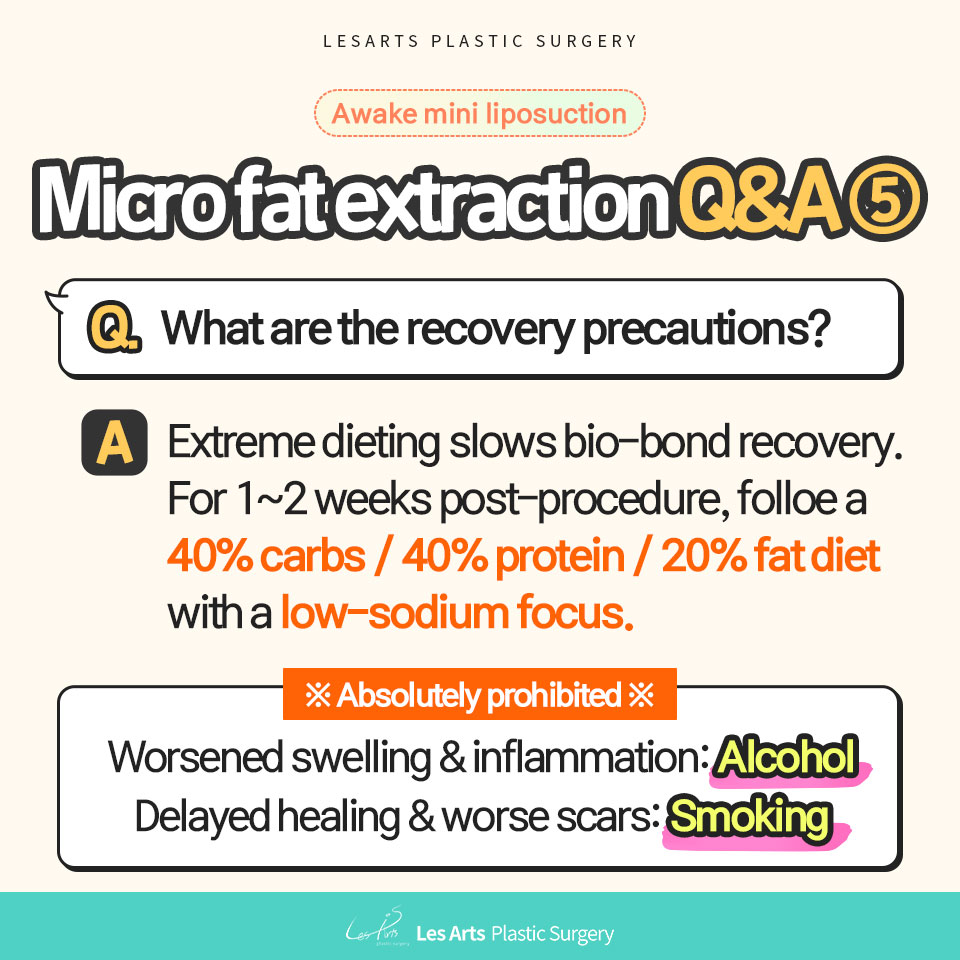
Post-Mini Liposuction Guidelines
3. Nutritional Strategies and Essential Lifestyle Guidelines During Recovery
Recommended Daily Caloric Intake and Macronutrient Balance
Consuming adequate, high-quality nutrition is essential to support healthy tissue repair and skin tone where fat was debulked.
Severe fasting or extreme caloric deficits immediately following treatment can impede normal healing and prolong bio-bond resolution.
Therefore, maintaining sufficient caloric intake to support basal metabolism is recommended during the first 1 to 2 weeks.
General Caloric Reference Guidelines - Men: approx. 2,200–2,800 kcal/day, Women: approx. 1,600–2,200 kcal/day
A balanced macronutrient distribution of approximately 40% complex carbohydrates, 40% protein, and 20% healthy fats is recommended.
Protein: As the primary building block for tissue regeneration,
consuming lean protein sources such as skinless chicken breast, white fish, tofu, and egg whites in each meal is beneficial.
Carbohydrates: Favoring complex carbohydrates (brown rice, oats, sweet potatoes) over refined sugars and processed flours
helps stabilize postprandial insulin levels, helping prevent unnecessary fat accumulation.
※ Dietary Items to Limit During Recovery ※
Excess sodium intake is a major contributor to prolonged postoperative edema.
High-sodium soups, heavily seasoned stews, and pickled foods cause fluid retention, noticeably delaying swelling resolution.
Maintaining a mild, low-sodium diet for at least the first week post-procedure is strongly recommended.
Risks of Alcohol and Smoking (Essential Restrictions During Recovery)
Alcohol
Alcohol causes peripheral vasodilation, which can exacerbate swelling and bruising,
and elevates core skin temperature, increasing the risk of localized inflammatory reactions at the puncture site.
Smoking (Nicotine)
Nicotine induces peripheral vasoconstriction,
substantially reducing microvascular blood flow to the treated area and depriving healing tissue of vital oxygen and nutrients.
Because this can impair wound healing and potentially lead to darker, firmer scar tissue, strict smoking cessation is required.
The first week following mini liposuction marks the beginning of contour changes.
This period can be viewed as an early transition phase leading toward your planned body silhouette.
While many patients notice early reductions in circumference within the first seven days,
this phase still involves normal temporary swelling and active internal tissue healing.
Over the course of roughly 4 weeks, the vast majority of residual swelling subsides
and the treated line settles according to the body's natural physiological timeline.
Therefore, rather than feeling anxious over minor daily swelling variations during the first week,
we encourage patients to follow our clinical aftercare guidelines
and allow their tissues sufficient time to heal and stabilize naturally.
When a specialized procedure is supported by attentive post-care from the patient,
the most satisfying, natural-looking contour results can be achieved.
FAQ
Q1. Why do bruising and swelling migrate toward the elbows, knees, or pelvis
rather than remaining strictly at the procedure site?
A. This represents a normal physiological healing process where interstitial fluids and minor blood components naturally travel downward
under the influence of gravity while being reabsorbed by the body.
Swelling shifts from the upper arms toward the elbows, from the abdomen toward the groin, and from the thighs toward the knees.
Q2. What causes palpable firmness ('bio-bond') in the treated area?
A. Bio-bond is a temporary phase of natural tissue fibrosis and adherence that occurs as fibroblasts concentrate in the subcutaneous tunnels
created by the cannula, producing collagen to repair disrupted planes.
Its occurrence is considerably milder than in large-volume surgery, reflecting a normal step in skin contraction and contour stabilization.
Q3. Why should hydrocolloid dressings and sunscreen continue to be used for 1–2 weeks
even after sutures are removed on days 5 to 7?
A. Dressings maintain a moist healing environment to support epidermal regeneration on skin sensitized by cannula friction,
while shielding vulnerable puncture points from outdoor sunlight and indoor light to help prevent post-inflammatory hyperpigmentation.
Q4. What dietary balance is recommended for tissue recovery, and what foods should be avoided?
A. Rather than extreme fasting, consuming balanced meals with roughly 40% complex carbohydrates, 40% protein, and 20% healthy fats
provides necessary energy for normal tissue remodeling. Conversely, high-sodium foods such as heavily seasoned soups cause fluid retention
and delay swelling resolution, making a mild, low-salt diet advisable for at least the first week.
Q5. How do alcohol and smoking adversely affect the recovery process?
A. Alcohol causes peripheral vasodilation, worsening swelling and increasing the risk of localized inflammation.
Nicotine from smoking constricts microvessels, reducing blood flow, oxygen, and nutrient delivery to the puncture site,
which can impair wound healing and contribute to firmer, more noticeable scarring.
Dr. Jihoon Moon


Cases finding
similar to my profile
Customer Diagnostics


Select the surgery and
area you are interestedto see real
before andafter changes.


we
make you,
the art
Clinic hours
MON - FRI
10 am – 7pm
SAT
10 am – 4pm
Holiday
SUN, HOLIDAY
Location
Lesarts Moon Clinic Tower 4-5F, 40, Nonhyeon-ro 168-gil,
Gangnam-gu, Seoul, Republic of Korea

Medical institution name Lesarts Plastic Surgery
Address Lesarts Moon Clinic Tower 4-5F, 40, Nonhyeon-ro 168-gil, Gangnam-gu, Seoul, Republic of Korea
Representative Moon sung jun
