




Online Consultation
Please accurately enter the information below.
Quick Cost Consultation
Quick Consultation & Reservation
Cases finding
similar to my profile






Doctor's Note
Medical columns by our surgeons
Adolescent Male Gynecomastia: Is "Waiting" the Only Answer? [Doctor's Note by Dr. Jihoon Moon]
2026-08-24
Adolescent Male Gynecomastia: Is "Waiting" the Only Answer? [Doctor's Note by Dr. Jihoon Moon]
Does adolescent gynecomastia resolve naturally over time?
While pubertal gynecomastia often improves naturally within 1 to 3 years, not all cases resolve on their own.
If glandular tissue feels firm upon palpation, persists without size reduction, or is accompanied by pain or asymmetry, accurate diagnostic evaluation and clinical follow-up are needed.
▶ Lesarts Gynecomastia Surgery Guide
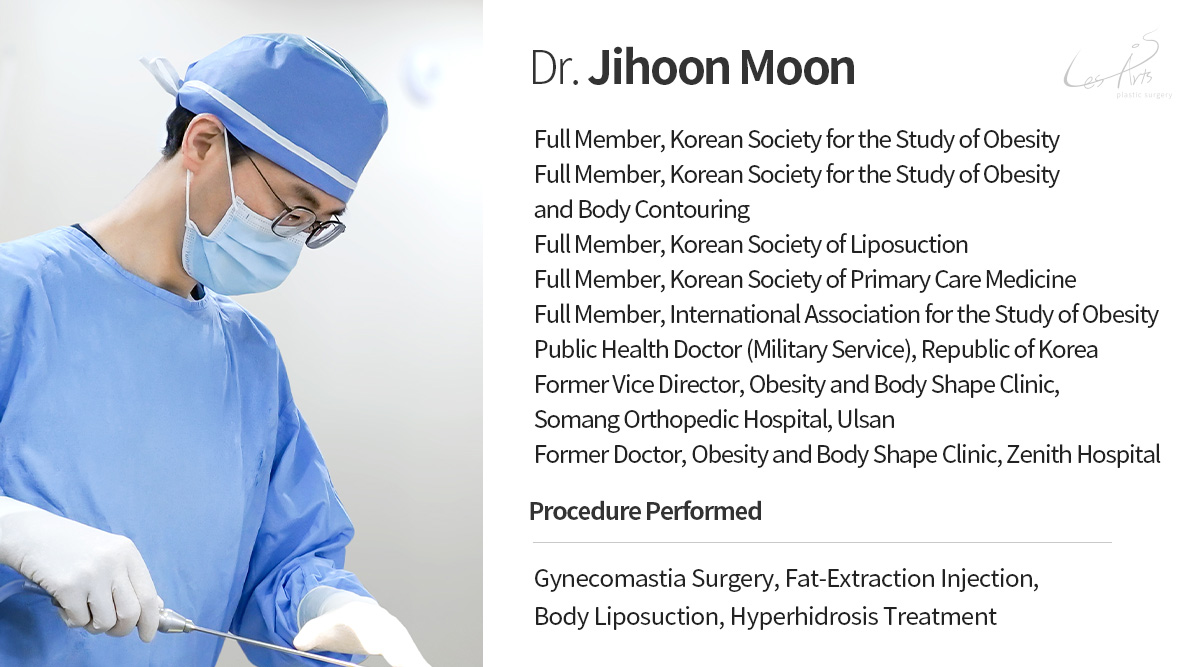
Hello, I am Dr. Jihoon Moon, Board-Certified Plastic Surgeon at Lesarts Plastic Surgery.
Gynecomastia is not an issue confined solely to adult men.
Recently, middle and high school-aged male students visiting our clinic
due to concerns regarding chest shape have been steadily increasing.
In particular, gynecomastia presenting during puberty—a phase highly sensitive to bodily changes—cannot
be viewed merely as a cosmetic shift.
Beyond concerns regarding body image,
it can influence self-esteem, peer relationships, and social interactions.
Today, I would like to explain key considerations regarding gynecomastia presenting in minor male students,
focusing particularly on important aspects parents should know.
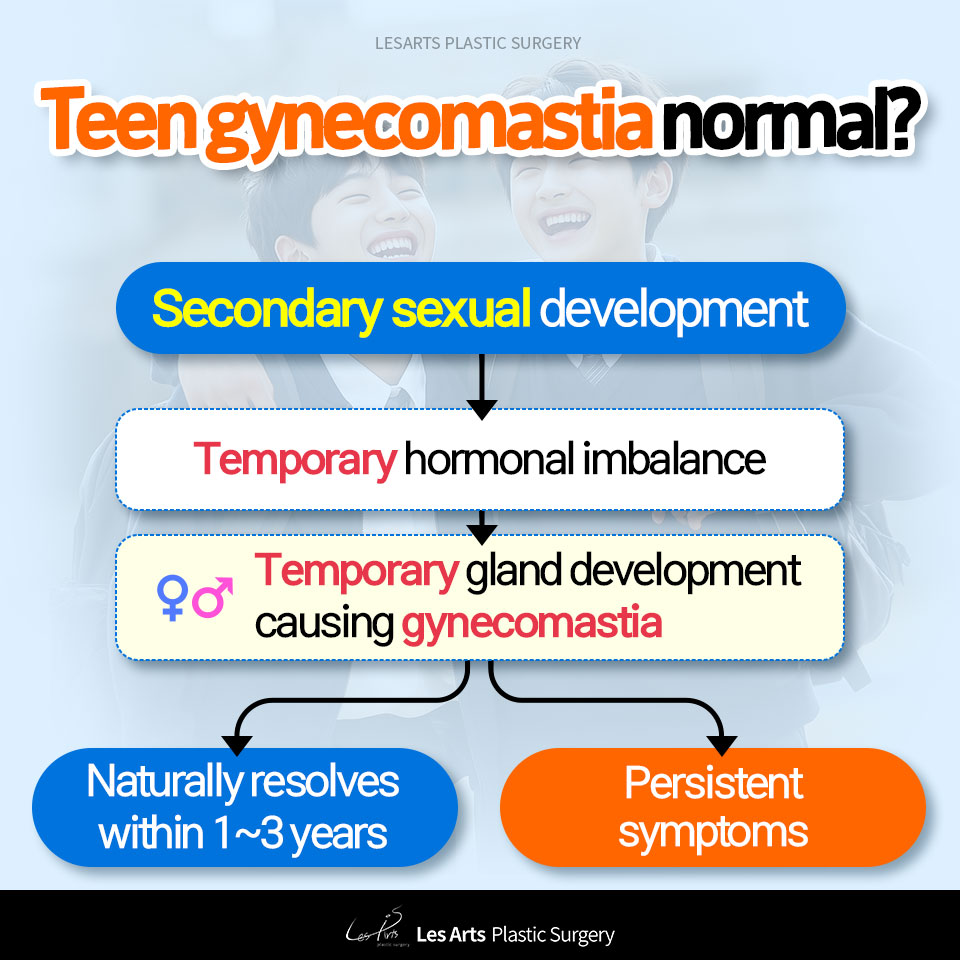
[Causes of Adolescent Gynecomastia - Dr. Jihoon Moon, Lesarts Plastic Surgery]
Is Pubertal Gynecomastia Normal?
To begin with the primary conclusion, gynecomastia arising during puberty is a relatively common physiological change.
As secondary sexual characteristics develop, temporary shifts in the balance between androgens and estrogens occur,
and under this influence, mammary glandular tissue may temporarily proliferate.
In many cases, these changes regress or resolve naturally within approximately 1 to 3 years.
Because of this, families are often told that “it may improve on its own over time.”
While this statement holds true for many, an essential point is that not all gynecomastia resolves spontaneously.
There are presentations that persist as time passes,
and in some individuals, the condition does not remain a transient shift, but continues as persistent gynecomastia.
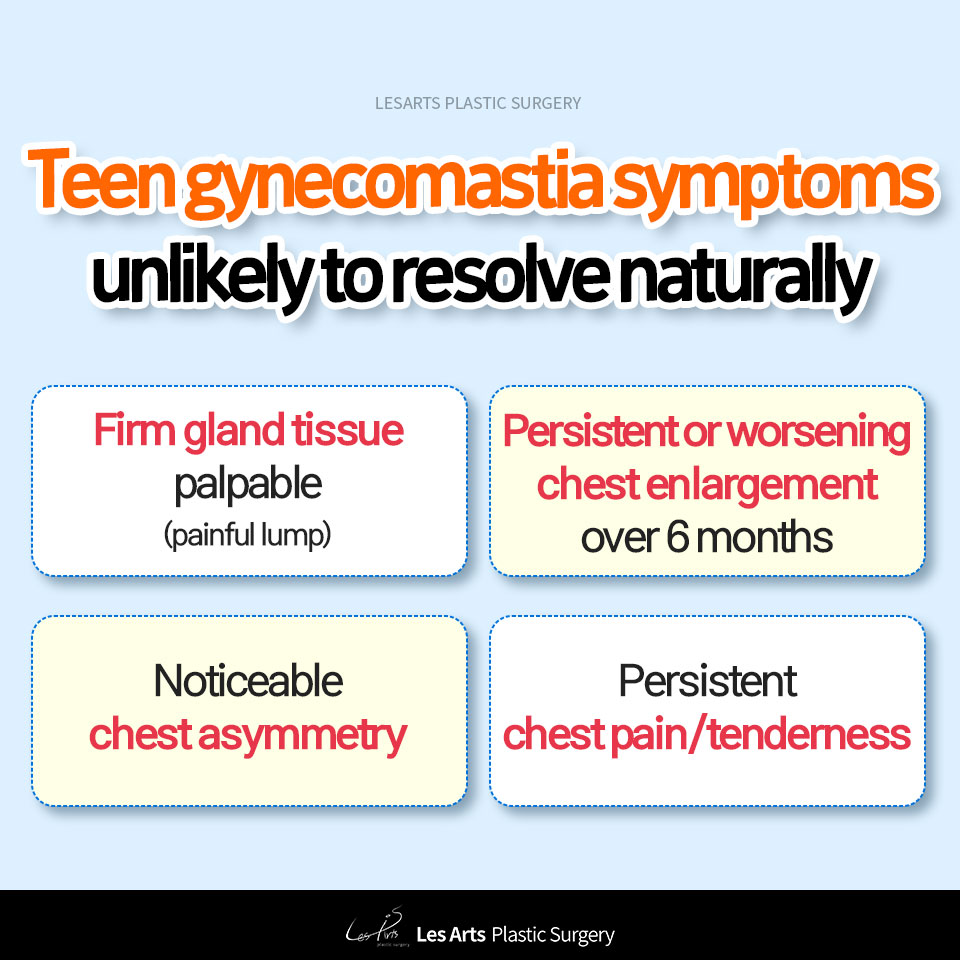
[Can Adolescent Gynecomastia Resolve Naturally - Dr. Jihoon Moon, Lesarts]
In particular, the likelihood of spontaneous resolution may be lower under the following circumstances:
- Glandular tissue is palpable as a firm nodule or mass
- No reduction in size is observed over 6 months, or enlargement progresses
- Distinct bilateral asymmetry is present between the breasts
- Pain or tenderness upon palpation persists, whether at rest or with pressure
When such signs are present, rather than passive observation alone, a more proactive clinical assessment is needed.
Therefore, assuming that “waiting a little longer” is always appropriate is not necessarily correct.
Current national health insurance criteria in Korea generally recommend
observing progress for at least 6 months before re-evaluating adolescent gynecomastia.
While this serves as a reasonable benchmark to limit unnecessary intervention,
clinical practice frequently presents different practical realities.
By the time a student visits a clinic for gynecomastia,
considerable emotional stress has often accumulated.
Furthermore, when distinct gynecomastia is identified at the initial visit,
there are numerous cases where the condition persists without meaningful reduction even after 6 months.
Ultimately, waiting alone does not provide a universal solution for every adolescent presentation.

[Diagnosis and Management of Adolescent Gynecomastia - Dr. Jihoon Moon, Lesarts]
For adolescent males, gynecomastia is not solely an aesthetic concern,
and the personal distress experienced by the student can be greater than anticipated:
- Avoiding changing clothes during physical education classes
- Reluctance to visit swimming pools, public baths, or saunas
- Insisting on wearing multiple layers or excessively baggy clothing
- Heightened sensitivity to peer attention or teasing → developing habits of hunching the torso or stooping the shoulders to conceal the chest
When these behaviors become repetitive, they can lead to social avoidance or feelings of withdrawal.
From a parent's perspective, one might wonder, 'Is this something to worry about so much?',
yet for the student, it can represent a daily, concrete source of stress.
Because adolescence is a vital developmental phase during which self-esteem and body image form,
dismissing it under the assumption that time will resolve everything may allow psychological burdens to linger over an extended period.

[Recurrence Considerations Following Gynecomastia Surgery - Dr. Jihoon Moon, Lesarts]
Should Surgery Be Postponed? - Addressing Concerns Regarding Regrowth
When considering surgery for minor patients, the most frequent concern raised by parents is,
“Since he is still growing, won't it recur if operated on now?”
Theoretically, because hormonal fluctuations continue during ongoing growth,
the possibility of glandular proliferation cannot be completely ruled out.
However, in clinical practice, meaningful glandular regrowth leading to clinical recurrence after proper surgical resection is considered uncommon.
Rather, it is helpful to weigh the following factors together:
- The clinical likelihood of recurrence is relatively low
- In contrast, the current emotional stress experienced can be substantial
- Continuous post-operative follow-up and monitoring remain available
That is, one may consider whether focusing solely on a low probability of recurrence
while requiring the student to endure ongoing discomfort and distress
represents the more reasonable approach.
It is important not to delay the evaluation of gynecomastia excessively.
For minor patients in particular, the timing of the initial medical visit carries practical significance.
Because health insurance guidelines require an observational period (typically 6 months or more) following the initial consultation,
delaying the initial visit can subsequently postpone the timeframe in which surgical options may be formally evaluated.

[Surgical Timing for Minor Gynecomastia Patients - Dr. Jihoon Moon, Lesarts]
While individual considerations differ based on presentation,
generally, “when the patient was first evaluated and diagnosed”
can directly influence subsequent treatment scheduling.
Therefore, if gynecomastia is suspected and accompanied by emotional burdens or daily discomfort,
obtaining an accurate diagnostic assessment early can serve as a practical step.
In adolescent gynecomastia, the supportive role of parents is paramount.
Adolescent boys often hesitate to speak openly with their parents
regarding physical changes or personal insecurities.
They may dismiss it themselves, thinking “it's just weight gain,”
worrying in isolation while withdrawing socially,
or relying on unverified information found online.
In such circumstances, rather than becoming overly alarmed
or dismissing the concern lightly,
helping the student obtain an objective medical evaluation is important.
Observing what discomfort or stress the student is experiencing
and initiating an open, thoughtful dialogue can be an effective beginning.
In Conclusion
Adolescent gynecomastia frequently improves on its own over time
as part of normal physiological development during puberty.
However, spontaneous resolution does not occur in every individual,
and there are clearly cases where clinical diagnosis and management are indicated depending on the condition.

[Diagnosis and Surgical Management for Middle & High School Gynecomastia - Dr. Jihoon Moon, Lesarts]
The three core points to keep in mind include:
- Not all gynecomastia resolves spontaneously over time.
- The personal distress experienced by the student can be substantial.
- Timely initial evaluation is important for determining subsequent treatment timing.
Importantly, allowing ongoing discomfort and stress to persist solely out of concern
over a low probability of recurrence should be carefully reconsidered.
Adolescent gynecomastia extends beyond simple chest appearance;
it can affect a young person's emotional well-being, daily routines, and quality of life during a sensitive developmental stage.
Therefore, when symptoms are suspected, seeking an accurate diagnosis early
and considering appropriate clinical intervention when indicated
can provide practical support for the student.
▶ View Real Clinical Cases of Gynecomastia at Lesarts
FAQ
Q1. Does pubertal gynecomastia resolve naturally over time?
Pubertal gynecomastia commonly arises due to hormonal shifts
and often improves spontaneously within 1 to 3 years.
However, spontaneous resolution does not occur in every case.
Q2. When should adolescent gynecomastia be medically evaluated?
If glandular tissue feels firm upon palpation, pain is present,
no size reduction occurs over 6 months, or bilateral asymmetry is distinct,
obtaining an accurate diagnostic assessment is recommended over waiting alone.
Q3. Why is early diagnosis important in adolescent gynecomastia?
Adolescent gynecomastia can affect daily life and self-esteem, such as avoiding changing clothes or swimming.
Additionally, the timing of the initial medical evaluation can influence subsequent treatment scheduling under clinical guidelines.
Q4. Can gynecomastia recur if operated on during the growth period?
Because hormonal fluctuations continue during ongoing growth,
the potential for glandular proliferation cannot be completely excluded.
However, surgical indications and timing should be determined after thoroughly evaluating the clinical presentation.
Q5. What should parents do if gynecomastia is suspected in their child?
Rather than simply assuming it is standard weight gain,
it is important to first acknowledge the discomfort and stress the student may be experiencing.
When appropriate, helping them receive an objective medical evaluation from a specialist is recommended.
Dr. Jihoon Moon


Cases finding
similar to my profile
Customer Diagnostics


Select the surgery and
area you are interestedto see real
before andafter changes.


we
make you,
the art
Clinic hours
MON - FRI
10 am – 7pm
SAT
10 am – 4pm
Holiday
SUN, HOLIDAY
Location
Lesarts Moon Clinic Tower 4-5F, 40, Nonhyeon-ro 168-gil,
Gangnam-gu, Seoul, Republic of Korea

Medical institution name Lesarts Plastic Surgery
Address Lesarts Moon Clinic Tower 4-5F, 40, Nonhyeon-ro 168-gil, Gangnam-gu, Seoul, Republic of Korea
Representative Moon sung jun
