




Online Consultation
Please accurately enter the information below.
Quick Cost Consultation
Quick Consultation & Reservation
Cases finding
similar to my profile






Doctor's Note
Medical columns by our surgeons
Abdominal Liposuction | Which Areas Should Be Emphasized for an Idol-Like Abdominal Line in a 20s Female?
2026-10-02
Abdominal Liposuction | Which Areas Should Be Emphasized for an Idol-Like Abdominal Line in a 20s Female?
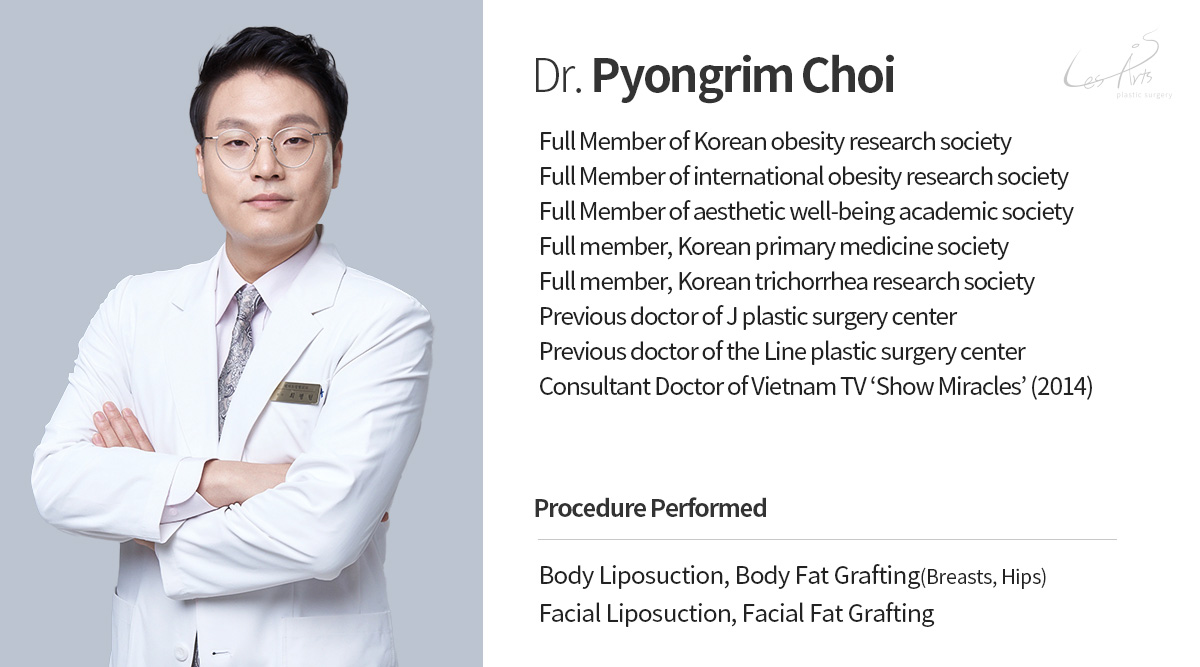
Written by Dr. Pyongrim Choi, Lesarts Plastic Surgery
Q. What are the key liposuction areas and design strategies to create an idol-like abdominal contour that stands out in crop tops for a relatively slender female in her 20s (156 cm / 52 kg)?
A. Rather than excessive over-aspiration aimed solely at flattening the abdomen, the core strategy involves smoothing the periumbilical fullness and lower abdominal protrusion while intensively tapering the waistline flowing from below the costal margin to the pelvis.
Preventing periumbilical hollow depressions while preserving three-dimensional curvature and subtle eleven-line shadows establishes a narrow waist and smooth, idol-like abdominal silhouette.
[Learn More About Lesarts Abdominal Liposuction]
This column was authored directly by our medical staff.
※ Unauthorized copying, editing, or redistribution is strictly prohibited. ※
A clear shift in aesthetic ideals among women in their 20s has emerged in recent years.
Rather than pursuing extreme caloric restriction to achieve an emaciated frame, women strongly favor balanced full-body proportions with natural S-curve curvature and resilient contours that appear defined in crop tops and fitted attire.
In particular, a streamlined, idol-like abdominal silhouette displayed cleanly in crop tops or high-waisted trousers is one of the most frequent aesthetic goals requested during consultations.
Does an appealing abdominal contour resembling that of a girl group member simply materialize from having low body fat and a flat belly?
1. The Anatomical Essence of an Idol Abdominal Line: Three-Dimensional Silhouette Over Sheer Flatness
Examining stage performers reveals that their abdominal profiles differ fundamentally from monotonous, flat abdomens stripped bare of subcutaneous fat.
The core element lies in a slender circumference paired with three-dimensional lateral curves transitioning from the lower ribs into a tapered waist and rounded pelvic flares.
Specifically, three key anatomical zones dictate visual refinement in crop tops or low-rise attire:
✔ A tapered, narrow waist indentation extending from beneath the costal margin into the central waist
✔ Subtle, natural eleven-line vertical shadowing along the junction of the rectus abdominis and oblique muscles
✔ A smooth, flat lower abdomen transitioning cleanly to the anterior pelvic plane without periumbilical or infraumbilical bulging
Therefore, building a desirable abdominal profile relies not on scraping out subcutaneous fat indiscriminately,
but on deliberate surgical design deciding which zones to debulk and which buffer layers to retain to maintain three-dimensional depth.
2. Clinical Case: 20s Female (156 cm / 52 kg) Troubled by Lower Belly Fullness Despite a Slender Build
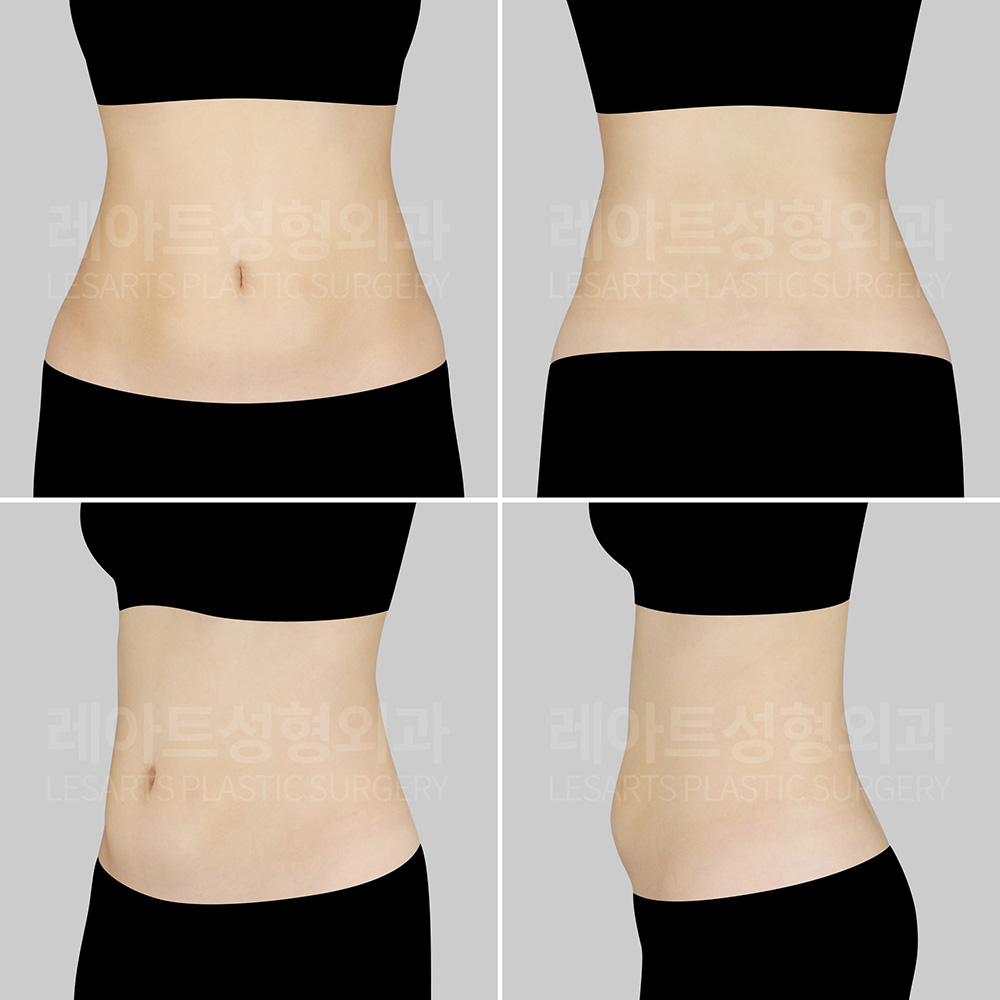
Preoperative Physical Examination for Abdominal Liposuction - Lesarts Plastic Surgery
The patient was a female in her 20s within standard body mass index parameters,
who presented with localized fullness concentrated along the anterior abdominal wall and flanks relative to her slender extremities.
During consultation, her primary concerns focused on two issues:
✔ Outward periumbilical protrusion and rounded lower abdominal bulging observable on frontal and lateral views
✔ Desire to accentuate waistline curvature for a slender, defined appearance in crop tops
“I want to bring out the natural waistline of my underlying skeletal frame, making it appear far more tapered and clearly contoured.”
This request served as the primary surgical objective.
She strongly envisioned a profile where periumbilical and lower abdominal planes fell smoothly without bulging,
while the lateral flank margins narrowed into a sharply tapered waistline beneath cropped attire or high-waisted pants.
3. Three Crucial Diagnostic Points Evaluated in Preoperative Design
1) Smoothly Reducing Central Periumbilical Bulging
Because the umbilicus represents the central junction connecting the upper and lower abdomen, cannula depth and aspiration volume must be calibrated precisely to create a continuous transition rather than extracting aggressively.
Over-aspirating immediately around the umbilical ring risks step-off demarcation or cicatricial hollow depressions; delicate feathering into surrounding subcutaneous planes is essential.
2) Uniformly Correcting Anterior Lower Abdominal Protrusion
Lower abdominal bulging is governed by multiple anatomical variables, including subcutaneous fat depth, dermal elasticity, rectus abdominis fascial tone, and pelvic tilt angles.
Preoperative ultrasound must verify whether the protrusion is driven purely by treatable subcutaneous adipose thickness;
if fascial laxity or visceral pressure contributes, the achievable scope and boundaries of isolated liposuction must be counseled beforehand.
In this patient, localized subcutaneous fat accumulation beneath elastic dermal tissue was confirmed as the primary driver, allowing for targeted debulking.
3) Accentuating Waist Indentation Relative to Pelvic Framework
This zone represents the most critical design section for overall visual proportion.
A graceful waist curve does not form automatically by solely extracting flank fat.
The three-dimensional line extending from the costal margin across the flank down to the iliac crest must be calculated cohesively.
Confirming that the waist tapers inward from the front while the anterior wall flattens on 90-degree lateral profile is key to surgical refinement.
4. Mini Abdominal Liposuction in Slender Frames: Uniformity Over Sheer Volume
Surgical design in slender contour sculpting differs completely from large-volume debulking in generalized obesity.
In young, elastic dermal envelopes, aggressive over-aspiration can cause dermal-fascial tethering, step-offs, and surface irregularities; preserving a uniform, thin buffer layer of subcutaneous fat is imperative.
Furthermore, because delicate vascular and cutaneous nerve networks traverse the subcutaneous plane, uniform cannula depth must be maintained safely,
with continuous cross-checking across dynamic angles to ensure skin transitions remain smooth both standing and sitting.
5. Postoperative Progress at 6 Weeks: Achieving a Defined Abdominal Silhouette
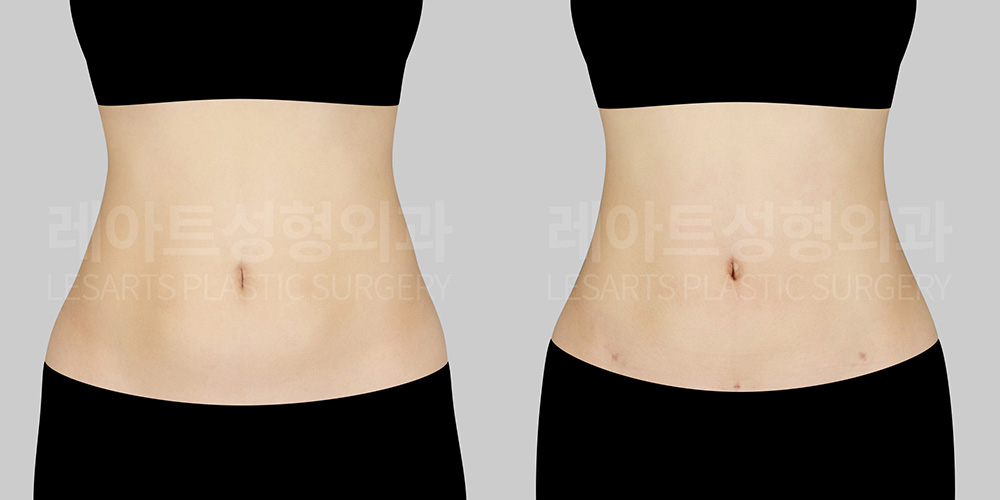
Changes at 1.5 Months Post-Abdominal Liposuction - Dr. Pyongrim Choi, Lesarts
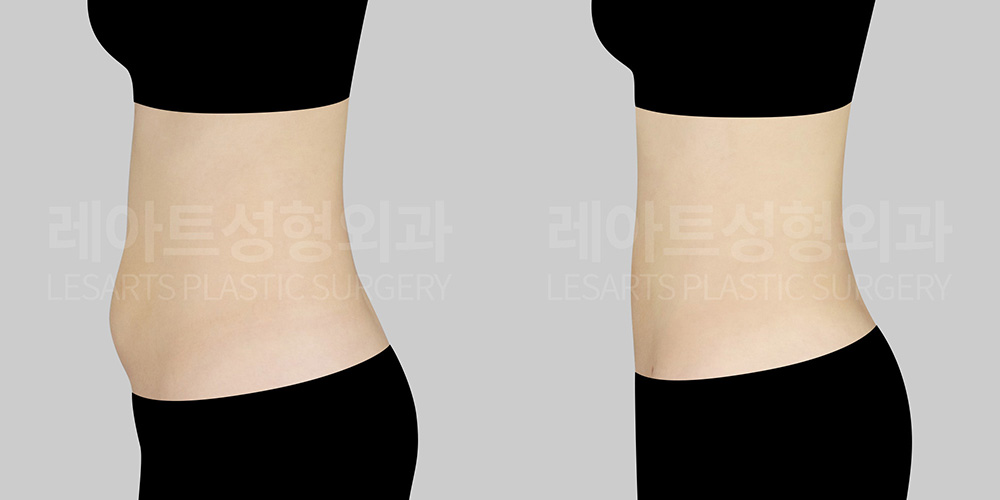
Lower Abdominal Liposuction Before & After - Lesarts Plastic Surgery
At 6 weeks (approximately 1.5 months) postoperatively, periumbilical fullness and lower abdominal deposits are smoothed cleanly,
with both flanks displaying a noticeably tapered, narrow waistline.
Because 6 weeks represents an intermediate phase where bio-bands and fine swelling continue to subside, this does not reflect the final endpoint.
Dermal retraction and soft-tissue remodeling continue over several months, progressively enhancing surface elasticity and contour smoothness over time.
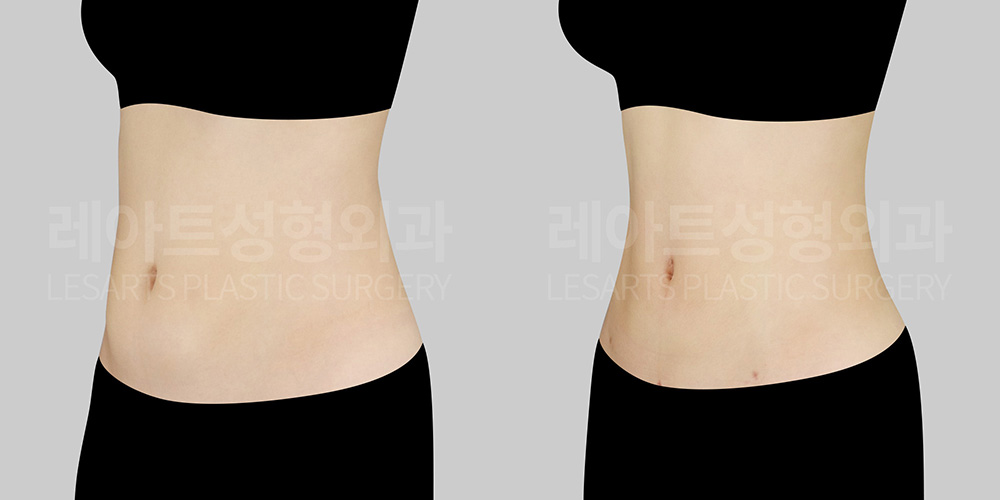
Abdominal Liposuction Outcomes - Dr. Pyongrim Choi, Lesarts Plastic Surgery
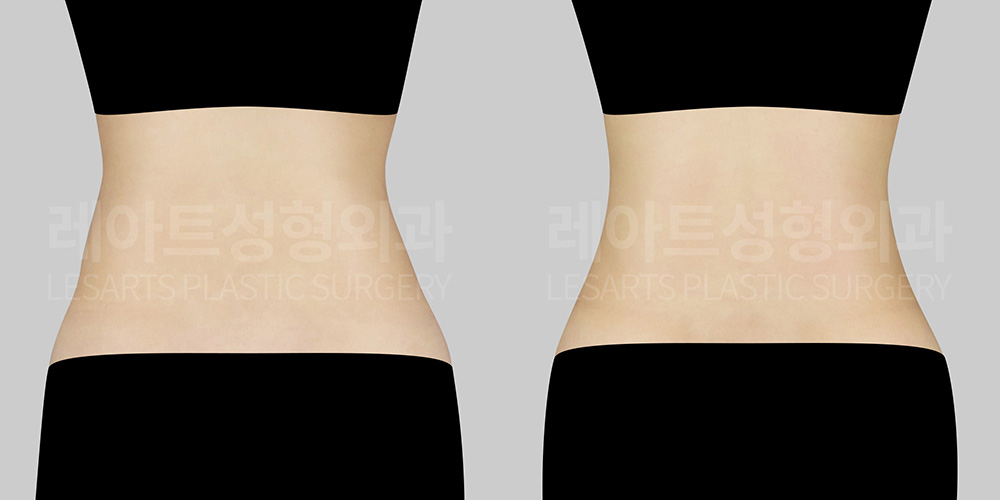
Flank Line Refinement Post-Abdominal Liposuction - Lesarts Plastic Surgery
Nevertheless, establishing her desired silhouette—
‘a flat, smooth anterior abdominal plane paired with an accentuated waistline indentation’—
at 6 weeks demonstrates a successful clinical outcome.
As shown in this case, even within standard body frames, customized design tailored to subcutaneous fat distribution and skeletal proportions reliably sculpts desired lines.
However, identical lines cannot be standardized uniformly across every individual.
Native ribcage width, pelvic morphology, genetic adipose distribution, skin elasticity, and muscular wall support create clear individual boundaries regarding expected transformation.
Slender Build (BMI Under 20)
▶ View Real Abdominal Liposuction Cases
When planning abdominal liposuction, rather than focusing solely on extraction volume,
evaluating where fat should be trimmed and where natural lines should be highlighted based on your unique skeletal frame
with a board-certified plastic surgeon is the most effective approach.
Abdominal Liposuction FAQ
Q1. Why is three-dimensional curvature more important than complete flatness when sculpting an idol-like abdominal contour?
A. An abdomen stripped completely flat often appears boxy and lacking dimension. A tapered waistline indenting from beneath the ribs, subtle eleven-line shadows, and a flat lower abdomen must harmonize to enhance full-body proportions and feminine three-dimensional curves beneath clothing.
Q2. Why must aggressive over-aspiration immediately around the umbilicus be avoided?
A. The umbilicus is the central focal point; over-aspirating only its immediate perimeter risks sharp boundary step-offs or cicatricial hollow depressions. Uniform blending with adjacent upper and lower abdominal fat layers is essential.
Q3. What must be evaluated before correcting lower abdominal protrusion in a young female?
A. Differentiating whether the protrusion stems from subcutaneous fat or underlying muscular laxity and pelvic tilt is critical. Subcutaneous adiposity responds favorably to liposuction, whereas fascial laxity or visceral expansion has clear clinical limitations with liposuction alone.
Q4. Why is uniform layered extraction emphasized over large-volume debulking in slender patients?
A. Because subcutaneous fat is thin and skin elasticity is active, over-aspiration can cause surface step-offs or superficial fascial tethering. Preserving a thin, uniform buffer layer across planes maintains smooth dermal texture.
Q5. What changes and recovery progress can be anticipated at 6 weeks post-liposuction?
A. At 6 weeks, periumbilical and lower abdominal fullness is smoothed and waist tapering becomes visible. Because early induration and fine swelling continue to resolve, lines progressively settle into a smoother, more natural plane over subsequent months.
Dr. Pyongrim Choi


Cases finding
similar to my profile
Customer Diagnostics


Select the surgery and
area you are interestedto see real
before andafter changes.


we
make you,
the art
Clinic hours
MON - FRI
10 am – 7pm
SAT
10 am – 4pm
Holiday
SUN, HOLIDAY
Location
Lesarts Moon Clinic Tower 4-5F, 40, Nonhyeon-ro 168-gil,
Gangnam-gu, Seoul, Republic of Korea

Medical institution name Lesarts Plastic Surgery
Address Lesarts Moon Clinic Tower 4-5F, 40, Nonhyeon-ro 168-gil, Gangnam-gu, Seoul, Republic of Korea
Representative Moon sung jun
