




Online Consultation
Please accurately enter the information below.
Quick Cost Consultation
Quick Consultation & Reservation
Cases finding
similar to my profile






Cases finding
similar to my profile
Customer Diagnostics
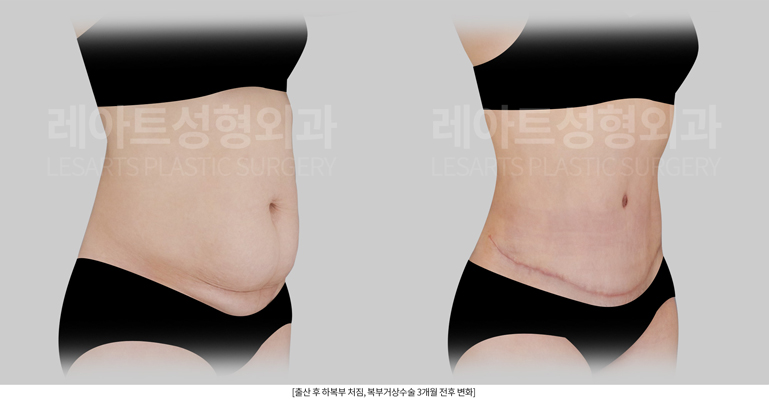
Loose Skin Above a C-Section Scar After Pregnancy 3-Month Results After Full Abdominoplasty at a Plastic Surgery Clinic in Gangnam, Seoul, Korea
2026-04-01
When patients come in for an abdominoplasty consultation,
their concerns may seem similar at first,
but the pattern of abdominal skin sagging can vary a lot from person to person.
Because of this, the details of the surgery also need to be planned differently.
For example, after a cesarean section,
some patients develop overlapping skin or an uneven step-like contour in a specific area.
In these cases, surgery may need to include removal of the old C-section scar,
careful placement of the new tummy tuck scar, release of scar adhesion,
and excision of loose skin to create a smoother abdominal surface.
This is especially important when the condition of the upper abdomen
and lower abdomen is different. In that situation, the surgical plan should consider
not only the amount of loose skin, but also the underlying structural changes
in the abdominal wall.
In this case, the patient developed skin sagging and
contour changes mainly below the belly button after cesarean delivery,
and underwent full abdominoplasty to correct both the loose skin and
the abdominal structure at our plastic surgery clinic in Gangnam, Seoul, Korea.
Pre-Surgery Evaluation
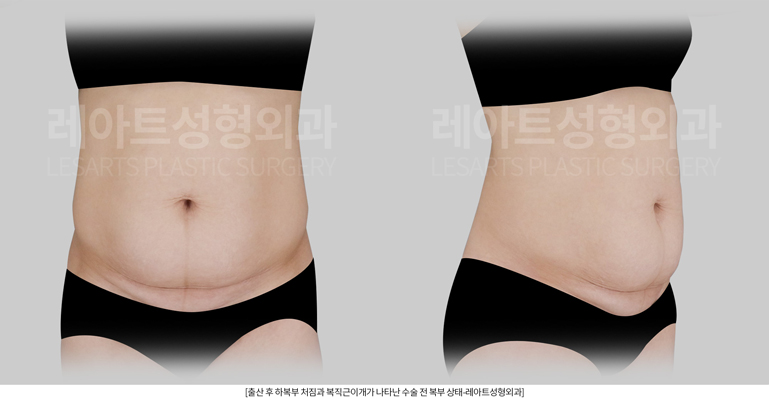
Lower Abdominal Sagging and Rectus Diastasis After Cesarean Section
Before surgery, the patient showed
several important abdominal findings.
The main concern was loose lower abdominal skin below the navel,
which had started to sag downward.
The area around the previous C-section scar also created an additional fold,
making the lower abdomen look heavier and more prominent.
Because of this, the abdominal contour did not look smooth,
and the patient felt uncomfortable with the uneven appearance.
The examination also confirmed rectus diastasis,
meaning separation of the abdominal muscles,
which contributed to the forward bulging appearance of the abdomen.
Surgical Plan
Full Abdominoplasty with Muscle Repair and Contour Improvement
M-Type Full Abdominoplasty
An M-type full abdominoplasty was planned
because the patient had clear lower abdominal skin
sagging that needed surgical correction.
The goals of this procedure were:
- Improve the sagging skin in the lower abdomen
- Create a smoother overall abdominal contour
- Place the incision as low as possible in the lower abdomen
- Remove the previous cesarean section scar
Rectus Muscle Repair
Because rectus diastasis was present in both the upper and lower abdomen,
muscle repair was performed to bring the abdominal muscles back
toward the center and restore better support to the abdominal wall.
This helped improve the protruding abdominal contou
and create a firmer abdominal shape.
Belly Button Correction
After lifting the abdominal skin,
the belly button position and shape were adjusted to
better match the new abdominal proportions.
Abdominal Liposuction
Abdominal liposuction was performed together with the tummy tuck to reduce
abdominal thickness and refine the contour from the waist to the lower abdomen.
Hip Dip Fat Grafting
Fat grafting to the hip area was also included
to improve the balance between the waist and outer pelvis,
helping create a smoother and more proportionate body line.
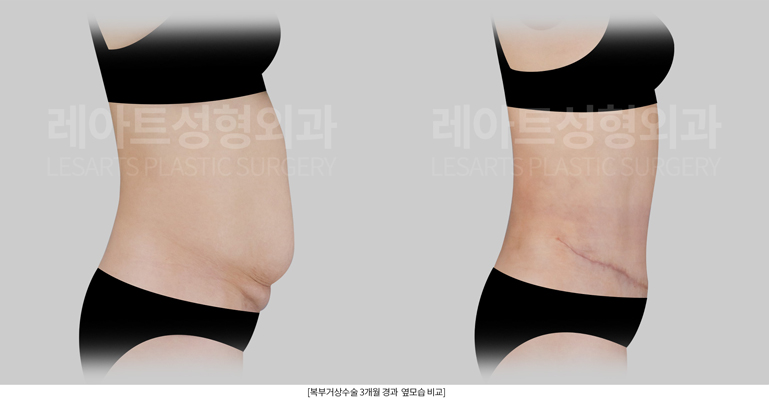
3-Month Results After Abdominoplasty
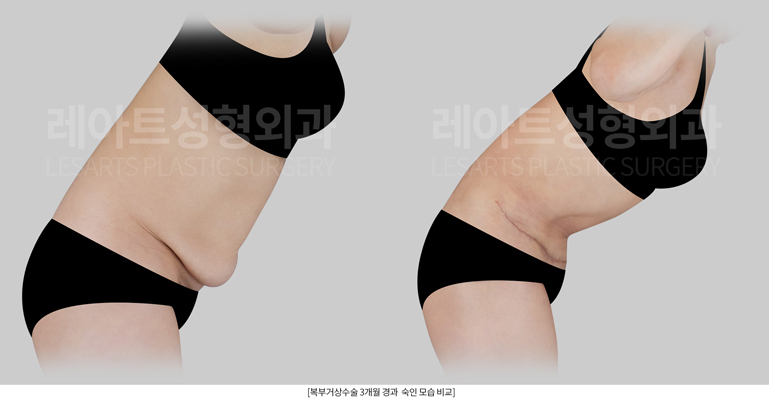
Front, Bent-Over, and Side View Changes
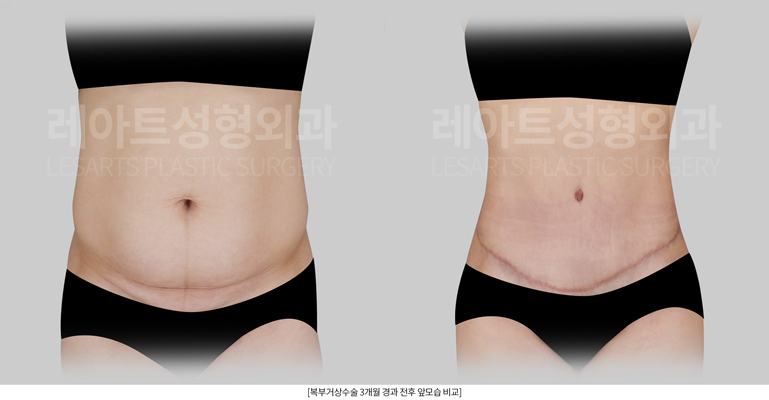
In the pre-surgery photos,
the skin below the belly button
was clearly sagging downward and folding.
In particular, the skin overlapped again around the area of the cesarean scar,
which made the lower abdomen look heavier because of
the combined effect of skin and fat volume.
As a result, the abdominal contour did not flow smoothly.
At 3 months after abdominoplasty, the results show a clear change.
- The loose lower abdominal skin was lifted
- The front abdominal line became firmer and smoother
- The abdominal contour that had projected forward because of rectus
diastasis became flatter and more stable
This created a much cleaner and
more natural abdominal shape overall.
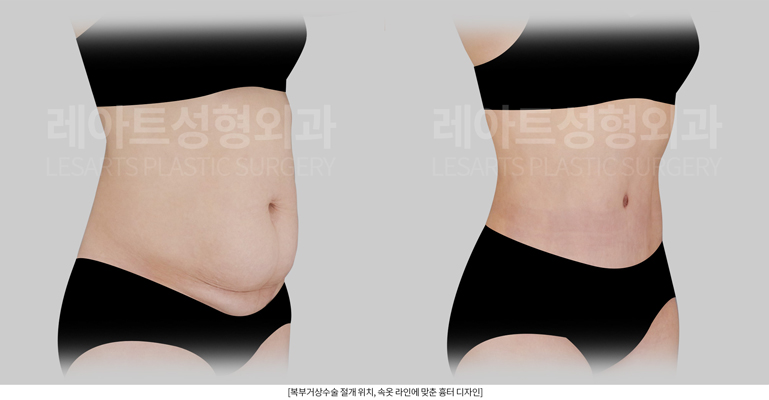
Scar Design After Tummy Tuck
Low Incision Hidden Under the Underwear Line
The abdominoplasty incision was placed as low as possible
in the lower abdomen so that it can be naturally hidden under underwear.
For this patient, one of the most uncomfortable concerns before surgery
was the step-like sagging skin above the C-section scar. After surgery,
that uneven area was corrected, and the abdominal contour
now looks much smoother and more natural.
Current Recovery Stage
3 Months After Surgery
At this stage, the patient is about 3 months after abdominoplasty.
This is still part of the recovery period, so:
- Mild residual swelling may remain
- The tissues may still feel somewhat firm as healing continues
With proper follow-up care and postoperative management,
the scar is also expected to gradually fade over time.
As recovery continues, the abdominal contour is expected
to settle further and look even more natural.
Why Personalized Surgical Planning Matters
This case shows that postpartum abdominal sagging
after a cesarean section is not always a simple issue of loose skin alone.
When the patient has:
- Loose skin concentrated in the lower abdomen
- A previous C-section scar
- Overlapping skin folds
- Rectus diastasis
- An uneven abdominal contour
the surgery must be planned carefully to improve
both the surface contour and the underlying structure.
At our plastic surgery clinic in Gangnam,
Seoul, Korea, each abdominoplasty procedure is planned based on
the patient’s individual anatomy to create a smoother, firmer,
and more balanced abdominal shape.
#Abdominoplasty
#M-type
#Abdominal liposuction(M) #Hip Fat Transfer(M)


Cases finding
similar to my profile
Customer Diagnostics


Select the surgery and
area you are interestedto see real
before andafter changes.


we
make you,
the art
Clinic hours
MON - FRI
10 am – 7pm
SAT
10 am – 4pm
Holiday
SUN, HOLIDAY
Location
Lesarts Moon Clinic Tower 4-5F, 40, Nonhyeon-ro 168-gil,
Gangnam-gu, Seoul, Republic of Korea

Medical institution name Lesarts Plastic Surgery
Address Lesarts Moon Clinic Tower 4-5F, 40, Nonhyeon-ro 168-gil, Gangnam-gu, Seoul, Republic of Korea
Representative Moon sung jun
