




Online Consultation
Please accurately enter the information below.
Quick Cost Consultation
Quick Consultation & Reservation
Cases finding
similar to my profile






Cases finding
similar to my profile
Customer Diagnostics
Thigh Liposuction for Slim Legs: Inner Thigh and Saddlebags 1-Month Results | Best Liposuction Clinic in Gangnam, Seoul, Korea
2026-07-09
C-section scars can be a concern not only because of the scar itself,
but also because of the surrounding skin fold, unevenness,
adhesion, and step-like contour around the lower abdomen.
In some patients, the skin above the C-section scar folds downward,
making the lower belly look heavier and less smooth.
This can become more noticeable
when wearing fitted clothes or when bending forward.
This case is about a patient who visited LesArts Plastic Surgery,
a plastic surgery clinic in Gangnam, Seoul, Korea,
to improve C-section scar-related skin folding,
lower abdominal sagging, and an uneven abdominal line.
The patient underwent M-Type tummy tuck surgery,
rectus muscle repair, abdominal liposuction, belly button reshaping,
and hip line fat grafting to improve both the appearance
and structural support of the abdomen.
Before Surgery Analysis
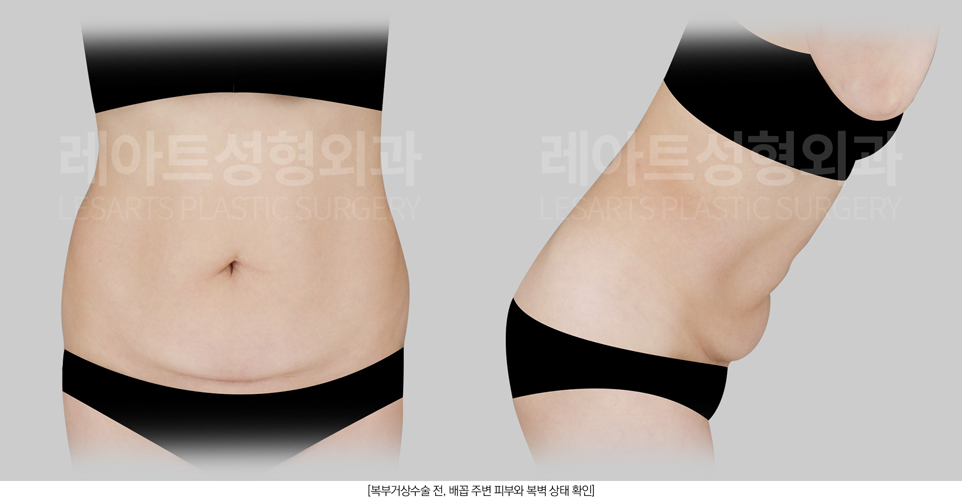
Before tummy tuck surgery, the patient had reduced skin
elasticity from the upper abdomen to the lower abdomen.
The lower abdominal skin had sagged downward below the belly button,
creating a heavy-looking lower belly. The skin also folded over the previous
C-section scar, making the scar area look more uneven.
When the patient bent forward, the folding became even more noticeable.
Even slightly fitted clothing showed the uneven abdominal silhouette clearly.
The main concerns included:
- C-section scar folding
- Lower belly sagging
- Skin laxity from the upper abdomen
Step-like unevenness around the scar
- Rectus diastasis
- Abdominal wall weakness
- Lower abdominal protrusion
- Uneven belly button shape
- Less smooth abdominal contour
From the side view, the sagging skin above the C-section scar created a visible step.
The abdominal wall also looked weak and pushed forward
because of fascial laxity and rectus muscle separation.
This was not simply a fat reduction case.
The loose skin, weakened abdominal wall,
C-section scar line, and overall abdominal balance
had to be corrected together.
Surgical Plan
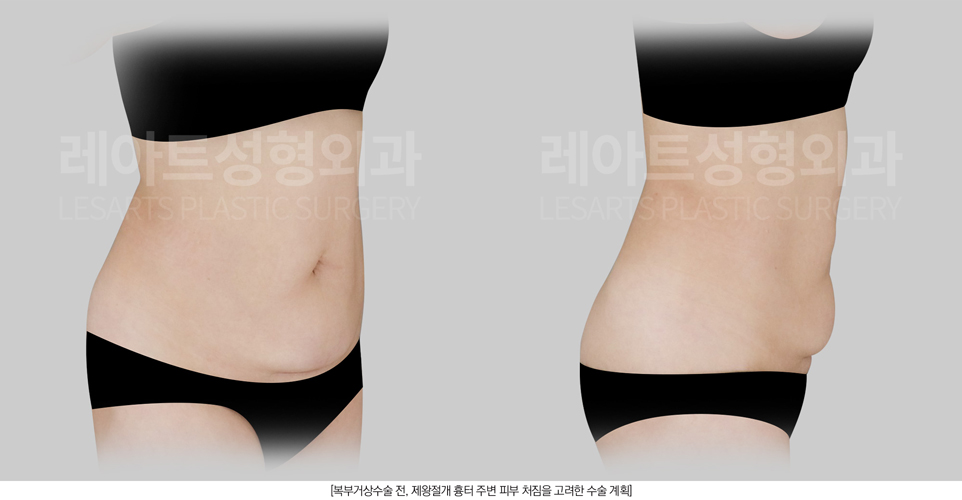
Based on the patient’s abdominal condition,
an M-Type full tummy tuck was planned.
The goal was to remove the previous C-section scar and the loose skin around
it while improving the lower abdominal contour and abdominal wall support.
The surgical plan included:
- M-Type tummy tuck
- C-section scar removal
- Lower abdominal skin removal
- Rectus muscle repair
- Abdominal wall tightening
- Abdominal liposuction
- Belly button reshaping
- Hip line fat grafting
- Waist and pelvis line refinement
- Overall abdominal contour correction
The surgery was planned to improve both the outer shape
and the internal support of the abdomen.
Because the front abdomen showed uneven protrusion
and the abdominal wall looked unsupported, rectus muscle repair was needed.
Abdominal liposuction was also performed to refine the surrounding contour.
In addition, hip line fat grafting was suggested to create a smoother
and more balanced line from the upper body to the lower body.
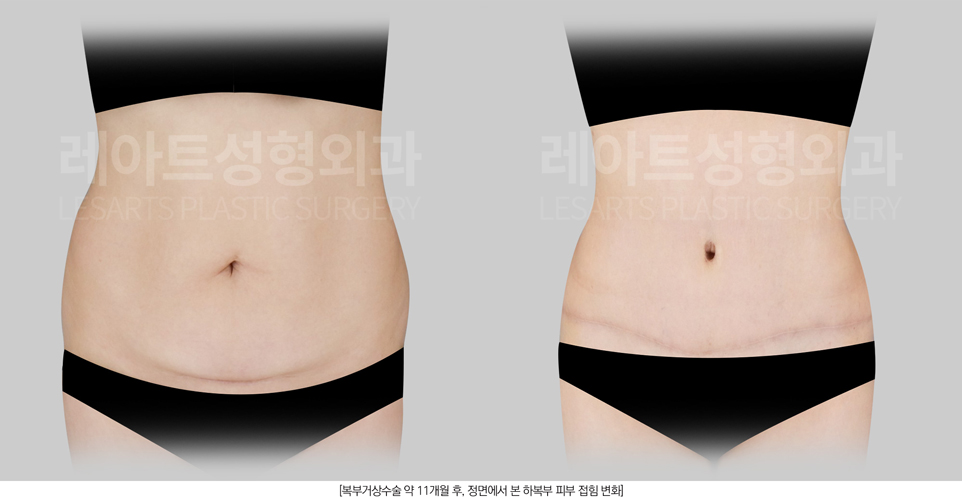
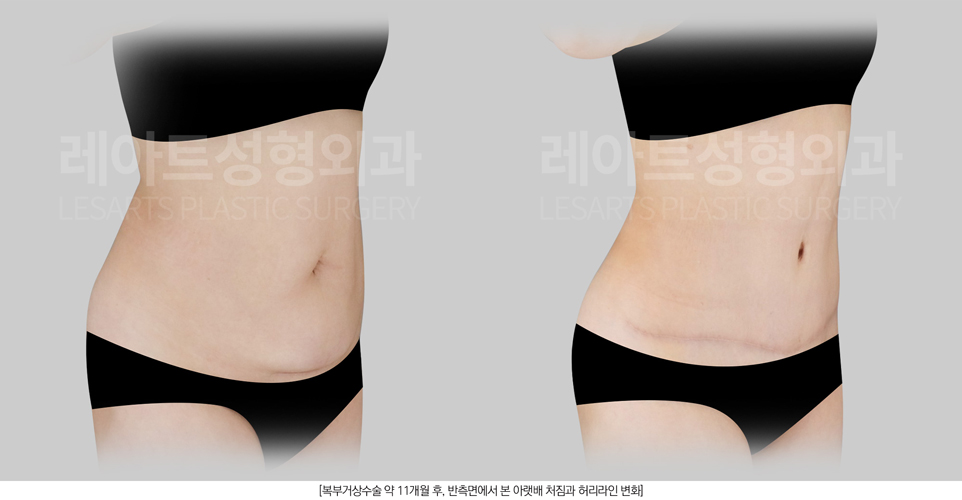
11-Month After Tummy Tuck Results
The before and after photos were compared
at around 11 months after tummy tuck surgery.
Before surgery, the lower abdomen looked heavy,
and the sagging skin
above the C-section scar created a noticeable step.
After surgery:
- The sagging lower abdominal skin was removed
- The C-section scar was removed
- The step-like unevenness improved
- The lower belly line became smoother
- The front abdomen looked firmer
- The waistline became more natural
- The pelvis line looked more balanced
- The belly button was reshaped
- The abdominal contour looked lighter and cleaner
The folded skin that had been visible from the front disappeared,
and the lower abdomen became smoother.
Because abdominal liposuction and hip line fat grafting
were performed together, the waist and pelvis line
also looked more natural.
Front View Changes
From the front view, the lower abdominal fold
and heaviness were clearly improved.
Before surgery, the skin below the belly button sagged downward
and folded over the C-section scar.
After surgery, the old C-section scar was removed,
and the lower abdomen looked flatter and cleaner.
The belly button also changed. Before surgery,
the belly button had been affected by upper abdominal sagging
and had an irregular shape. During the tummy tuck,
the previous belly button was removed and reconstructed
into a more vertical shape that matched the waistline.
Half-Side View Changes
From the half-side view, the lower abdominal sagging and
waistline change could be seen more clearly.
Before surgery, the front abdomen looked pushed forward and
uneven because of loose skin and weakened abdominal support.
After tummy tuck surgery, the lower belly line became smoother,
and the waist-to-pelvis connection looked more balanced.
The overall abdominal silhouette changed from a heavy and
folded line to a firmer and more refined contour.
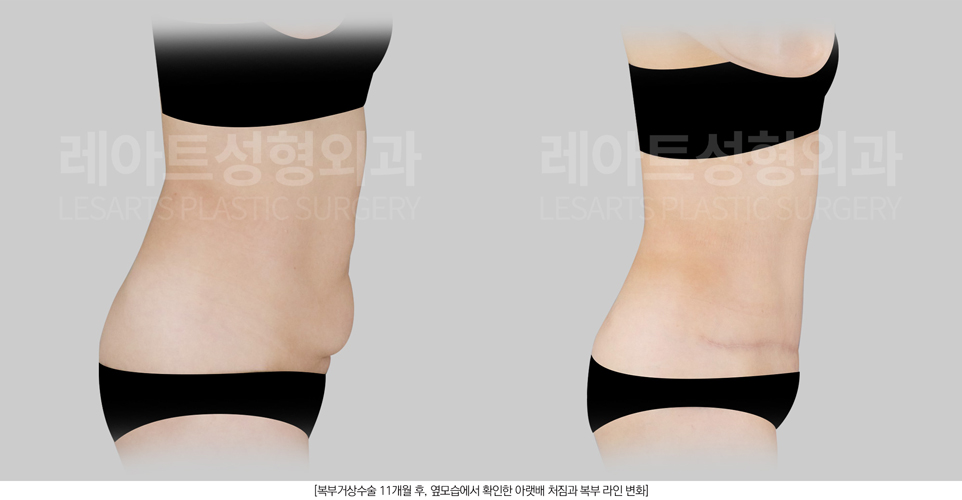
Side View Changes
From the side view,
the improvement in the protruding lower abdomen was noticeable.
Before surgery, the front abdominal line looked uneven and bulky,
especially around the lower belly.
After surgery, the abdominal wall support improved,
and the lower abdomen no longer looked pushed forward.
The loose skin, folding, and step-like contour were corrected,
creating a tighter and smoother abdominal line.
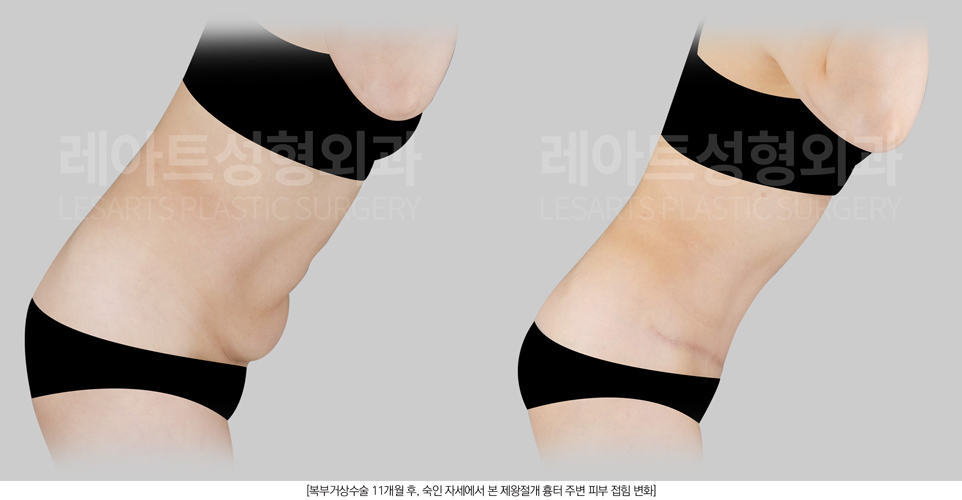
Bending View Changes
The bending view is important for patients
who are concerned about skin folding after C-section delivery.
Before surgery, the lower abdominal skin folded
more noticeably when the patient bent forward.
After surgery, the abdomen remained
more stable even with posture changes.
The abdominal wall looked better supported,
and the lower belly no longer folded over the previous scar area.
This helped create a more comfortable
and smoother abdominal contour in daily movement.

Scar Location and 11-Month Recovery
Because tummy tuck surgery removes loose skin,
a long incision is made on the lower abdomen.
For many patients, scar location
is one of the biggest concerns before surgery.
In this case, the new tummy tuck scar was placed low on the lower abdomen,
so it could be naturally hidden by underwear.
At around 11 months after surgery,
the scar showed a gradual fading pattern with consistent scar care.
The patient was informed that the scar would continue to become lighter over time.
At LesArts Plastic Surgery Clinic in Gangnam, Seoul, Korea,
recovery care is provided according
to each stage after tummy tuck surgery.
Since patients often have concerns about sensation around the dissected area,
scar healing, and incision recovery, regular follow-up care is important.
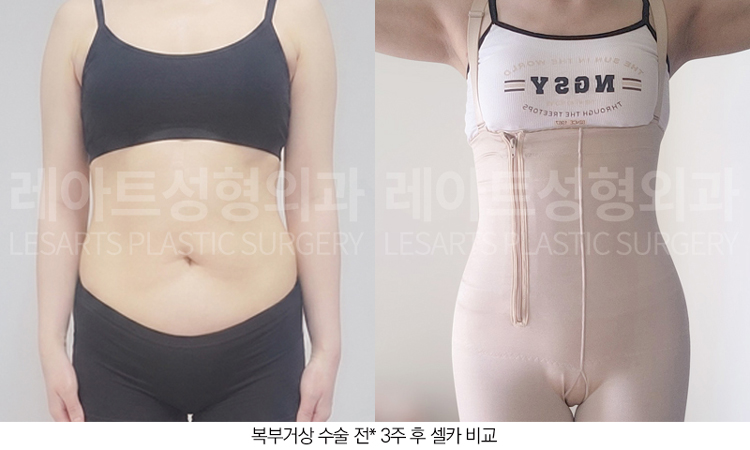
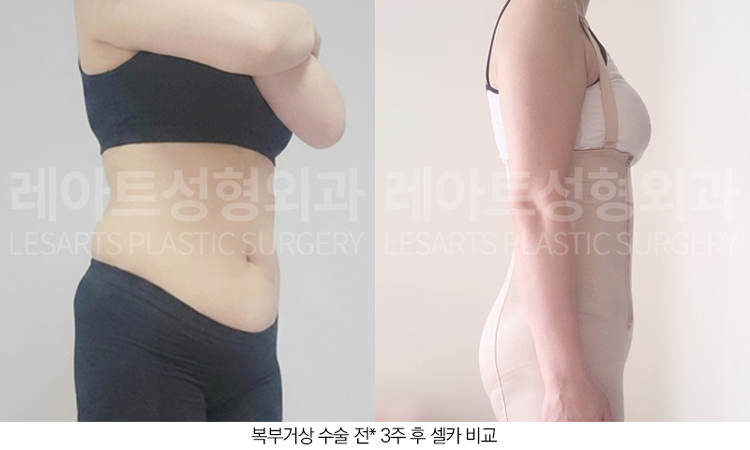
Early Selfie Comparison: 3 Weeks After Surgery
The patient also shared selfie photos from about 3 weeks after surgery.
At this early stage, swelling and tightness can still remain,
and compression garments are usually needed.
However, the lower abdominal line already
looked more lifted compared to before surgery.
The front and side selfie comparison showed that the lower belly no longer
folded in the same way over the previous C-section scar area.
Although this was still an early recovery period,
the overall abdominal silhouette already appeared cleaner.
Why M-Type Tummy Tuck Was Needed
This case was not only about improving a scar.
The patient needed a customized tummy tuck
plan because several concerns had to be corrected together:
- C-section scar adhesion and unevenness
- Loose lower abdominal skin
- Skin folding above the scar
- Rectus diastasis
- Fascial laxity
- Weak abdominal wall support
- Lower abdominal protrusion
- Belly button shape change
- Waist and pelvis line imbalance
If only the scar were treated without correcting the loose skin
and abdominal wall support, the lower belly fold and
uneven contour could remain.
For this reason, M-Type tummy tuck surgery with rectus muscle repair,
abdominal liposuction, and belly button reshaping was planned to improve
both the structure and appearance of the abdomen.
Conclusion
After C-section delivery, the scar area can sometimes create more than a visible line.
Skin folding, tissue adhesion, step-like unevenness,
and lower abdominal sagging can make the abdomen look less smooth.
In this case, M-Type tummy tuck surgery with C-section scar removal, rectus muscle repair, a
bdominal liposuction, belly button reshaping, and hip line fat grafting helped improve the lower abdominal fold,
scar-related unevenness, and abdominal contour at around 11 months after surgery.
For patients who are concerned about C-section scar folding, lower belly sagging,
or loose abdominal skin after childbirth, consultation at a trusted plastic surgery clinic or hospital in Gangnam,
Seoul, Korea can help determine the most suitable tummy tuck plan.
At LesArts Plastic Surgery Clinic, each tummy tuck plan
is customized based on the patient’s scar location,
skin laxity, abdominal wall condition, fat distribution, and desired body line.
A customized tummy tuck in Korea may help create a smoother,
firmer, and more balanced abdominal contour.
#Abdominoplasty
#M-type
#Abdominal liposuction(M) #Hip Fat Transfer(M)


Cases finding
similar to my profile
Customer Diagnostics


Select the surgery and
area you are interestedto see real
before andafter changes.


we
make you,
the art
Clinic hours
MON - FRI
10 am – 7pm
SAT
10 am – 4pm
Holiday
SUN, HOLIDAY
Location
Lesarts Moon Clinic Tower 4-5F, 40, Nonhyeon-ro 168-gil,
Gangnam-gu, Seoul, Republic of Korea

Medical institution name Lesarts Plastic Surgery
Address Lesarts Moon Clinic Tower 4-5F, 40, Nonhyeon-ro 168-gil, Gangnam-gu, Seoul, Republic of Korea
Representative Moon sung jun
