




Online Consultation
Please accurately enter the information below.
Quick Cost Consultation
Quick Consultation & Reservation
Cases finding
similar to my profile






Cases finding
similar to my profile
Customer Diagnostics
Facial Fat Grafting for Cheekbone Protrusion and Temple Hollowing: 1-Week Results | Best Plastic Surgery Clinic in Gangnam, Seoul, Korea
2026-07-13
Facial Fat Grafting | 1 Week After Facial Fat Grafting: How Did Cheekbone Protrusion and Temple Hollowing Change?
Can facial fat grafting make prominent cheekbones look less pronounced?
Facial fat grafting is not a procedure that reduces the size of the cheekbones themselves.
However, by adding the needed amount of volume to hollow areas such as the temples and below the cheekbones,
the height difference against surrounding areas decreases,
allowing cheekbone lines that looked relatively prominent to appear softer and smoother.
▶ Learn About Facial Fat Grafting Surgery at Lesarts
Compared with Western facial structures, East Asian faces
often appear wider horizontally and flatter.
When cheekbones are developed or the temples and
areas beneath the cheekbones are hollow, the face can look even wider
and give a stronger impression.
These facial contour concerns do not necessarily
have to be addressed only through bone-reduction surgery.
Appropriately adding volume to hollow areas around the cheekbones
and the center of the face to even out height differences
can make the contours look noticeably smoother and softer
within your existing facial structure.
In this post, we will examine the pre-operative condition
and 1-week post-operative changes after facial fat grafting in a patient
whose facial lines looked uneven due to temple hollowing and cheekbone protrusion.
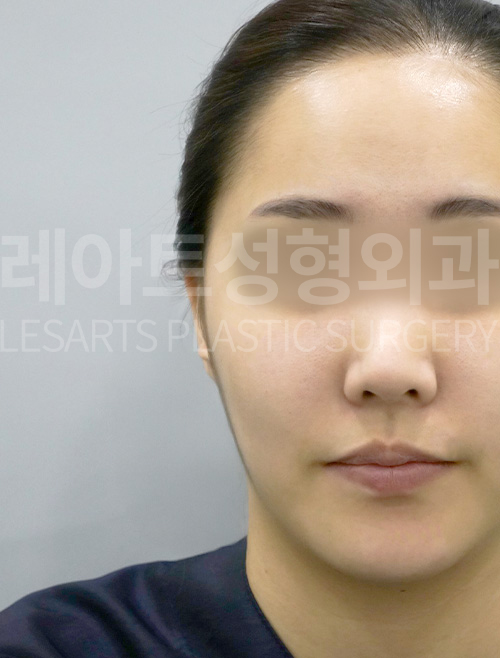
[Pre-Operative Analysis of Cheekbone Protrusion and Facial Contours Before Facial Fat Grafting]
In the pre-operative front photo, the temples looked sunken and shadowed,
making the cheekbones just below them appear relatively more prominent.
Shadowing also appeared beneath the cheekbones,
preventing the outer facial contour from flowing smoothly
and creating an overall strong, tired impression.
The patient hoped to smooth out her prominent cheekbone line
and naturally improve the upper-face contour flowing
from both sides of her forehead into her temples.
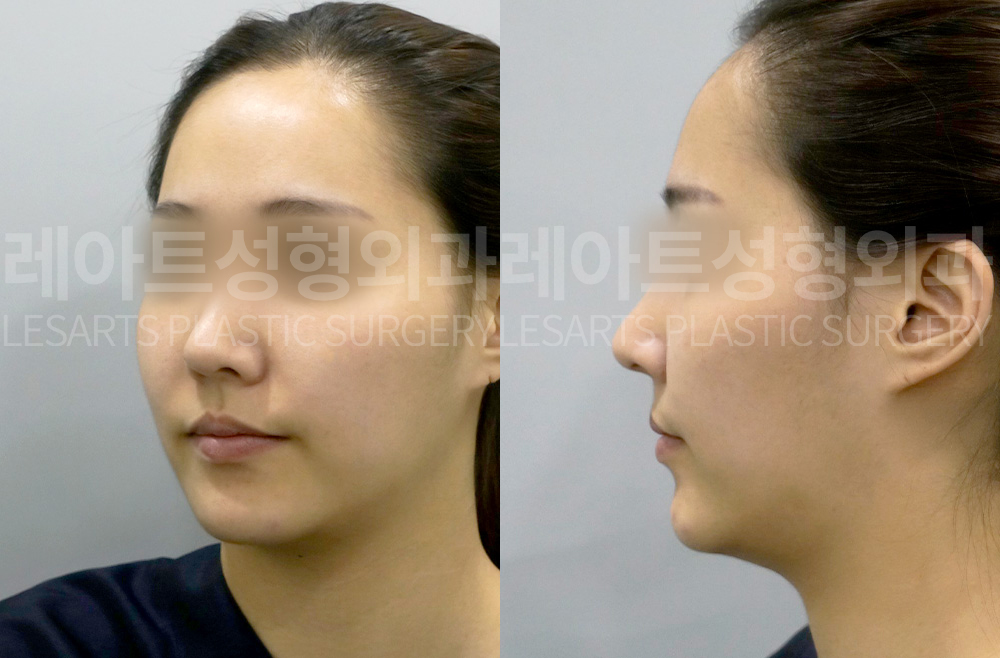
[Facial Fat Grafting Surgical Plan]
Rather than overfilling on top of the cheekbones,
this facial fat grafting procedure was planned to replenish volume
focused on hollow areas such as the temples and below the cheekbones
to even out facial contour heights.
Volume was added so that both sides of the forehead and the temple line would connect smoothly,
while supplementing hollow areas below the cheekbones and in the front cheeks
to give the center of the face more dimension.
The nasolabial area and front chin were also filled only as needed
within a range that preserves overall proportions,
balancing the face so no single area would stand out excessively.
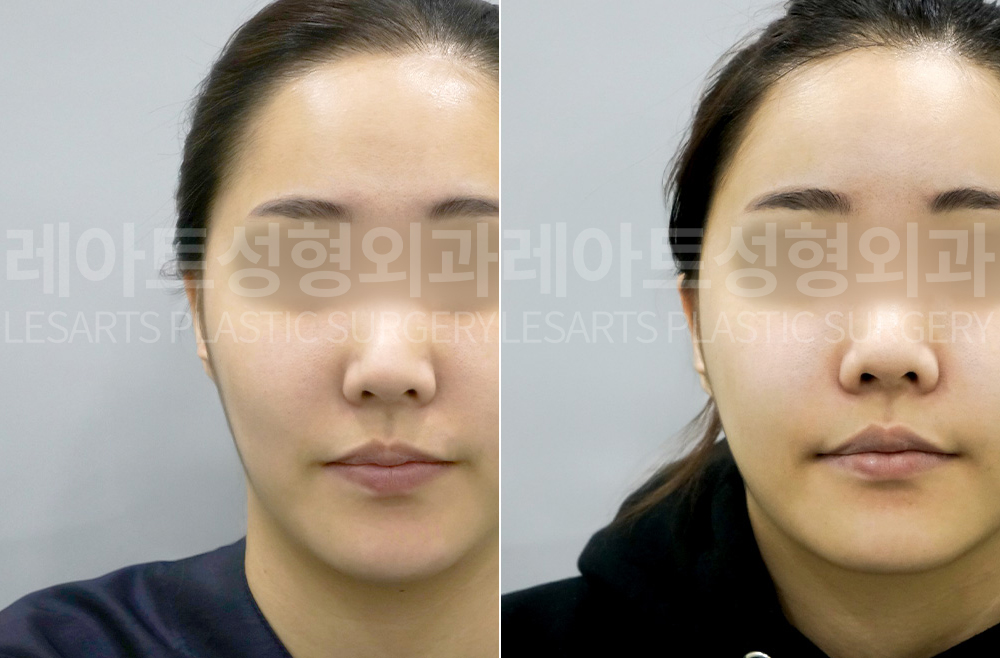
[1 Week After Facial Fat Grafting: Volume Changes in the Temples, Below the Cheekbones, and Front Cheeks]
[1 Week After Facial Fat Grafting: Forehead and Front Chin Volume Changes Seen From the Side]
*The photos above were taken under the same conditions
before facial fat grafting and 1 week after surgery.
At 1 week after surgery, with volume added to both sides of the previously flat forehead
and the temples,
the upper-face contour flows in a rounder, softer curve.
The uneven curve from the temples to the side cheekbones and below the cheekbones has also softened,
making the previously prominent cheekbone line
look noticeably calmer and smoother.
With lacking volume in the front cheeks and nasolabial area gently replenished without overdoing it,
dimension has been added to the center of the face,
creating a brighter, more refreshed impression than before surgery.

[1 Week After Facial Fat Grafting: Changes in Forehead Curve and Front Chin Line]
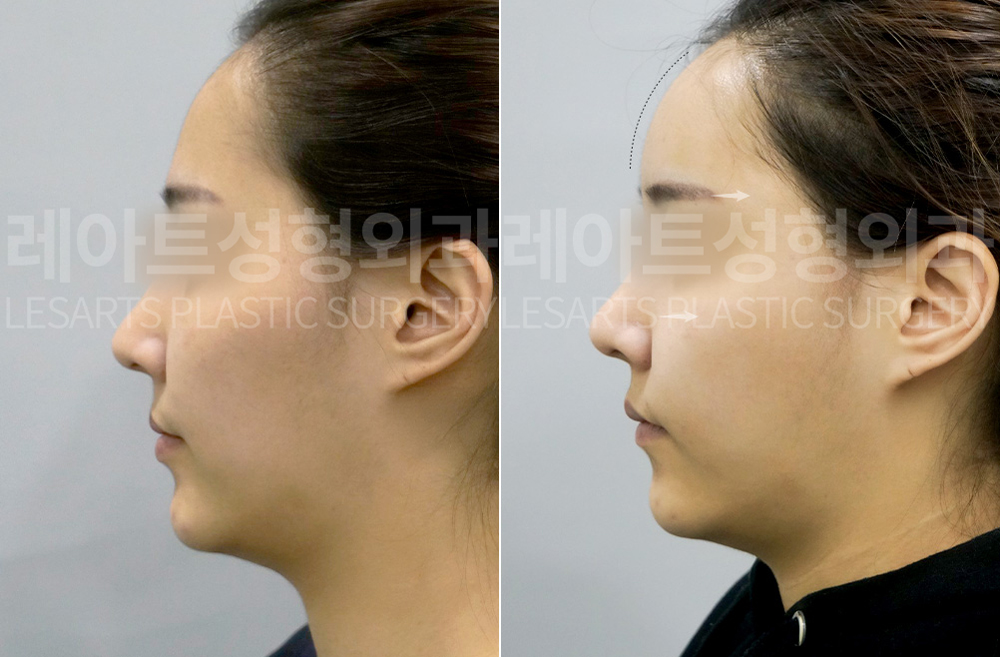
[1 Week After Facial Fat Grafting: Changes in Forehead Curve and Front Chin Line]
In the side view, a natural curve has formed across the forehead,
making the previously flat upper face look more defined than before.
Front chin volume was also supplemented in proportion with the face,
creating a balanced side profile flowing from the forehead to the nose and chin.
Rather than dramatically altering her facial shape with excessive volume,
this result focused on replenishing deficient areas to soften contour flaws
while naturally preserving her original impression.
One week after surgery is still an early stage when swelling remains
and the grafted fat is settling into place.
The volume visible right now is not the final result; as swelling subsides
and fat retention progresses, the facial lines will gradually stabilize.
The patient was also pleased that her temple hollowing and uneven curves around the cheekbones
were naturally softened
without her face looking overly puffy.
If temple hollowing or shadowing below the cheekbones makes your face look wide or strong,
or if lacking volume in the front cheeks and nasolabial area gives a tired impression,
it is important to evaluate overall facial height differences and transitions together
rather than filling just one area.
At Lesarts Plastic Surgery, through our facial fat grafting consultation,
we evaluate your current facial fat distribution, bone structure, and skin condition,
and consult on the necessary grafting areas and volume tailored to why your cheekbones look prominent
and the image you hope to achieve.
If bone-reduction surgery feels burdensome,
yet you want to smoothly refine uneven contours around the cheekbones and temple hollowing,
have your current facial condition checked at Lesarts Plastic Surgery
and consult on the facial fat grafting direction best suited to you.
Facial Fat Grafting FAQ
Q1. Does facial fat grafting make the cheekbones smaller?
It does not reduce the cheekbones themselves.
Instead, it replenishes hollow areas at the temples and below the cheekbones
to soften their relative prominence.
Q2. Is the appearance 1 week after facial fat grafting the final result?
No.
Swelling still remains at 1 week,
and volume and contours gradually stabilize as fat retention progresses.
Q3. Why are the temples and front cheeks grafted together?
Filling only a single area can leave an awkward boundary,
so the transitions across the forehead, temples, below the cheekbones, and front cheeks are considered together.
Q4. Does all of the grafted fat survive?
Part of the grafted fat may be absorbed,
and retention rates vary by individual.
The need for a touch-up grafting session is determined after monitoring progress.
Q5. How long does swelling last after facial fat grafting?
The speed at which early swelling subsides varies by individual.
It is best to follow recommended post-operative care instructions
while monitoring progress at each stage after surgery.
#Etc
#Face fat graft
#Flat forehead #Volume loss


Cases finding
similar to my profile
Customer Diagnostics


Select the surgery and
area you are interestedto see real
before andafter changes.


we
make you,
the art
Clinic hours
MON - FRI
10 am – 7pm
SAT
10 am – 4pm
Holiday
SUN, HOLIDAY
Location
Lesarts Moon Clinic Tower 4-5F, 40, Nonhyeon-ro 168-gil,
Gangnam-gu, Seoul, Republic of Korea

Medical institution name Lesarts Plastic Surgery
Address Lesarts Moon Clinic Tower 4-5F, 40, Nonhyeon-ro 168-gil, Gangnam-gu, Seoul, Republic of Korea
Representative Moon sung jun
