




Online Consultation
Please accurately enter the information below.
Quick Cost Consultation
Quick Consultation & Reservation
Cases finding
similar to my profile






Cases finding
similar to my profile
Customer Diagnostics
Full Face Fat Grafting for a Tired-Looking Face: 7-Week Forehead and Cheek Volume Results | Best Plastic Surgery Clinic in Gangnam, Seoul, Korea
2026-08-13
Facial Fat Transfer | A Tired, Drooping Appearance: Changes 7 Weeks After Full-Face Fat Transfer
Can fat transfer help if you are concerned about facial hollows and a tired appearance?
When areas of the face,
such as the forehead or cheeks, lack volume,
the transitions between facial contours can become more pronounced,
creating an overall impression
of tiredness or sagging.
When planning facial fat transfer, it is important
to assess not only the front view,
but also the oblique and side views,
adding volume where it is needed
so that the facial contours
flow together naturally.
▶ Lesarts Plastic Surgery Official Website
Areas of the face that look particularly hollow
or appear flat
can affect the overall facial impression.
For example, insufficient volume in the forehead and cheeks
can do more than make the face appear flat.
It can also accentuate the contours around the cheekbones,
making the face appear larger than it actually is
or giving the midface a downward-sagging appearance.
Some patients also visit the clinic after losing
a significant amount of facial fat during weight loss,
concerned that they look more tired
or older than before.
When a lack of volume makes facial contours
look harsh or changes the overall appearance,
one option to consider is facial fat transfer.
However, rather than simply filling every hollow area with fat,
it is important to assess the facial contours from the front, oblique, and side views
and determine which areas need volume
and how much is appropriate.
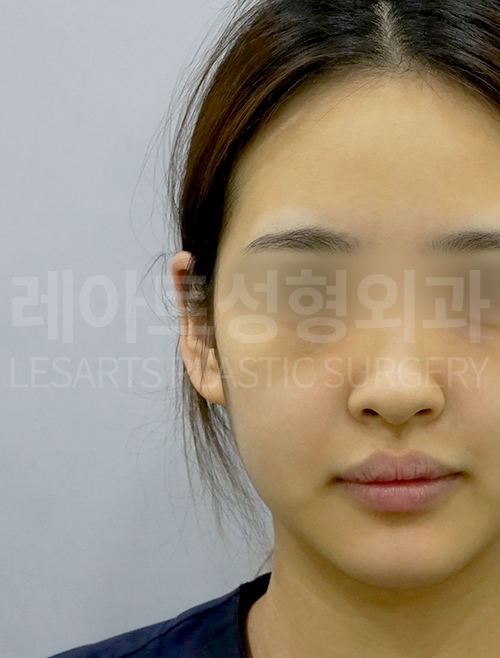
[Before Facial Fat Transfer: Surgical Planning Based on Overall Facial Volume and Contours]
For this patient, we planned full-face fat transfer
to address insufficient volume throughout the face.
Before surgery, the forehead lacked some volume,
giving it a generally flat appearance.
The transition from the under-eye area to the cheeks
also lacked sufficient fullness, reducing facial dimension
and contributing to a somewhat tired appearance.
In particular, hollowness around the cheeks
made the cheekbone contours appear relatively prominent,
while the fullness of the anterior cheeks appeared to sit lower,
giving the midface a drooping appearance as well.
Rather than prominently filling only one particular area,
we therefore planned the treatment areas to include
the forehead, under-eye areas, and anterior cheeks,
so that the contours across the face would blend smoothly.
[Why Overall Contour Transitions Matter in Full-Face Fat Transfer]
Simply adding a large amount of volume to one area
does not necessarily produce a natural-looking result.
When the forehead, under-eye areas,
and cheeks are all hollow, as in this patient's case,
adding volume to only one area may instead accentuate its boundaries with surrounding areas.
We therefore assessed not only the front-view contours,
but also the projection and curves visible from oblique and side angles,
planning the procedure so that the volume in each area
would blend naturally with the rest of the face.
▶ View More Facial Fat Transfer Cases at Lesarts Plastic Surgery
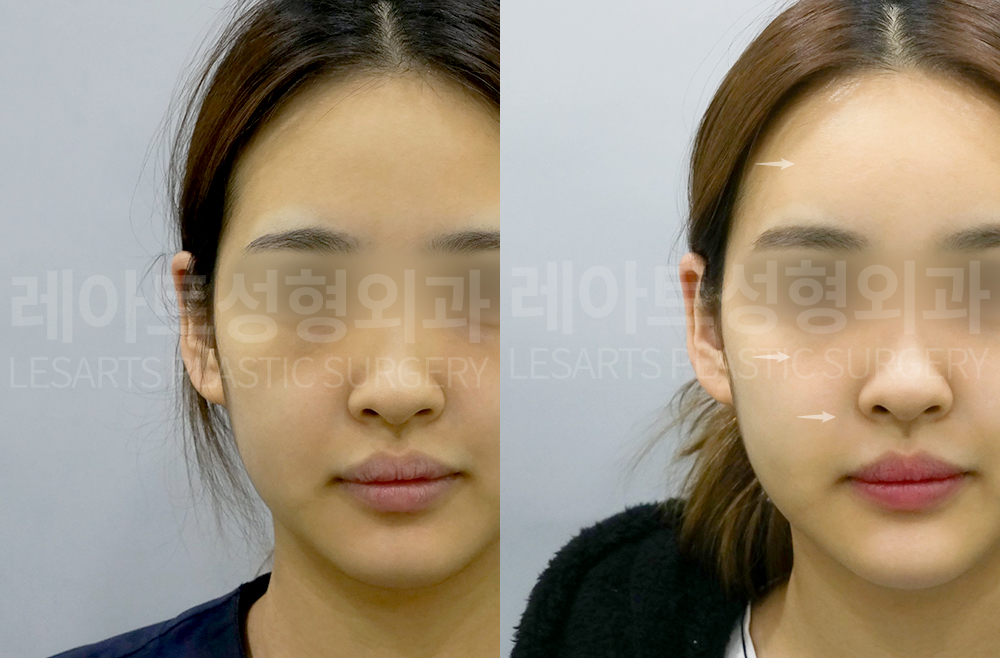
[Full-Face Fat Transfer: Before and 7 Weeks After Surgery - Lesarts Plastic Surgery]
*Post-operative photos taken at 7 weeks under the same conditions as the pre-operative photos.
Let's compare the appearance approximately 7 weeks after surgery.
Before surgery, the central forehead appeared relatively flat.
After fat transfer, natural-looking projection was added
to the areas that lacked fullness, enhancing dimension in the upper face.
The hollow areas extending from beneath the eyes toward the mouth
were also gently filled,
reducing the previously tired appearance.
As volume around the cheeks was restored,
the previously pronounced cheekbone contours
also appeared to blend more smoothly into the surrounding areas.
In particular, filling the hollow anterior cheeks from beneath the eyes
toward the nasolabial folds made the previously drooping-looking midface
appear lighter and more refreshed.
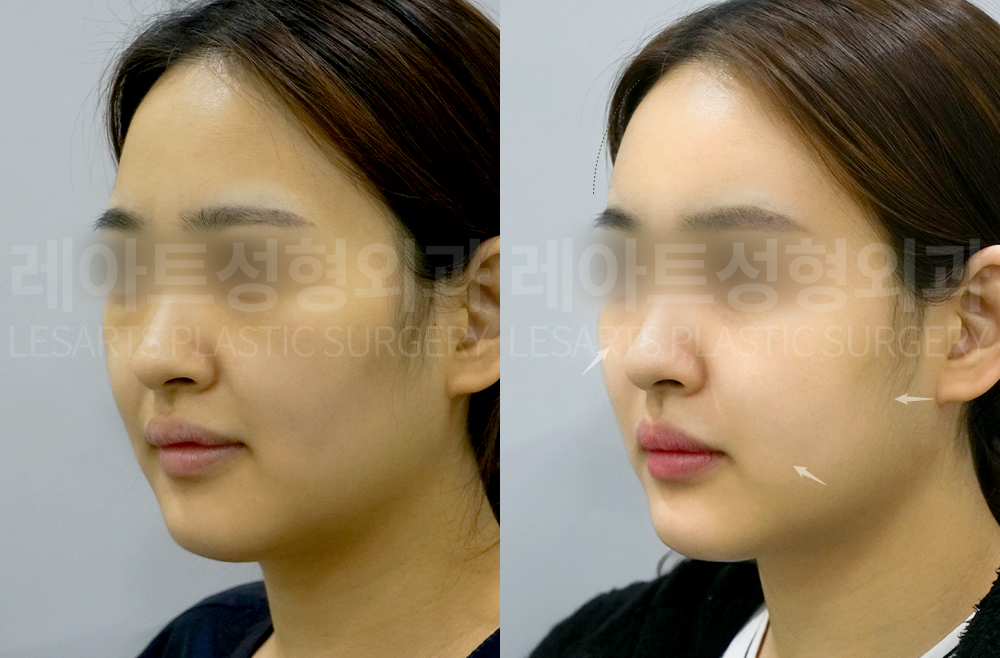
[Before and 7 Weeks After Facial Fat Transfer: Changes in Anterior Cheek Volume and Cheekbone Contours - Lesarts Plastic Surgery]
The oblique view shows the changes in anterior cheek volume
and the contours around the cheekbones more clearly.
Before surgery, hollowness around the cheeks made the cheekbones
appear relatively prominent, with noticeable shadows
extending from beneath the eyes toward the mouth.
After surgery, natural-looking fullness in the anterior cheeks and surrounding areas
reduced the impression of abruptly projecting cheekbones,
creating smoother transitions along the facial outline.
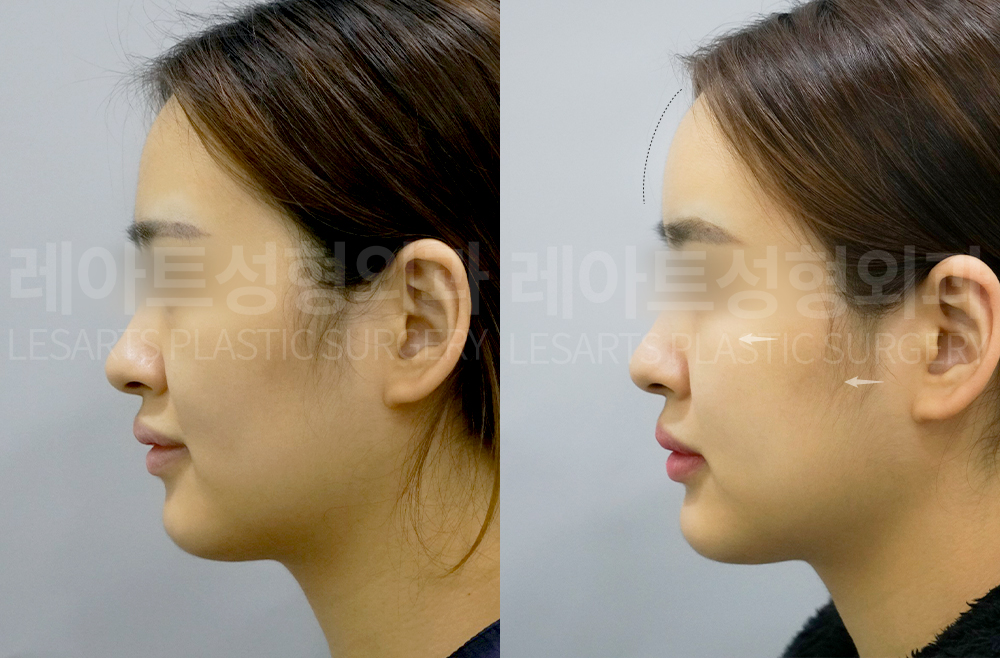
[Before and 7 Weeks After Facial Fat Transfer: Changes in Forehead Curvature and Volume - Lesarts Plastic Surgery]
The side view shows a natural curve in the previously flat forehead,
along with added dimension in the anterior cheeks.
Before surgery, the facial profile had relatively little variation in projection.
After surgery, the added volume in the forehead and anterior cheeks
created more naturally flowing contours.
With improved dimension visible from both oblique and side angles,
the facial contours appeared softer,
and the overall appearance became more refreshed.
This patient lacked volume in the forehead, under-eye areas,
and cheeks, which accentuated the cheekbone contours
and gave the midface a somewhat drooping appearance.
Through full-face fat transfer, we added volume where needed
while considering how the contours connected across the entire face,
rather than substantially enlarging only a particular area.
Seven weeks after surgery, the previously flat forehead had a natural curve,
and filling the hollow anterior cheeks helped the contours around the cheekbones
blend more smoothly than before.
The patient was also pleased that restoring the areas
that lacked volume in a natural-looking way
made the overall appearance softer and more refreshed.
If you are considering facial fat transfer,
it is important to look beyond simply adding facial fullness.
First, identify which areas are hollow
and where added volume would help the overall contours
flow together naturally.
After a thorough assessment of your face
from the front, oblique, and side views, discuss the treatment areas
and amount of fat appropriate for your facial features.
▶ Lesarts Plastic Surgery Official Website
Facial Fat Transfer FAQ
1. Can I have facial fat transfer if I have lost facial volume after weight loss?
If volume loss in specific areas after weight loss has made your face look hollow,
fat transfer to those areas may be considered
after assessing your current facial fat distribution and contours.
2. Does full-face fat transfer involve placing the same amount of fat throughout the face?
No. Areas such as the forehead, anterior cheeks, and under-eye regions
differ in how much volume they lack.
The treatment locations and amount of fat are determined
after assessing the balance of the entire face.
3. Can hollow cheeks make the cheekbones look more prominent?
When the areas around the cheeks lack volume,
the cheekbone contours may appear relatively more pronounced.
4. Can facial fat transfer also improve a drooping appearance?
When a lack of volume makes the midface look hollow
and appear to sit lower,
adding fullness to the anterior cheeks
may create a visually lighter appearance.
5. Is 7 weeks after facial fat transfer the final result?
At 7 weeks, some post-operative changes are already visible,
but the treated areas may continue
to settle afterward.
Final volume and shape vary from person to person.
#Etc
#Face fat graft
#Volume loss


Cases finding
similar to my profile
Customer Diagnostics


Select the surgery and
area you are interestedto see real
before andafter changes.


we
make you,
the art
Clinic hours
MON - FRI
10 am – 7pm
SAT
10 am – 4pm
Holiday
SUN, HOLIDAY
Location
Lesarts Moon Clinic Tower 4-5F, 40, Nonhyeon-ro 168-gil,
Gangnam-gu, Seoul, Republic of Korea

Medical institution name Lesarts Plastic Surgery
Address Lesarts Moon Clinic Tower 4-5F, 40, Nonhyeon-ro 168-gil, Gangnam-gu, Seoul, Republic of Korea
Representative Moon sung jun
