




Online Consultation
Please accurately enter the information below.
Quick Cost Consultation
Quick Consultation & Reservation
Cases finding
similar to my profile






Cases finding
similar to my profile
Customer Diagnostics
"How to Slim Thigh Fat That Won’t Go Away With Diet Alone: The Power of Liposuction
2025-03-25
It's a common fact that achieving the straight,
slender leg shape many people desire
is difficult through weight loss alone.
In particular, the thighs, where large muscles and fat coexist,
are especially prone to disproportionate fat accumulation,
easily disrupting smooth leg contours.
Because of this, slimming down thighs beautifully
solely through exercise and dieting can be challenging.
In this thigh liposuction case study,
we'll explore how the thigh line changed after liposuction surgery,
and how the procedure goes beyond simple fat removal,
creating a naturally balanced body shape and
delivering results comparable to extensive dieting.
[Patient Information]
Age: Early 30s
Occupation: Office Worker
Height: 165 cm
Weight: 56 kg
Bmi: 20
*Note: Results may vary even among
individuals with similar specifications.
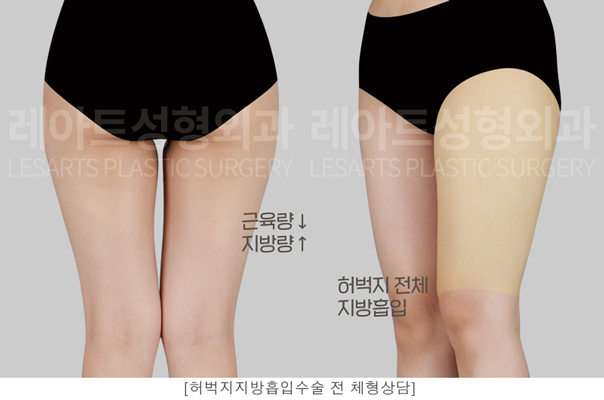
Despite regularly doing aerobic exercise and dieting,
the patient felt frustrated because stubborn fat
on her inner thighs would not easily go away.
She especially desired to achieve a thigh gap,
but found that obtaining straight,
slender inner thigh lines through exercise or stretching alone
was almost impossible. As a result, she decided to undergo thigh liposuction.
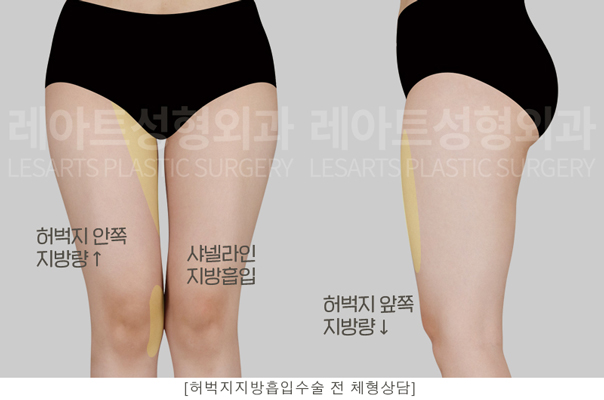
Analyzing the patient's body prior to surgery,
she had a balanced distribution of muscle mass
and fat across her thighs.
However, the patient specifically struggled with excess fat on the inner thighs
and "Chanel line" (inner knee area), making it difficult to achieve
the desired thigh gap. These areas appeared heavy
and disrupted the smooth, streamlined look of her legs.
Considering these physical characteristics,
we planned comprehensive thigh liposuction.
The procedure involved minimal liposuction
on the front thighs to avoid accentuating the muscles,
while focusing primarily on the inner thighs and Chanel line to create
a straight thigh line and a visible thigh gap.
Additionally, since the patient was concerned
about potential unevenness or skin sagging post-liposuction,
we explained that the surgery would be meticulously
designed to preserve skin elasticity and
ensure smooth, natural-looking results.
Below, we'll examine the surgical outcomes
through photos taken five months after thigh liposuction.
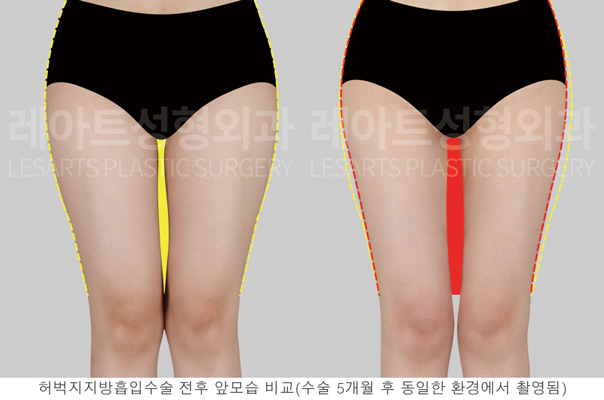
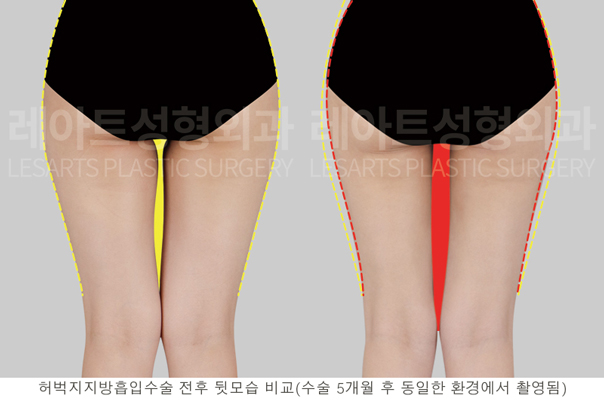
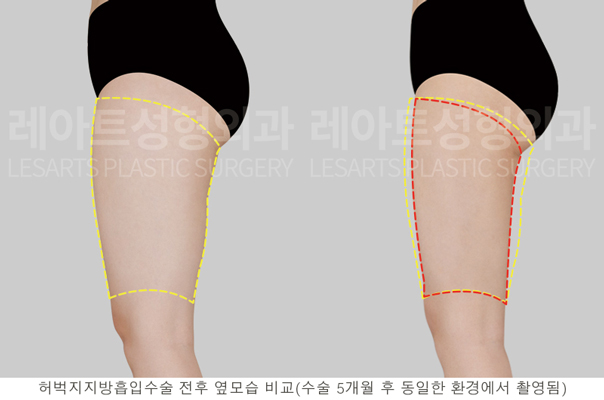
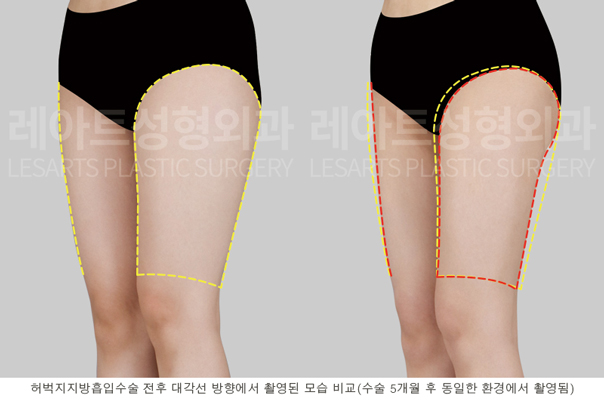
Through liposuction, the overall volume of the thighs
—including inner, outer, front, and back areas—
has been harmoniously reduced, resulting in
smoother and lighter leg contours.
Most notably, the stubborn fat on the inner thighs,
which was the patient's main concern,
has been effectively removed, creating a visible thigh gap.
Additionally, reduced volume in the outer thighs
(saddlebags) and front thighs has given the legs a slimmer,
elongated appearance.
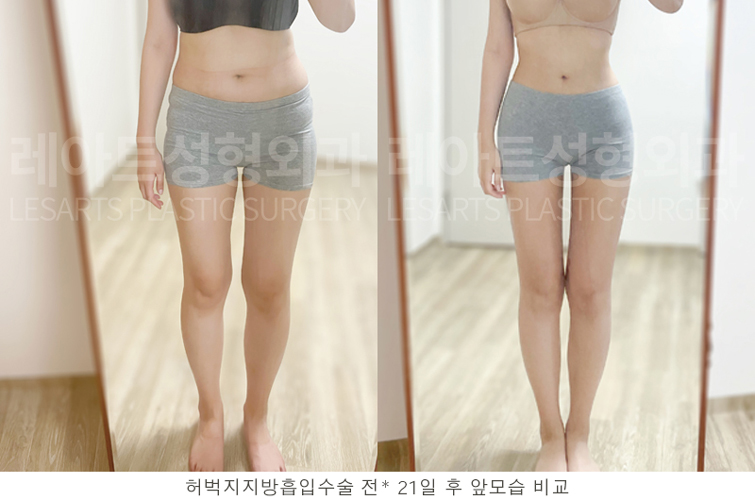
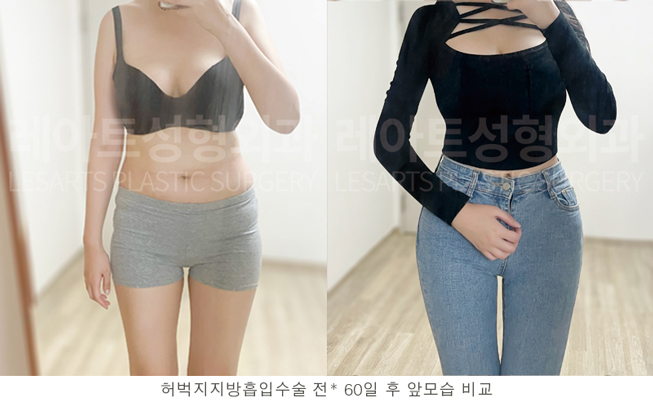
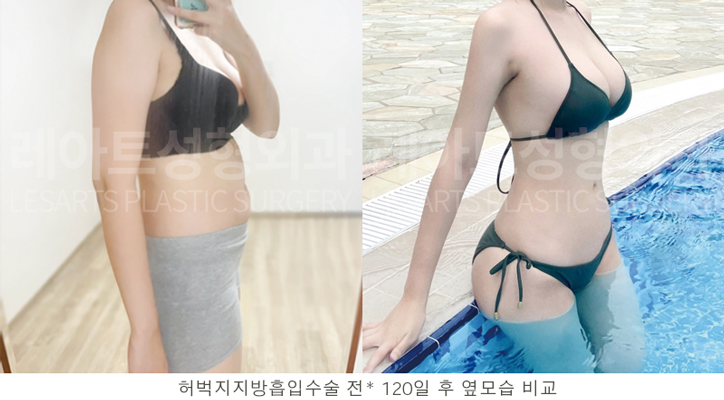
Through selfies taken from various angles after thigh liposuction,
we could clearly see how the leg lines became smoother,
lighter, and more naturally refined.
In particular, the evenly contoured thighs
allowed tight-fitting clothes to accentuate smooth leg
silhouettes and improved body proportions.
Before surgery, despite consistent exercise and dieting,
the patient had struggled with stubborn inner thigh fat.
However, by undergoing precise thigh liposuction tailored to
preserve skin elasticity, she achieved a naturally smooth,
toned thigh gap without any unevenness.
This case demonstrates that thigh liposuction is not
just about aggressively removing large amounts of fat.
Instead, a personalized approach—considering body shape,
skin condition, and proportion—is crucial for achieving optimal results.
Rather than excessive fat removal,
the surgery prioritized achieving ideal proportions,
ultimately resulting in stable, highly satisfying outcomes for the patient.
#Liposuction
#Thigh
#Fat type #Thin thighs #Thigh Gap #BMIbelow30(thigh)


Cases finding
similar to my profile
Customer Diagnostics


Select the surgery and
area you are interestedto see real
before andafter changes.


we
make you,
the art
Clinic hours
MON - FRI
10 am – 7pm
SAT
10 am – 4pm
Holiday
SUN, HOLIDAY
Location
Lesarts Moon Clinic Tower 4-5F, 40, Nonhyeon-ro 168-gil,
Gangnam-gu, Seoul, Republic of Korea

Medical institution name Lesarts Plastic Surgery
Address Lesarts Moon Clinic Tower 4-5F, 40, Nonhyeon-ro 168-gil, Gangnam-gu, Seoul, Republic of Korea
Representative Moon sung jun
