




Online Consultation
Please accurately enter the information below.
Quick Cost Consultation
Quick Consultation & Reservation
Cases finding
similar to my profile






Cases finding
similar to my profile
Customer Diagnostics
Sagging belly surgery, abdominoplasty
2025-03-24
Many people worry about sagging belly fat caused by pregnancy, childbirth,
or rapid weight changes.
This concern is difficult to solve with just diet, exercise,
or other efforts to lose belly fat.
In particular, sagging skin of the belly is often accompanied by diastasis recti,
which causes the midline of the abdomen to protrude
and the waistline to appear thick and blunt.
Even if the waist circumference is not large,
the body’s balance can look off.
When consulting with patients,
these issues go beyond cosmetic problems,
leading to physical discomfort, loss of confidence,
and psychological withdrawal.
Abdominoplasty is a fundamental solution
to sagging belly fat and diastasis recti.
This surgery lifts sagging skin and corrects separated abdominal muscles,
firmly reshaping the abdomen.
It is an effective method to solve elasticity problems
that cannot be improved by diet, exercise, or liposuction alone.
However, abdominoplasty is performed through a long incision,
and recovery management is very important.
Therefore, understanding every process carefully—
from the patient’s condition diagnosis,
to precise surgical planning,
and thorough follow-up—is essential.
For a more detailed explanation,
we will share the case of a patient
who underwent abdominoplasty below.
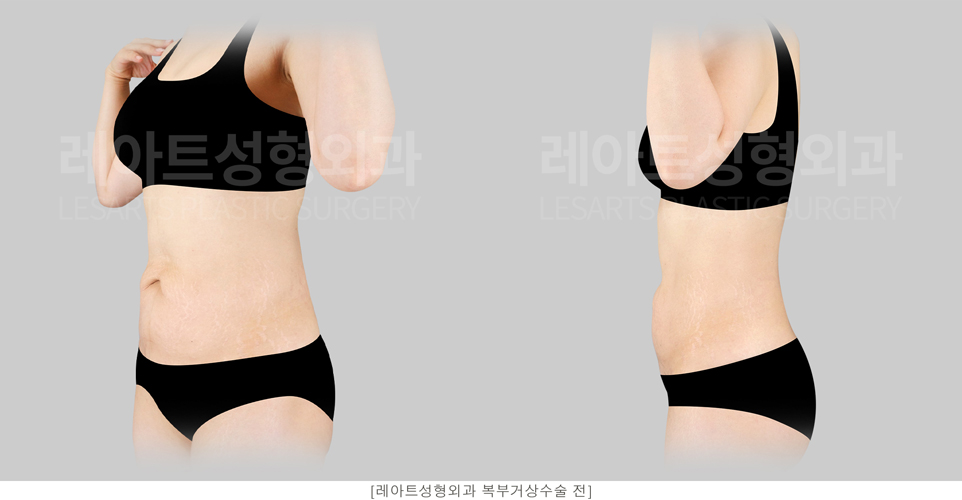
This time, we will analyze a case of abdominoplasty surgery.
The patient is a woman in her 40s
who experienced natural childbirth a long time ago.
After pregnancy and childbirth,
she felt a loss of abdominal skin elasticity
and experienced significant stress
due to sagging belly skin.
Her weight increased by nearly 30kg after childbirth.
Although she succeeded in losing weight through dieting,
the skin that lost elasticity couldn’t return to its original state,
which worsened the sagging and increased her stress.
In particular, although her waist circumference decreased as body fat was reduced through dieting,
the separation of the rectus abdominis muscles (diastasis recti)
caused her upper abdomen to protrude,
and her abdominal line appeared uneven and bumpy.
As mentioned earlier,
this issue is difficult to resolve
through liposuction or abdominal exercises alone,
and requires surgical correction.
Ultimately, it was necessary to improve the sagging abdominal skin
and to tighten the waistline
by correcting the separated abdominal muscles.
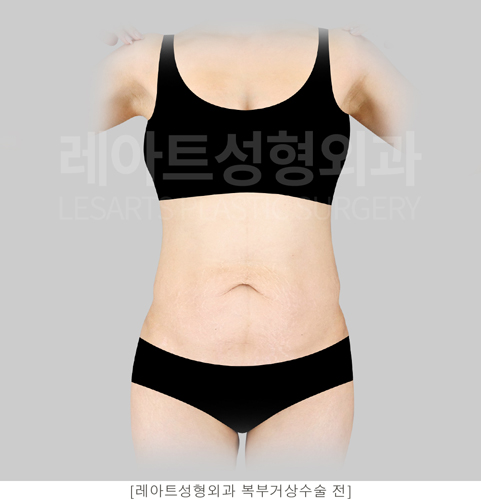
Before the abdominoplasty surgery,
the patient’s condition was evaluated.
The abdominal skin elasticity was significantly reduced,
and due to abdominal wall laxity,
the entire abdomen appeared protruded.
Especially, from the upper abdomen,
the stretched skin was sagging down below the navel.
The rectus abdominis muscles were weakened,
making the waistline appear loose, dull,
and unclear.
Looking at the balance of the waist and abdomen,
the rib cage was relatively wide,
while the abdominal volume was concentrated downward,
resulting in an unbalanced upper and lower body proportion.
Furthermore, as the sagging progressed,
the navel position was also lowered,
making the waistline appear shorter.
Wrinkles had formed around the navel,
causing visible deformation.
A surgical plan was explained to the patient,
which included abdominoplasty combined with rectus muscle repair.
This would remove the sagging skin
and strengthen the abdomen and waistline
starting from the muscle layer.
Additionally, lifting the abdominal skin
from the upper abdomen required repositioning the navel.
During this process, the deformed navel
was redesigned to look natural,
and repositioned to its original location,
making the waist appear slimmer and the legs longer.
Navel reshaping surgery was also planned.
Below are clinical photos taken before the surgery
and 3 months after abdominoplasty.
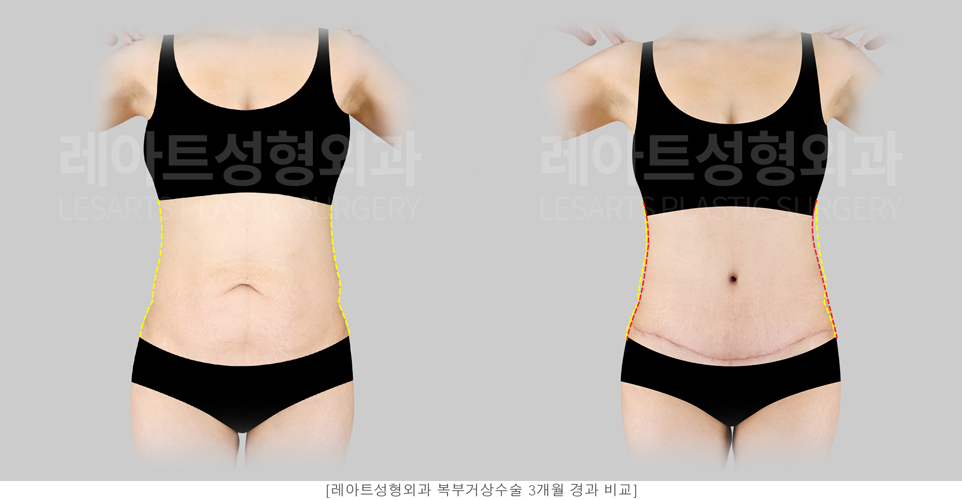
Comparing the patient’s abdomen before and after
3 months following abdominoplasty surgery,
Before surgery, the waist curve was unclear,
and the proportion between the upper and lower body
was unbalanced.
Especially, the separated rectus muscles weakened
the abdominal support,
resulting in a more protruding and uneven abdomen.
However, 3 months after abdominoplasty,
the patient’s abdomen and waistline show
a clearly improved and refined appearance.
Through abdominoplasty and rectus muscle repair,
the sagging abdominal skin has been noticeably lifted.
The skin that sagged above the navel before surgery
is now lifted,
eliminating the uneven texture on the front abdomen,
making it smooth and firm again.
Wrinkles that were prominent from the navel to the lower abdomen
have disappeared,
and the sagging skin has tightened,
creating an overall balanced abdominal contour.
Notably, with the rectus muscle repair tightening
the center of the abdomen,
the waistline appears slimmer,
enhancing a youthful body shape.
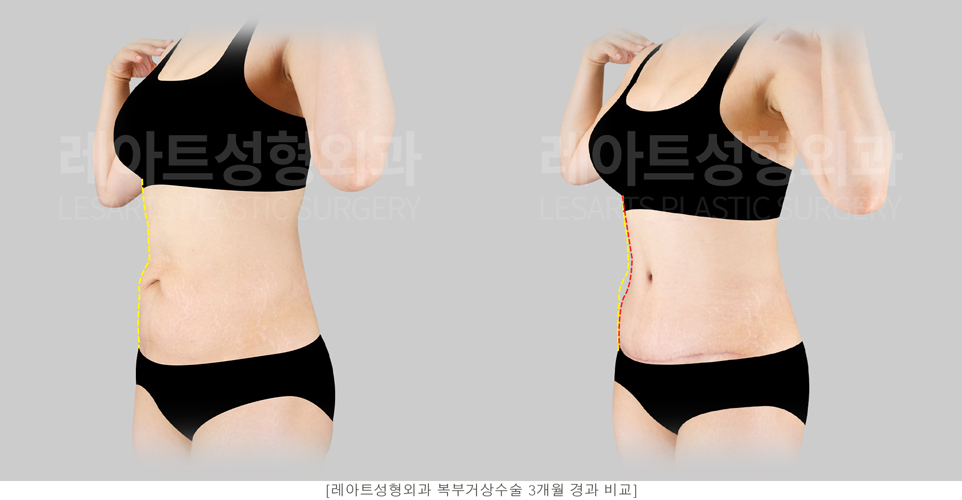
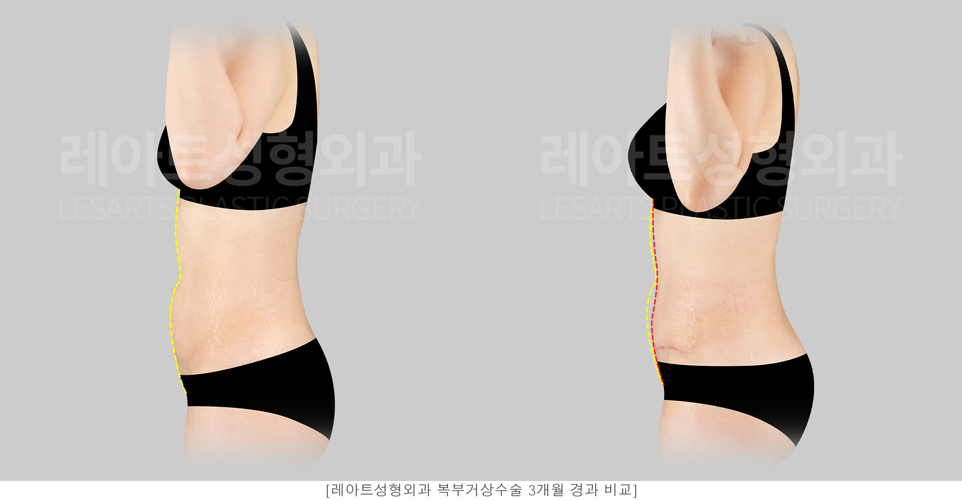
The changes are also clearly visible
when viewed from the side.
Compared to before surgery,
the navel, which was sagging and pointing downward,
has been ideally repositioned.
The surrounding skin, which was severely sagging,
has also been tightened,
making the shape of the navel more defined and noticeable.
In the early stages after surgery,
the patient experienced discomfort due to
swelling that shifted downward,
causing swelling in the lower body.
We explained that this is a temporary condition
that can occur after surgery
and is part of the normal recovery process.
Through regular follow-up visits,
we continuously monitored the healing progress
of the surgical area,
reassuring the patient
and providing appropriate treatment and care as needed.
Through this tummy tuck surgery,
the patient experienced a transformation
beyond just improving sagging belly fat —
a harmonious reshaping of the body line.
Based on an accurate diagnosis
and meticulous surgical planning,
we were able to create natural, three-dimensional contours
not only for the abdomen but also for the side and back profiles,
which the patient expressed high satisfaction with.
These changes are not only about external beauty,
but also about relieving physical discomfort
and fostering psychological recovery.
While tummy tuck surgery continues to grow in popularity year after year,
the most important thing is
to find the optimal approach that suits you best
through careful consultation and planning.
#Abdominoplasty
#M-type


Cases finding
similar to my profile
Customer Diagnostics


Select the surgery and
area you are interestedto see real
before andafter changes.


we
make you,
the art
Clinic hours
MON - FRI
10 am – 7pm
SAT
10 am – 4pm
Holiday
SUN, HOLIDAY
Location
Lesarts Moon Clinic Tower 4-5F, 40, Nonhyeon-ro 168-gil,
Gangnam-gu, Seoul, Republic of Korea

Medical institution name Lesarts Plastic Surgery
Address Lesarts Moon Clinic Tower 4-5F, 40, Nonhyeon-ro 168-gil, Gangnam-gu, Seoul, Republic of Korea
Representative Moon sung jun
