ALL MENU

Online Consultation

Online Consultation

kakaoTalk

NaverTalk

INSTAGRAM

YOUTUBE

Cases finding similar to my profile

Cases finding
similar to my profile

Customer Diagnostics

#Abdominoplasty

Post-C-section lower belly sagging, improved with tummy tuck surgery

2025-06-02
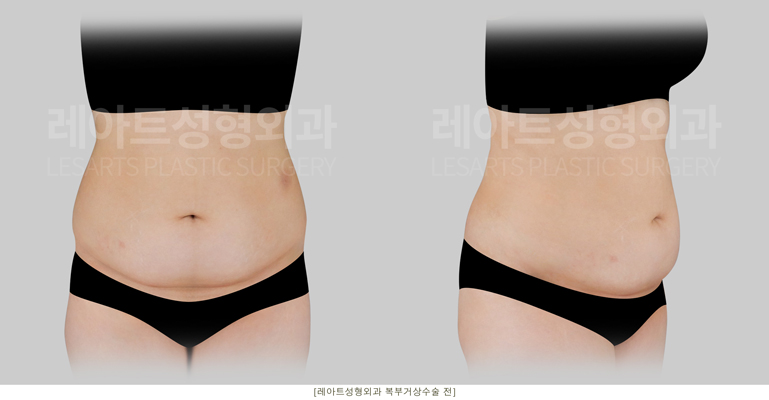
Many women experience stress
from body shape changes after pregnancy
when their abdomen doesn't return
to its pre-pregnancy state.
In particular, fat tends to accumulate
below the belly button,
and skin elasticity declines,
causing not just a bulging belly
but also sagging and multiple skin folds.
As regular readers of our blog know,
these physical changes are often difficult
to reverse with just dieting or exercise.
They can cause discomfort and stress
in daily outfits or postures.
To surgically improve postpartum sagging,
multiple factors must be considered—
including skin elasticity, fat distribution,
and abdominal muscle separation.


Post-C-section lower belly sagging, improved with tummy tuck surgery photo 1
 
This patient is a woman in her 40s
who had struggled for a long time
with her abdominal shape not recovering
after giving birth.
Following her C-section,
fat accumulated below her belly
and her skin began to fold,
making her abdomen look heavier
than other areas.
The sagging around the lower abdomen
also caused the belly button to droop,
lowering her waistline
and making her overall body line
appear unbalanced,
which significantly affected her confidence.
Recognizing that dieting alone
would not resolve the issue,
she visited our clinic
seeking a more fundamental solution.


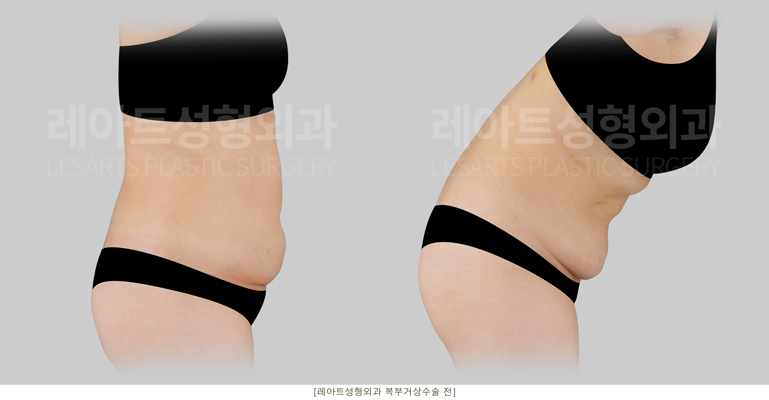
Post-C-section lower belly sagging, improved with tummy tuck surgery photo 2
 
During her pre-surgery consultation,
we confirmed significant sagging
and excess volume in the lower abdomen,
with deep folds and wrinkles present.
The drooping skin extended from the upper abdomen,
pulling the belly button downward.
The uneven waistline also indicated
that liposuction or a mini tummy tuck
would not be sufficient.
We proposed a surgical plan
to correct both the sagging
and body line imbalance:
  1. M-type Tummy Tuck Surgery
    To address sagging across the full abdomen,
    an M-type tummy tuck was planned
    to lift the skin from the upper area downward.
    We also corrected muscle separation
    for a tighter abdominal contour.
  2. Abdominal Liposuction
    Although the patient didn’t have a large fat volume,
    liposuction was added to refine
    abdominal curves and smooth the waistline.
  3. Hip Dip Fat Grafting
    Some of the harvested abdominal fat
    was grafted into the hip dips
    to improve overall body contour.

Let’s look at her 2-month post-op progress.
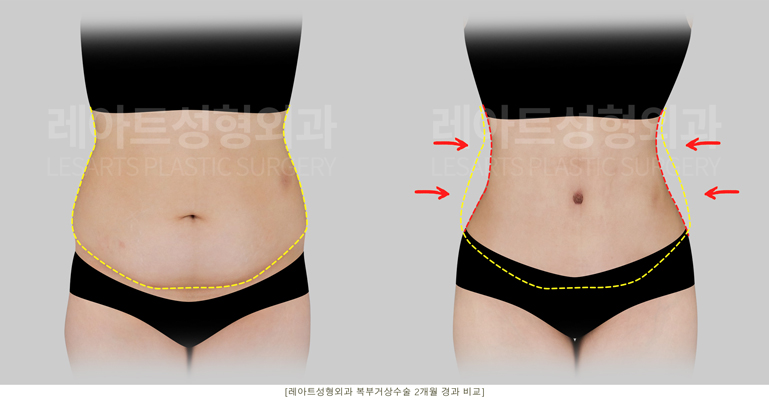

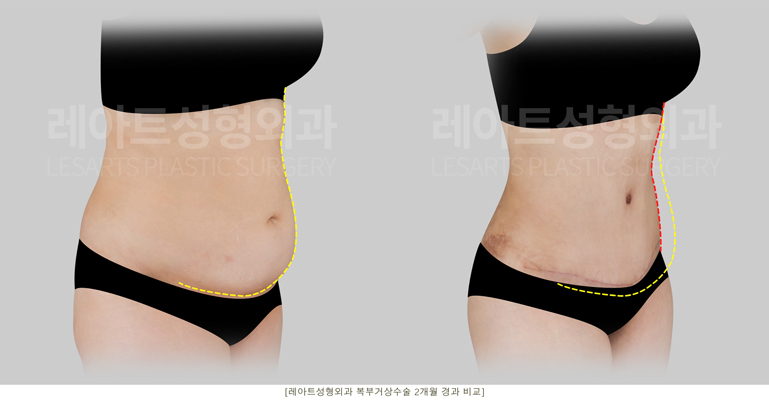
Post-C-section lower belly sagging, improved with tummy tuck surgery photo 3

Before surgery,
sagging caused by gravity
made the lower belly look heavier
and created deep folds.
Her belly button had dropped,
and her waistline appeared undefined
and unbalanced.
After 2 months,
the drooping from the upper to lower abdomen
was corrected.
The belly button was repositioned
to the center in a natural way,
and the waistline became smooth and firm.

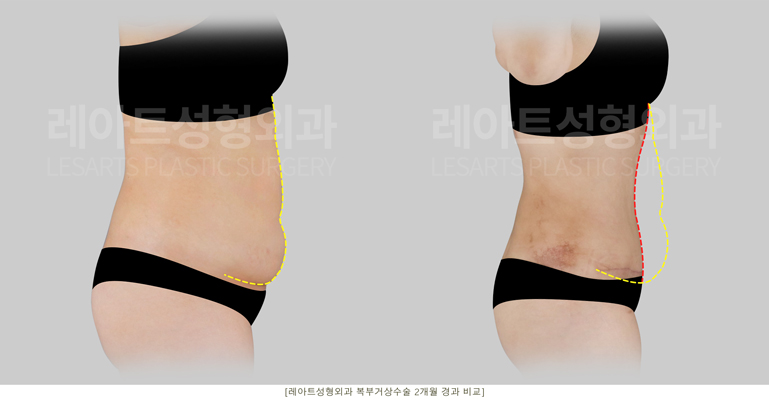
Post-C-section lower belly sagging, improved with tummy tuck surgery photo 4

In the side view before surgery,
sagging fat and skin created
a protruding lower abdomen,
which added to the perceived bulk.
Two months post-op,
the abdomen appears lifted and toned.
The surgical scar is well-hidden
inside the underwear line,
resulting in a more natural and slim profile.

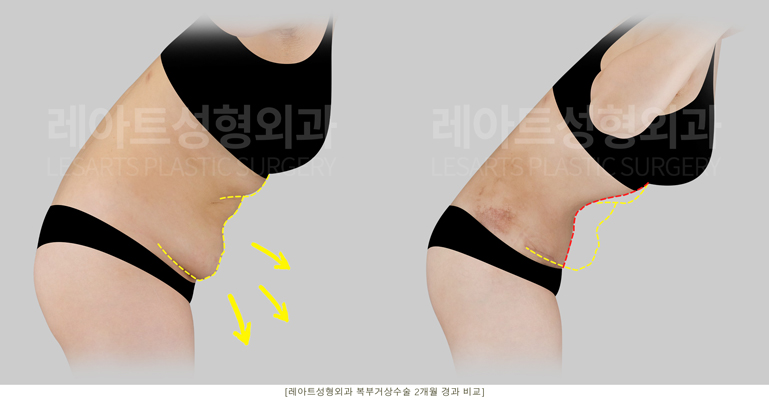
Post-C-section lower belly sagging, improved with tummy tuck surgery photo 5

Before surgery, when bending forward,
the sagging skin visibly hung downward,
causing discomfort in daily movements.
Now, at two months post-op,
the lifted skin holds its shape
without folding or sagging—
even in a bent posture.
The incision remains hidden
within the underwear line,
minimizing scar concerns
and showing a stable recovery overall.

Post-C-section lower belly sagging, improved with tummy tuck surgery photo 6

It’s important to remember that
a full tummy tuck involves a wide surgical area,
often combined with liposuction—
so detailed monitoring is crucial
throughout recovery.
We emphasized the need
for scheduled follow-up care,
scar treatment, and patience,
rather than rushing the healing process.
Especially with potential issues like seroma
or skin irritation,
early management, compression wear,
and timely injections
can significantly affect results.
By actively attending check-ups
and maintaining good self-care habits,
patients can expect more stable recovery
and long-term satisfaction.

#Abdominoplasty 

#M-type 

#Abdominal liposuction(M) #Hip Fat Transfer(M)

Previous post

Men with chest concerns – What changes after 2 months of gynecomastia surgery?

Next post

Flattening belly fat with abdominal liposuction, even for slim body types