




Online Consultation
Please accurately enter the information below.
Quick Cost Consultation
Quick Consultation & Reservation
Cases finding
similar to my profile






Cases finding
similar to my profile
Customer Diagnostics
When Can You Return to Daily Life After Gynecomastia Surgery? (Gynecomastia Surgery | Male Breast Reduction | Gland Removal | Chest Liposuction | Simon Grade 2A | Recovery Timeline | Return to Work | Seoul Gangnam Plastic Surgery Clinic)
2026-01-15
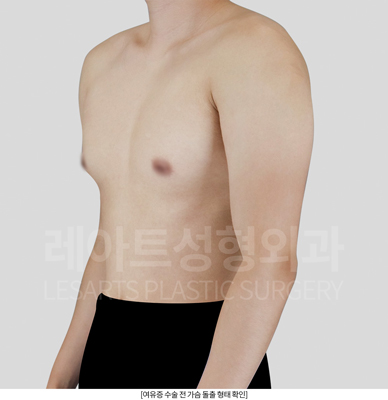
Many men considering gynecomastia surgery worry not only about the procedure itself
but also about how soon they can return to daily activities, exercise,
or work—especially if their job involves a lot of upper-body movement.
It’s true that after gland removal, the chest requires a period of
protection to prevent bleeding and allow stable healing.
However, this doesn’t mean patients cannot function in daily life.
The key is to adjust activity levels gradually according to the healing phase.
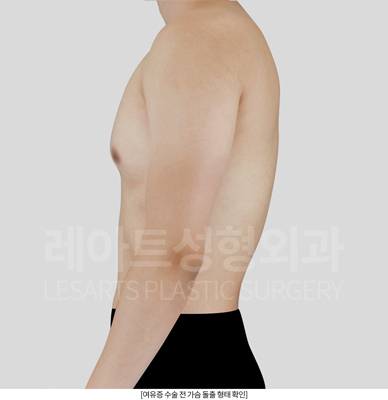
Today’s case focuses on a patient who had:
-Visible enlargement of both breasts
-Nipple-area projection
-A firm lump beneath the nipple on palpation
Ultrasound examination confirmed overgrown
glandular tissue in both breasts.
Fat was also present on the lateral chest,
meaning both gland removal and chest liposuction
were necessary for full correction.
The patient was diagnosed with Simon Grade 2A gynecomastia,
and surgery was planned to include:
- Gland removal
- Tissue repositioning to prevent dents
- Lateral chest liposuction
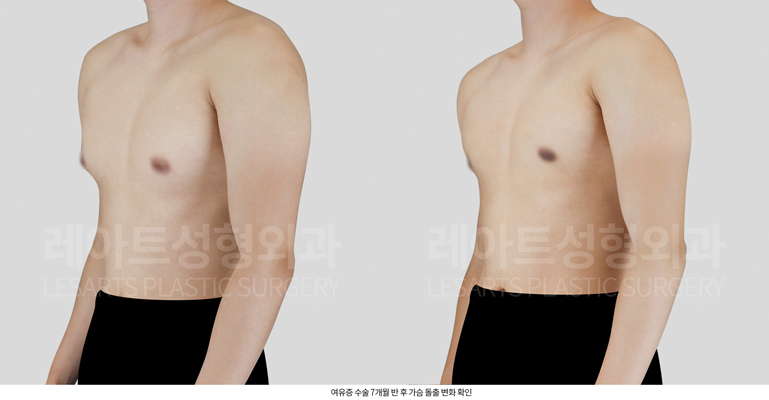
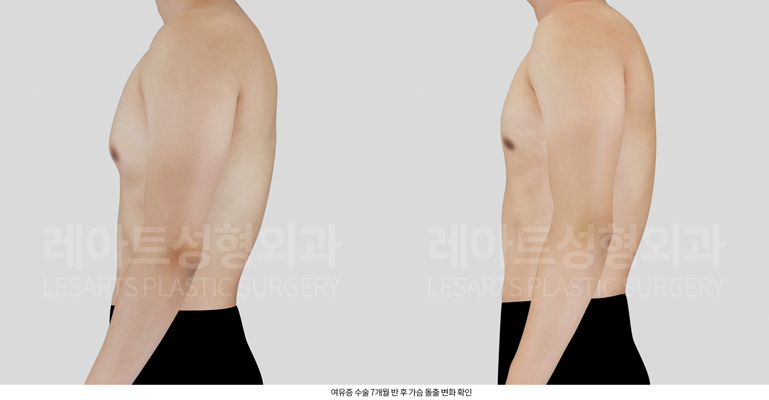
7.5-Month Postoperative Chest Projection Improvement
At 7.5 months after surgery, the chest contour showed:
-Significant reduction in projection
-A flat, even, and masculine chest line
-No dents or adhesions around the nipple area
-A natural flow from upper chest → center → side chest
This result was possible because the goal was not merely to remove the gland,
but to redesign the entire chest shape in a balanced, masculine way.
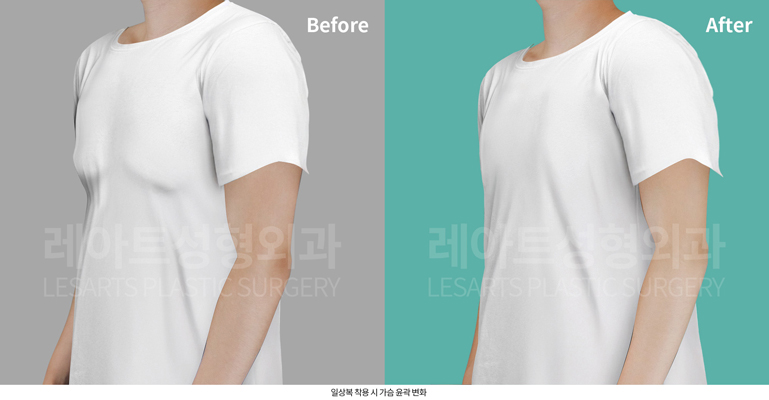
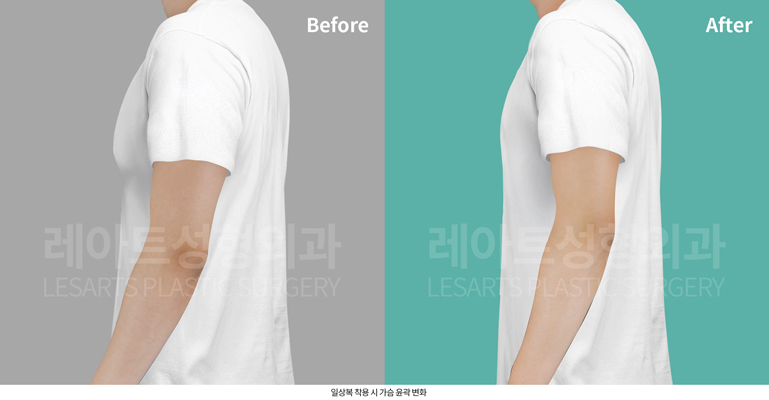
Daily Clothing Fit — A Noticeable Difference
The patient shared that before surgery:
-His chest was obvious even under regular clothing
-He often felt self-conscious wearing fitted tops
-The nipple–areola area created an unwanted silhouette
After surgery:
-The chest contour looks clean and natural in daily outfits
-The previous discomfort about clothing choices disappeared
-He regained confidence in his upper-body appearance
Recovery Timeline — When Can You Resume Activities?
This patient works in a job that requires frequent
use of the hands and upper body, so he was initially worried
about how long he would need to limit movement.
He was advised:
-For the first 2 weeks, avoid heavy upper-body use and protect the surgical area
-Gradually expand activity level depending on healing progress
-Continue follow-up checkups to monitor swelling, tissue stability, and scar recovery
Now, 7 months after surgery, he has:
-Fully returned to daily life
-No limitations at work
-No discomfort during upper-body movement
-A stable chest contour with no hollowness or adhesion
His chest shape has settled naturally,
with a clean and well-defined upper-body silhouette.
Final Notes — Why Aftercare Matters
Although gynecomastia surgery shows
an immediate reduction in chest size,
the internal healing of tissues takes much longer.
Stable and natural results depend on:
-Proper early-stage activity restrictions
-Wearing compression garments as instructed
-Avoiding strenuous chest or arm movement in the first weeks
-Attending scheduled follow-ups
By following medical guidance, patients can achieve a smooth,
natural masculine chest without dents, adhesions, or irregularities.
#Male body contouring
#Gynecomastia
#Grade2-A #true gynecomastia #Side chest liposuction


Cases finding
similar to my profile
Customer Diagnostics


Select the surgery and
area you are interestedto see real
before andafter changes.


we
make you,
the art
Clinic hours
MON - FRI
10 am – 7pm
SAT
10 am – 4pm
Holiday
SUN, HOLIDAY
Location
Lesarts Moon Clinic Tower 4-5F, 40, Nonhyeon-ro 168-gil,
Gangnam-gu, Seoul, Republic of Korea

Medical institution name Lesarts Plastic Surgery
Address Lesarts Moon Clinic Tower 4-5F, 40, Nonhyeon-ro 168-gil, Gangnam-gu, Seoul, Republic of Korea
Representative Moon sung jun
