




Online Consultation
Please accurately enter the information below.
Quick Cost Consultation
Quick Consultation & Reservation
Cases finding
similar to my profile






Cases finding
similar to my profile
Customer Diagnostics
Chest Bulging Correction After Gynecomastia Surgery (Gynecomastia Surgery | Puffy Nipple Correction | Male Chest Reduction | Gland Removal | Chest Projection Improvement | True Gynecomastia Grade 2A | Seoul Gangnam Pla
2026-01-23
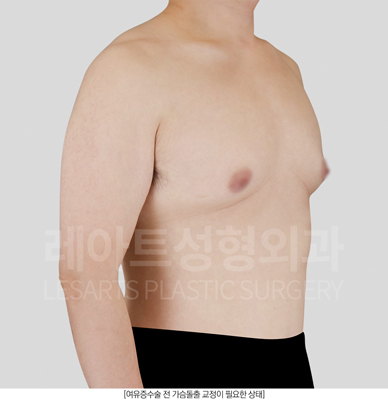
Before Surgery: Visible Chest Bulging That Needed Correction
Many patients who come in for gynecomastia consultations worry
not only about the surgical results but also about the recovery process.
People who smoke or drink regularly,
or who take medication for chronic conditions,
often wonder whether these lifestyle factors might affect healing.
Our patient in this case is a man in his late 30s,
who had been dealing with enlarged and protruding breasts since his 20s.
Even with regular exercise and weight control
his gynecomastia did not improve.
He also had concerns about recovery because of smoking,
drinking habits, high cholesterol medication, and hair-loss treatment.
These issues were thoroughly discussed during his consultation.
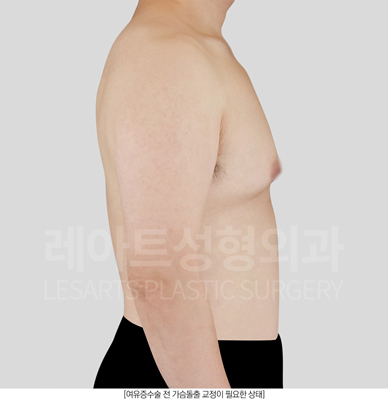
Patient Profile
Age: Late 30s
BMI: 26
Diagnosis: Simon Grade 2A
– True Gynecomastia
Ultrasound Findings and Diagnosis
During palpation, a firm lump beneath the areola was clearly felt.
Ultrasound confirmed this was overgrown glandular tissue,
which explained the progressive enlargement and
protrusion of the areola.
Because his breast enlargement and palpable mass
had continued regardless of weight changes or exercise,
glandular excision was essential for improvement.
There was no pain, nipple discharge, or breast sagging,
but the areola was enlarged and dome-shaped due to gland overgrowth.
This was the patient’s biggest source of stress.
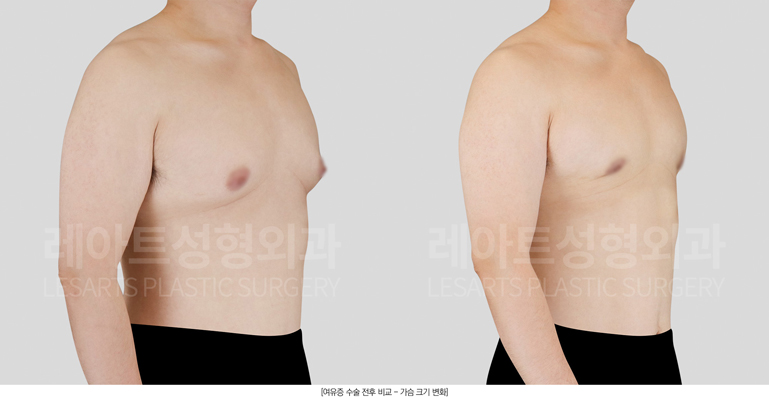
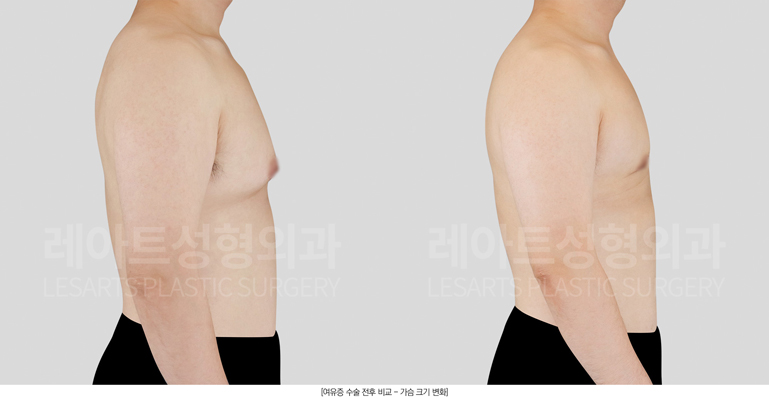
Gynecomastia Surgery: Before & After Comparison
Chest Shape Change
After surgery, the previously protruding area around the areola flattened,
giving the upper body a cleaner, more masculine contour.
The chest no longer appeared rounded or full, and the silhouette
became more naturally aligned from the upper chest down to the lower chest.
Areola & Nipple Projection Improvement
The correction of nipple-areola projection was especially dramatic.
This reduced the awkward bulging appearance and
restored a flatter, more proportionate chest shape.
Skin irregularities were also corrected through tissue redistribution,
helping the chest look smooth while keeping the upper-chest muscular contour intact.
The angle between the lower chest and abdomen,
which previously looked tight and compressed due to protrusion,
was corrected into a more balanced shape.
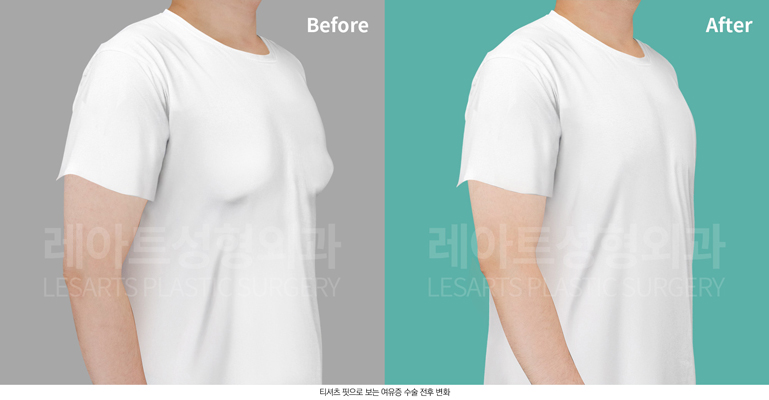
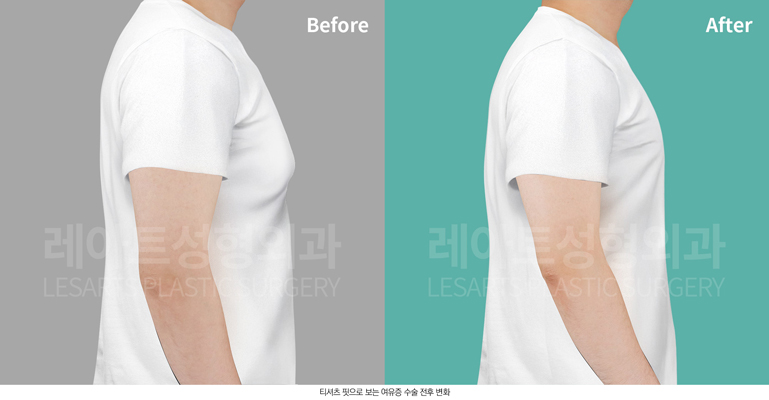
T-Shirt Fit: A Clearer Visual Difference
The most noticeable improvement appeared when wearing a T-shirt.
Before surgery, the areola area was the highest point of the chest,
causing fabric to catch awkwardly, which made clothing choices stressful.
At 2 months post-op, even with some residual swelling,
the chest looks smooth under fitted clothing.
There is no visible bump or unnatural outline
giving the upper body more balanced proportions.
The patient expressed great satisfaction
because improving T-shirt fit was one of his main goals.
Recovery Process
Although the patient initially worried due to:
-Smoking
-Alcohol consumption
-Chronic medication use
these factors did not cause complications because
he followed instructions carefully and attended all scheduled check-ups.
The surgical area healed without issues,
and the chest contour continued to settle into a natural shape.
Important Reminders About Gynecomastia Recovery
Lifestyle habits and medical conditions can affect recovery.
That’s why proper:
-Diagnosis
-Glandular removal
-Follow-up checks
-Adherence to postoperative guidelines
are essential for safe recovery and preventing recurrence.
If you are concerned about healing or long-term results,
consult with a specialist and ensure consistent follow-up care.
#Male body contouring
#Gynecomastia
#Grade2-A #true gynecomastia


Cases finding
similar to my profile
Customer Diagnostics


Select the surgery and
area you are interestedto see real
before andafter changes.


we
make you,
the art
Clinic hours
MON - FRI
10 am – 7pm
SAT
10 am – 4pm
Holiday
SUN, HOLIDAY
Location
Lesarts Moon Clinic Tower 4-5F, 40, Nonhyeon-ro 168-gil,
Gangnam-gu, Seoul, Republic of Korea

Medical institution name Lesarts Plastic Surgery
Address Lesarts Moon Clinic Tower 4-5F, 40, Nonhyeon-ro 168-gil, Gangnam-gu, Seoul, Republic of Korea
Representative Moon sung jun
