




Online Consultation
Please accurately enter the information below.
Quick Cost Consultation
Quick Consultation & Reservation
Cases finding
similar to my profile






Doctor's Note
Medical columns by our surgeons
Gynecomastia | Medication-Induced Gynecomastia: Which Drugs Are Involved?
2026-08-18
Gynecomastia | Medication-Induced Gynecomastia: Which Drugs Are Involved?
Q. Which primary medications are associated with the development of male gynecomastia,
and what precautions and management steps are recommended during their use?
A. Hair loss medications (finasteride, dutasteride), antipsychotics (risperidone),
and diuretics (spironolactone) are representative examples; rather than arbitrarily discontinuing them, it is advised to recognize early symptoms (pain, tenderness, enlargement) and consult medical professionals.
[Learn More About Lesarts Plastic Surgery Gynecomastia Surgery]
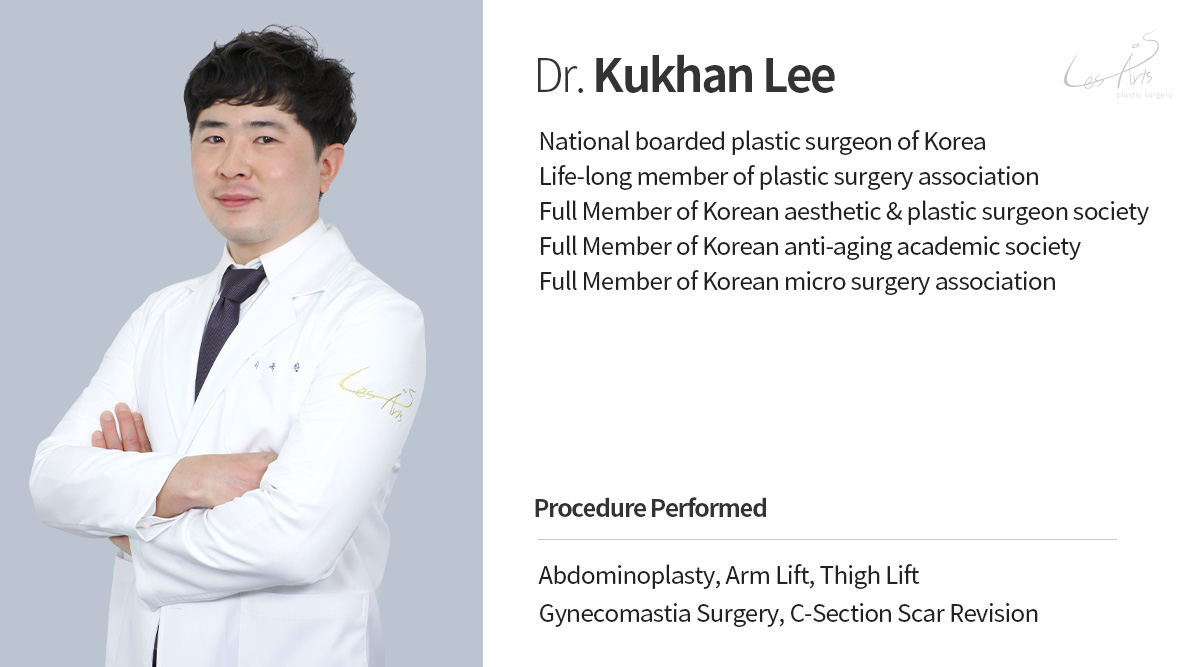
Hello, I am Dr. Kukhan Lee, Board-Certified Plastic Surgeon.
Male gynecomastia, where a male's chest appears prominently rounded, is a relatively common anatomical condition.
According to domestic and international medical literature, approximately 30% to 60% of the male population may experience it at least once during their lifetime,
presenting with a notable frequency among men.

Proportion of Gynecomastia Patients - Lesarts Plastic Surgery
Furthermore, approximately 9% to 25% of all gynecomastia patients
are reported to develop symptoms directly associated with specific medication use.
In clinical consultations for gynecomastia diagnostics and surgical planning, we thoroughly review 'medication history,'
frequently meeting male patients who have been taking prescription drugs over long durations
ranging from routine supplements to targeted treatments for underlying medical conditions.
Some patients are aware in advance that their prescribed medication carries a risk of gynecomastia development,
yet in many cases, patients maintain long-term medication regimens without being aware of this medical correlation.
In this post, based on medical literature regarding medication-induced gynecomastia,
I will summarize the representative medications that demonstrate a notable correlation with gynecomastia development.
The clinical data referenced here is based on the US FDA Adverse Event Reporting System (FAERS) database,
analyzing more than 30,000 reported adverse cases of gynecomastia over a 20-year span from 2004 to 2023.
Through this, we can review which drugs show meaningful associations with gynecomastia and when symptoms typically present post-administration.

Based on reported findings, the 6 primary medications most prominently associated with gynecomastia development include:
Risperidone
Paliperidone
Dutasteride
Finasteride
Spironolactone
Montelukast
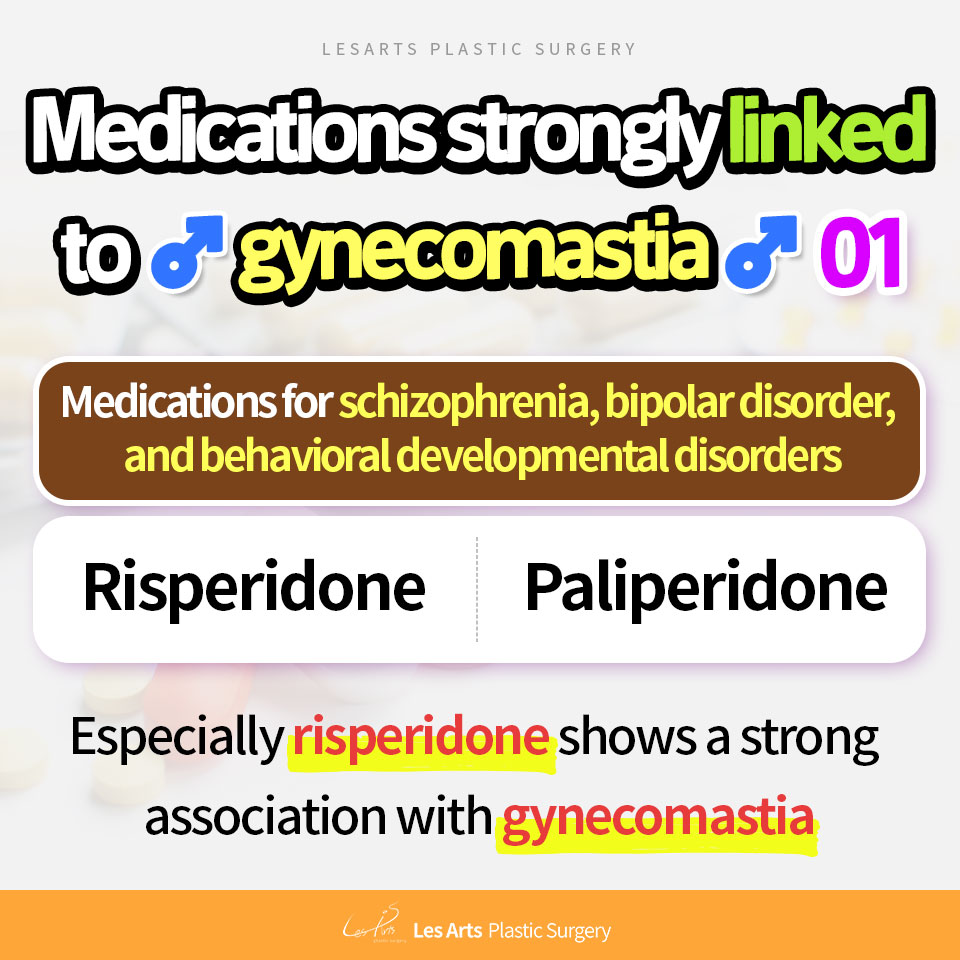
Medication-Induced Male Gynecomastia - Dr. Kukhan Lee, Lesarts
Among these, risperidone and paliperidone are second-generation atypical antipsychotics primarily prescribed in psychiatry,
indicated not only for schizophrenia management, but also for bipolar disorder and pediatric behavioral disorders.
In particular, risperidone accounts for a substantial proportion of drug-induced gynecomastia reports,
and is recognized for elevating prolactin levels in the body, which can contribute to the development of gynecomastia.
A specific area requiring clinical attention is its prescription and use in adolescent patients.
Among medications prescribed in patients under 18 years of age, it demonstrates a relatively higher reported risk profile for gynecomastia;
★ therefore, if a minor child is taking this medication, guardians are advised
to attentively monitor for morphological changes or palpable lumps in the chest. ★
Because symptoms can develop gradually over time following medication initiation,
long-term follow-up observation is appropriate.
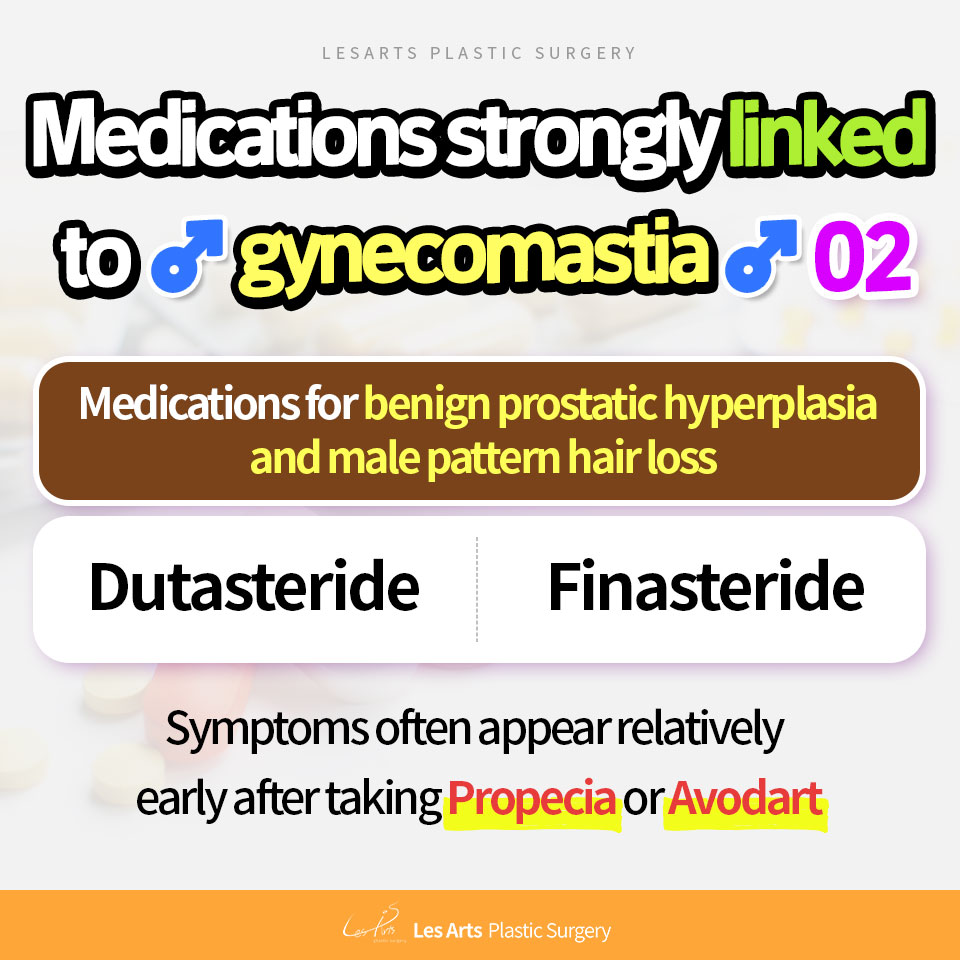
Correlation Between Hair Loss Medications and Gynecomastia - Dr. Kukhan Lee, Lesarts
Dutasteride and finasteride were originally developed for benign prostatic hyperplasia (BPH),
yet are now widely utilized among men in their 20s and 30s for the management of androgenetic alopecia.
They are familiar under commercial brand names such as Propecia and Avodart.
Because many men take these hair loss treatments regularly,
an increasing number of patients seek consultation aware of the potential for gynecomastia associated with DHT suppression mechanisms,
yet many continue long-term regimens without prior knowledge of this potential side effect.
Symptoms such as chest tingling or palpable glandular nodules often present in relatively early stages of hair loss medication use,
and because alopecia management generally involves long-term treatment over several years,
★ ongoing periodic monitoring of residual glandular responses or contour changes is recommended even following gynecomastia surgery. ★
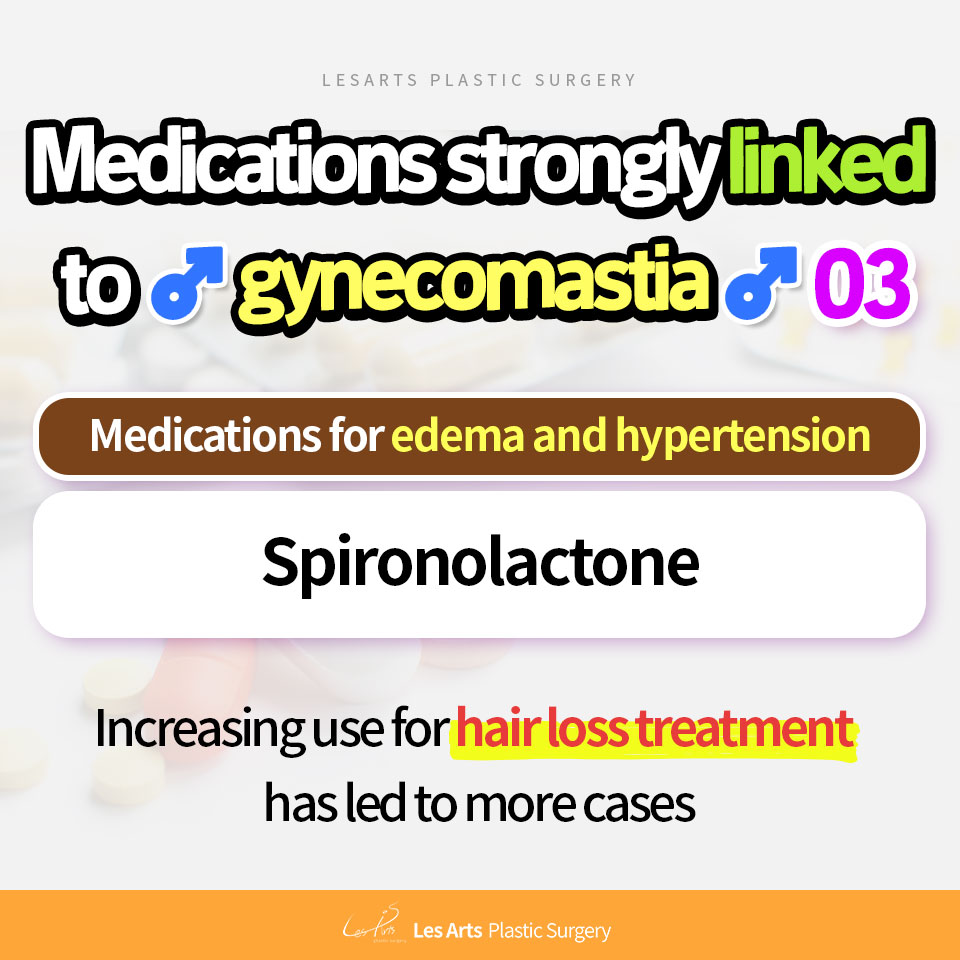
Correlation Between Antihypertensives and Gynecomastia
Spironolactone is prescribed for the management of edema and hypertension.
More recently, an increasing number of male patients take it for dermatologic indications or as an adjunctive hair loss therapy due to its anti-androgenic effects.
Because this agent is recognized as a medication that blocks androgen receptors and can contribute to gynecomastia,
patients currently taking it are advised to monitor for palpable changes in the chest.

Correlation Between Asthma/Allergy Medications and Gynecomastia - Dr. Kukhan Lee, Lesarts
Montelukast is a leukotriene receptor antagonist commonly prescribed for bronchial asthma and chronic allergic rhinitis.
While the overall incidence of associated gynecomastia is not high,
correlations have been documented with sustained long-term administration, making self-checks regarding physical changes worthwhile.
In addition, reports associate antipsychotics such as olanzapine
and statin-class lipid-lowering agents such as atorvastatin with potential gynecomastia symptoms.
Because various prescription medications encountered in regular medical care carry potential correlations with gynecomastia development,
establishing a routine of monitoring for atypical chest reactions before and after starting long-term regimens
can be clinically helpful.
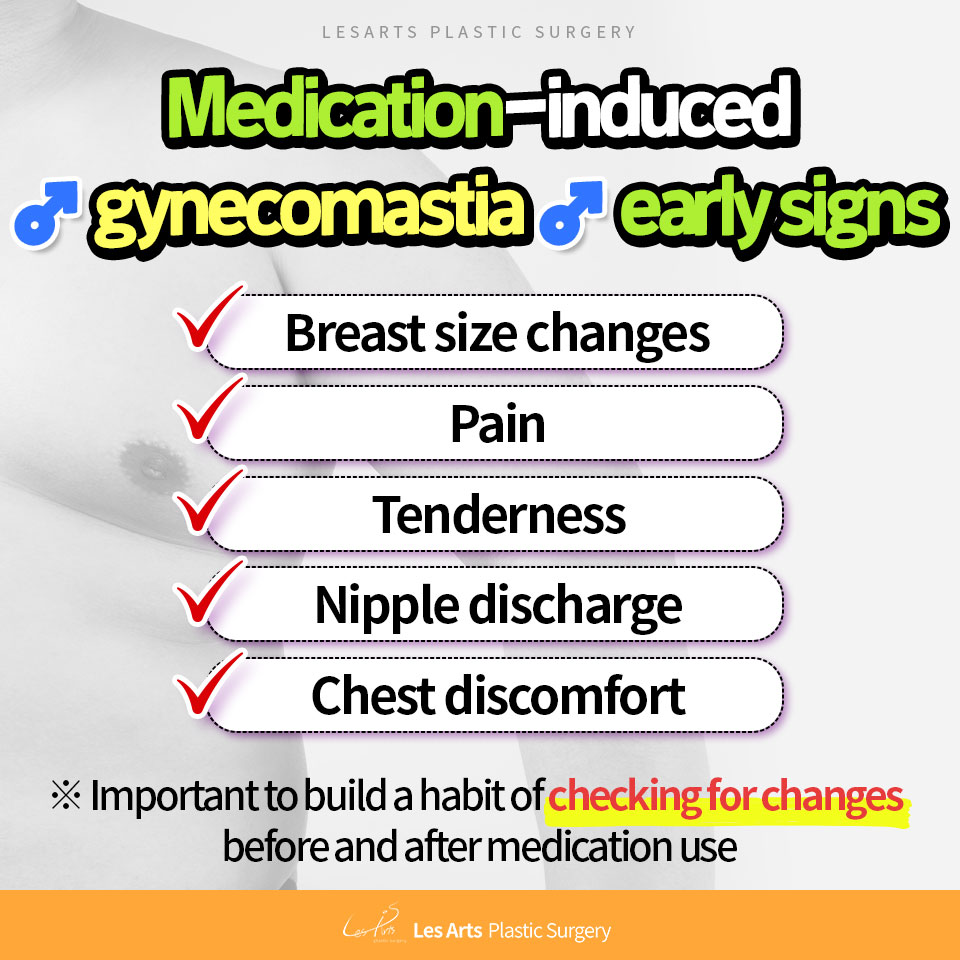
Early Symptoms of Medication-Induced Gynecomastia - Lesarts Plastic Surgery
Medication-induced gynecomastia often presents during early stages of administration
with signs such as periareolar enlargement, tingling nipple pain, tenderness upon palpation, nodule formation, or localized secretion.
Carefully comparing physical sensations before and after starting a new prescription is therefore important.
While gynecomastia is often perceived purely as excess subcutaneous fat accumulation,
in certain patients, it may be closely linked to the endocrine mechanisms of concurrent medications.
If atypical changes are detected in the chest during medication use, rather than abruptly stopping the drug without guidance,
it is recommended to consult a board-certified plastic surgeon to assess potential drug-related associations,
and coordinate with the prescribing physician regarding dosage adjustments or alternative therapies if appropriate.
Recognizing early physiological signs can serve as a helpful clue
in safely determining appropriate diagnostic and surgical pathways, including glandular excision.
If your chest appears unusually rounded or exhibits tenderness, seeking professional examination is advised.
FAQ
Q1. Why can commonly prescribed hair loss medications (finasteride, dutasteride) contribute to gynecomastia?
A. Because androgenetic alopecia treatments act on endocrine metabolic pathways,
resultant shifts in hormonal balance can stimulate mammary glandular tissue, leading to gynecomastia symptoms.
As hair loss treatments are often taken over extended periods, ongoing observation is recommended both during initial use and following gynecomastia surgery.
Q2. Which medications require particular observation in adolescent patients under 18?
A. Atypical antipsychotics such as risperidone and paliperidone.
Prescribed for schizophrenia, bipolar disorder, and behavioral conditions, they carry a relatively higher reported risk profile
in minors, warranting attentive physical monitoring alongside guardians.
Q3. What clinical precautions should be noted with the diuretic spironolactone?
A. While spironolactone promotes fluid excretion for edema and hypertension,
it also interacts with hormone receptors and is documented as an agent that can induce glandular proliferation.
With its growing use as an adjunctive therapy in dermatology and hair care, monitoring chest changes is advised.
Q4. What early symptoms typically characterize medication-induced gynecomastia?
A. Early presentation often involves increased chest volume, palpable glandular nodules, sharp or tingling pain,
contact tenderness, localized secretions, or dull discomfort.
Q5. What is the recommended first step if medication-induced gynecomastia is suspected?
A. Arbitrarily stopping prescribed medications can exacerbate underlying medical conditions;
consulting both the prescribing physician and a plastic surgeon to assess glandular tissue status
and explore alternative therapies where appropriate is the most advisable course of action.
Dr. Kukhan Lee


Cases finding
similar to my profile
Customer Diagnostics


Select the surgery and
area you are interestedto see real
before andafter changes.


we
make you,
the art
Clinic hours
MON - FRI
10 am – 7pm
SAT
10 am – 4pm
Holiday
SUN, HOLIDAY
Location
Lesarts Moon Clinic Tower 4-5F, 40, Nonhyeon-ro 168-gil,
Gangnam-gu, Seoul, Republic of Korea

Medical institution name Lesarts Plastic Surgery
Address Lesarts Moon Clinic Tower 4-5F, 40, Nonhyeon-ro 168-gil, Gangnam-gu, Seoul, Republic of Korea
Representative Moon sung jun
