




Online Consultation
Please accurately enter the information below.
Quick Cost Consultation
Quick Consultation & Reservation
Cases finding
similar to my profile






Doctor's Note
Medical columns by our surgeons
Abdominal Liposuction | Why Results Differ After Your 40s: 9-Month Progress Accounting for Fibrous Tissue and Skin Elasticity [Doctor's Note by Dr. Pyongrim Choi]
2026-08-19
Abdominal Liposuction | Why Results Differ After Your 40s: 9-Month Progress Accounting for Fibrous Tissue and Skin Elasticity [Doctor's Note by Dr. Pyongrim Choi]
Can results feel different after your 40s even when extracting the same amount of fat?
After your 40s, as fibrous tissue within the fat layer increases
and skin elasticity declines, the post-extraction contour changes
may feel different compared to younger years.
Particularly around the navel and lower abdomen, taking fibrous tissue and skin quality into account
to differently modulate the extraction depth between deep and superficial layers is critical.
▶ Learn More About Lesarts Abdominal Liposuction
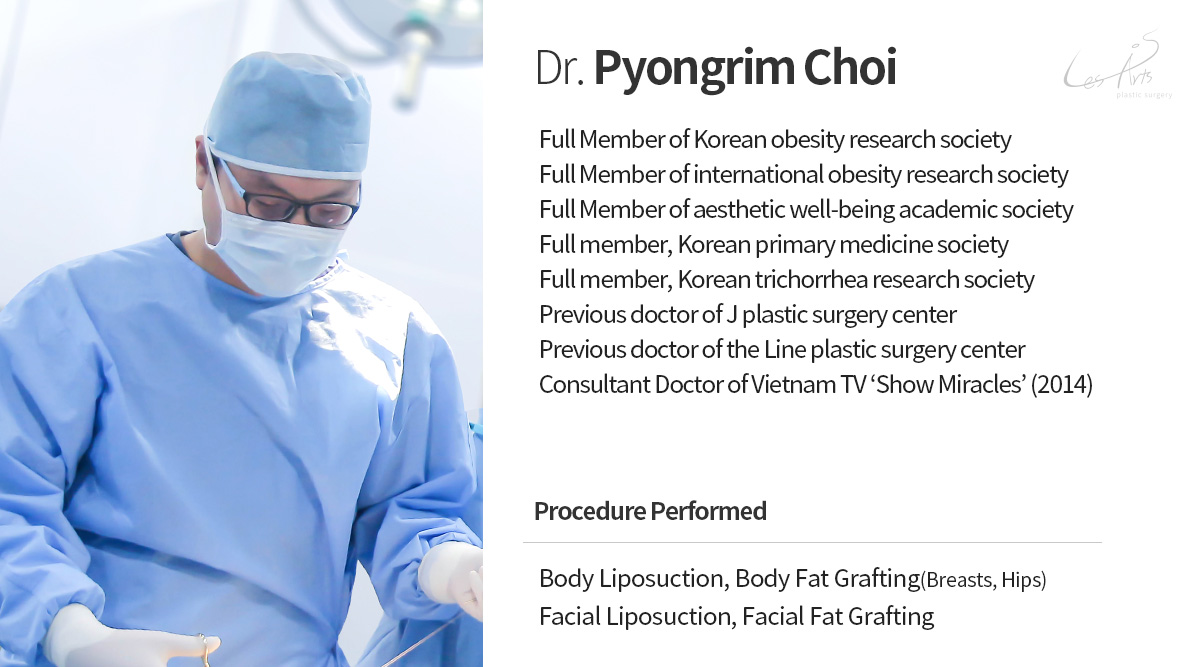
Hello, I am Dr. Pyongrim Choi, Board-Certified Plastic Surgeon at Lesarts Plastic Surgery.
During liposuction consultations,
there are questions frequently asked by women in their 40s and beyond.
“It feels harder to lose weight than before.”
“Will my skin sag more after fat is removed?”
Upon entering one's 40s, due to hormonal shifts and a decline in basal metabolic rate,
many notice fat concentrating around the abdomen
even while maintaining their usual lifestyle habits.
Similarly, in liposuction, extracting an identical volume of fat
does not lead to identical results across all age groups.
The key factors creating this difference
are the fibrous tissue distributed within the adipose layer and skin elasticity.
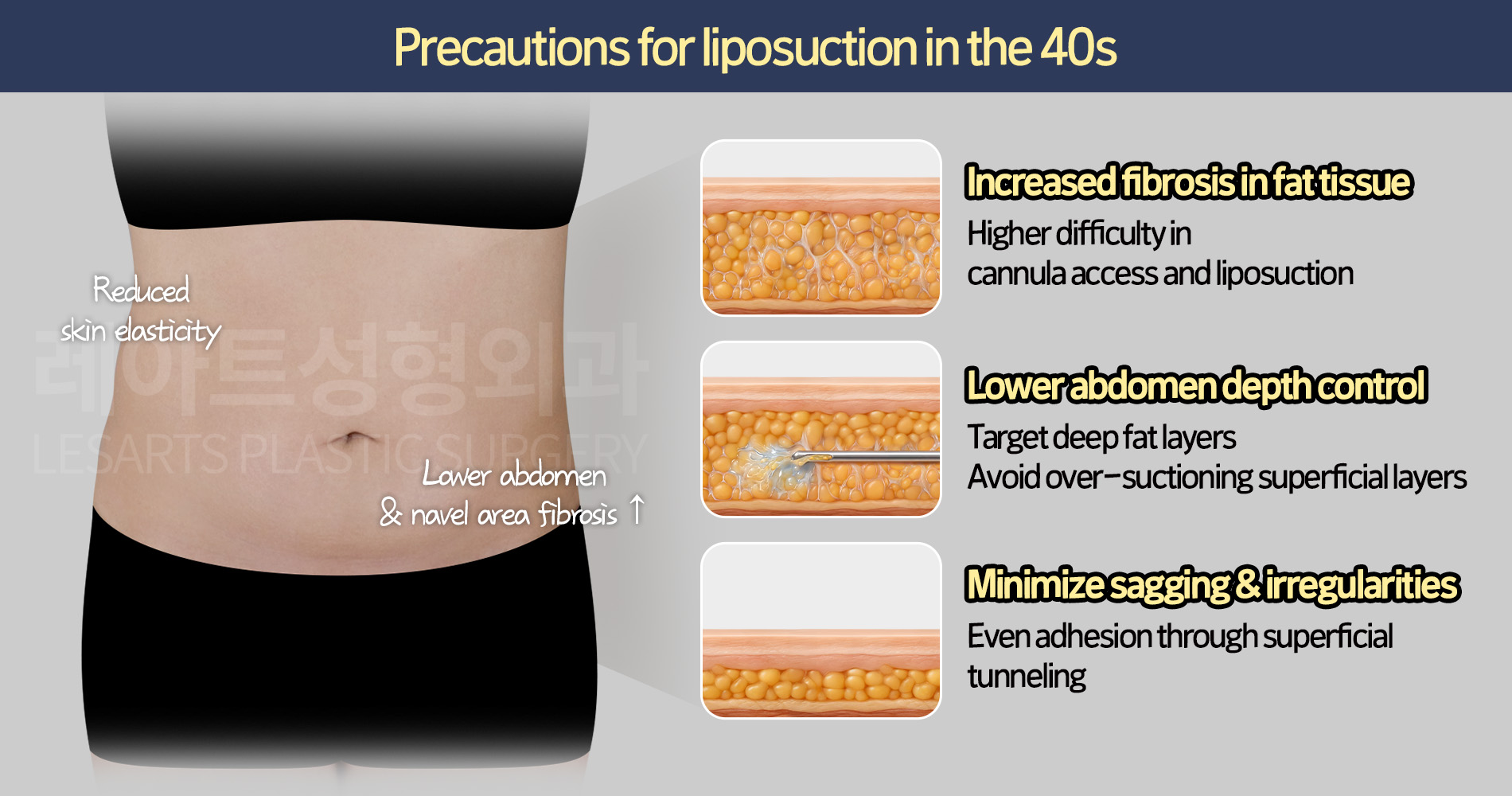
[Surgical Considerations for Liposuction Patients in Their 40s and Beyond]
1. Why Liposuction Outcomes Differ in Patients in Their 40s and Above
Increase in Fibrous Tissue Within the Fat Layer
With age, the adipose layer can accumulate not only adipocytes,
but also dense, fibrous connective tissue.
When fibrous content increases, the fat layer itself becomes firmer,
increasing the resistance felt
as the cannula moves during liposuction.
This can make it more challenging to contour fat uniformly in a single pass,
and subtle variations in extraction depth can occur depending on the area.
Therefore, in liposuction after one's 40s,
rather than determining extraction boundaries purely by volume,
one must evaluate which areas contain high fibrous content
and how firm the adipose plane is.
Reduction in Skin Elasticity
Another key factor is skin elasticity.
Because cutaneous retraction capacity may decrease after one's 40s,
even when removing the same amount of fat, the degree to which skin readapts
to the reduced volume can vary.
Particularly when skin elasticity is notably compromised,
excessively extracting superficial fat carries the potential
for skin to remain loose or for surface irregularities
to become more noticeable, which must be accounted for.
Ultimately, in liposuction after one's 40s,
one must assess both how much fat can be removed
and how the overlying skin will redrape
following extraction.
2. Surgical Considerations and Extraction Strategies for Abdominal Liposuction in Patients 40 and Above
While the abdomen appears as a single unit, dermal thickness, elasticity,
and fibrous density can vary across the upper abdomen, periumbilical area,
lower abdomen, and flanks.
Therefore, rather than suctioning the entire abdomen at a single uniform depth and technique,
the approach must be tailored to the tissue characteristics of each sub-unit.
In particular, the periumbilical zone and lower abdomen often exhibit higher fibrous content
and reduced skin elasticity,
requiring care to prevent surface irregularities
caused by uneven skin adherence after volume reduction.
In these zones, the volume of the deep fat layer can be sufficiently reduced,
while suction volume is modulated to avoid over-stripping
the superficial fat directly beneath the dermis.
Furthermore, in fibrous areas, rather than aggressive passes in a single direction,
cross-tunneling from multiple angles is crucial to contour the layer evenly,
preventing one-sided thinning.
Ultimately, the goal is not simply maximal fat removal,
but preserving a consistent subcutaneous fat thickness to help minimize laxity
and contour irregularities.
▶ View More Abdominal Liposuction Cases
[Abdominal Liposuction Strategy Illustrated via Clinical Case]
[Patient Profile]
Female in her mid-40s
Height: 159 cm
Weight: 57.5 kg
BMI: 22.7 kg/m²
The patient desired to address anterior abdominal protrusion centered around the navel
and sculpt a more natural-looking, refined waistline.
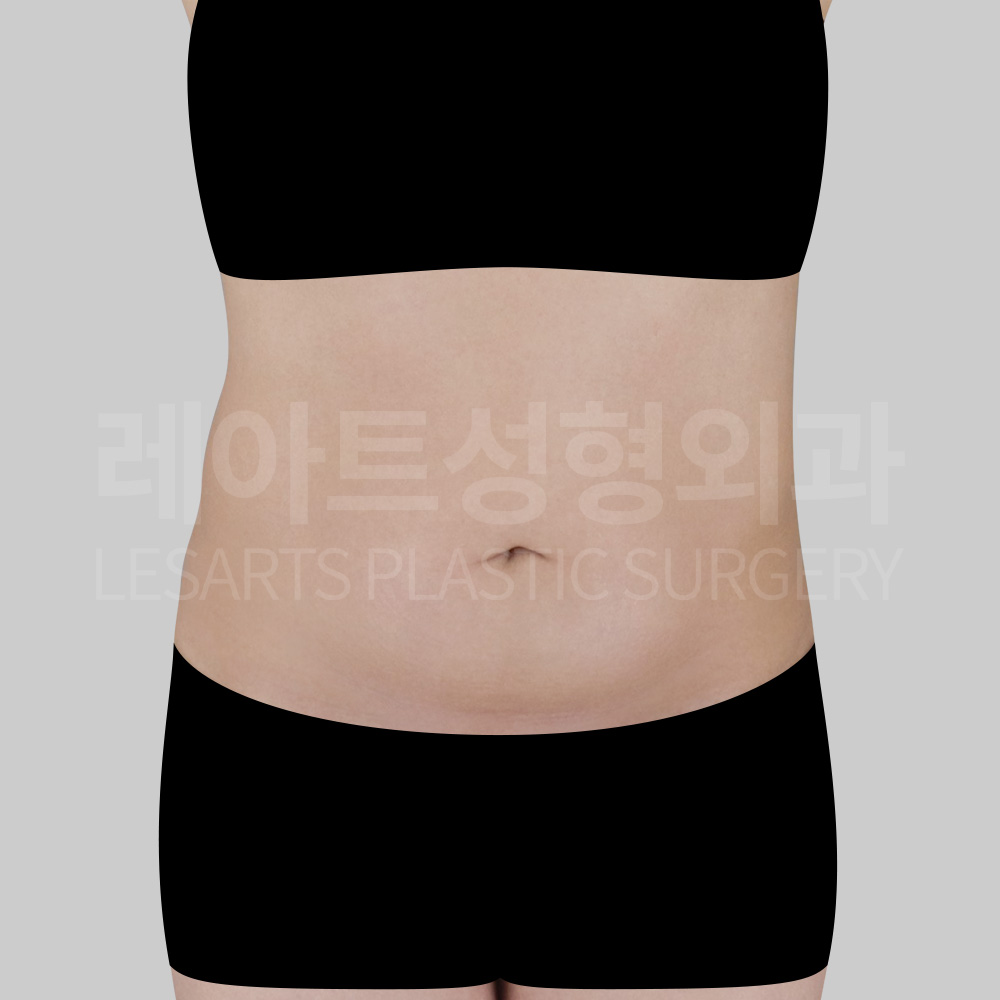
Lesarts Abdominal Liposuction Pre-Op Assessment - Frontal View
In the frontal view, the waistline descended almost straight
down toward the underwear line.
Conversely, the lateral hip dip areas exhibited relative depression,
preventing a smooth, natural transition between the waist and pelvis.
While simply reducing abdominal fat could lighten the torso,
if lateral pelvic depressions remained unaddressed, the desired waistline definition
might not be sufficiently emphasized.
Therefore, we planned full abdominal liposuction concurrently with autologous fat grafting
to the pelvis and hip dips to harmonize the proportional transition
from the waist down to the pelvis.
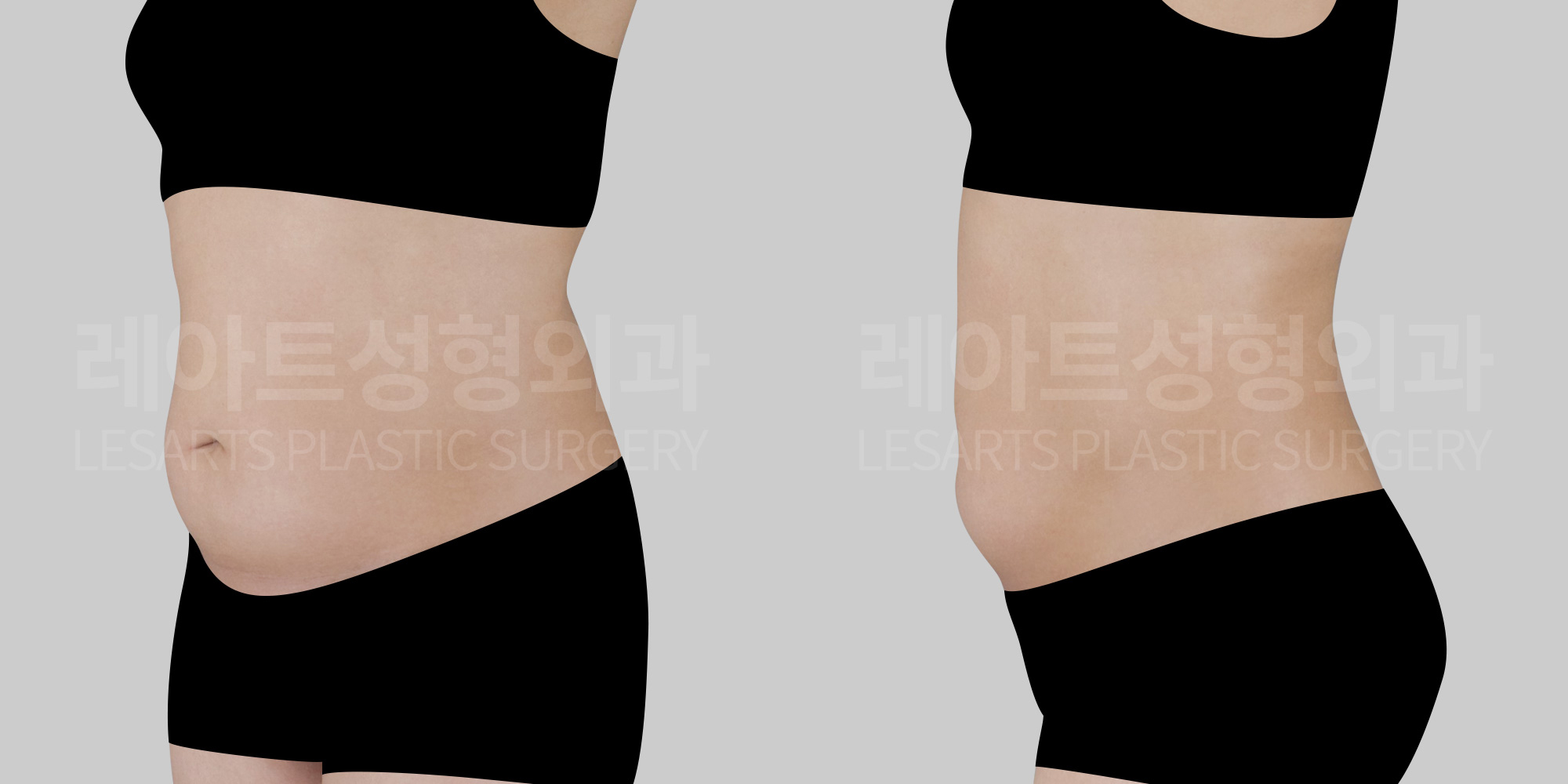
[Lesarts Abdominal Liposuction Pre-Op Assessment - Lateral View]
In the 45-degree and lateral views, the anterior abdomen projected forward overall,
with thickness being particularly pronounced around the navel and lower abdomen.
While these zones required sufficient fat reduction,
they were also notably influenced by fibrous tissue density.
Additionally, the patient presented with
relatively prominent lower ribcage contours.
Because debulking abdominal fat can reveal underlying skeletal landmarks
that were previously masked by soft tissue,
we explained preoperatively that ribcage boundaries could become
relatively more noticeable post-op.
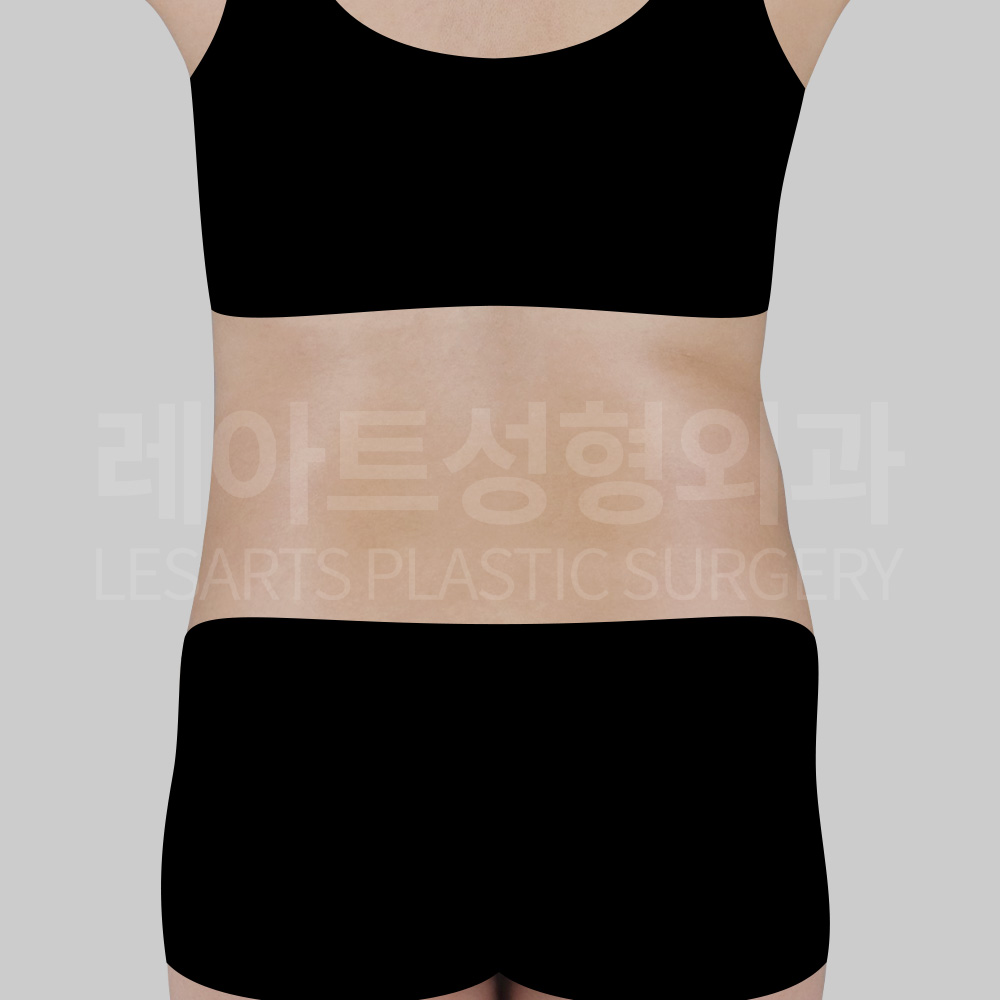
[Lesarts Abdominal Liposuction Pre-Op Assessment - Posterior View]
In the posterior view, love handles bulged above the underwear line,
with the hip dip regions directly below appearing depressed.
Consequently, rather than a smooth transition from waist to pelvis,
the silhouette presented a broken,
straight downward drop.
Therefore, we planned to adequately debulk posterior love handle fat,
while grafting fat into the depressed hip dips and lateral pelvis
to help the natural waist curve emerge more harmoniously.

[Posterior Comparison Post-Abdominal Liposuction - Dr. Pyongrim Choi, Lesarts]
Here is the appearance at 9 months post-op.
Because the waist and love handle zones had a higher proportion of extractable fat
relative to fibrous tissue, fat was debulked adequately in those areas.
As posterior love handle bulk decreased,
the waistline began to curve naturally inward.
Additionally, performing concurrent pelvic and hip dip fat grafting
supplemented volume below the waist, so that along with a reduction in waist circumference,
the lateral waist curve was visually highlighted.
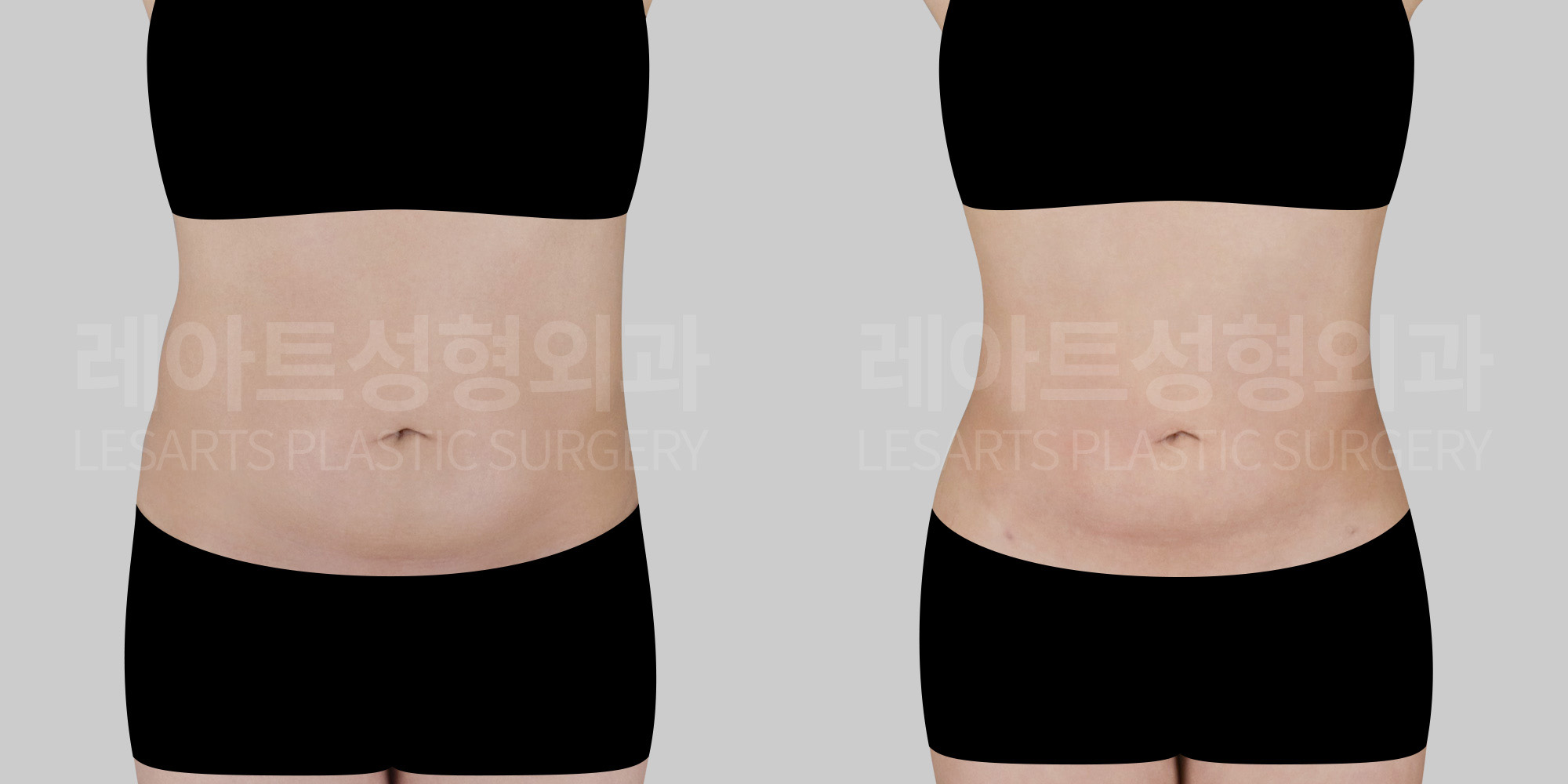
[Before & After Abdominal Liposuction in 40s - Dr. Pyongrim Choi, Lesarts]
The patient's lower abdomen and periumbilical area contained not only fat,
but also a notable amount of fibrous tissue.
Thus, a different surgical approach was required
compared to the flank areas.
Deep-layer fat contributing to volume was sufficiently reduced,
while a portion of superficial fat directly below the dermis was preserved.
Excessive thinning of the superficial plane can cause uneven skin adherence,
potentially leading to surface irregularities around the navel or lower abdomen.
Postoperative photos show that while the prominent
lower abdomen and periumbilical fullness were lightened,
the skin surface connects smoothly without abrupt hollows or irregular contour steps.
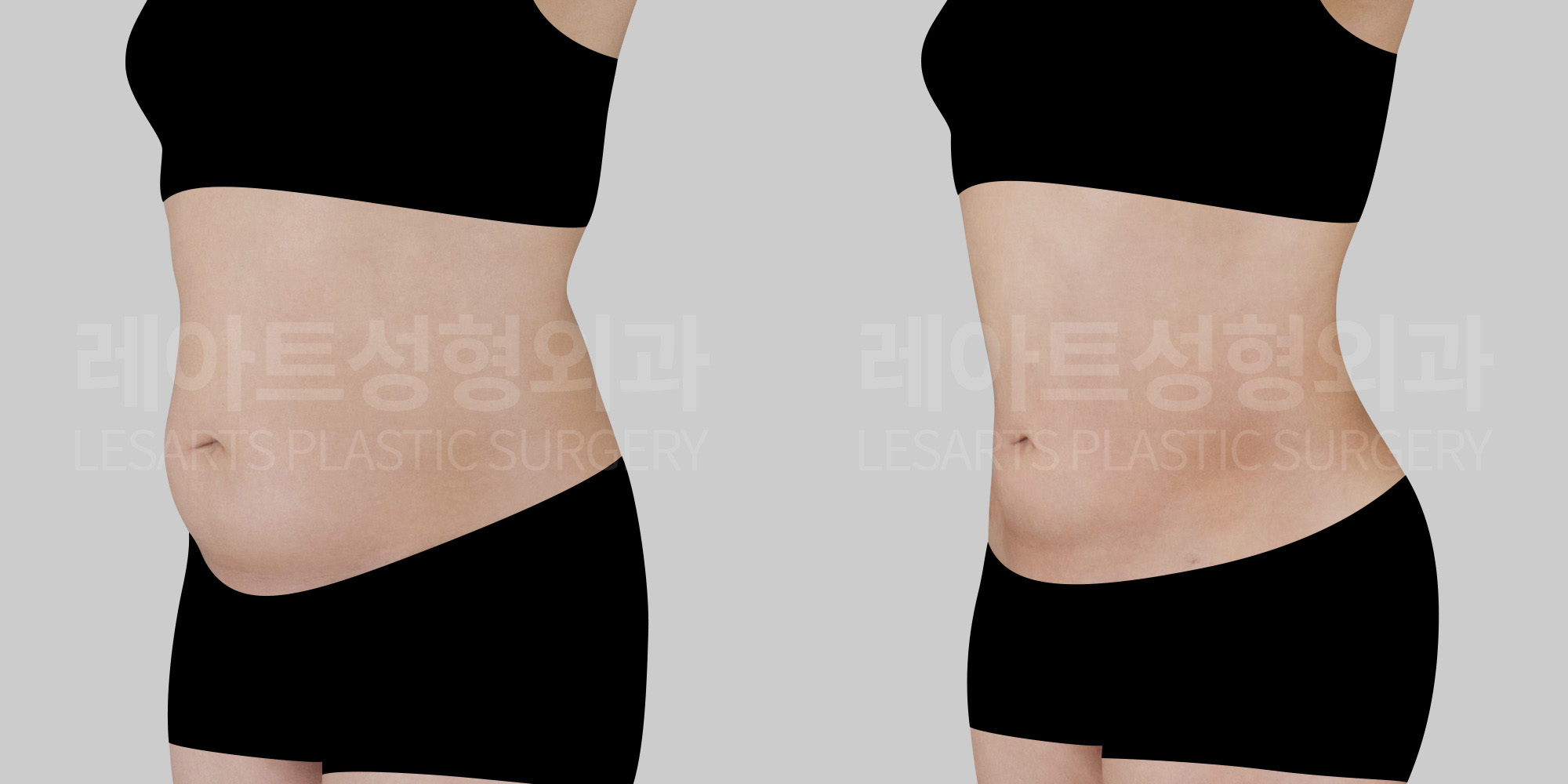
[Skin Redraping Evaluation Before & After Abdominal Liposuction - Lesarts Plastic Surgery]
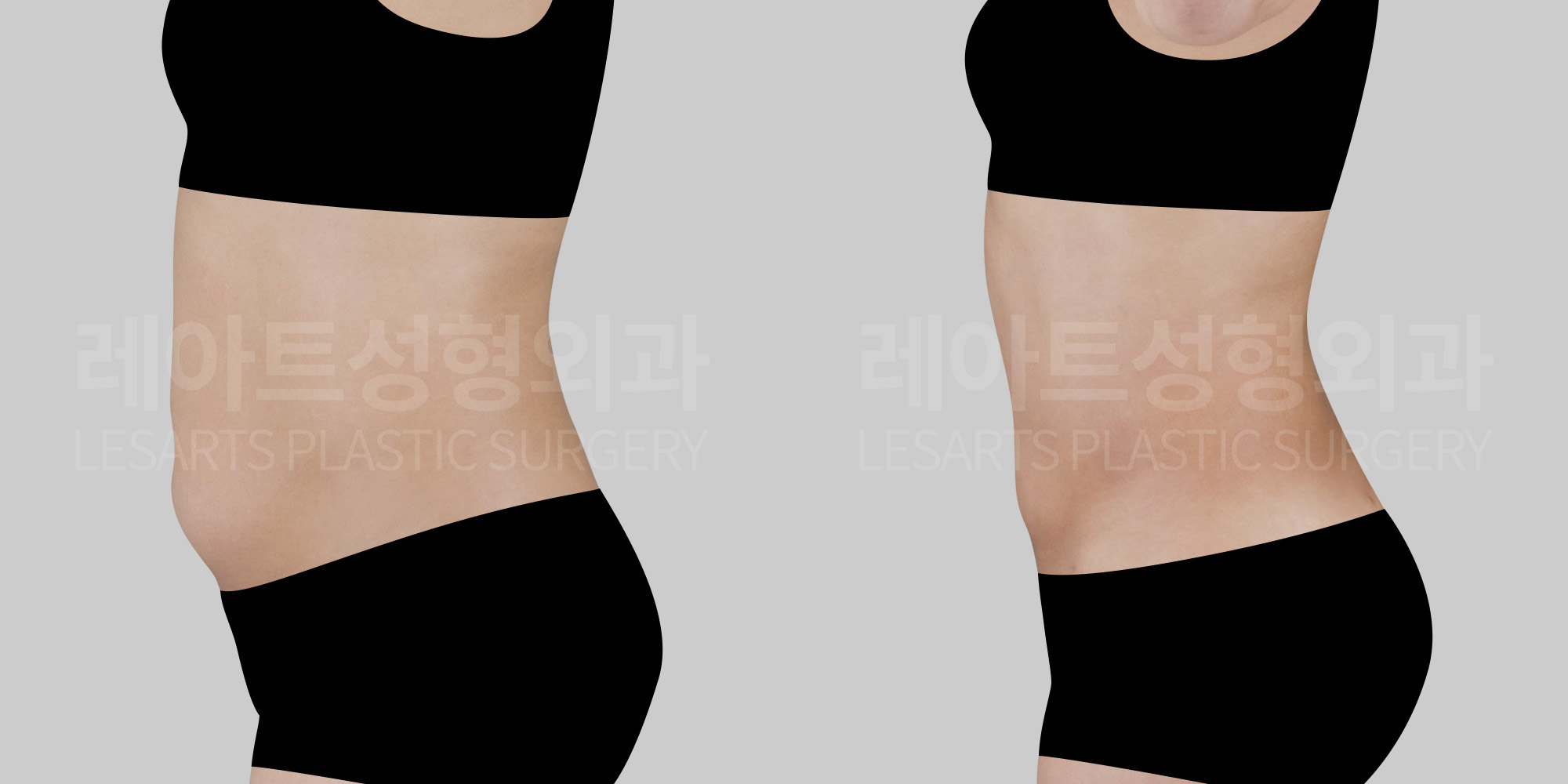
[Lateral Profile Comparison Before & After Abdominal Liposuction - Dr. Pyongrim Choi]
In the upper abdomen, fat was contoured via multi-directional approaches
to prevent skin from folding or creasing along muscle boundaries.
In the lower abdomen as well, over-resection of superficial fat was avoided.
Volume was reduced predominantly in the deep layer,
with cross-tunneling applied to stimulate the superficial layer evenly,
focusing on preventing the skin from adhering irregularly post-operatively.
Consequently, when viewed from the lateral profile, anterior abdominal thickness decreased
while healing without severe cutaneous ptosis or deep localized folding.
The patient consistently wore a compression garment for approximately 3 to 6 months
following abdominal liposuction during her recovery.
Compression garments can be used to manage post-op edema and help skin and soft tissue
settle relatively evenly.
Additionally, radiofrequency aftercare was incorporated within the first 3 months
to assist in resolving edema and indurated tissue firmness.
However, garment wear duration and required aftercare are not identical for every patient.
Actual wear duration and management protocols should be adjusted based on the surgical scope,
skin condition, and post-operative progress.
Abdominal liposuction after one's 40s cannot be viewed simply as an issue
of fat being harder to lose than in younger years.
Depending on whether fibrous tissue has increased to make the layer firmer
and how much skin elasticity remains, required extraction approaches
can differ across different zones within the same abdomen.
In this patient as well, while volume was reduced actively in the waist and love handles where extractable fat was abundant,
the periumbilical zone and lower abdomen—where fibrous density was high and skin elasticity needed consideration—
were managed by debulking deep fat while partially preserving the superficial layer.
By combining this with pelvic and hip dip fat grafting,
we addressed not only waist circumference reduction, but also smoothed the transition from the waist down to the pelvis.
At 9 months post-op, lower abdominal and periumbilical fullness had lightened,
and love handle bulk reduced, revealing a natural-looking waistline contour.
Ultimately, what matters in abdominal liposuction after one's 40s is not solely how much fat was removed.
Maintaining an appropriate residual fat thickness across zones,
supporting natural skin redraping,
and creating a smooth continuity across the waist and abdomen are essential components
that shape the final outcome.
If you are considering abdominal liposuction in your 40s or beyond and are concerned about skin laxity
or contour unevenness, we recommend consulting on a surgical approach tailored to your condition
after thoroughly assessing abdominal fat volume, fibrous tissue, and skin elasticity.
▶ View More Lesarts Abdominal Liposuction Cases
Abdominal Liposuction in Your 40s FAQ
1. Does the effectiveness of liposuction decline in your 40s?
Outcomes cannot be judged by chronological age alone.
However, because fibrous tissue content and skin elasticity can differ,
surgical techniques and post-recovery skin redraping may vary.
2. Should less fat be extracted if skin elasticity is reduced?
It is not necessary to extract smaller amounts across all areas.
Assessing regional skin quality and adipose layers to distinguish between zones
suitable for substantial debulking and areas where superficial fat
should be preserved is key.
3. Why is the periumbilical area prone to contour irregularities?
The periumbilical zone and lower abdomen often contain higher fibrous tissue density
and reduced elasticity, meaning that non-uniform extraction
can make surface irregularities more visible post-operatively.
4. Can abdominal liposuction and pelvic fat grafting be performed concurrently?
As in this case, supplementing depressed hip dips or lateral pelvic hollows after debulking waist fat
allows for harmonious adjustment of the proportional curve
extending from the waist down to the pelvis.
5. How long should compression garments be worn after abdominal liposuction?
While this patient wore garments for 3 to 6 months,
this duration is not applied identically to all patients.
Actual wear duration can vary based on surgical scope and individual recovery progress.
Dr. Pyongrim Choi


Cases finding
similar to my profile
Customer Diagnostics


Select the surgery and
area you are interestedto see real
before andafter changes.


we
make you,
the art
Clinic hours
MON - FRI
10 am – 7pm
SAT
10 am – 4pm
Holiday
SUN, HOLIDAY
Location
Lesarts Moon Clinic Tower 4-5F, 40, Nonhyeon-ro 168-gil,
Gangnam-gu, Seoul, Republic of Korea

Medical institution name Lesarts Plastic Surgery
Address Lesarts Moon Clinic Tower 4-5F, 40, Nonhyeon-ro 168-gil, Gangnam-gu, Seoul, Republic of Korea
Representative Moon sung jun
