




Online Consultation
Please accurately enter the information below.
Quick Cost Consultation
Quick Consultation & Reservation
Cases finding
similar to my profile






Doctor's Note
Medical columns by our surgeons
L-Type (Extended) Abdominoplasty at 6 Months [Doctor's Note by Dr. Kukhan Lee]
2026-08-24
L-Type (Extended) Abdominoplasty at 6 Months [Doctor's Note by Dr. Kukhan Lee]
If abdominal sagging does not improve with postpartum exercise and diet, is abdominoplasty necessary?
When stretched skin and diastasis recti (fascial relaxation) occur together after childbirth, it may be difficult to sufficiently improve abdominal laxity through exercise or weight loss alone.
After evaluating the extent of skin laxity and fat volume, abdominoplasty and liposuction can be considered concurrently.
[Learn More About Lesarts Tummy Tuck]
[Lesarts Abdominal Liposuction Guide]
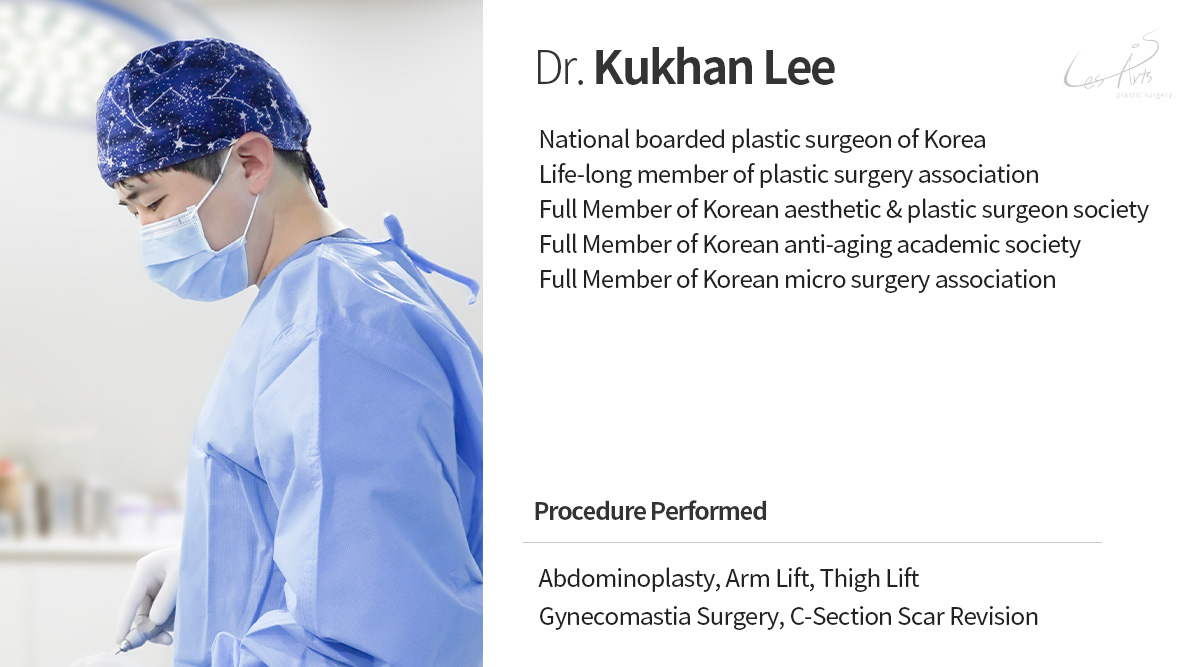
Hello, I am Dr. Kukhan Lee, Board-Certified Plastic Surgeon at Lesarts Plastic Surgery.
As the mild spring weather passes, summer is quickly approaching.
During seasons when clothing becomes lighter, interest in one's body silhouette naturally rises.
In particular, postpartum changes in body shape frequently become a source of long-standing concern,
as they may not improve as much as anticipated even with consistent exercise and dietary control.
If you are troubled by an abdominal contour that does not easily improve despite personal efforts,
or by repeated weight fluctuations while managing childcare and daily life,
the abdominoplasty case introduced today may serve as a helpful reference.
This patient was a female in her 40s who had delivered two children via natural vaginal birth.
At the time of consultation, her physical measurements were approximately 165 cm and 65 kg,
and her weight had previously increased up to 80 kg during pregnancy.
Although she had exercised consistently after childbirth, maintaining an average weight of around 55 kg,
abdominal laxity and protrusion did not easily improve despite these efforts, causing her significant stress.
With recent weight regain, her abdominal concerns deepened further,
prompting her to visit our clinic for an abdominoplasty consultation.
She had no significant prior surgical history,
and physical examination confirmed an increased subcutaneous fat layer across the entire abdomen.
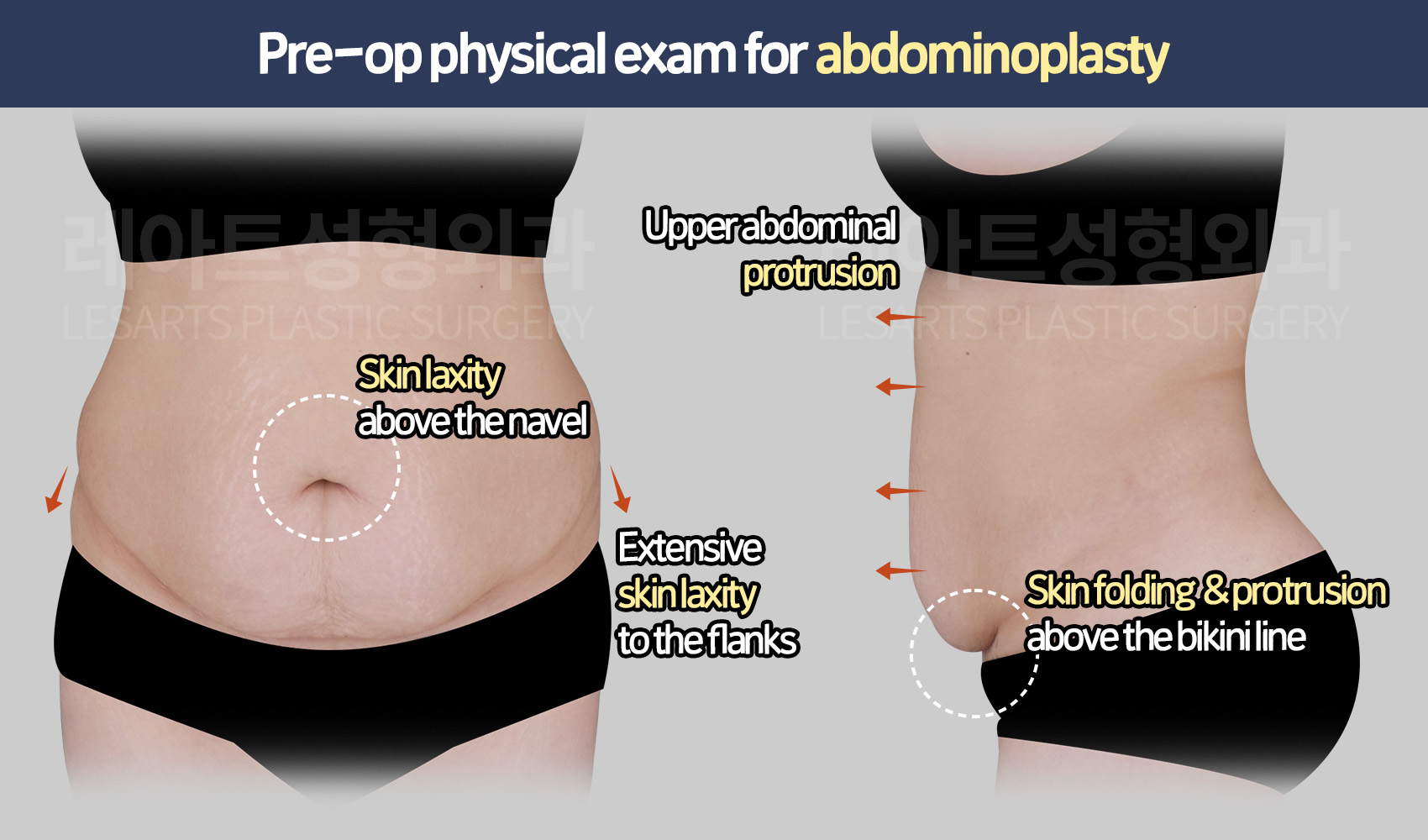
[Pre-Operative Physical Examination for Abdominoplasty]
Upon examining the patient's abdomen, overall anterior protrusion was observed starting from the upper abdomen,
and skin laxity above the navel was also relatively distinct.
The umbilicus presented a horizontally stretched appearance,
and in the lower abdomen, redundant skin folded above the bikini line, protruding outward.
Skin laxity was not limited to the anterior abdomen but extended broadly toward the flanks,
and bending forward made the redundant lower abdominal skin even more prominent.
Because the subcutaneous fat layer was relatively thick, it was difficult to definitively evaluate the exact degree of diastasis recti through manual palpation alone.
However, after two or more deliveries, fascial relaxation or diastasis of the rectus abdominis often coexists,
so we planned to confirm the internal muscular status during surgery and perform plication as indicated.
The surgical plan was designed first to perform abdominal liposuction
to debulk accumulated subcutaneous fat across the entire abdomen and support smoother body contours.
Subsequently, an L-type extended abdominoplasty was planned concurrently
to address the broad skin laxity extending from the anterior abdomen across the flanks.
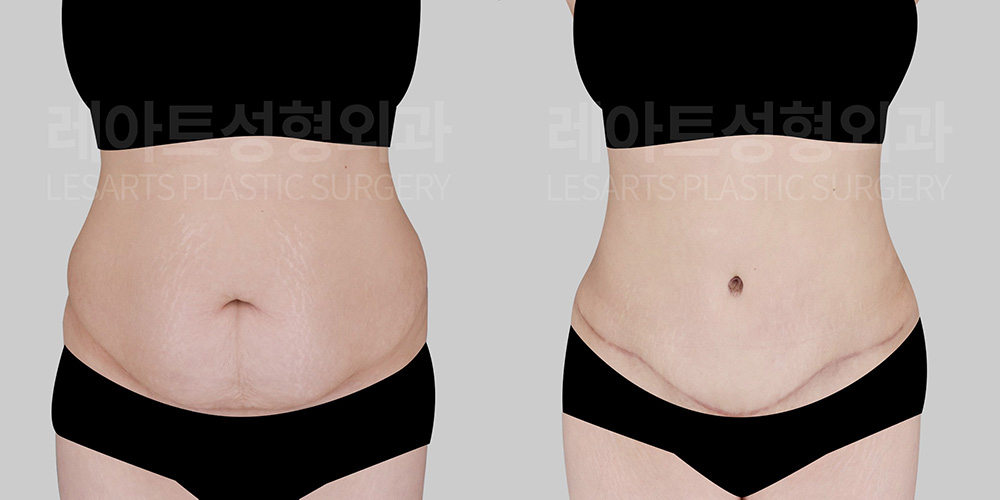
[Extended Abdominoplasty Before & After Comparison - Dr. Kukhan Lee, Lesarts Plastic Surgery]
Here is the appearance at 6 months post-abdominoplasty.
As fat accumulated in the abdomen and flanks was debulked,
the overall contour settled more smoothly than before.
In particular, the natural curve transitioning from the flanks down to the pelvis emerged,
demonstrating an improved, more feminine and balanced silhouette.
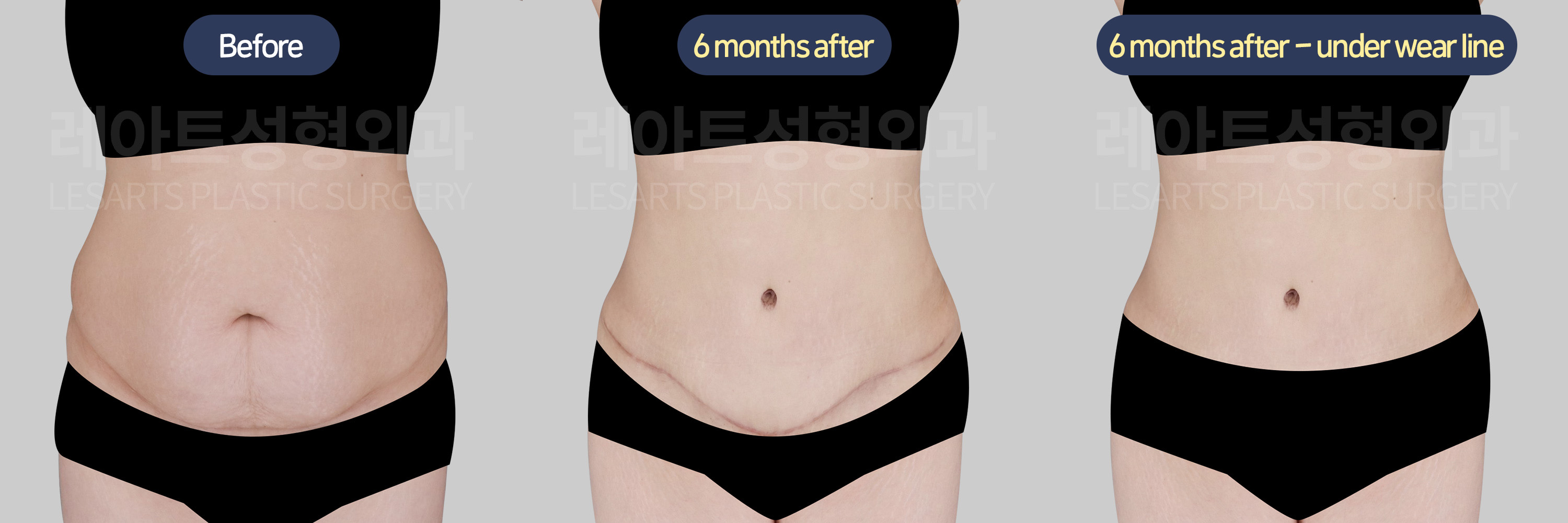
[Extended Abdominoplasty Scar Length and Placement - Dr. Kukhan Lee, Lesarts Plastic Surgery]
At 6 months post-op, the abdominoplasty scar remains somewhat noticeable as tissue continues to remodel.
Currently, the scar shows a relatively stable healing process without significant widening or hypertrophic elevation,
and its color and appearance are expected to gradually fade over time.
During this stage (6 months post-op), continuing consistent scar care and moisturization remains important.
We guided the patient to maintain routine home care and advised that
combining laser treatments during regular clinic visits can help support scar improvement.
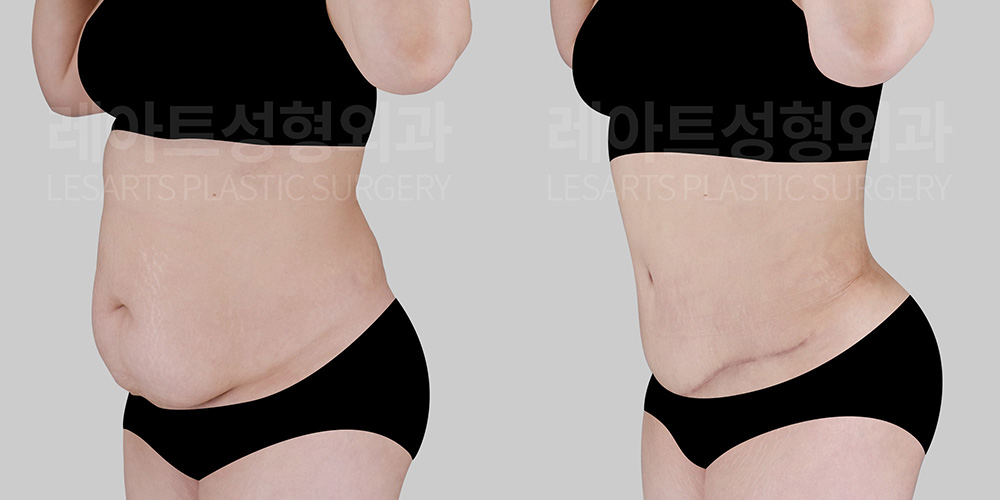
[Full Abdominal Liposuction + Abdominoplasty Before & After - Dr. Kukhan Lee, Lesarts]
Following full abdominal liposuction and abdominoplasty, the redundant skin along the upper abdomen was redraped,
transitioning into a smoother abdominal line.
In particular, skin laxity above the navel improved,
and the umbilical contour is gradually settling more naturally throughout recovery.
As residual mild pigmentation gradually softens,
the overall appearance of the abdomen is expected to look even more natural.
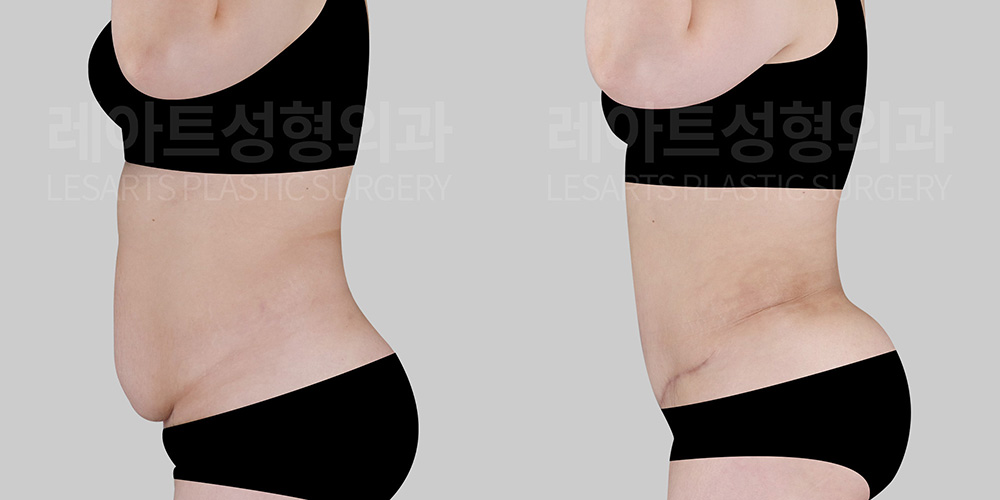
[Anterior Abdominal Laxity Improvement via Abdominoplasty - Lesarts Plastic Surgery]
The skin that previously folded above the bikini line in the lower abdomen
settled smoothly so that the step-off is barely discernible.
Because the area of laxity was broad, the extension of the incision toward the flanks can feel like an added consideration;
however, finishing naturally without dog-ear deformities at either end of the incision represents a favorable clinical outcome.
Even though the patient had gained approximately 2 kg compared to her preoperative weight, the abdominal skin did not fold over again,
and the overall abdominal contour was stably maintained.
Continuing regular exercise and dietary management moving forward
is expected to help maintain her improved silhouette over the long term.
Abdominoplasty and abdominal liposuction do not represent the final conclusion of all physical management with surgery alone.
It is best viewed as a new starting point for maintaining a refined silhouette over time.
Because abdominoplasty involves relatively long incisions and scar maturation,
combining post-operative scar care, weight maintenance, and exercise remains important.
If you have concerns regarding abdominal contour changes resulting from childbirth or repeated weight fluctuations, feel free to visit Lesarts Plastic Surgery.
We will carefully evaluate your abdominal tissue condition and body frame, providing tailored consultations and clinical care.
[View Clinical Cases of Lesarts L-Type Abdominoplasty]
FAQ
Q1. Why does abdominal laxity persist after childbirth despite exercise and dieting?
After childbirth, skin is overstretched and the rectus abdominis fascia may relax or separate alongside fat accumulation.
When these structural changes occur together, reducing body weight may not sufficiently improve the sagging abdominal contour.
Q2. When is an L-type extended abdominoplasty considered?
It can be considered when skin laxity extends broadly beyond the anterior abdomen toward the flanks.
It is important to design the incision and correction boundaries in accordance with the extent of redundant skin.
Q3. Why are abdominoplasty and abdominal liposuction performed concurrently?
While abdominoplasty corrects redundant skin, liposuction debulks unnecessary adipose tissue across the abdomen and flanks.
This allows the overall transition from the flanks down to the pelvis to be refined simultaneously.
Q4. Can scars remain visible at 6 months post-abdominoplasty?
Yes. At 6 months post-op, scars can still be noticeable as tissue remodeling continues over time.
Moisturization, scar management, and adjunctive laser treatments can be utilized during this phase as appropriate.
Q5. How can post-abdominoplasty results be maintained over time?
Repeated weight fluctuations post-surgery can influence abdominal contours.
Maintaining a stable weight through regular exercise, balanced nutrition, and consistent scar care is important.
Dr. Kukhan Lee


Cases finding
similar to my profile
Customer Diagnostics


Select the surgery and
area you are interestedto see real
before andafter changes.


we
make you,
the art
Clinic hours
MON - FRI
10 am – 7pm
SAT
10 am – 4pm
Holiday
SUN, HOLIDAY
Location
Lesarts Moon Clinic Tower 4-5F, 40, Nonhyeon-ro 168-gil,
Gangnam-gu, Seoul, Republic of Korea

Medical institution name Lesarts Plastic Surgery
Address Lesarts Moon Clinic Tower 4-5F, 40, Nonhyeon-ro 168-gil, Gangnam-gu, Seoul, Republic of Korea
Representative Moon sung jun
