




Online Consultation
Please accurately enter the information below.
Quick Cost Consultation
Quick Consultation & Reservation
Cases finding
similar to my profile






Doctor's Note
Medical columns by our surgeons
Male Gynecomastia | Why Breasts Sag After Pausing Workouts: Distinguishing True from Pseudogynecomastia [Doctor's Note by Dr. Jihoon Moon]
2026-08-19
Male Gynecomastia | Why Breasts Sag After Pausing Workouts: Distinguishing True from Pseudogynecomastia [Doctor's Note by Dr. Jihoon Moon]
If your chest enlarges or sags after pausing exercise, has gynecomastia developed?
Pausing exercise does not directly cause gynecomastia on its own.
As pectoralis major volume decreases and body fat increases, the chest may appear to sag,
while in other cases, hormonal changes after middle age may lead to actual glandular tissue proliferation.
Therefore, it is important to distinguish whether current changes are due to adipose tissue
or accompanied by glandular development.
▶ View Male Gynecomastia Clinical Cases
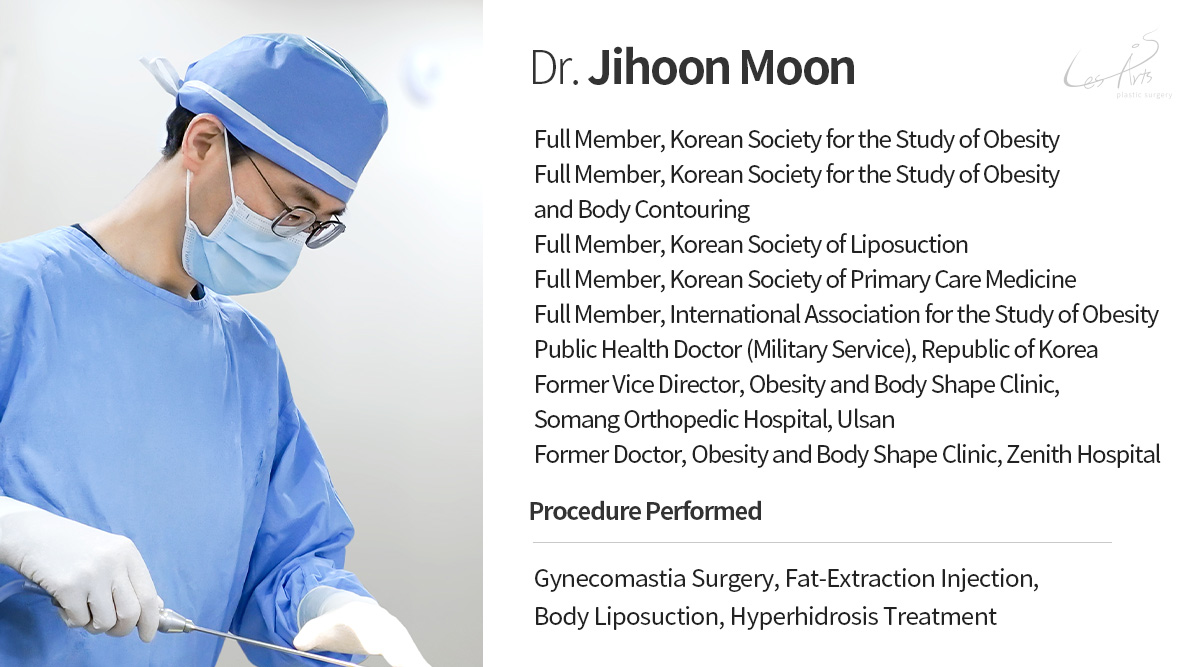
Hello, I am Dr. Jihoon Moon, Board-Certified Plastic Surgeon at Lesarts Plastic Surgery.
Among men who consistently engaged in weight training during their youth,
some express concern upon observing changes in their chest shape as they enter middle age.
“My chest used to be firm, but after pausing workouts, it seems to be sagging.”
“Could stopping exercise have caused gynecomastia?”
These are questions frequently encountered in clinical consultations.
To begin with the conclusion, pausing exercise alone
does not directly cause gynecomastia.
However, as muscle mass, body fat, skin elasticity, and hormonal balance simultaneously change,
the chest may appear larger and more ptotic than before,
producing changes that can feel very similar to gynecomastia.
How, then, do general body contour changes differ from true gynecomastia?
1. When Muscle Diminishes, It 'Sags' — Structural Changes
The pectoralis major muscle developed through resistance training
does not merely increase physical "volume."
It acts as an 'internal scaffolding'
that supports overlying skin and adipose layers from beneath.
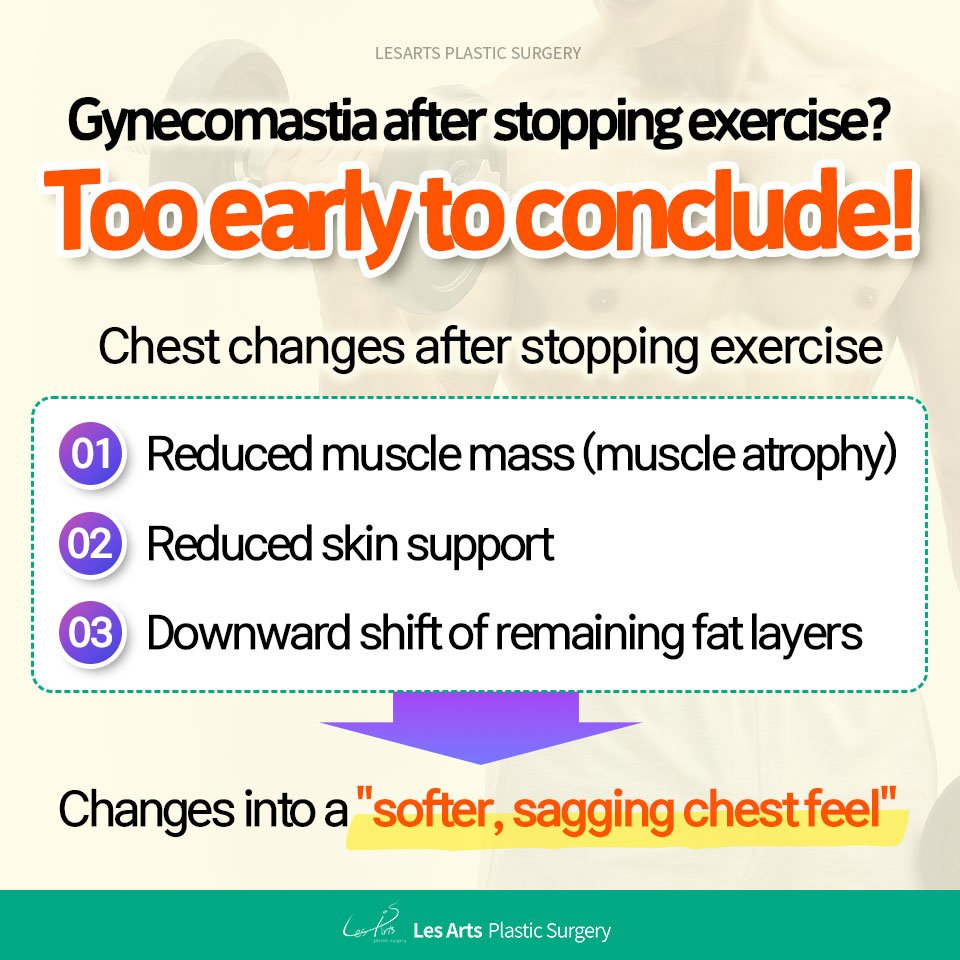
[Gynecomastia Symptoms After Discontinuing Exercise - Lesarts Plastic Surgery]
The pectoralis major muscle developed through weight training
does more than create chest dimension.
By supporting the skin and adipose plane from beneath,
it also serves to maintain overall chest contour.
While training consistently, pectoralis volume is preserved,
allowing the chest to feel firm and taut.
Conversely, when exercise volume decreases substantially, muscle mass
gradually declines, reducing the supportive strength that previously held the chest upright.
During this process,
1. Pectoralis major volume diminishes,
2. The underlying structural support for the skin weakens, and
3. Pre-existing adipose tissue appears positioned relatively lower,
which can create the sensation of a chest that feels softer and more dependent
than in the past.
The essential point is that these morphological adjustments alone
cannot yet be classified as true gynecomastia.
2. Increased Body Fat — Pseudogynecomastia
An even more important variable to evaluate than paused workouts
is the shift in body fat.
As basal metabolic rate and daily activity levels drop in middle age
alongside dietary changes, adipose tissue can accumulate more readily than in one's youth.
In men, fat can deposit not only in the abdomen and flanks, but also in the chest.
When the chest fat layer thickens, overall volume expands,
and as it descends under gravity, the nipple and
areolar zone can take on a fuller appearance.
In outward appearance, this can look quite similar to gynecomastia.
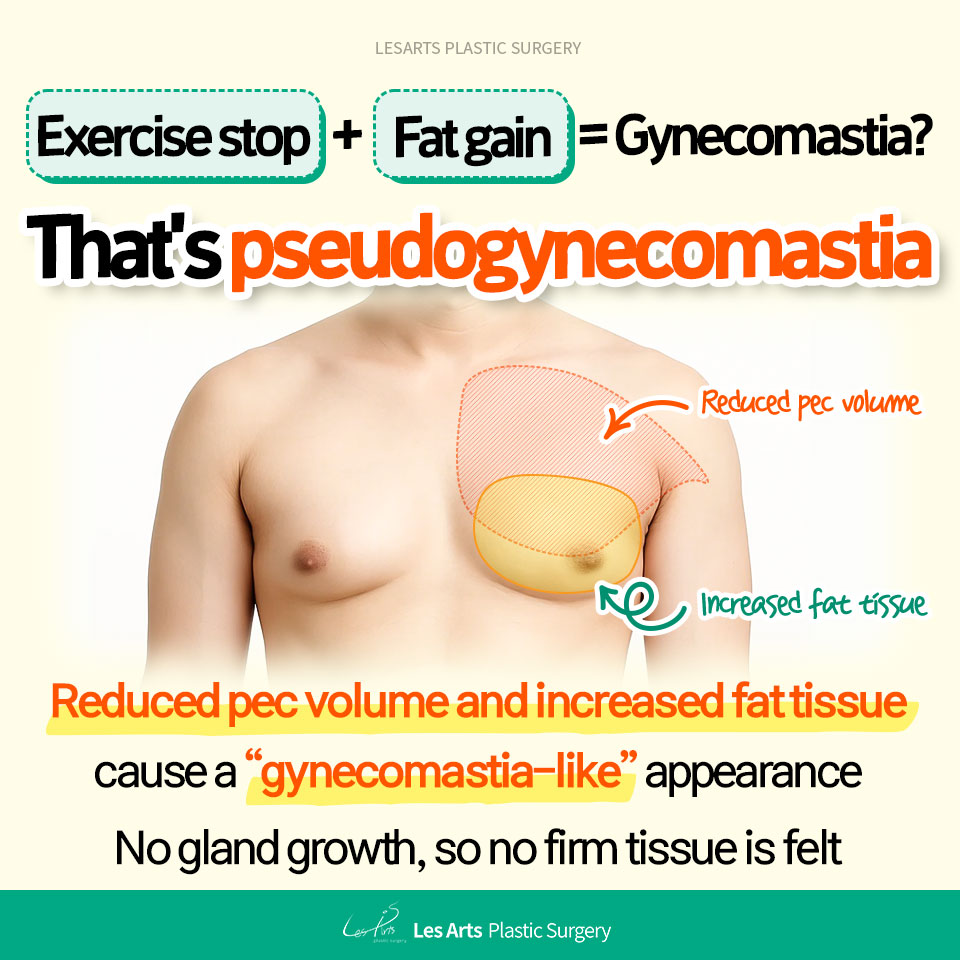
[Gynecomastia and Body Fat - Dr. Jihoon Moon, Lesarts Plastic Surgery]
However, presentations driven primarily by localized fat accumulation rather than glandular proliferation
are categorized as
pseudogynecomastia.
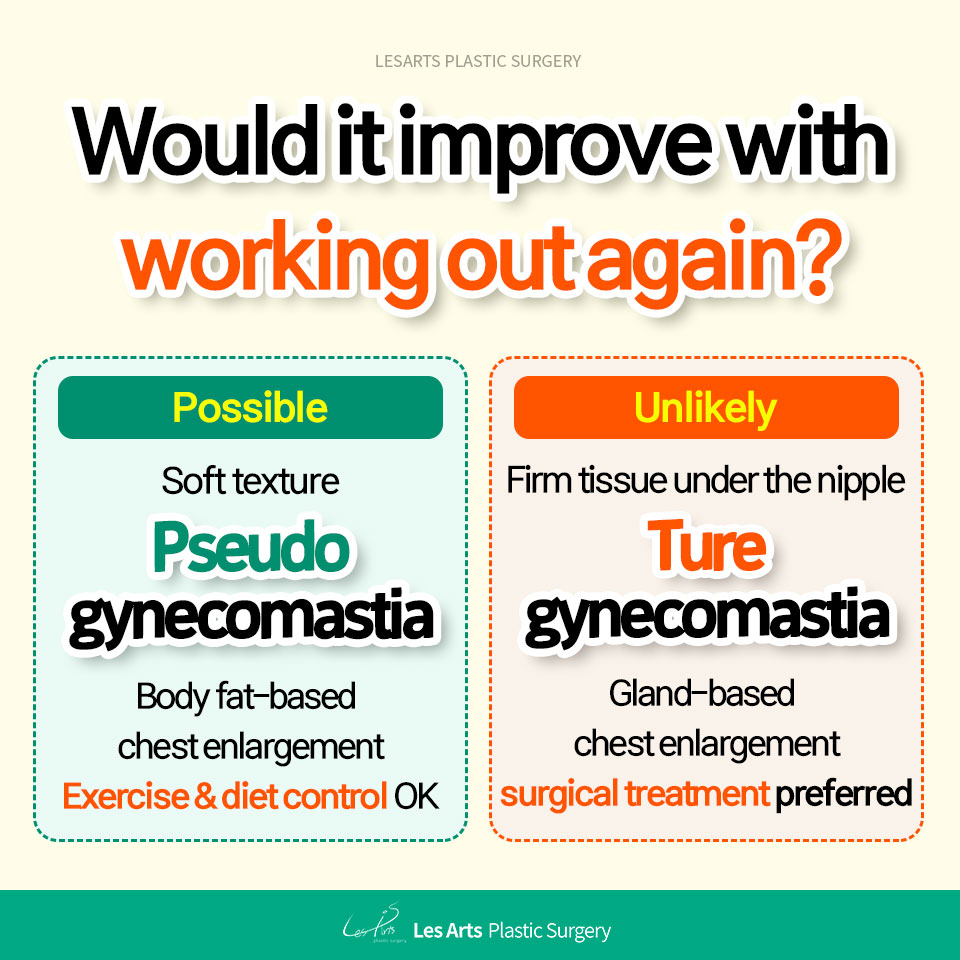
Differences can often be felt upon palpation.
While true gynecomastia often presents with glandular tissue that feels relatively firm and disc-like beneath the nipple and areola,
fat-predominant pseudogynecomastia presents with an entire chest that feels
relatively soft and uniform in consistency.
In other words, if muscle has decreased and body fat has increased after pausing workouts,
the chest may simply present with accumulated adipose tissue mimicking gynecomastia,
rather than genuine glandular hyperplasia.
3. True Gynecomastia — The Influence of Hormonal Shifts
Why, then, does true gynecomastia develop?
A primary factor is the balance between testosterone,
the male sex hormone, and estrogen, the female sex hormone.
With middle age, testosterone levels can decrease relative to earlier years,
while body fat often increases.
Adipose tissue contains the aromatase enzyme.
Because this enzyme participates in converting testosterone into estrogen,
an increase in body fat can create an internal environment
where glandular tissue proliferation can occur more readily.
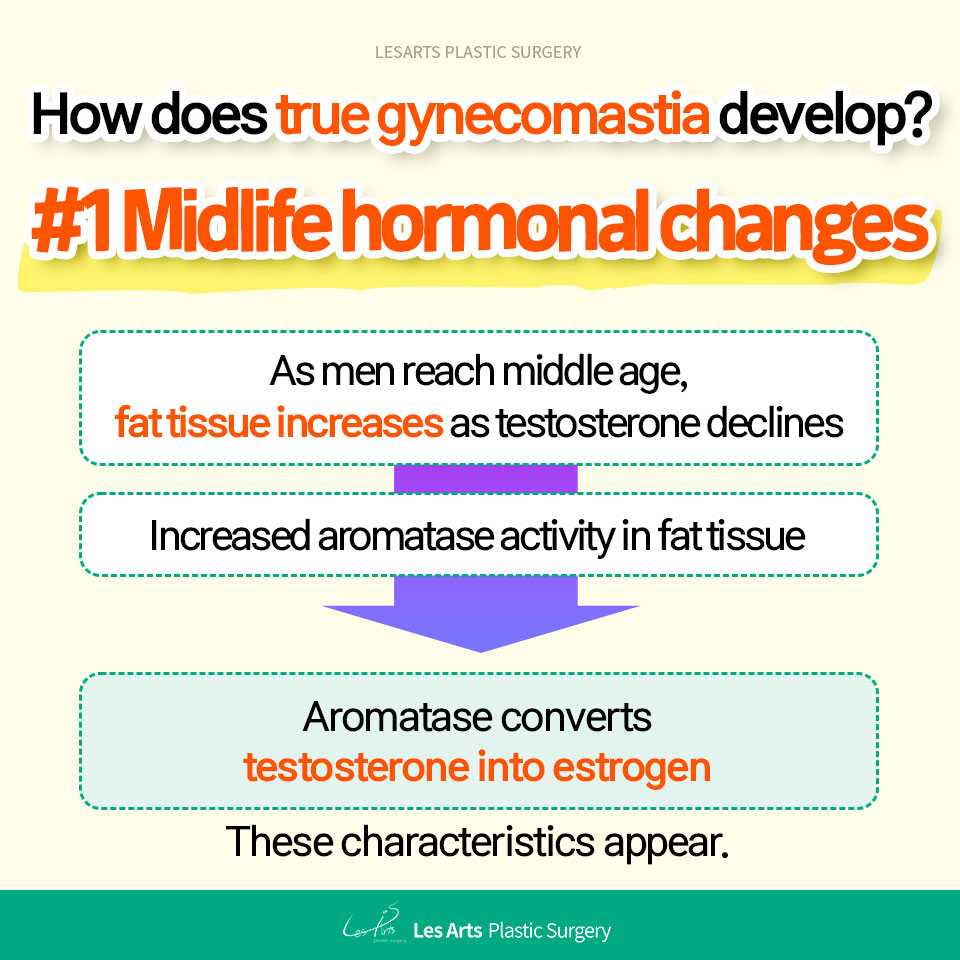
[Middle-Age Gynecomastia and Hormonal Changes - Lesarts Plastic Surgery]
This state of genuine mammary glandular proliferation is termed
true gynecomastia.
Some patients palpate a firm nodule beneath the nipple or areola,
or experience mild tenderness or discomfort upon pressure.
In some presentations, one side may enlarge more than the other,
exhibiting bilateral asymmetry.
However, the presence of glandular tissue does not guarantee
a distinct palpable mass or tenderness in every instance.
Because these symptoms may be subtle or absent, distinguishing
simple adipose accumulation from true gynecomastia
purely by tactile self-examination has clinical limitations.
▶ View More Male Gynecomastia Before & After Cases
4. Hair Loss Medications and Gynecomastia — An Easily Overlooked Variable
An essential element evaluated during consultation
is current medication history.
In particular, many men take medications over long periods
for hair loss prevention and treatment.
Hair loss therapies can broadly be categorized
into the following groups:
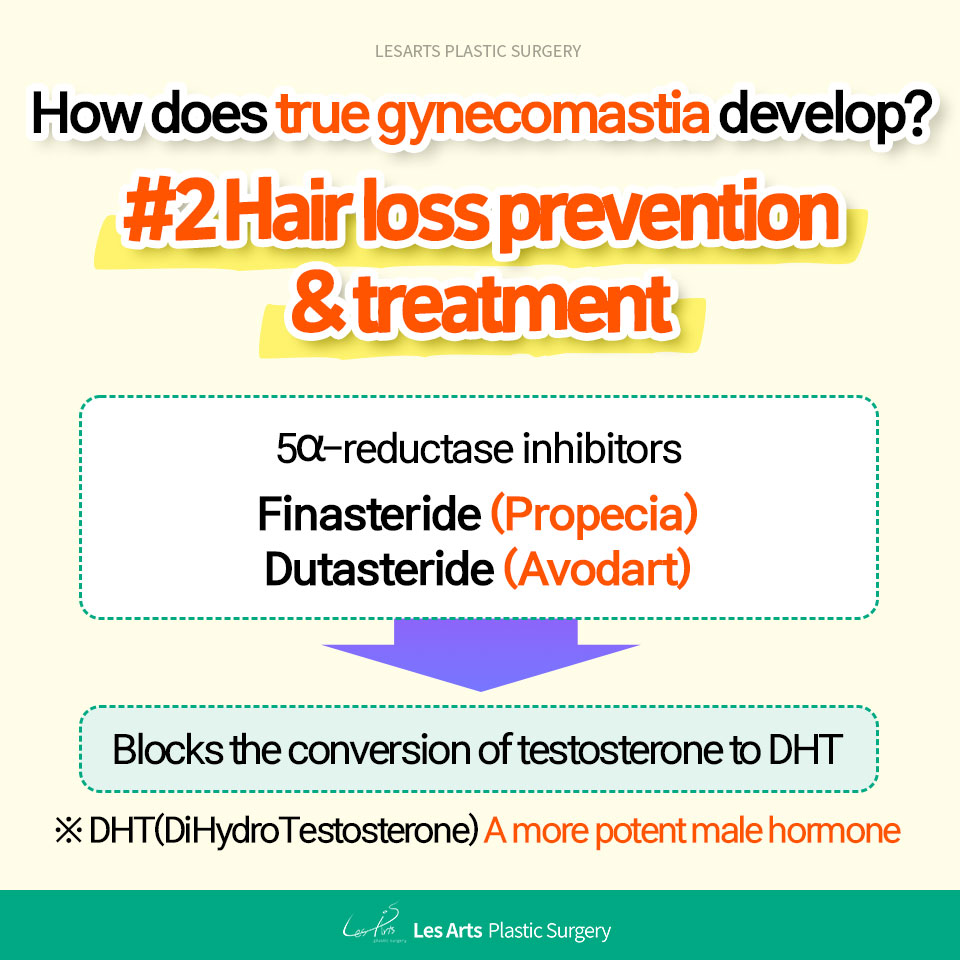
[Relationship Between Hair Loss Medications and Gynecomastia - Dr. Jihoon Moon, Lesarts]
1) 5α-Reductase Inhibitors
Representative agents include finasteride and dutasteride.
These medications function by inhibiting the conversion
of testosterone into dihydrotestosterone (DHT).
They are utilized in treating androgenetic alopecia and benign prostatic hyperplasia.
Among hair loss treatments discussed here,
the class requiring evaluation regarding gynecomastia association
is this 5α-reductase inhibitor category.
During detailed clinical history taking,
some patients note that chest contours gradually altered
after initiating these medications.
2) Minoxidil
Minoxidil is a vasodilator utilized in hair loss management
to support scalp microcirculation and follicular health.
Based on criteria outlined in medical references, minoxidil, unlike 5α-reductase inhibitors,
is not described as an agent associated with gynecomastia.
Therefore, if chest contours change noticeably in middle age,
it is prudent to review ongoing medications alongside exercise history
and weight fluctuations.
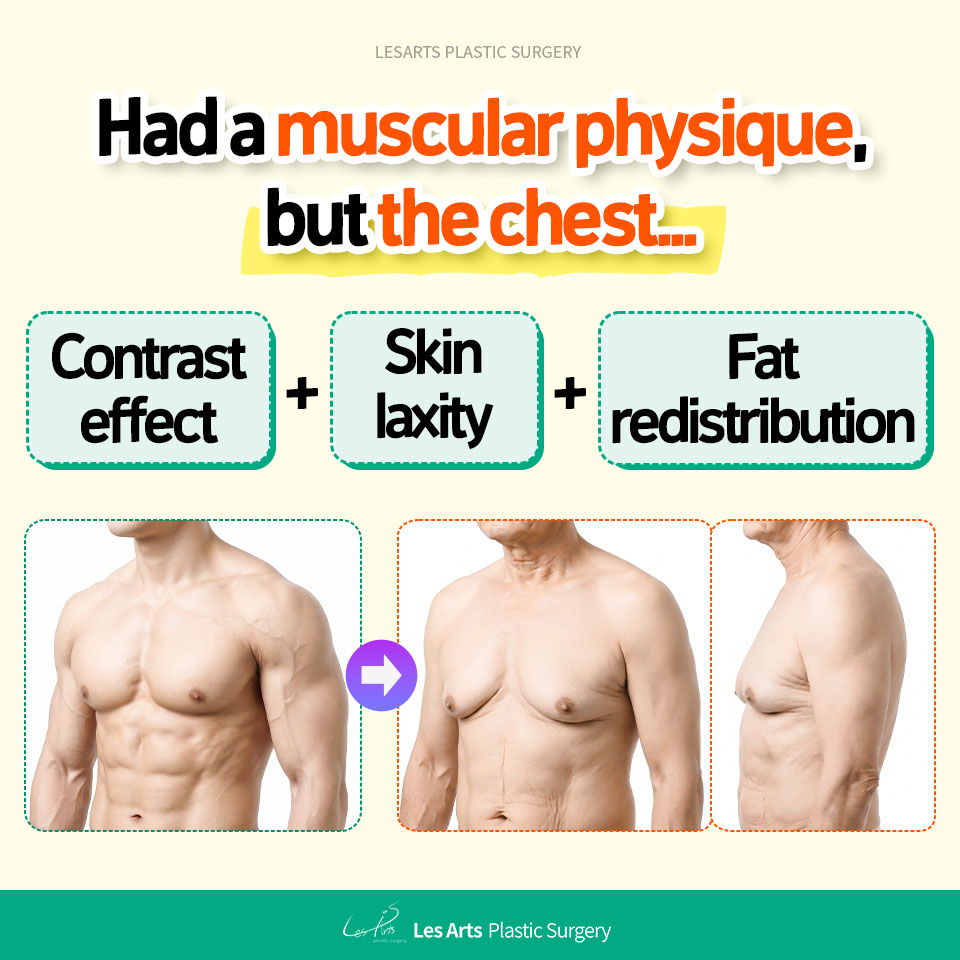
[Chest Muscle Reduction and Gynecomastia - Lesarts Plastic Surgery]
An interesting observation is that individuals who trained extensively in the past
often perceive middle-age chest changes more acutely.
The first reason is the contrast between past and present.
The chest was firm and muscular during youth due to well-developed pectorals;
subsequent muscle reduction and fat accumulation make the visual difference feel more pronounced.
This explains why some feel their chest has suddenly sagged substantially, beyond the objective volume change.
The second reason is skin laxity.
Skin that previously expanded over large muscle bulk
may retain a degree of laxity.
When muscle volume recedes, the remaining skin can sag relatively lower
than would be expected from simple fat gain alone.
When gynecomastia is accompanied by skin laxity, it may also be categorized
at a higher grade on the Simon classification scale.
The third reason is altered fat distribution.
With decreased physical activity and increased body fat,
adipose deposits can gather around the chest perimeter.
When muscle loss, body fat gain, and redundant skin occur together,
the chest can appear considerably altered from its previous contour.
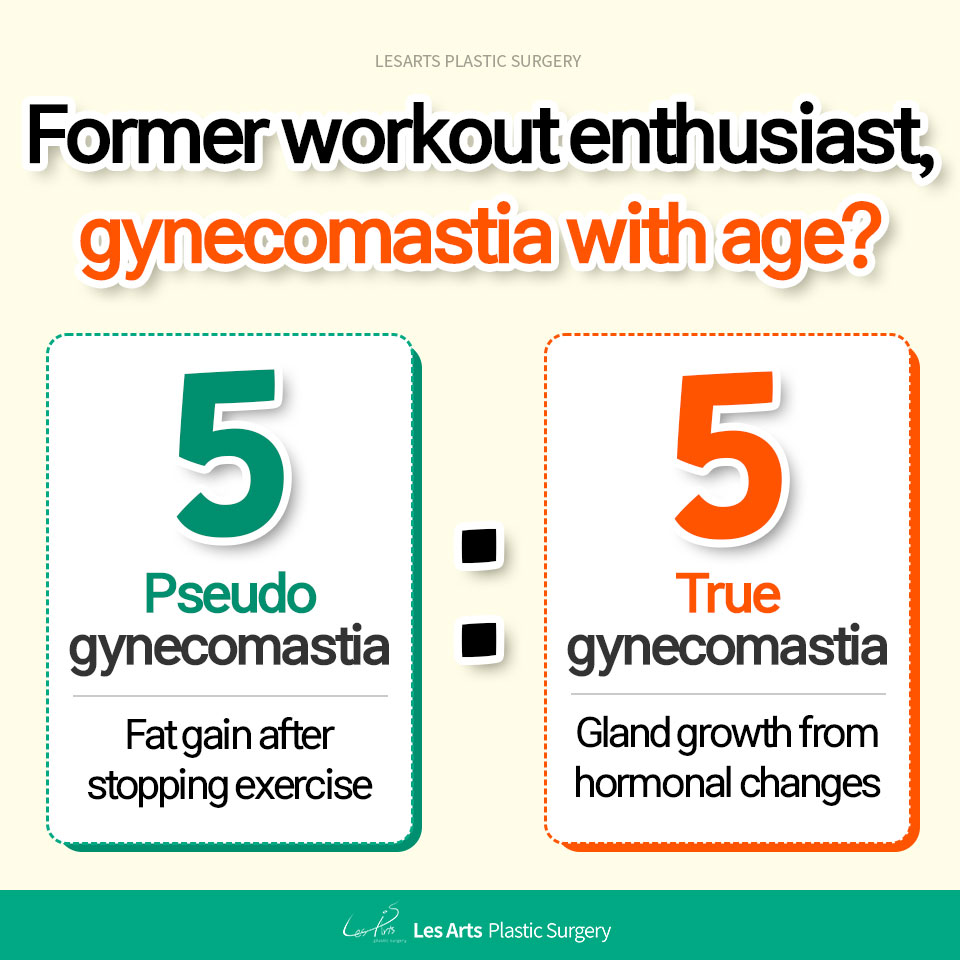
[Causes of Middle-Age Gynecomastia - Lesarts Plastic Surgery]
Dr. Jihoon Moon


Cases finding
similar to my profile
Customer Diagnostics


Select the surgery and
area you are interestedto see real
before andafter changes.


we
make you,
the art
Clinic hours
MON - FRI
10 am – 7pm
SAT
10 am – 4pm
Holiday
SUN, HOLIDAY
Location
Lesarts Moon Clinic Tower 4-5F, 40, Nonhyeon-ro 168-gil,
Gangnam-gu, Seoul, Republic of Korea

Medical institution name Lesarts Plastic Surgery
Address Lesarts Moon Clinic Tower 4-5F, 40, Nonhyeon-ro 168-gil, Gangnam-gu, Seoul, Republic of Korea
Representative Moon sung jun
