




Online Consultation
Please accurately enter the information below.
Quick Cost Consultation
Quick Consultation & Reservation
Cases finding
similar to my profile






Doctor's Note
Medical columns by our surgeons
Abdominal Liposuction | Persistent Lower Abdomen After Dieting: Abdominal Line Changes at 2 Months [Doctor's Note by Dr. Yongseung Seo]
2026-08-26
Abdominal Liposuction | Persistent Lower Abdomen After Dieting: Abdominal Line Changes at 2 Months [Doctor's Note by Dr. Yongseung Seo]
If only the lower abdomen remains bulging after losing weight, can liposuction make a difference?
If sufficient subcutaneous fat remains in the lower abdomen even after weight reduction,
liposuction can effectively reduce its thickness.
However, because visceral fat can also contribute to abdominal protrusion,
it is important to distinguish between subcutaneous and visceral fat and plan
necessary postoperative weight management alongside the procedure.
▶ Learn More About Lesarts Abdominal Liposuction
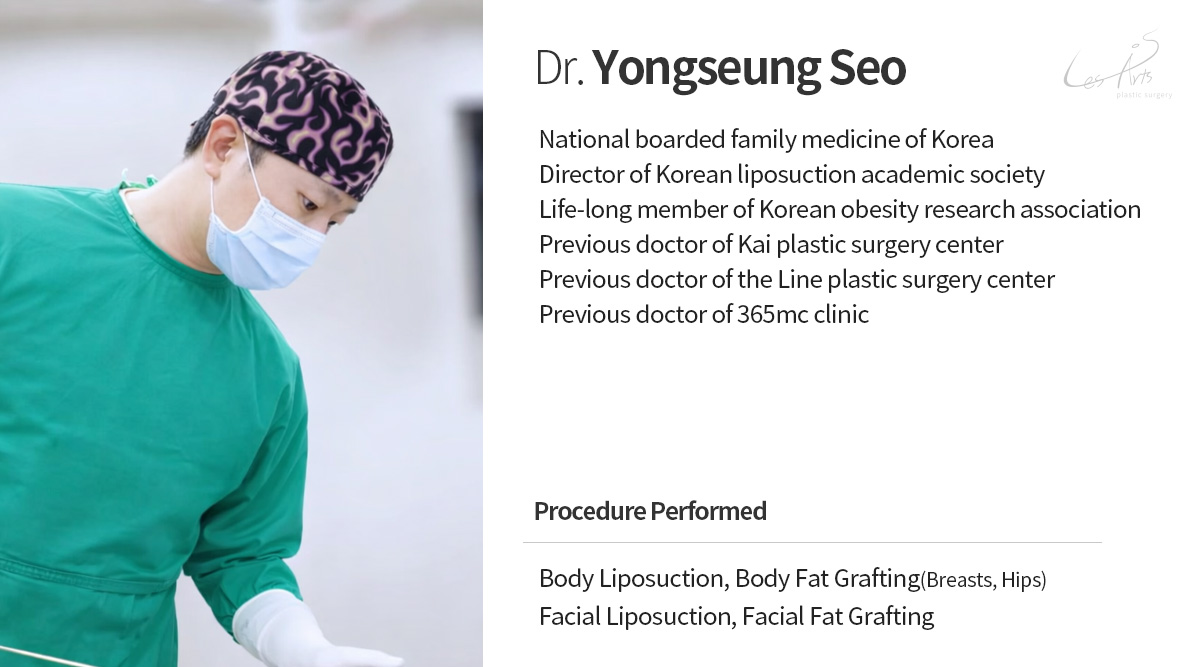
Hello, I am Dr. Yongseung Seo, Plastic Surgeon at Lesarts Plastic Surgery.
Anyone who has been on a diet may have experienced situations where overall body weight has dropped,
yet the lower belly stubbornly remains unchanged.
Even with consistent diet and exercise,
the area below the navel remains thick to the pinch,
and looking from the side, the protruding lower belly
continues to cause stress when wearing clothes.
When subcutaneous fat remains localized in specific areas
even after weight loss,
rather than pushing for more extreme weight cuts,
it is worth verifying how much reducible fat remains
in the abdomen through liposuction.
The patient introduced today had previously undergone thigh liposuction at our clinic
and steadily lost an additional 4 kg through ongoing lifestyle care,
yet was troubled by the lower abdomen and flank lines that persisted to the very end.
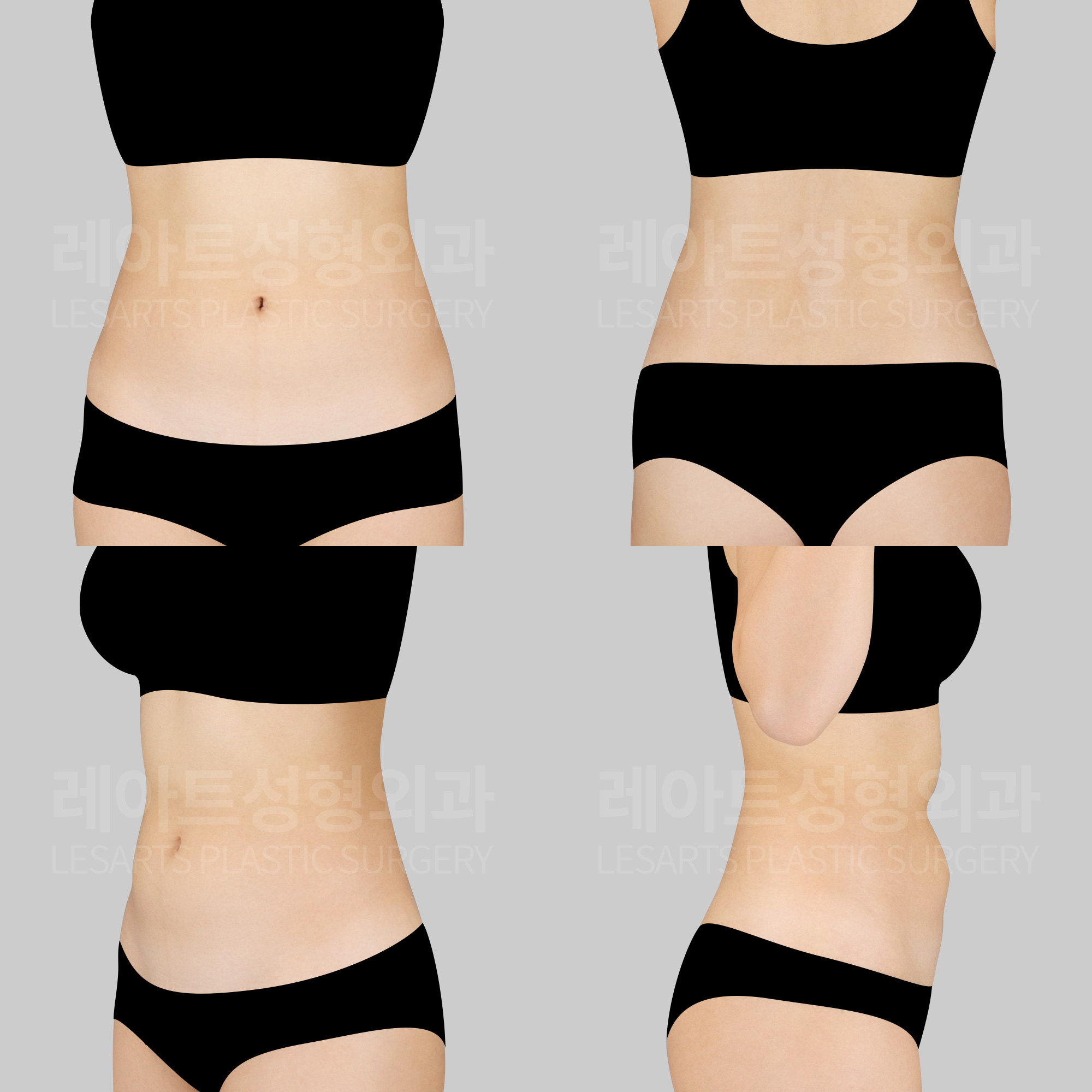 [Pre-Operative Physical Examination for Abdominal Liposuction]
Patient Profile
Age: Early 20s
Height: 151 cm
Weight: 47.4 kg
BMI: 20.8 kg/m²
Body Fat Percentage: 33.1%
Visceral Fat Level: 7
※ Even with similar body shape and weight, surgical outcomes
may vary depending on fat distribution and skin condition.
Even after receiving thigh liposuction at our clinic,
the patient steadily maintained her body contouring regimen and lost an additional 4 kg.
However, unlike her reduced body weight,
her lower abdomen still bulged prominently forward.
From the lateral profile, the curvatures of the upper and lower abdomen connected in a way
that prevented the abdomen from falling flat, creating a so-called
bumpy anterior abdominal line resembling the number '3'.
While the volume of fat in the flanks and love handles was not exceptionally large,
localized bulges remained along the waistline,
making the overall waist curvature feel somewhat flat and indistinct.
 [Pre-Operative Assessment and Surgical Planning for Abdominal Liposuction at Lesarts Plastic Surgery]
Ultrasound examination measured the subcutaneous fat thickness
remaining in each abdominal area:
Upper Abdomen: 17 mm
Lower Abdomen: 23 mm
Flanks: 11 / 10 mm
Love Handles: 11 / 11 mm
Subcutaneous fat in the lower abdomen—her primary concern—was thicker than in the upper abdomen,
and reducible fat amenable to liposuction
was also confirmed in the flanks and love handles.
Therefore, we concluded that abdominal liposuction could create meaningful improvements
in her anterior abdominal profile and waistline.
▶ View More Before & After Abdominal Liposuction Cases
[Abdominal Liposuction Surgical Design]
Although the patient was most concerned with her lower abdomen,
the upper abdomen was also projecting forward.
Therefore, rather than debulking the lower abdomen in isolation,
we planned to contour the upper abdomen concurrently so that the anterior profile
would transition smoothly when viewed from the side.
However, there was an essential point that required thorough preoperative explanation:
The patient had a component of protrusion influenced not only by subcutaneous fat,
but also by visceral fat.
Because liposuction can only remove
the subcutaneous fat beneath the skin,
no matter how thoroughly subcutaneous fat is reduced, if visceral fat remains unchanged,
there are clear anatomical limits to achieving a completely flat abdomen.
We therefore explained that continuing post-operative dieting and weight management
to reduce visceral fat simultaneously would be essential
to achieve her desired abdominal line.
[Precautions to Prevent Deepening of the Supraumbilical Fold]
Before surgery, the patient already presented with a deep, furrow-like horizontal fold
above the navel.
In this condition, if one remains slouched forward for long periods after fat extraction,
or repeatedly wears garments like underwear or belts that exert strong pressure across the abdomen,
the pre-existing crease can become etched even deeper into the tissue.
Thus, we instructed her to avoid staying in a hunched posture for extended periods during early recovery,
and to ensure tight waistbands or belts did not press continuously
along the same fold line.
In particular, we emphasized that keeping the abdomen extended
as flat as possible during the first month
would be paramount.
[Flank Fat Removal May Unmask Underlying Asymmetry]
While fat volume in the flanks and love handles was not exceptionally large,
extractable fat was confirmed to further refine her waistline.
However, the patient had pre-existing bilateral differences in skeletal framework.
Before surgery, overlying fat had cushioned and masked this difference,
making it less visible; once the fat layer thinned,
her inherent skeletal asymmetry carried the potential to become more apparent.
After thoroughly discussing this consideration prior to surgery,
we proceeded with comprehensive abdominal liposuction.
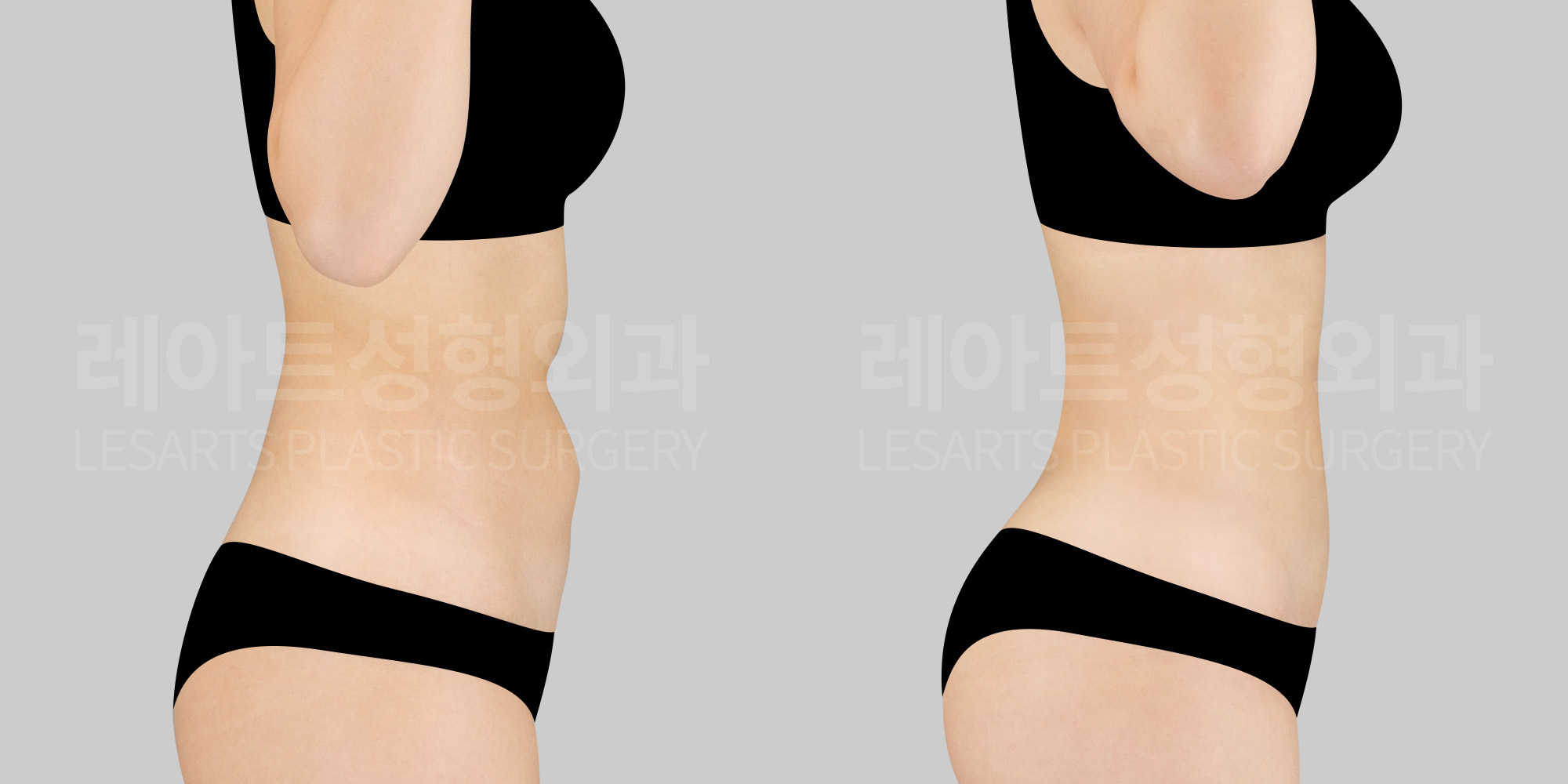 [Lower Abdomen Liposuction Results - Dr. Yongseung Seo, Lesarts Plastic Surgery]
*Captured 2 months post-op under standardized lighting and clinic settings
Postoperatively, anterior abdominal changes became distinct,
centered around the lower abdomen that had troubled her most.
Before surgery, the area below the navel bulged forward,
creating a pronounced curve on lateral view.
By thoroughly debulking subcutaneous fat in the lower abdomen
and simultaneously contouring the upper abdomen to match the overall depth,
the anterior abdomen now transitions in a much flatter,
continuous contour than before.
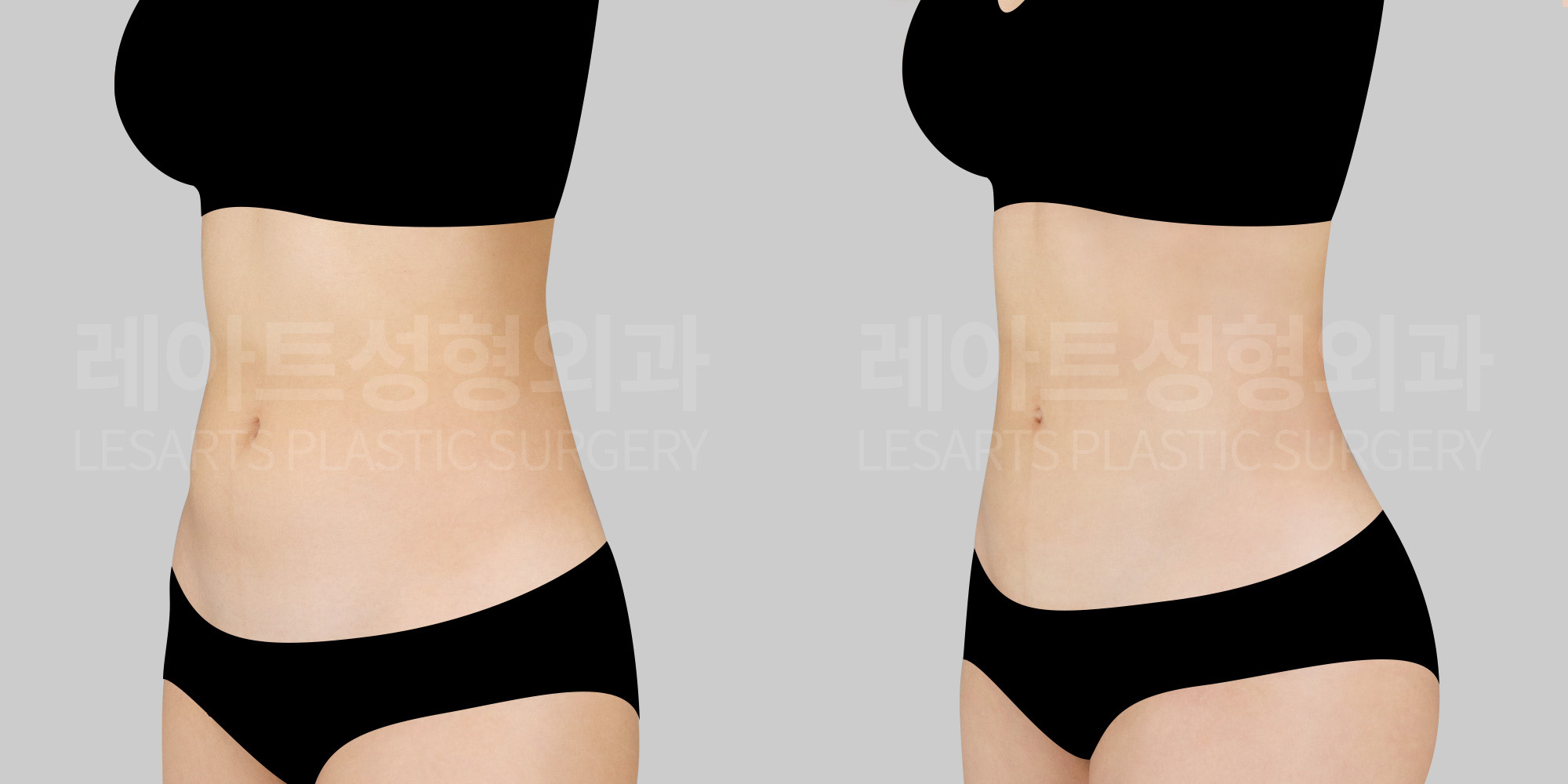 [Abdominal Liposuction Before & After - Dr. Yongseung Seo, Lesarts Plastic Surgery]
Before surgery, we also had to consider the risk that the deep fold above the navel
might become more pronounced after liposuction.
However, thanks to the patient's attentive management of posture and compression wear,
no new deep creasing developed around the navel
at her 2-month follow-up.
By maintaining consistent post-operative weight management, visceral fat also decreased,
allowing the anterior abdomen to appear noticeably lighter
than would have been achieved through subcutaneous fat removal alone.
Because 2 months is still early to evaluate final contour settling,
we advised her to maintain her current weight-management routines
a bit longer.
 [Abdominal Liposuction Before & After - Dr. Yongseung Seo, Lesarts Plastic Surgery]

[Flank Contour Changes After Abdominal Liposuction - Dr. Yongseung Seo, Lesarts Plastic Surgery]
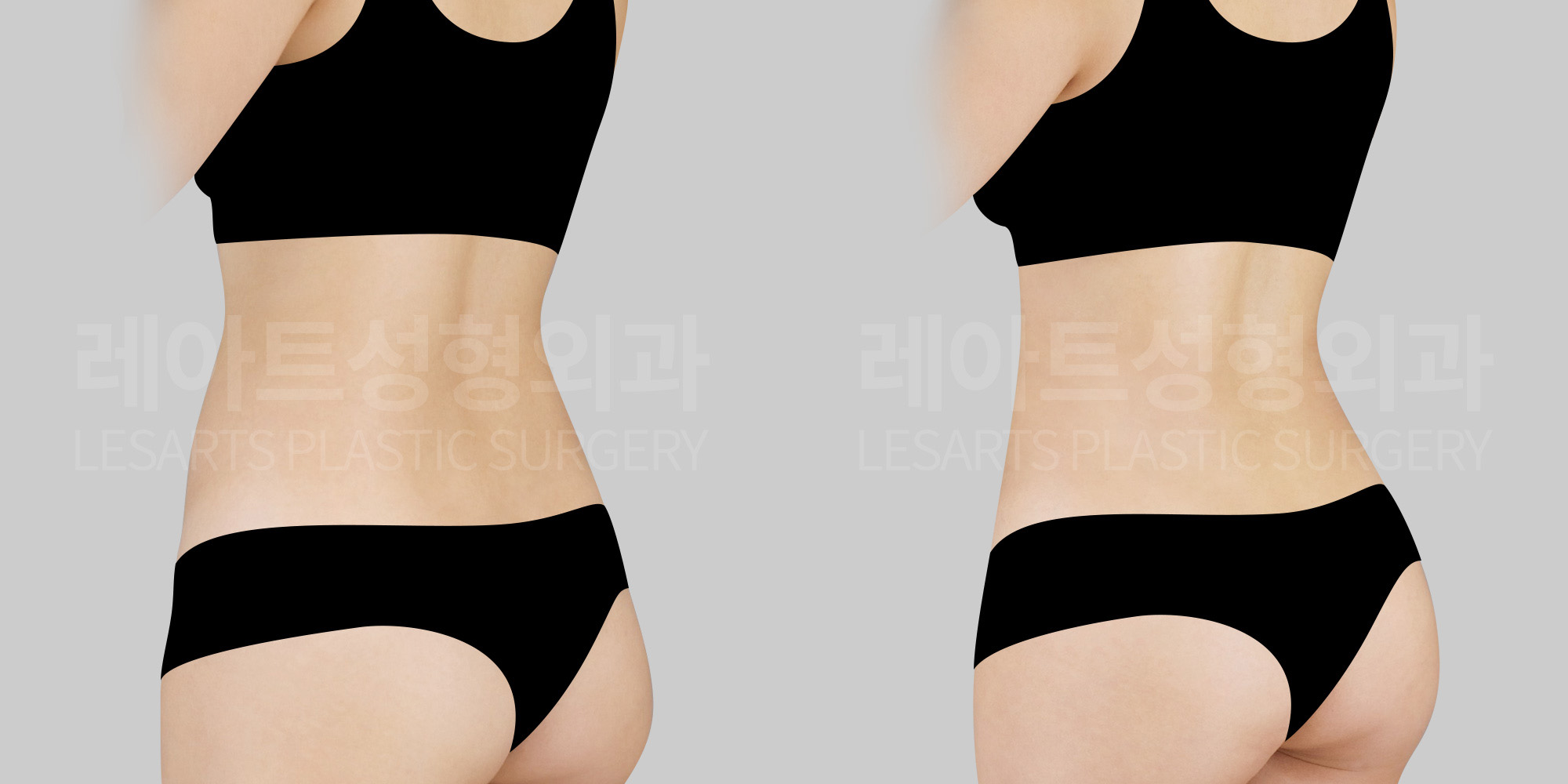
[Love Handle Liposuction Before & After - Dr. Yongseung Seo, Lesarts]
Along with the anterior abdomen, flank volume was also reduced,
refining the waistline on frontal view to look noticeably lighter.
Because the flanks and love handles did not have as much fat as the lower abdomen,
the absolute reduction volume
was relatively modest.
Nevertheless, as localized fat deposits along the waist were contoured,
her natural waist curve emerged
more clearly than before.
In the posterior view, bulging across the lateral waist and love handles was reduced.
While her physique did not require extensive debulking,
lightening these areas allowed the transition from waist
to pelvis to connect much more naturally;
as a result, the entire waistline appears more tapered than pre-op,
revealing a natural S-curve from both frontal and dorsal perspectives.
As explained preoperatively, however, pre-existing skeletal differences
previously masked by subcutaneous fat became somewhat more noticeable
after the fat layer thinned.
This does not represent newly developed asymmetry,
but rather the unmasking of innate anatomical features,
which is an important point to anticipate and discuss
when planning abdominal liposuction.
This patient had demonstrated consistent dedication to self-care,
losing an additional 4 kg even after her prior thigh liposuction.
Nevertheless, subcutaneous fat in the lower abdomen and flanks did not reduce as much as desired,
and the irregular anterior abdominal profile on lateral view
remained her greatest source of dissatisfaction.
Ultrasound examination confirmed sufficient reducible subcutaneous fat
centered around the lower abdomen,
allowing us to treat the upper abdomen, lower abdomen, flanks,
and love handles as an integrated unit.
At 2 months post-op, thickness in the protruding lower abdomen decreased,
transitioning smoothly into the upper abdomen
and transforming the anterior abdominal wall
into a much flatter contour.
Her thorough post-operative care prevented the pre-existing supraumbilical crease from deepening,
and concurrent visceral fat reduction through lifestyle habits brought her
even closer to the planned surgical outcome.
However, liposuction does not replace lifestyle dieting.
While subcutaneous fat is debulked through liposuction,
visceral fat requires continued management through diet and exercise,
and underlying skeletal asymmetries may become more apparent as fat is removed.
Therefore, if your lower abdomen remains bulging or pinchable flank fat persists
even after sufficient weight loss, rather than pursuing more extreme dieting,
it is advisable to first confirm whether the remaining fullness stems from subcutaneous fat,
or involves visceral fat and skeletal contributions.
We encourage you to consult thoroughly on the realistic improvements achievable
through liposuction for your specific anatomy, as well as
the post-operative management required to maintain your results.
▶ View More Lesarts Abdominal Liposuction Cases
Abdominal Liposuction FAQ
1. Can lower abdominal fullness persist even after dieting?
Even when overall body weight decreases, depending on individual fat distribution,
subcutaneous fat below the navel may remain relatively prominent.
2. Can abdominal liposuction remove visceral fat as well?
No. Liposuction removes the subcutaneous fat layer
located directly beneath the skin.
Visceral fat requires dedicated lifestyle management
through diet and exercise following surgery.
3. Why not treat only the lower abdomen?
If fat projects in the upper abdomen as well,
debulking only the lower belly can cause the vertical transition
to appear unnatural.
The surgical scope must be determined based on your current fat distribution.
4. Can creases develop around the navel after abdominal liposuction?
If a deep pre-existing fold is present or if strong pressure is applied
to the same spot over long periods, creasing can become more noticeable.
In this clinical case, we guided the patient to take extra care with posture
and abdominal compression during the first month.
5. Can waist asymmetry become more apparent after liposuction?
Yes, it is possible. If fat had previously cushioned underlying skeletal differences,
pre-existing skeletal asymmetry may become more noticeable
after the overlying fat layer is thinned.
Dr. Yongseung Seo


Cases finding
similar to my profile
Customer Diagnostics


Select the surgery and
area you are interestedto see real
before andafter changes.


we
make you,
the art
Clinic hours
MON - FRI
10 am – 7pm
SAT
10 am – 4pm
Holiday
SUN, HOLIDAY
Location
Lesarts Moon Clinic Tower 4-5F, 40, Nonhyeon-ro 168-gil,
Gangnam-gu, Seoul, Republic of Korea

Medical institution name Lesarts Plastic Surgery
Address Lesarts Moon Clinic Tower 4-5F, 40, Nonhyeon-ro 168-gil, Gangnam-gu, Seoul, Republic of Korea
Representative Moon sung jun
