




Online Consultation
Please accurately enter the information below.
Quick Cost Consultation
Quick Consultation & Reservation
Cases finding
similar to my profile






Doctor's Note
Medical columns by our surgeons
Abdominoplasty | Uneven Postpartum Abdominal Contours: Resolving Skin Laxity and Lower Belly Bulging at 3 Months
2026-08-26
Abdominoplasty | Uneven Postpartum Abdominal Contours: Resolving Skin Laxity and Lower Belly Bulging at 3 Months [Doctor's Note by Dr. Kukhan Lee]
Why does the lower belly protrude with an uneven abdominal contour even after returning to pre-pregnancy weight?
Even if body weight returns to pre-pregnancy levels after childbirth,
if stretched skin and diastasis recti (abdominal muscle separation)
remain unresolved, the abdomen can continue to project forward
or present an uneven, irregular contour.
In particular, when skin laxity involves not only the lower abdomen but extends into the upper abdomen as well,
rather than addressing isolated segments,
the surgical approach must be determined by thoroughly evaluating the full extent of skin laxity and the condition of the abdominal wall together.
▶ View Lesarts Abdominoplasty Clinical Cases
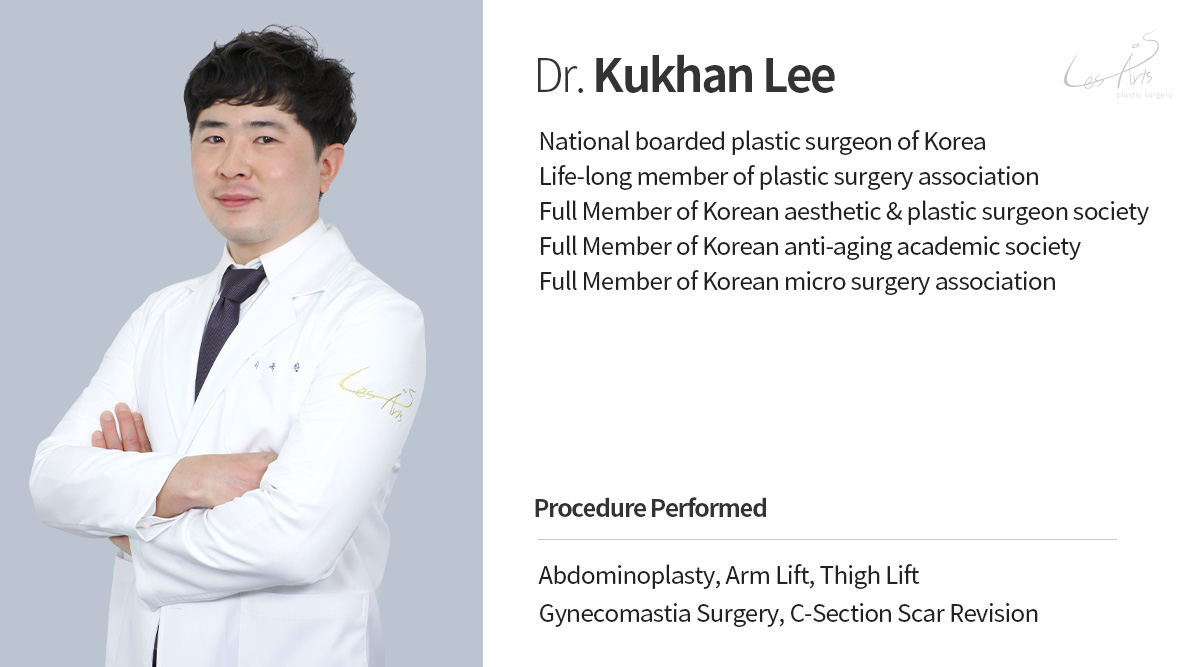
Hello, I am Dr. Kukhan Lee, Board-Certified Plastic Surgeon at Lesarts Plastic Surgery.
After childbirth, many women find that although their body weight has returned to their baseline,
the lower belly still protrudes forward, or loose abdominal skin
remains uneven and creased, causing ongoing concern.
Especially when wearing athletic wear or thin, form-fitting clothing,
lower abdominal volume and skin folds are clearly visible,
making the abdominal silhouette a source of stress independent of numerical body weight.
Such postpartum abdominal changes are often difficult
to explain as simple fat accumulation alone.
The patient featured today had also maintained a lean physique through steady exercise and dietary control;
nevertheless, lower abdominal bulging, upper abdominal skin creasing, and an overall
irregular abdominal contour persisted, prompting her to visit our clinic.
Let us examine the transformation observed over the course of 3 months
following an M-type full abdominoplasty performed concurrently with abdominal liposuction.
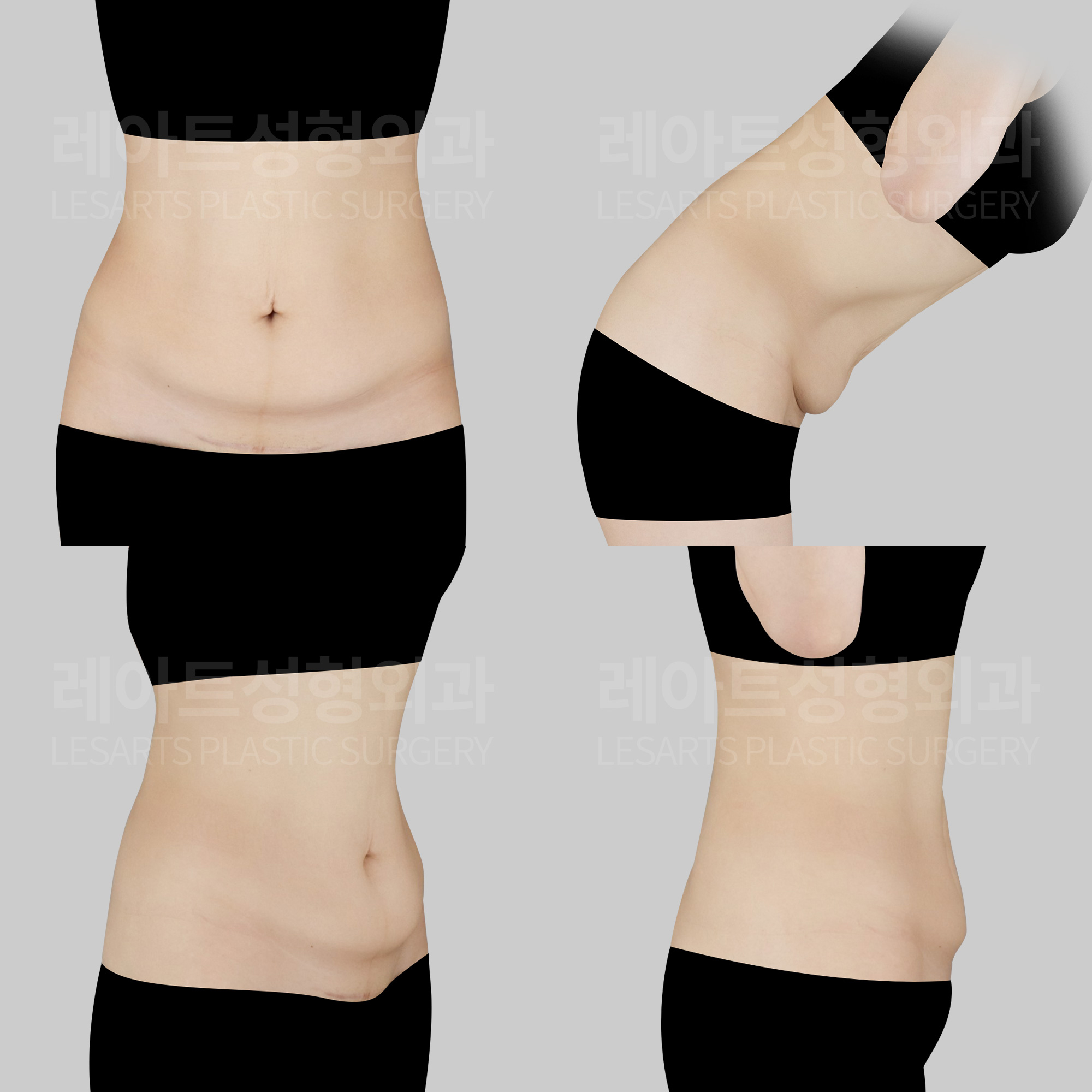
[Pre-Operative Assessment for Abdominoplasty]
Patient Profile
Age: 30s
Height: 161 cm
Weight: 46 kg
Obstetric History: 2 Cesarean deliveries
The patient delivered both of her children
via Cesarean section.
At the time of presentation, she weighed 46 kg, maintaining a well-managed overall frame;
during pregnancy, however, her body weight had increased
to nearly 70 kg.
Although she sufficiently reduced her weight through disciplined post-partum workouts and nutrition,
the forward projection of her lower abdomen
did not improve as desired.
Additionally, upper abdominal creasing that developed postpartum and
an altered overall torso silhouette were major coexisting concerns.
Reviewing her pre-operative photos, her abdomen
did not present with heavy global adiposity.
However, residual subcutaneous fat was concentrated in the lower abdomen,
and regional volume discrepancies prevented the profile
from transitioning smoothly from the upper to lower abdomen
in a single unified line.
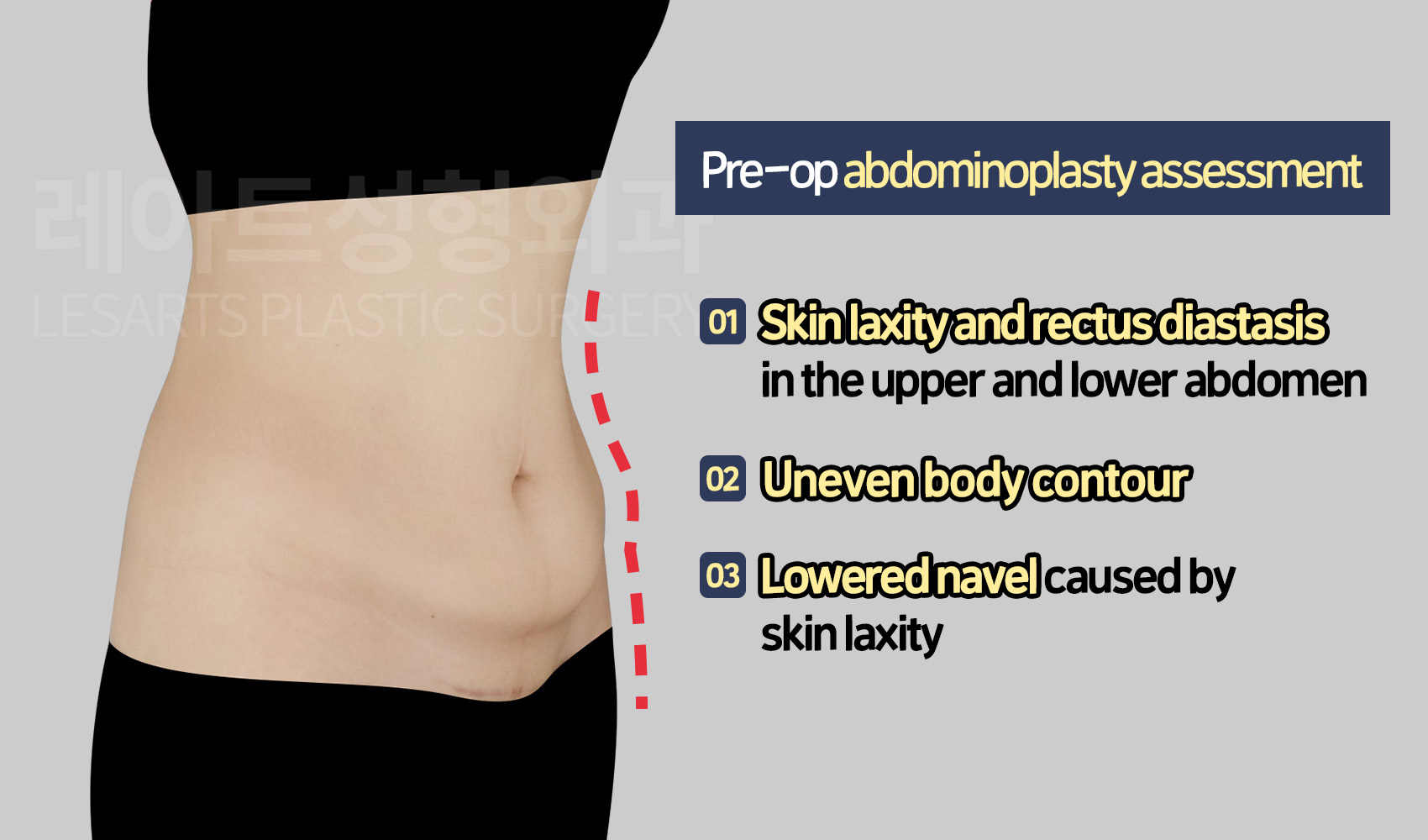
[Abdominoplasty Consultation - Dr. Kukhan Lee, Lesarts Plastic Surgery]
The area the patient felt most uncomfortable with was her lower belly.
Upon thorough physical examination, however,
skin laxity was not confined to the lower abdomen alone.
Skin was also loose and redundant across the upper abdomen and supraumbilical zone,
which caused the umbilicus to appear positioned relatively low.
When the navel sits low, the vertical proportions of the torso can make the upper body look elongated
and the legs appear relatively shorter.
Furthermore, beyond dermal laxity, diastasis recti
was confirmed across both the upper and lower abdominal wall.
Therefore, correcting only the protruding lower abdomen partially
carried the risk of falling short of the comprehensive improvement the patient desired.
To address the continuous skin laxity originating from the upper abdomen,
repair the separated rectus muscles, and debulk residual lower abdominal fat concurrently,
we established a surgical plan combining an M-type full abdominoplasty
with targeted abdominal liposuction.
▶ View More Abdominoplasty Before & After Cases
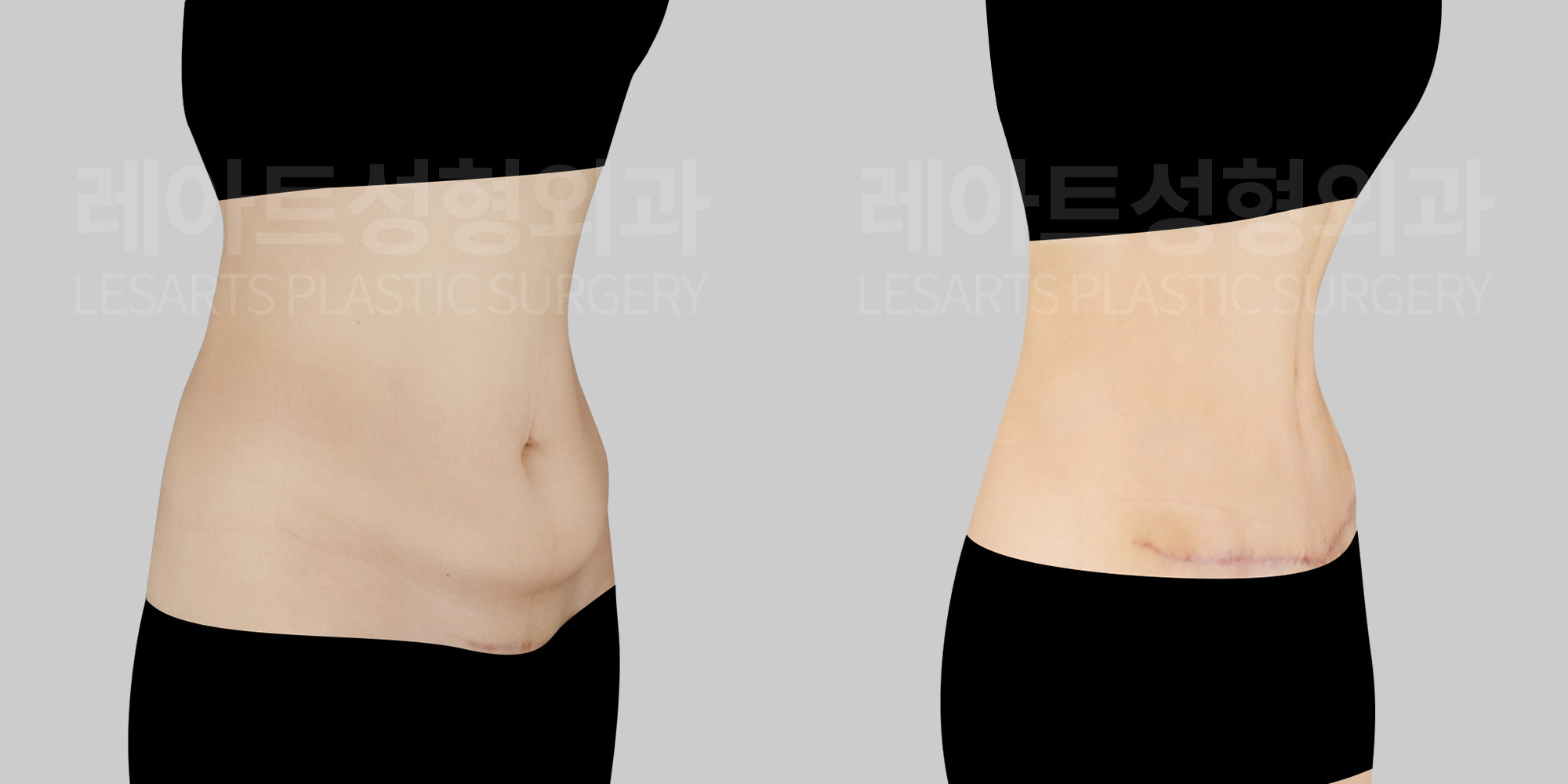
[Vertical Umbilicoplasty Combined with Abdominoplasty - Dr. Kukhan Lee, Lesarts]
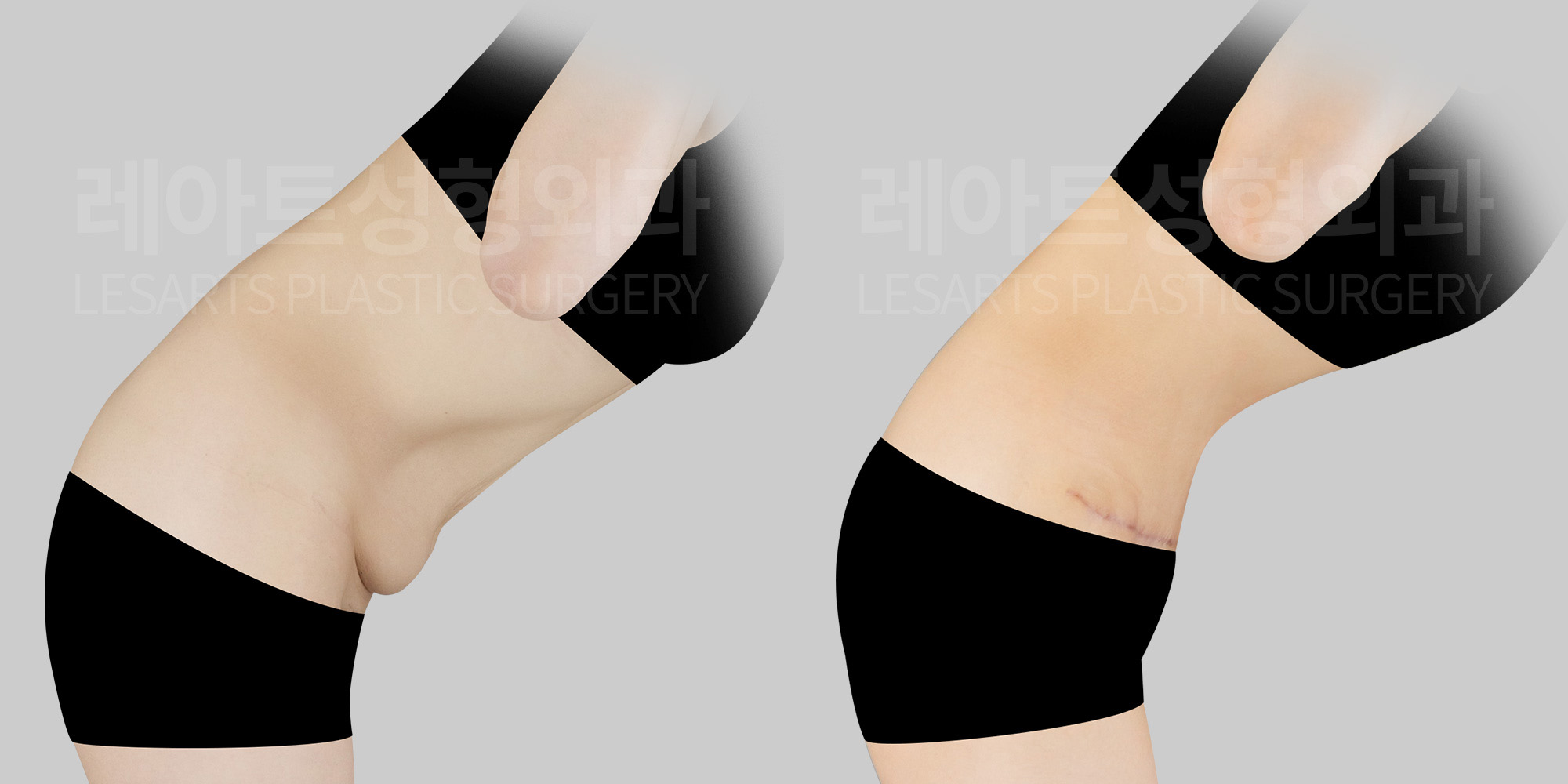
[Improvement in Wrinkling and Laxity Post-Abdominoplasty - Dr. Kukhan Lee, Lesarts]
Here is the appearance at 3 months post-abdominoplasty.
The overall body line has settled into a much smoother contour
through concurrent liposuction debulking.

[Lower Belly Protrusion Improvement Post-Abdominoplasty - Lesarts Plastic Surgery]
The lower abdomen had been the patient's greatest source
of emotional distress prior to surgery.
Despite her low body weight pre-operatively, the area below the navel
bulged forward, creating a pronounced step-off on profile view.
At 3 months post-op, as redundant skin and residual lower abdominal volume
were contoured simultaneously, the previously prominent lower belly
has transitioned into a noticeably flatter plane.
From the lateral view, the slope from the upper into the lower abdomen
no longer buckles in an irregular contour,
connecting in a far more continuous, natural line.
Because diastasis recti was plicated concurrently, outward muscular pushing
was also reduced, creating an overall firm
and stable anterior abdominal wall.
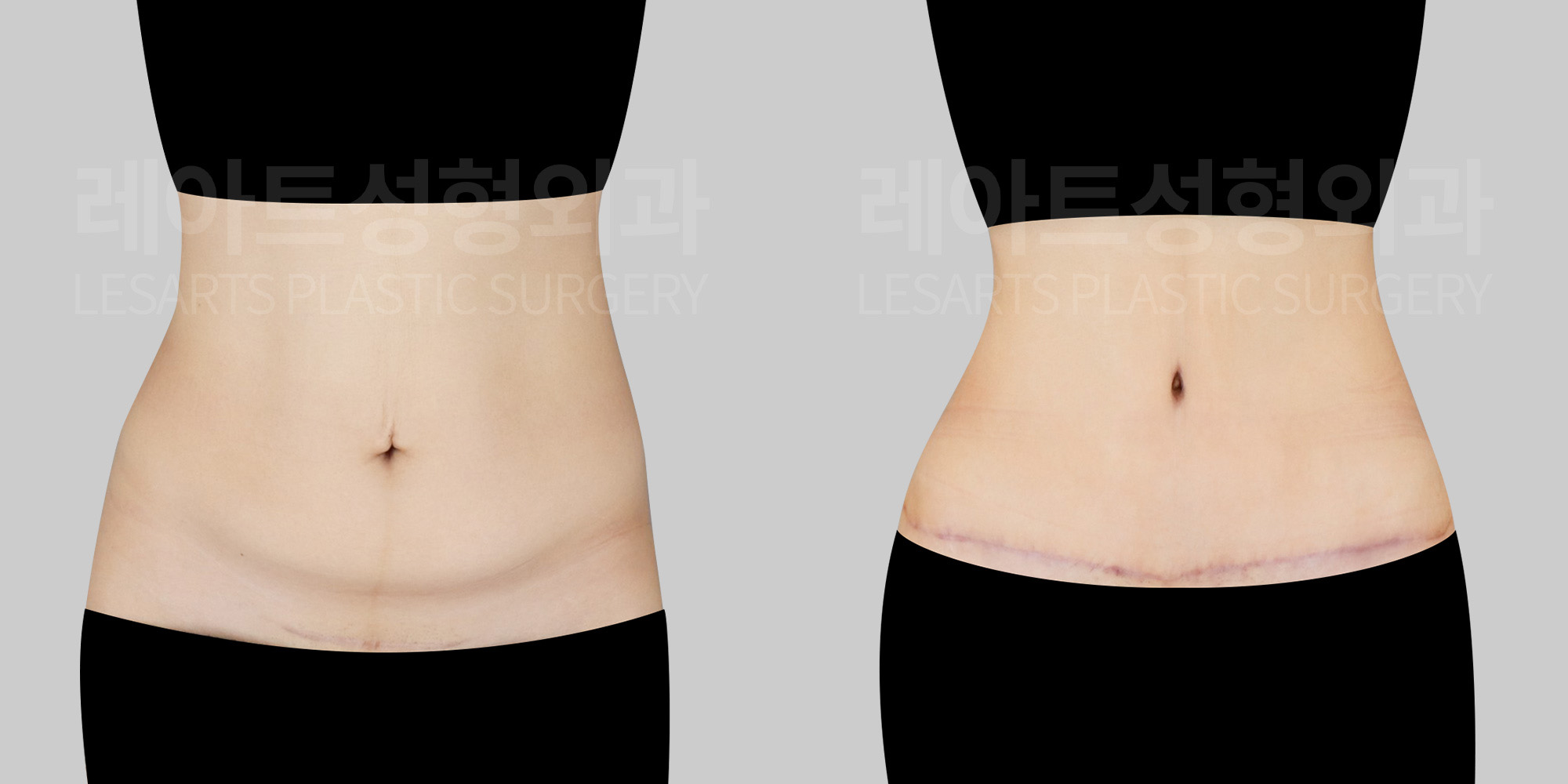
[Recovery Progress at 3 Months Post-Abdominoplasty - Dr. Kukhan Lee, Lesarts]
As the loose skin flap was advanced downward,
not only was the surface flattened, but the visual position of the navel was also repositioned.
Before surgery, due to surrounding skin ptosis,
the umbilicus appeared relatively low-set.
Post-operatively, with redundant skin resected and a new vertically oriented umbilicus reconstructed in the central abdomen,
the vertical proportions of the torso appear balanced and aesthetically pleasing.
The elongated oval umbilical shape requested by the patient
is settling into place favorably at the 3-month mark.

[Incision Placement and Length for Full Abdominoplasty - Dr. Kukhan Lee, Lesarts]
When considering abdominoplasty,
one of the primary concerns for many patients is the incisional scar.
In this patient as well, at 3 months post-op, the lower abdominal incision line
remains relatively erythematous, with areas where healing
remodeling is actively ongoing.
Because abdominoplasty involves significant tissue mobilization and resection,
scar redness and tissue firmness can be noticeable during early phases.
Three months is not a period of complete scar maturation;
therefore, the final aesthetic outcome cannot be judged based solely on this early stage.
We will continue to monitor the site during regular follow-ups while maintaining targeted scar therapies,
observing how color and thickness gradually soften
over time.
Following two Cesarean deliveries, this patient had sufficiently reduced her weight
and exercised diligently to maintain a lean 46 kg frame.
However, stretched dermal tissue and diastasis recti
resulting from pregnancy could not be resolved through exercise alone.
Because skin laxity involved not just the lower abdomen but extended into the upper abdomen and supraumbilical zone,
and diastasis recti was present across the entire abdominal wall,
an M-type full abdominoplasty was selected.
By combining abdominal liposuction to contour residual localized fat deposits,
the irregular lateral profile settled into a much smoother slope at 3 months post-op.
The protruding lower belly flattened significantly,
and with loose skin resected, her preferred vertical umbilicus
is settling naturally in the center of the abdomen.
It should be noted that this evaluation reflects the 3-month post-operative mark.
While contour improvements emerge relatively quickly,
the surgical scar remains in an active phase of remodeling and can still look prominent,
requiring ongoing scar management and long-term observation.
If your abdominal skin remains uneven or your lower belly continues to bulge
even after losing weight postpartum, it is best not to view it simply as stubborn fat.
Determining whether the residual fullness stems from subcutaneous fat,
or involves overstretched skin and diastasis recti,
directly dictates the appropriate surgical approach.
If abdominal contours continue to cause distress after dedicated diet and exercise,
we recommend first evaluating the condition of your abdominal skin and muscular wall,
and consulting on a corrective plan tailored to your anatomy.
▶ View More Lesarts Abdominoplasty Cases
Abdominoplasty FAQ
1. Can the lower belly remain bulging even after significant weight loss?
Yes. While residual fat may be present,
if post-partum diastasis recti or overstretched skin remains,
the lower abdomen can project forward or sag regardless of body weight.
2. Can a full abdominoplasty be necessary even if the lower abdomen is the main concern?
If skin laxity extends into the upper abdomen
and diastasis recti involves both upper and lower segments,
a full abdominoplasty addressing the entire abdominal wall
is often necessary over isolated lower-abdominal correction.
3. Why are abdominoplasty and liposuction performed concurrently?
Abdominoplasty primarily corrects redundant skin and the abdominal wall,
and if localized subcutaneous fat disrupts contour smoothness,
concurrent liposuction refines the transition
between the abdomen and flanks.
4. Does the shape of the navel change with full abdominoplasty?
In an M-type full abdominoplasty, because skin is mobilized broadly,
the umbilicus is transposed and reconstructed.
For this patient, we designed a vertically elongated, natural oval navel
in accordance with her preferences.
5. Is it abnormal for scars to appear prominent at 3 months post-abdominoplasty?
Three months is an active phase of scar remodeling.
During early recovery, scars can appear erythematous or feel firm,
and will gradually soften, flatten, and lighten
with consistent long-term scar management.
Dr. Kukhan Lee


Cases finding
similar to my profile
Customer Diagnostics


Select the surgery and
area you are interestedto see real
before andafter changes.


we
make you,
the art
Clinic hours
MON - FRI
10 am – 7pm
SAT
10 am – 4pm
Holiday
SUN, HOLIDAY
Location
Lesarts Moon Clinic Tower 4-5F, 40, Nonhyeon-ro 168-gil,
Gangnam-gu, Seoul, Republic of Korea

Medical institution name Lesarts Plastic Surgery
Address Lesarts Moon Clinic Tower 4-5F, 40, Nonhyeon-ro 168-gil, Gangnam-gu, Seoul, Republic of Korea
Representative Moon sung jun
