




Online Consultation
Please accurately enter the information below.
Quick Cost Consultation
Quick Consultation & Reservation
Cases finding
similar to my profile






Doctor's Note
Medical columns by our surgeons
Male M-type Abdominoplasty 3-Month Progress
2026-08-27
Male M-type Abdominoplasty 3-Month Progress [Doctor's Note by Dr. Kukhan Lee]
Can men also address abdominal skin laxity remaining after significant weight loss with abdominoplasty?
When stretched abdominal skin lacks sufficient elasticity to contract naturally after extensive weight reduction,
abdominoplasty can remove the excess tissue to restore a smoother, more contoured abdominal profile.
[Lesarts Abdominoplasty Information]
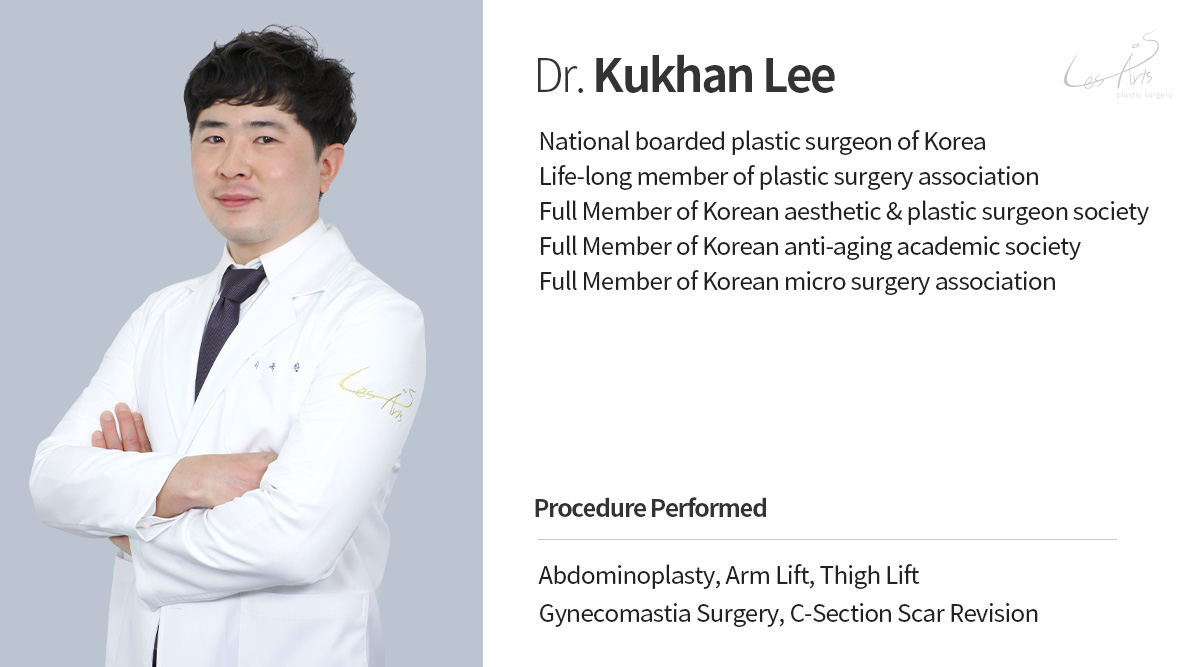
Hello, I am Board-Certified Plastic Surgeon Dr. Kukhan Lee.
After achieving significant weight loss, one of the primary milestones men look forward to is a more defined physique.
Substantial weight reduction through exercise and nutritional discipline improves not only health indicators, but also overall posture and clothing fit.
However, even after reaching one's target weight, a stubborn concern frequently persists.
Namely, stretched and redundant abdominal skin that has lost its natural elasticity.
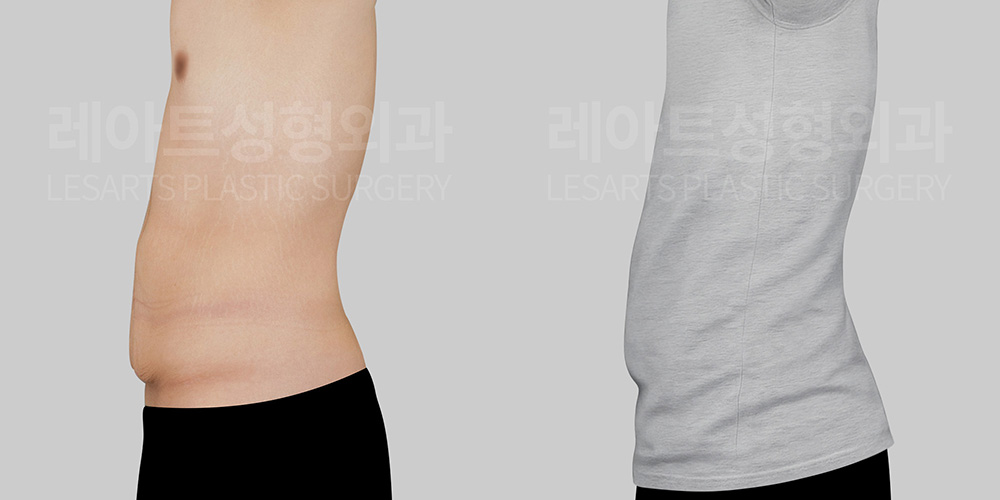
[Preoperative Clothing Fit - Lesarts Plastic Surgery]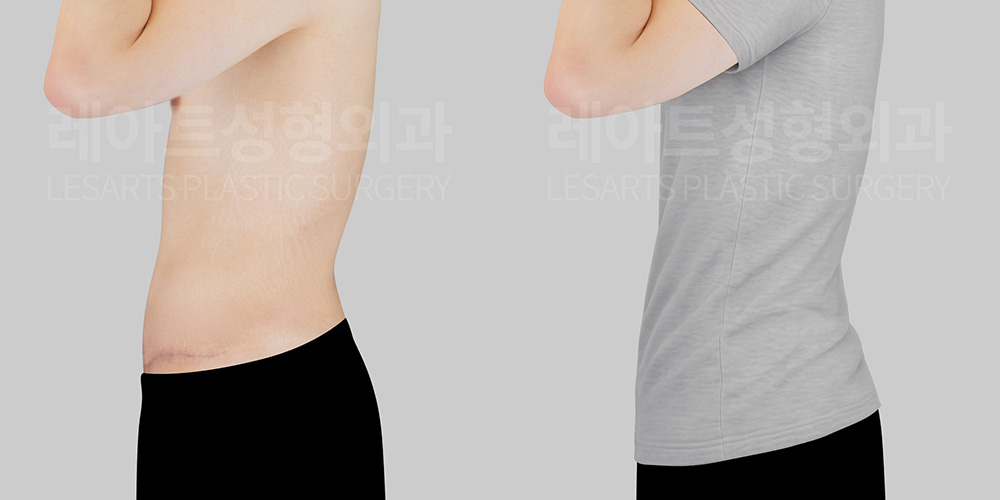
[Postoperative Clothing Fit Changes - Lesarts Plastic Surgery]
In particular, if one experienced rapid, substantial weight gain during adolescence or early adulthood,
the overstretched skin tissue often fails to retract fully even after the underlying fat volume has been substantially reduced, leading to skin folds or lower abdominal protrusion.
Because structural skin laxity has distinct anatomical limits in responding to ongoing exercise alone,
an increasing number of male patients are seeking consultations for abdominoplasty.
Below, we review the 3-month clinical follow-up of a male patient who underwent combined M-type full abdominoplasty and abdominal liposuction to address residual laxity following massive weight reduction.
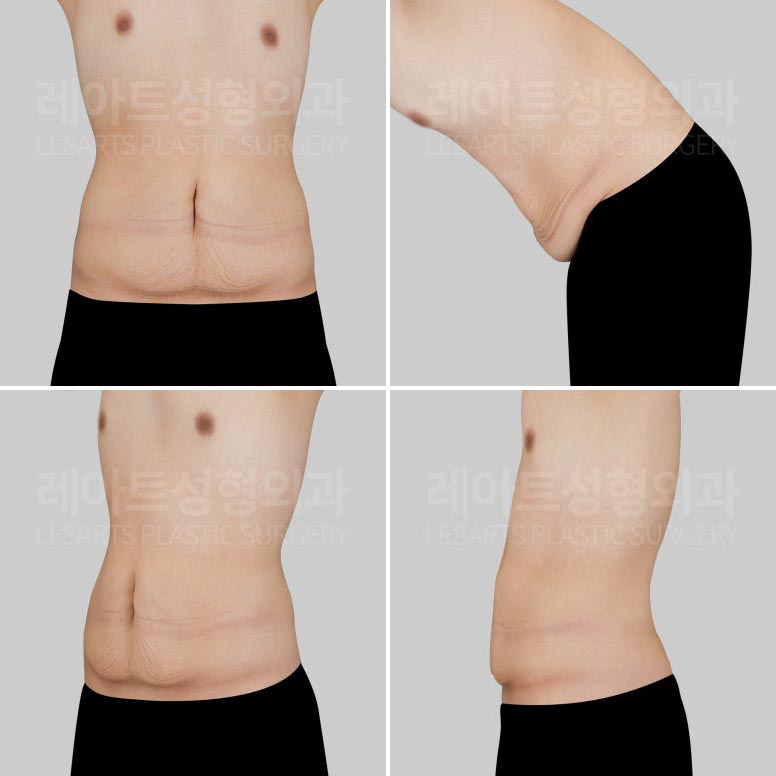
[Physical Evaluation for Male Abdominoplasty]
The patient was a male in his 20s, measuring 186 cm and 85 kg. He had experienced pronounced weight gain during adolescence, once exceeding 120 kg.
Through disciplined long-term lifestyle management, he had successfully lowered and stabilized his weight at his current baseline,
yet generalized abdominal tissue laxity and lower abdominal protrusion following this dramatic weight shift remained his foremost aesthetic and functional concerns.
Clinical evaluation revealed generalized cutaneous redundancy across the anterior abdominal wall.
While not an extreme ptosis covering the umbilicus entirely, bending the torso forward or assuming prone positions during workouts caused uncomfortable folding and friction of the excess skin.
In particular, laxity was notably pronounced in the infraumbilical region,
with redundant tissue folding over the beltline, making the lower abdomen appear disproportionately prominent relative to his actual physique.
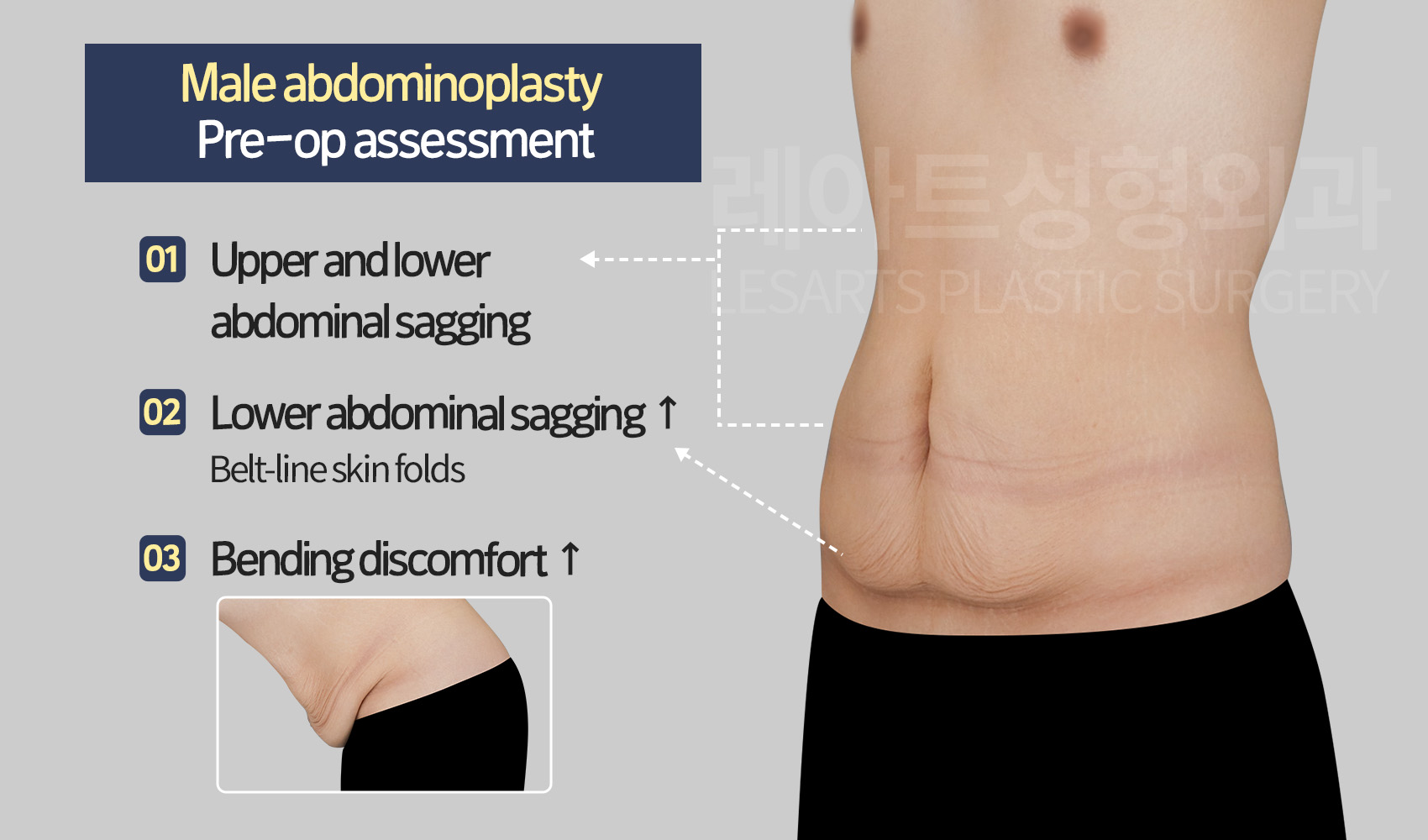
[Preoperative Evaluation for Male Abdominoplasty]
Although he did not possess an excessively thick subcutaneous adipose layer, uneven fat volume persisted across the flanks (love handles) and upper abdominal zones following weight loss.
Consequently, a combined approach of abdominoplasty with targeted abdominal and flank liposuction was determined optimal to refine and harmonize the entire torso silhouette.
A central consideration in surgical planning was establishing the precise procedural scope of the abdominoplasty.
Given that upper abdominal laxity was moderate rather than severe, a thorough comparison was made between M-type full abdominoplasty and S-type mini abdominoplasty.
M-type full abdominoplasty offers the advantage of simultaneously tightening and addressing wide-range cutaneous redundancy extending across both upper and lower abdomen.
However, it involves a longer transverse incision and requires umbilical transposition (umbilicoplasty), which leaves an incision perimeter around the navel;
it was explained that umbilical scarring and aesthetic changes can remain visible depending on individual healing characteristics.
Conversely, S-type mini abdominoplasty does not dissect around the umbilicus, preserving the original natural umbilical architecture without periumbilical scars.
Nonetheless, when lower abdominal laxity is broad and extends laterally toward the iliac crests as in this case, substantially shortening incision length is structurally limited,
and its capacity to correct upper abdominal laxity is fundamentally limited.
Following thorough consultation detailing the technical trade-offs, the decision was reached together with the patient
to perform M-type full abdominoplasty alongside concurrent abdominal liposuction.
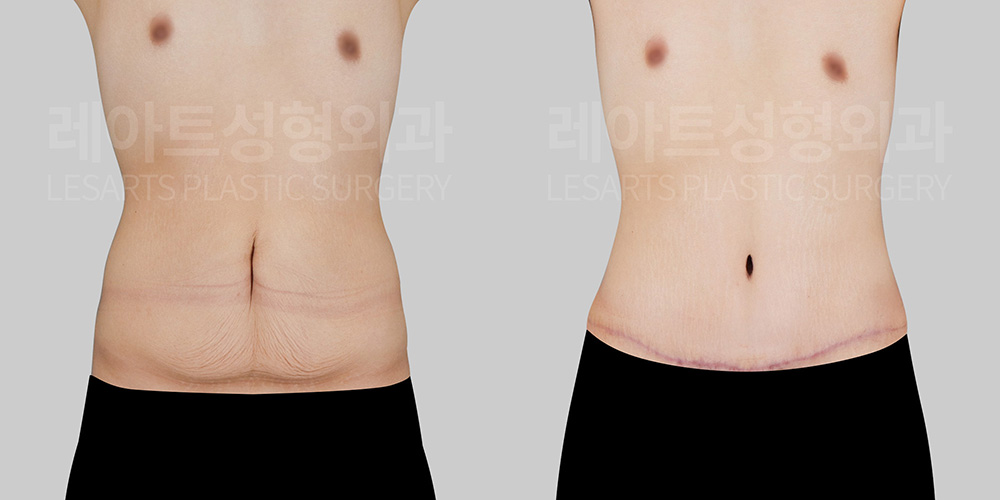
[Before & After Male Abdominoplasty - Dr. Kukhan Lee, Lesarts]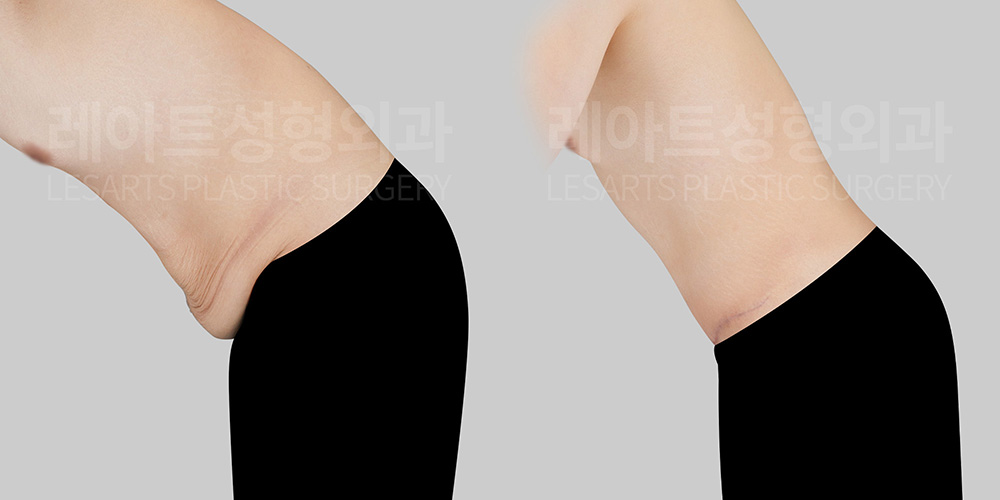
[Improvement in Lower Abdominal Laxity After Abdominoplasty - Lesarts Plastic Surgery]
Here is the patient's condition at 3 months postoperatively.
Prior to surgery, redundant lower abdominal skin overlapped to create a pronounced outward bulge,
whereas surgical excision of the excess tissue resulted in a distinctly flatter, more streamlined abdominal contour.
This transition is readily apparent in frontal views, and most notably, the tissue folding observed when flexing forward has visibly diminished.
The incision line is healing steadily without step-off deformities,
and the lateral endpoints transition smoothly without residual dog-ear deformities.
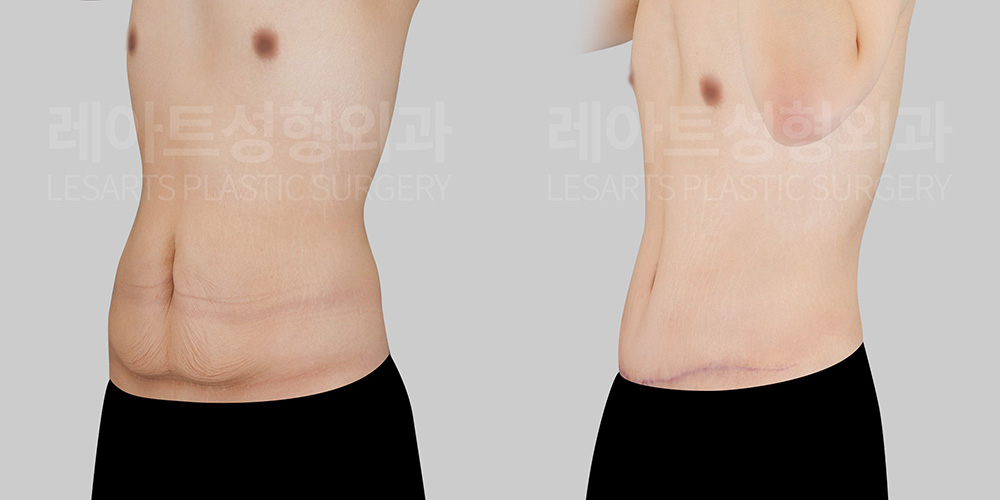
[Male Sagging Belly Surgery - Lesarts Abdominoplasty, Dr. Kukhan Lee]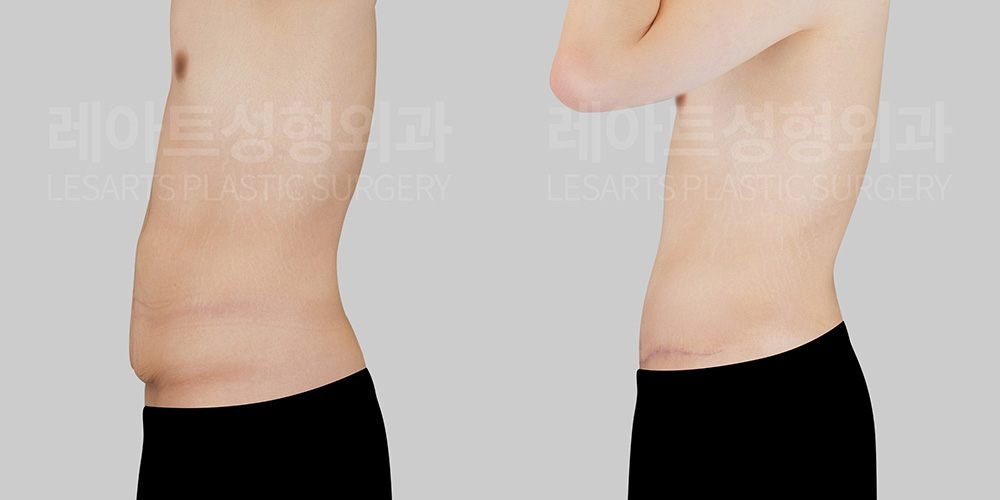
[Before & After Abdominoplasty - Dr. Kukhan Lee, Lesarts Plastic Surgery]
Postoperatively, the reconstructed umbilicus is settling into a balanced, natural contour,
and concurrent liposuction has helped shape an integrated, well-proportioned transition along the waist and flank margins.
In particular, the irregular, stepped lateral contour seen preoperatively
has transitioned into a smoother, continuous profile postoperatively.
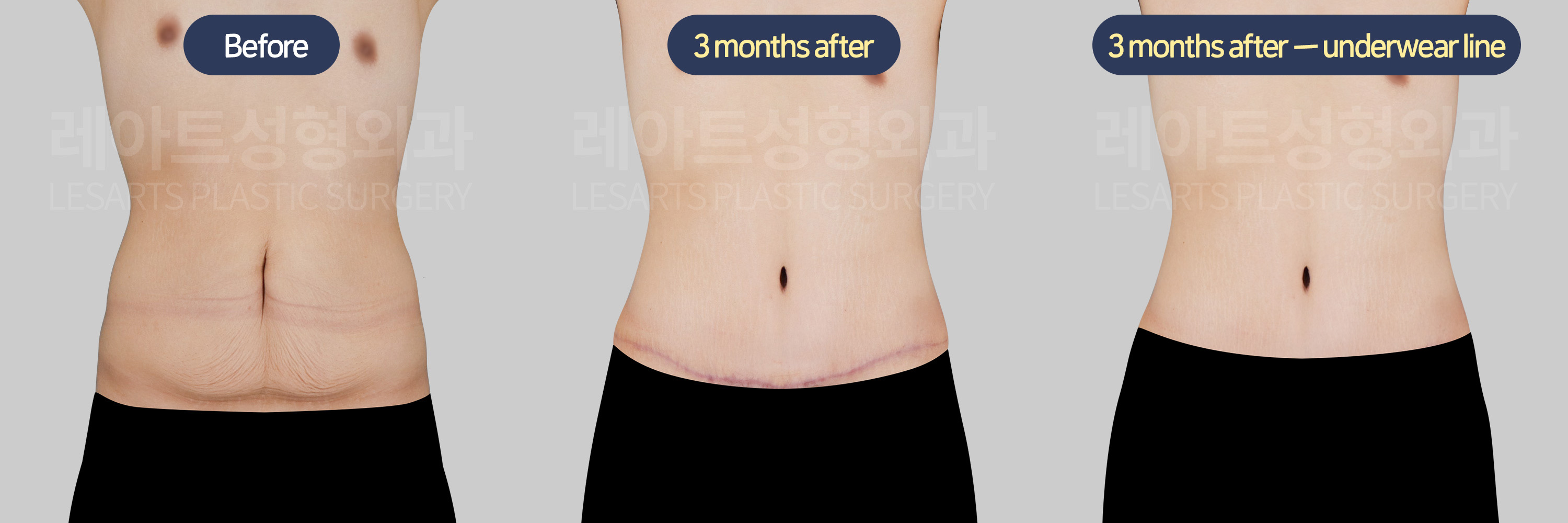
[Abdominoplasty Incision Location - Dr. Kukhan Lee, Lesarts]
At this 3-month milestone, the surgical scar is in an active phase where erythema remains noticeable.
While scar maturation in male patients can occasionally take longer than in female patients,
this patient is demonstrating a relatively stable and favorable healing progression.
With consistent post-op scar care regimens and periodic clinical follow-ups, the scar line is expected to gradually soften and fade over time.
When contemplating male abdominoplasty, the resulting surgical scar warrants thorough consideration.
Because abdominoplasty excises redundant cutaneous tissue, an incision line of corresponding length is an unavoidable component of the procedure.
Particularly for young men who frequently engage in activities where the upper body is exposed—such as athletics, saunas, or swimming—
it is crucial to evaluate how scar visibility aligns with personal lifestyle and comfort before proceeding.
Nevertheless, where persistent abdominal laxity cannot be resolved through exercise and diet alone,
abdominoplasty represents a clinical modality worth evaluating to reshape body contours and improve functional comfort.
We hope this clinical note provides helpful clarity for men seeking to address residual skin laxity after significant weight reduction and start a new phase of body conditioning.
[Explore More Real Cases of Lesarts Abdominoplasty]
FAQ
Q1. Can abdominal skin sag even after substantial weight loss?
Yes. Even as adipose volume diminishes, skin that has experienced prolonged overstretching may lack sufficient elastic recoil, leaving behind persistent skin folds or lower abdominal redundancy.
Q2. When is male abdominoplasty indicated?
It can be considered when generalized cutaneous laxity or persistent infraumbilical tissue folds remain unchanged despite rigorous exercise and diet management following weight loss.
Q3. What is the difference between M-type abdominoplasty and S-type mini abdominoplasty?
M-type corrects redundancy across both the upper and lower abdomen simultaneously, but requires umbilical relocation and a longer transverse incision.
S-type avoids periumbilical incisions, but provides limited correction for upper abdominal skin laxity.
Q4. Can abdominoplasty be performed together with abdominal liposuction?
Yes. If uneven localized adipose deposits remain along the flanks or abdominal wall, concurrent liposuction can help balance and refine the overall torso line.
Q5. How does the scar progress after male abdominoplasty?
Because redundant skin is excised, a surgical incision scar is an inherent outcome.
While it appears erythematous and prominent during initial months, it gradually matures and softens through ongoing scar care and clinical follow-up.
Dr. Kukhan Lee


Cases finding
similar to my profile
Customer Diagnostics


Select the surgery and
area you are interestedto see real
before andafter changes.


we
make you,
the art
Clinic hours
MON - FRI
10 am – 7pm
SAT
10 am – 4pm
Holiday
SUN, HOLIDAY
Location
Lesarts Moon Clinic Tower 4-5F, 40, Nonhyeon-ro 168-gil,
Gangnam-gu, Seoul, Republic of Korea

Medical institution name Lesarts Plastic Surgery
Address Lesarts Moon Clinic Tower 4-5F, 40, Nonhyeon-ro 168-gil, Gangnam-gu, Seoul, Republic of Korea
Representative Moon sung jun
