




Online Consultation
Please accurately enter the information below.
Quick Cost Consultation
Quick Consultation & Reservation
Cases finding
similar to my profile






Doctor's Note
Medical columns by our surgeons
Gynecomastia | Clinical Perspectives (Part 1): Supporting a Son’s Unspoken Physical Concerns
2026-09-03
Gynecomastia | Clinical Perspectives (Part 1): Supporting a Son’s Unspoken Physical Concerns
Q. When a son expresses distress about chest contour changes after puberty,
what are the clinical and emotional reasons parents should accompany him for an evaluation rather than dismissing it as simple weight gain?
A. Because true gynecomastia is a clinical condition involving proliferated glandular tissue that does not diminish through diet or exercise alone,
an objective ultrasound diagnosis paired with parental empathy serves as an essential first step
in restoring confidence for adolescent and young adult sons.
Learn More About Lesarts Gynecomastia Surgery
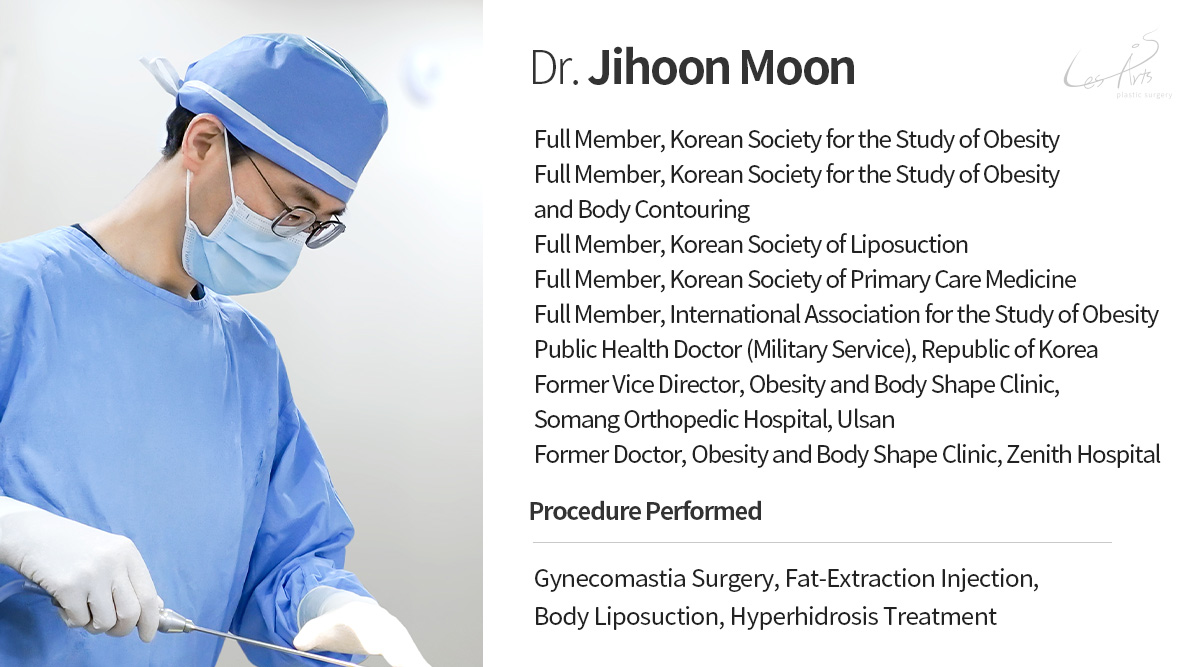
Hello, I am Dr. Jihoon Moon of Lesarts Plastic Surgery.
For many men, aesthetic concerns regarding the chest area remain a heavy personal burden that is difficult to voice openly.
The emotional self-consciousness that begins during pubertal years and the hesitation to wear light t-shirts comfortably even in hot summer weather
can be challenging for others to fully appreciate without experiencing it firsthand.
When young men finally gather the resolve to visit a clinic after prolonged private distress, many arrive accompanied by their parents.
Today, as the first part of our series on meaningful clinical encounters,
I would like to share clinical reflections on the shared journey between parents and sons.
1. “See? I Knew It Was True.” A Son's Relief After Long-Standing Hesitation

Symptoms and Concerns of Gynecomastia in Teens & 20s - Dr. Jihoon Moon, Lesarts Plastic Surgery
One of the most frequent and poignant scenes in the consultation room is when sons in their teens or twenties visit alongside their parents.
In reality, reaching the point of sitting in a consultation chair often follows years of private concern endured in silence.
When rapid physical changes occur during pubertal development, developing conical or rounded chest projection characteristic of gynecomastia can cause profound emotional stress.
Sons may layer thick undershirts beneath school uniforms or adopt a slouched, rounded posture during physical education classes even in midsummer heat.
School years are often spent with persistent anxiety over potential teasing or unwanted attention from peers regarding chest projection.
After enduring this private distress in front of the mirror for an extended period, many finally find the courage to speak to their parents:
“Mom, Dad, I really don't think my chest is just fat. I'd like to get an ultrasound evaluation for gynecomastia at a clinic.”
Upon first hearing this, parental reactions often follow a similar pattern:
“It's just because you don't exercise enough and gained weight.”
“It will disappear naturally once you go to the military or lose adolescent fat.”
Many attempt to normalize the concern as a temporary developmental phase.
It can be difficult for parents to immediately accept that their child may have a condition requiring clinical intervention,
often believing that male chest fullness is solely a matter of excess weight or transient adolescent physiology.
However, when persistent conversations lead them to the clinic for a professional physical examination and high-resolution ultrasound, the atmosphere shifts completely.
The moment the ultrasound monitor clearly displays dense, hypoechoic proliferated glandular tissue beneath the subcutaneous fat layer, the consultation room becomes focused and quiet.
When the physician explains, “The imaging confirms true gynecomastia involving glandular tissue, which cannot be metabolized through dietary weight loss or fitness routines alone,”
the son, who has waited anxiously for the findings, often breathes a sigh of relief, looks toward his parents, and says:
“See, Mom and Dad? I told you it wasn't just fat, it really is gynecomastia.”
This reaction carries no resentment or reproach.
Rather, it expresses profound emotional relief: ‘The distress I have experienced was not due to a lack of willpower or poor self-discipline,
and I am deeply relieved that it is recognized as a genuine clinical condition requiring medical attention.’
2. Maternal Attentiveness and the Quiet Solidarity of Fathers

Among parents accompanying their sons for consultations, mothers represent the majority.
Mothers are often the first to notice subtle emotional withdrawal, habitual slouching, or sensitivity regarding summer clothing.
Hearing an objective medical explanation in the consultation room often brings profound empathy and regret as mothers realize
why their son was frequently protective of his posture or reactive when selecting clothing during warmer months.
On other occasions, fathers visit the clinic accompanying their sons one-on-one.
The dynamic between a father and son often carries a grounded, quiet atmosphere.
From the reception lounge into the consultation room, they may share few words in calm silence.
While a father may have initially reacted bluntly with comments like, “Why worry about something so small?”
his underlying concern often led him to adjust his schedule, take time off work, and drive his son directly to the hospital.
While reviewing ultrasound scans on the monitor, fathers frequently listen with crossed arms, nodding thoughtfully.
“Doctor, will surgery reliably restore a flat, masculine chest contour?”
“When can he safely return to his daily routines, studies, and workouts after surgery?”
By asking practical questions centered on surgical safety and postoperative timelines, fathers demonstrate protective responsibility and quiet support as guardians and life mentors.
3. Familial Patterns in Gynecomastia: Shared Moments of Recognition

When fathers and sons attend consultations together, another compelling clinical connection frequently emerges:
the role of familial predisposition and genetic factors in male gynecomastia.
While reviewing their son’s ultrasound imaging and listening to anatomical descriptions of glandular tissue,
fathers often pause thoughtfully, subtly touch their own chest, and nod with quiet realization.
In many cases, the father himself experienced similar chest fullness during his youth or retains comparable tissue characteristics today.
In previous generations, awareness of male body contouring and gynecomastia as a distinct condition was limited; many assumed it was simply age-related weight gain or persistent adolescent fat,
living with the concern privately throughout their lives.
Witnessing their son's diagnostic examination reveals that this presentation is not merely lifestyle-induced adiposity, but a biological manifestation of glandular tissue development.
Fathers frequently reflect, “The concern I had in my younger years was also this exact condition,” finally finding clarity for questions held for decades.
This shared anatomical understanding provides an opportunity for fathers to connect with their son’s physical discomfort on a deeper, supportive level.
4. The Value of Parental Support for a Son's Well-Being

Beyond aesthetic chest projection, male gynecomastia can contribute to diminished self-esteem and social avoidance during formative adolescent and young adult years.
It is an anatomical issue involving glandular tissue that cannot be resolved through dietary restriction or fitness regimens alone.
When a son gathers the courage to express a long-hidden physical concern
and clinical examination confirms gynecomastia, the most meaningful role parents can provide is patient validation and steady support.
“You carried this concern on your own for a long time. Now that we clearly understand the cause, we will support you through treatment.”
Taking a son's concerns seriously and accompanying him to a clinic
represents invaluable emotional support.
Alongside surgical intervention, the experience of having personal vulnerabilities validated by family
and addressed together provides a strong foundation for young men to regain self-confidence and stand upright without hesitation.
In our next installment, we will explore consultations attended by partners and spouses,
discussing thoughtful communication and supportive clinic etiquette that respect personal sensitivities.
Gynecomastia Surgery FAQ
Q1. What are common initial reactions and misconceptions parents have when a son suggests evaluating for gynecomastia?
A. Many parents initially find it difficult to consider that their son may have a clinical condition,
often assuming it is simple weight gain or that it will resolve naturally with exercise or military service,
viewing it as a transient adolescent phase.
Q2. Why do sons often express visible relief when true gynecomastia is diagnosed via ultrasound?
A. It is not an expression of blame toward parents, but rather emotional relief that their long-standing physical concern
was recognized as an objective clinical condition rather than personal neglect or lack of discipline,
validating their private struggles.
Q3. Why do mothers frequently accompany their sons, and how do fathers typically engage during consultations?
A. Mothers often pick up on subtle signs of self-consciousness, such as slouched posture or clothing preferences, leading to higher attendance.
Fathers may speak less initially, but demonstrate grounded support by driving to the clinic and focusing on practical questions
regarding surgical efficacy, procedural safety, and recovery timelines.
Q4. How does familial predisposition typically become evident when fathers attend consultations with their sons?
A. While reviewing ultrasound findings, fathers often recognize that they experienced similar chest prominence in their youth or retain it currently.
Having previously attributed it to aging or weight, understanding the role of glandular tissue helps them
recognize shared genetic characteristics and empathize with their son's situation.
Q5. What is the most supportive approach parents can offer a son experiencing distress over gynecomastia?
A. Taking his concerns seriously and accompanying him for an objective clinical evaluation.
Validating his experiences with steady support and collaborating on a treatment plan
provides a crucial foundation for rebuilding self-confidence.
Dr. Jihoon Moon


Cases finding
similar to my profile
Customer Diagnostics


Select the surgery and
area you are interestedto see real
before andafter changes.


we
make you,
the art
Clinic hours
MON - FRI
10 am – 7pm
SAT
10 am – 4pm
Holiday
SUN, HOLIDAY
Location
Lesarts Moon Clinic Tower 4-5F, 40, Nonhyeon-ro 168-gil,
Gangnam-gu, Seoul, Republic of Korea

Medical institution name Lesarts Plastic Surgery
Address Lesarts Moon Clinic Tower 4-5F, 40, Nonhyeon-ro 168-gil, Gangnam-gu, Seoul, Republic of Korea
Representative Moon sung jun
