




Online Consultation
Please accurately enter the information below.
Quick Cost Consultation
Quick Consultation & Reservation
Cases finding
similar to my profile






Doctor's Note
Medical columns by our surgeons
Postpartum Abdominoplasty: Are the Results Well-Maintained? 6-Month vs. 1-Year Follow-Up Comparison
2026-09-07
Postpartum Abdominoplasty: Are the Results Well-Maintained? 6-Month vs. 1-Year Follow-Up Comparison
Can the outcomes of postpartum abdominoplasty be stably maintained after 1 year?
When body weight remains stable, not only do improvements in skin laxity and abdominal contours persist,
but the repaired rectus abdominis musculature also demonstrates stable, long-term integrity.
Over time, the surgical scar steadily undergoes maturation, gradually softening and fading.
[Lesarts Abdominoplasty Information]
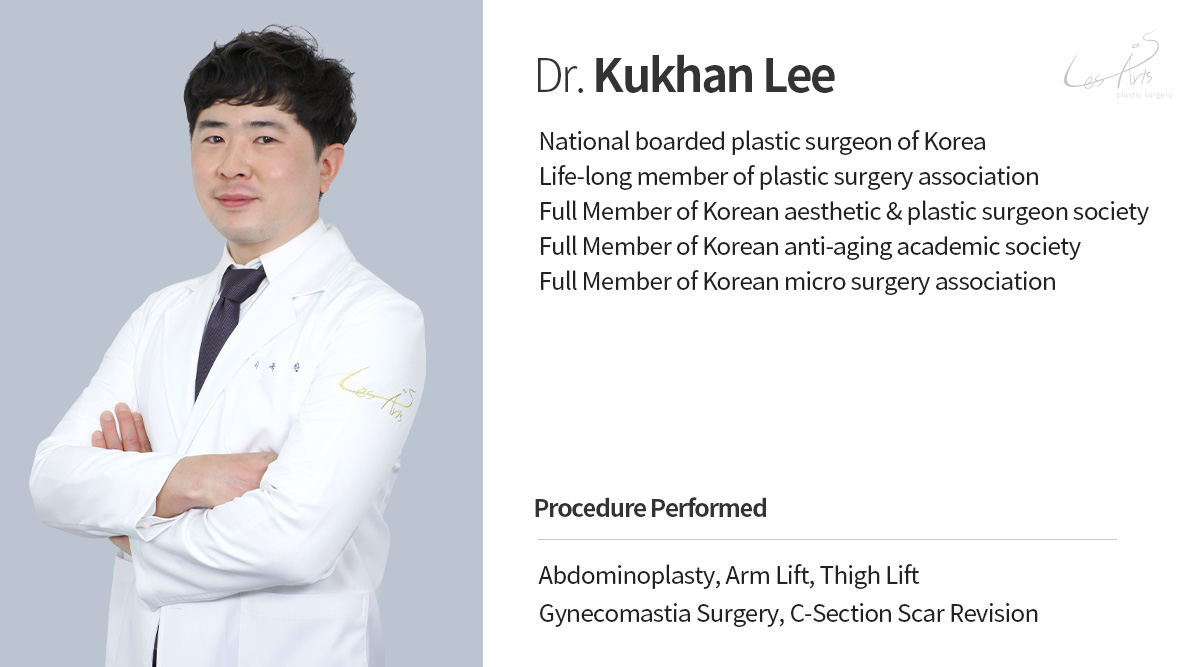
Hello, I am Board-Certified Plastic Surgeon Dr. Kukhan Lee of Lesarts Plastic Surgery.
Pregnancy and childbirth represent a deeply meaningful journey of welcoming a new family member, yet they often leave substantial anatomical changes across a woman's body.
In clinical consultations, I frequently meet patients who have consistently exercised and maintained nutritional discipline to restore their baseline weight,
yet feel distressed because their smooth pre-pregnancy abdominal contours fail to return.
When the abdomen expands significantly during pregnancy and associated weight shifts,
the skin becomes overstretched, the rectus abdominis muscles separate (rectus diastasis), and deep soft-tissue elasticity diminishes,
often preventing these structural alterations from fully recovering spontaneously after delivery.
When such persistent changes cannot be corrected through self-directed lifestyle efforts alone,
abdominoplasty is often clinically indicated.
In this clinical note, we explore the 1-year postoperative progress of a patient who underwent M-type full abdominoplasty
to correct postpartum abdominal alterations.
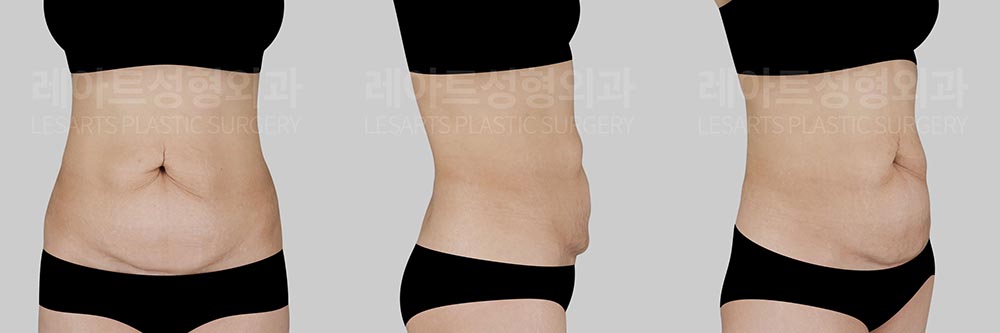
[Preoperative Assessment for Abdominoplasty - Lesarts Plastic Surgery]
The patient was a female in her 40s measuring 158 cm and 52 kg.
She had delivered twice via Cesarean section, with no prior abdominal surgical history other than a laparoscopic procedure.
Her weight increased to approximately 70 kg during pregnancy,
yet she had maintained a stable, healthy baseline weight through consistent postpartum care.
Her foremost aesthetic concern was the altered abdominal shape rather than body weight itself.
She noted that clothing fit felt disrupted without a smooth abdominal line,
and that widespread striae distensae and uneven surface contours significantly affected her confidence.
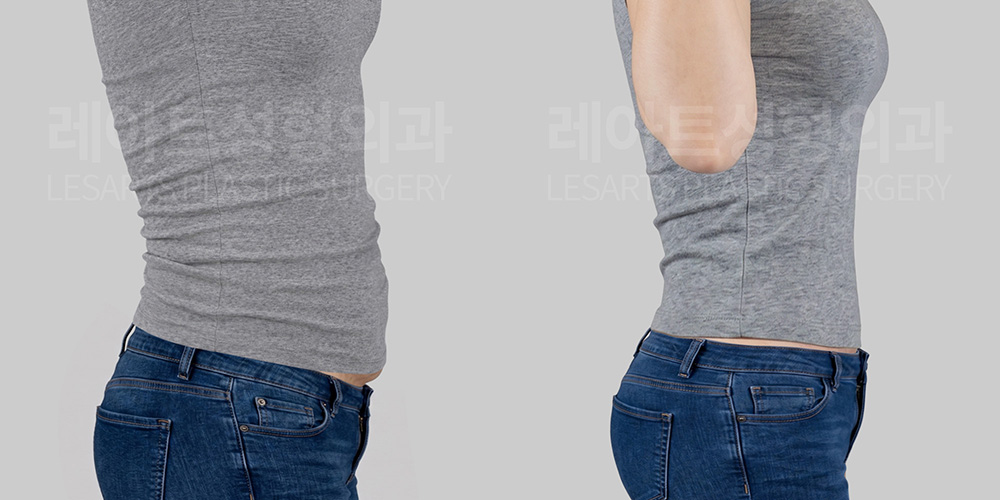
[Postpartum Abdominoplasty Clinical Outcomes - Dr. Kukhan Lee, Lesarts Plastic Surgery]
The patient experienced particular distress regarding uneven contours around the umbilicus
and a stepped, bulging lower abdomen directly superior to her C-section scar.
Physical examination revealed generalized cutaneous laxity across both the upper and lower abdomen.
Subcutaneous adipose tissue had accumulated around the umbilicus,
compounded by cicatricial adhesions from her prior laparoscopic port site,
which exaggerated the irregular, tethered surface texture.
Furthermore, localized fat accumulation directly above the Cesarean section scar created a distinct shelf-like step-off,
further accentuating the uneven lower abdominal profile.
Although total systemic adiposity was not excessive,
focal adipose deposits coexisting with cutaneous laxity
prevented a smooth, cohesive abdominal line.
Because the periumbilical adipose layer was relatively thick,
it was difficult to confirm the exact degree of rectus diastasis solely through manual palpation.
However, the widespread striae distensae and gestational tissue changes across the abdominal wall
indicated that the musculoaponeurotic layer had undergone substantial expansion,
strongly pointing to coexisting rectus diastasis.
Synthesizing these clinical findings,
because both the upper and lower abdomen required significant cutaneous excision,
an M-type full abdominoplasty was determined to be clinically optimal.
The surgical plan included concurrent rectus plication across the upper and lower midline to restore abdominal core stability,
paired with targeted abdominal liposuction to refine and harmonize the surrounding torso lines.
Below, we compare the clinical outcomes at 6 months and 1 year post-abdominoplasty.
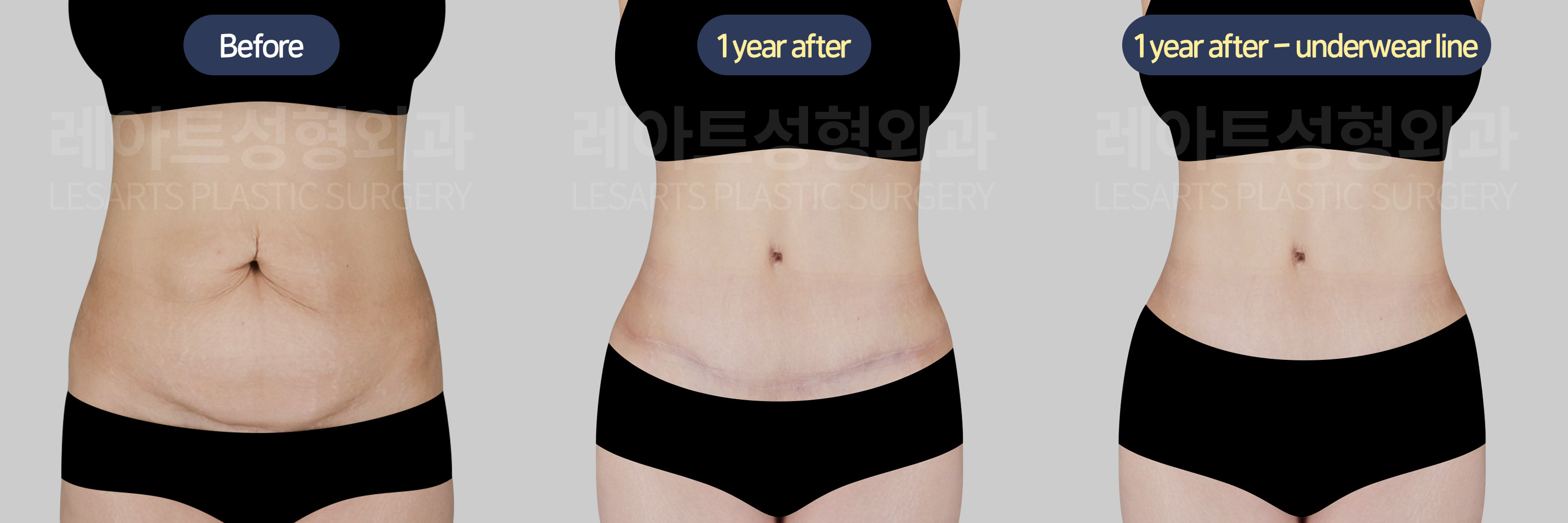
[Abdominoplasty Recovery Progression - Dr. Kukhan Lee, Lesarts Plastic Surgery]
With redundant, sagging abdominal skin resected and redraped,
the anterior abdominal wall transitioned into a smoother, naturally contoured profile.
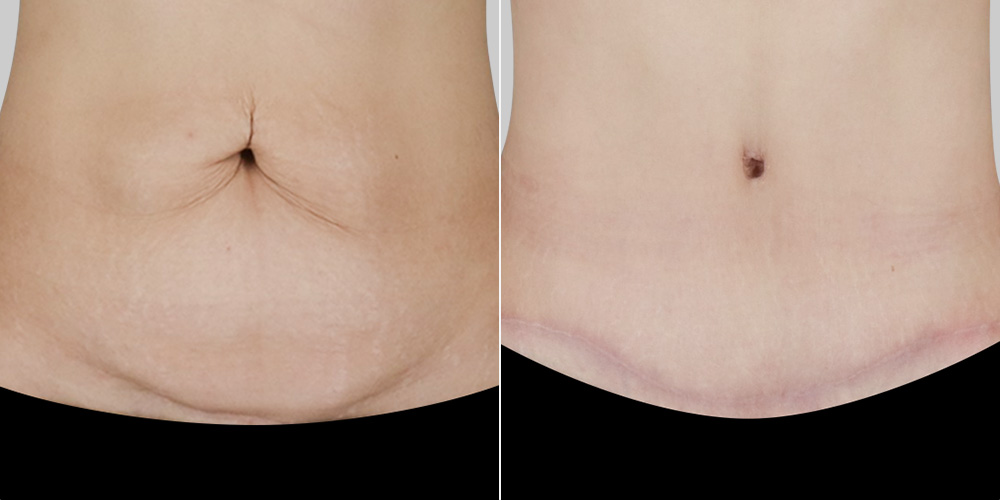
[Pre- and Postoperative Abdominal Wrinkle Comparison - Dr. Kukhan Lee, Lesarts]
In particular, the irregular periumbilical depressions and the bulging shelf above the C-section scar
were resolved into a streamlined transition through liposuction, extensive subfascial release, and precise cutaneous excision.
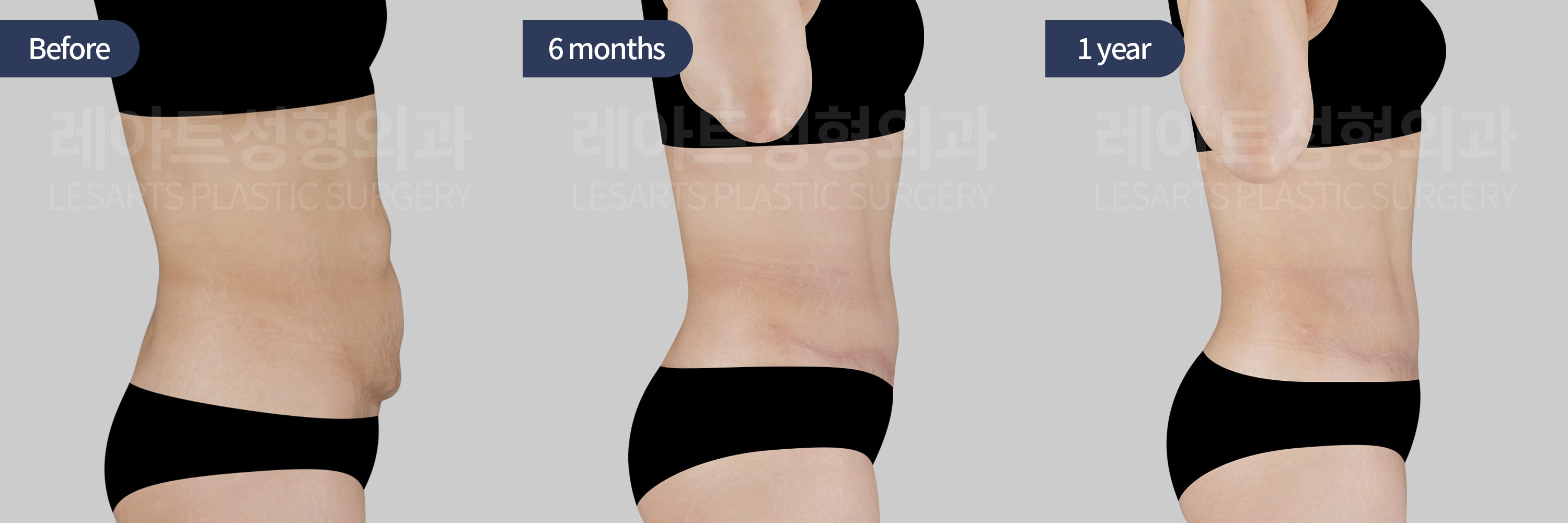
[Abdominoplasty Surgical Approach and Clinical Outcomes - Dr. Kukhan Lee, Lesarts]
The anteriorly projected lower abdomen seen preoperatively
was corrected into a taut, supported, and flat abdominal wall through concurrent rectus diastasis repair.
By addressing both the superficial skin envelope and the underlying musculofascial foundation,
the overall silhouette and body balance achieved a harmonious transition.
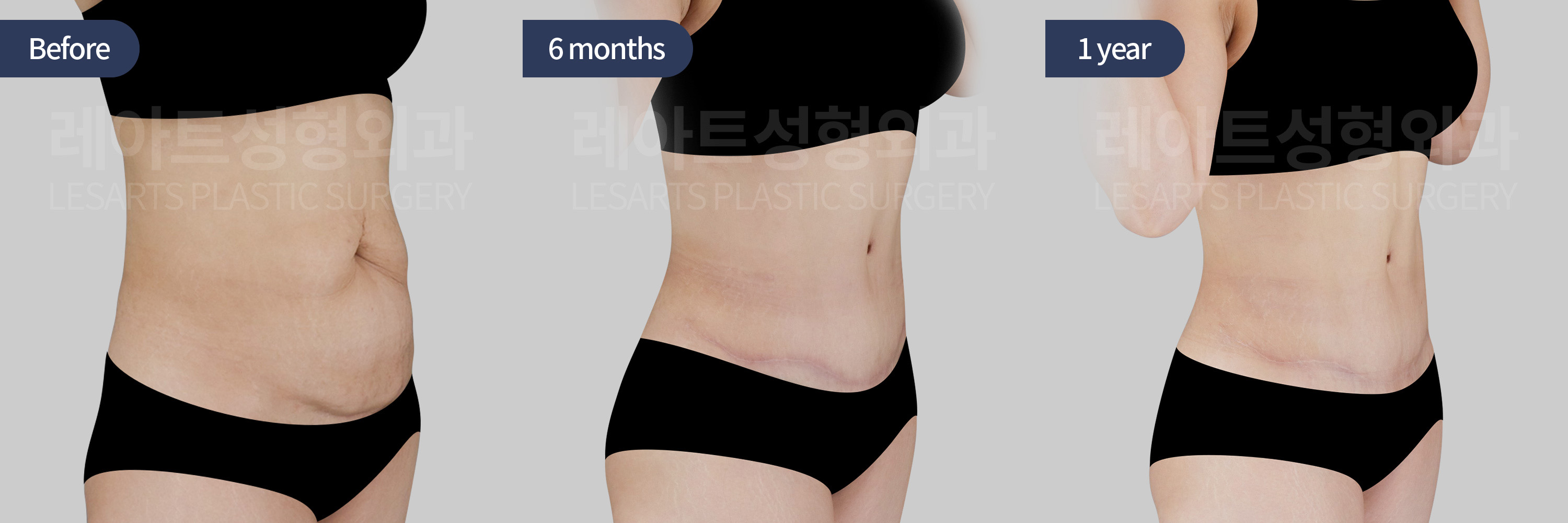
[Postpartum Sagging Belly Surgery - Lesarts Abdominoplasty]
Comparing clinical photographs between 6 months and 1 year postoperatively,
her body weight remained stable,
and the repaired rectus abdominis musculature showed sustained structural stability.
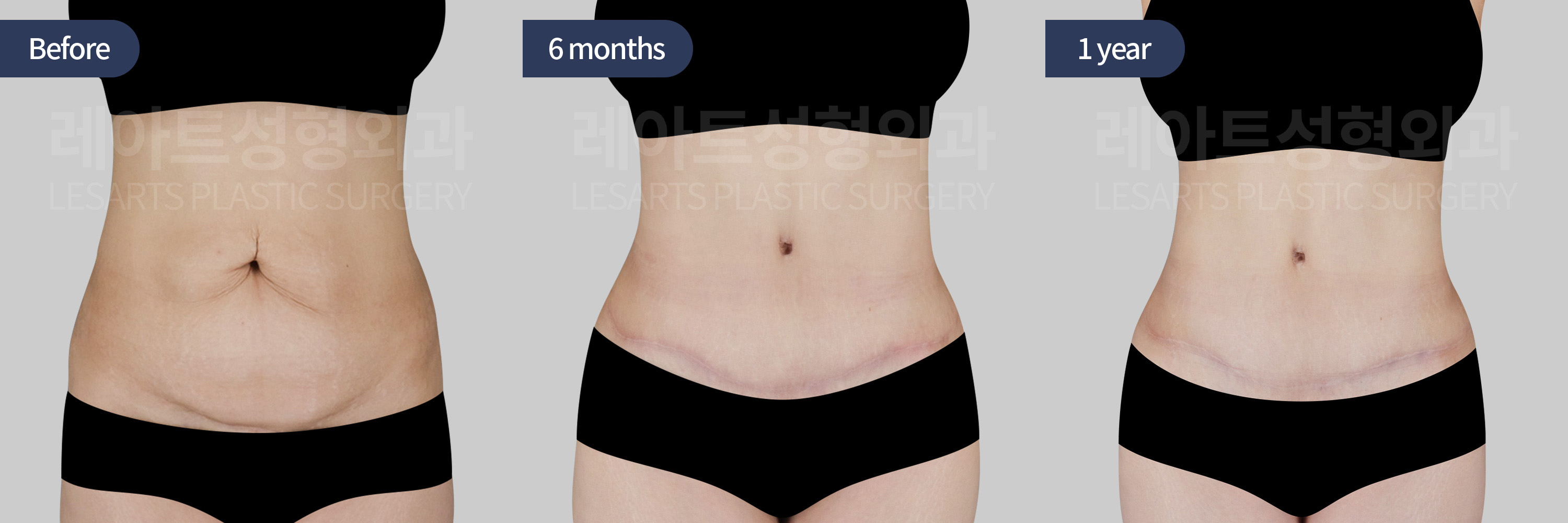
[Abdominoplasty Incision Length and Scar Placement - Dr. Kukhan Lee, Lesarts]
Postoperative erythema along the incision line gradually faded over time,
and the scar continues its natural maturation process, becoming softer and lighter.
Postpartum abdominal changes frequently cannot be resolved through weight loss alone.
Stretched skin, separated rectus muscles, scar-related shelf deformities, and focal adipose deposits
require accurate identification of their individual causes to formulate a proper, customized surgical plan.
Because the abdomen forms the structural center of the physique,
even measured refinements can transform overall proportions and clothing fit.
If abdominal skin laxity and contour step-offs persist despite ongoing lifestyle management,
we recommend undergoing an objective diagnostic evaluation to explore tailored clinical solutions.
We hope this case review provides helpful guidance for those sharing similar concerns.
[View More Real Cases of Lesarts M-Type Abdominoplasty]
FAQ
Q1. Why does abdominal skin laxity persist even after postpartum weight reduction?
Overstretched skin, separated rectus abdominis muscles, and compromised deep elastic fibers
often fail to retract fully, remaining loose despite reaching pre-pregnancy weight.
Q2. When is postpartum abdominoplasty indicated?
When widespread cutaneous laxity affects both the upper and lower abdomen,
or when rectus diastasis causes anterior abdominal wall protrusion,
abdominoplasty may be considered based on clinical presentation.
Q3. Can abdominoplasty and rectus diastasis repair be performed simultaneously?
Yes. Plicating the separated rectus abdominis pillars during abdominoplasty
re-establishes core abdominal tone, restoring anterior bulging into a flat, stable contour.
Q4. Are abdominoplasty results stably maintained after 1 year?
In this clinical case, body weight remained stable at both 6 months and 1 year postoperatively,
with both the repaired musculature and refined abdominal contours demonstrating lasting stability.
Q5. How does the abdominoplasty scar progress over time?
Postoperative erythema gradually subsides throughout recovery,
and the scar progressively matures, becoming softer and lighter over several months to a year.
Dr. Kukhan Lee


Cases finding
similar to my profile
Customer Diagnostics


Select the surgery and
area you are interestedto see real
before andafter changes.


we
make you,
the art
Clinic hours
MON - FRI
10 am – 7pm
SAT
10 am – 4pm
Holiday
SUN, HOLIDAY
Location
Lesarts Moon Clinic Tower 4-5F, 40, Nonhyeon-ro 168-gil,
Gangnam-gu, Seoul, Republic of Korea

Medical institution name Lesarts Plastic Surgery
Address Lesarts Moon Clinic Tower 4-5F, 40, Nonhyeon-ro 168-gil, Gangnam-gu, Seoul, Republic of Korea
Representative Moon sung jun
