




Online Consultation
Please accurately enter the information below.
Quick Cost Consultation
Quick Consultation & Reservation
Cases finding
similar to my profile






Doctor's Note
Medical columns by our surgeons
Pelvic Fat Grafting | Why Augmenting Only the Pelvis Is Not Enough: S-Line Flow Extending to the Trochanteric Hip Dip
2026-09-11
Pelvic Fat Grafting | Why Augmenting Only the Pelvis Is Not Enough: S-Line Flow Extending to the Trochanteric Hip Dip [Doctor's Note by Dr. Pyongrim Choi]
Q. Does pelvic fat grafting only involve filling the pelvic region?
A. While augmenting only the pelvic volume can broaden the frontal width,
if the trochanteric junction between the pelvis and thigh is hollowed,
the contour line may lack a continuous, natural transition.
Therefore, depending on individual anatomy, it is vital to design both the pelvis
and the trochanteric hip dip together
so that the waist, pelvis, and thighs connect
into a harmonious curve.
[ View More Lesarts Plastic Surgery Body Contouring Cases ]
Hello, I am Dr. Pyongrim Choi of Lesarts Plastic Surgery.
In the past, an ideal silhouette was often defined
simply by low body weight or an overall slender frame.
However, a low scale weight does not necessarily mean
that one naturally possesses balanced, contoured body lines.
Even among individuals with minimal total body fat,
the waist curve may appear indistinct
or insufficient pelvic volume can cause the torso to look straight and boxy.
Recently, rather than focusing purely on scale weight, more people are prioritizing
a balanced three-dimensional S-line
that flows naturally from the waist to the pelvis.
Particularly among women in their 20s and 30s, there is a strong preference for a silhouette
featuring a tapered waistline paired with natural volumetric curvature
along the pelvic contours.
Even at an identical body weight, the structural shape of the waist and pelvis
fundamentally dictates how much more slender and feminine the overall physique appears.
The patient presented today had a slender build at 167 cm and 50 kg,
yet felt troubled that her waistline appeared flat and pelvic volume was deficient,
preventing a feminine silhouette from emerging clearly.
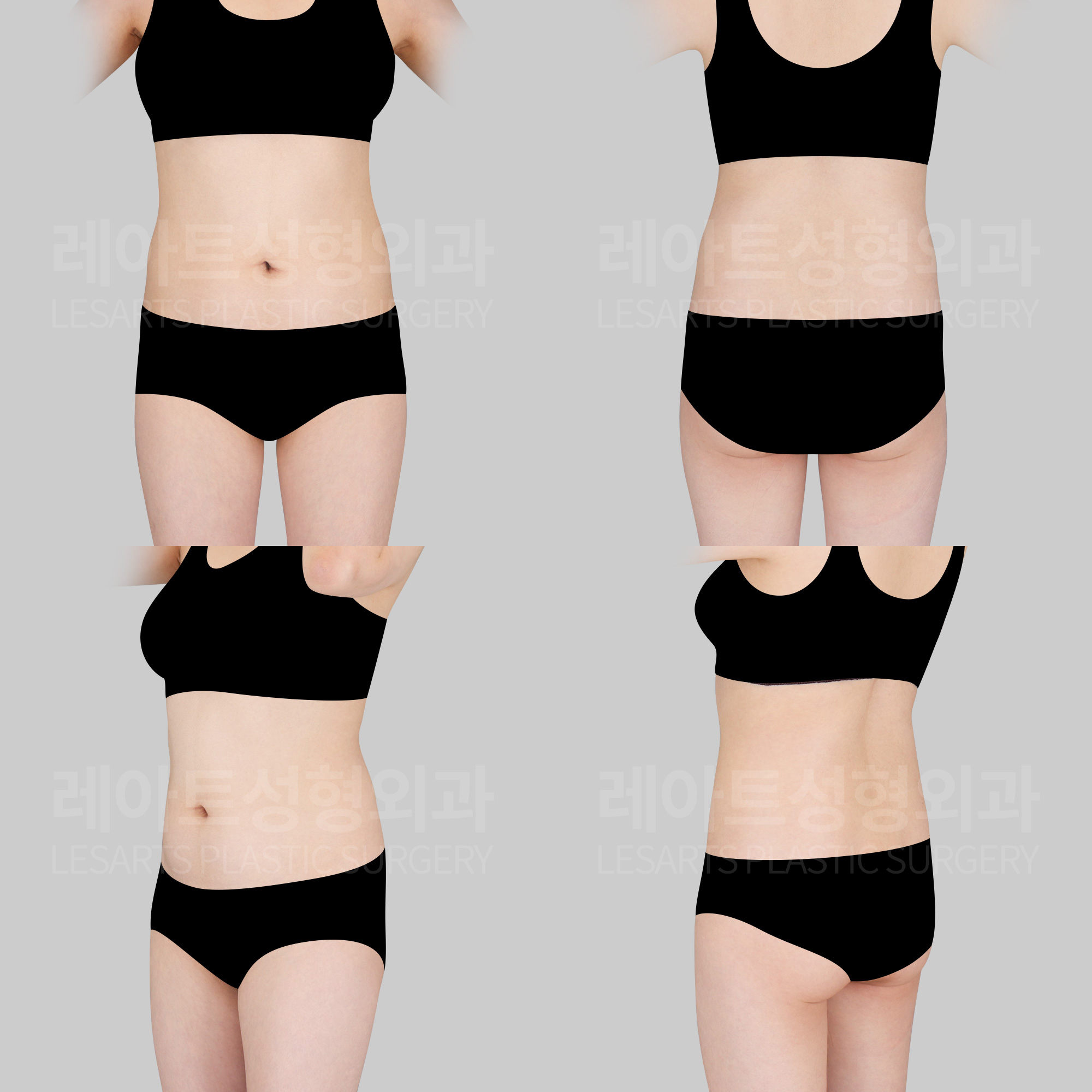
[Preoperative Assessment: Abdominal Liposuction with Pelvic & Trochanteric Fat Grafting]
1. Slender Builds Can Still Lack Waistline Definition
At 167 cm and 50 kg, the patient presented with an objectively lean physique.
However, scale weight and aesthetic contours do not always correlate directly.
While she did not have heavy abdominal adiposity,
subcutaneous fat along the lateral waist and flanks
obscured natural waist indentation.
Compounded by deficient pelvic volume, the transitional curve from the waist
to the pelvis was underdeveloped,
leaving a relatively linear, straight silhouette.
In such presentations, the goal of liposuction
is not simply extracting large volumes of fat.
The priority lies in sculpting and debulking localized fat precisely
around the specific target zones needed to reveal waistline definition.
In other words, in a slender patient, the design criterion focuses
less on total extraction volume and far more on which focal zones to refine
to accentuate natural curvature.
2. Why Filling Only the Pelvis Yields Incomplete Results
When considering pelvic fat grafting, many patients
primarily imagine broadening the pelvic width on frontal view.
However, a natural pelvic contour is not determined
solely by anterior width.
Only when volume connects seamlessly from the pelvis down
to the thighs on 45-degree oblique and posterior views
can true three-dimensional balance be achieved.
Grafting fat exclusively into the superior iliac crest zone may broaden the frontal outline,
but if the junction between the subpelvic region and thigh is underdeveloped,
it can leave an abrupt step-off where the volume appears disconnected.
Therefore, if baseline anatomy displays hollowed trochanteric depressions (hip dips),
incorporating concurrent fat grafting across both the pelvis and trochanteric hollows is clinically necessary.
Restoring volume down through the trochanteric junction:
√ Softens and smooths the continuous curve from the waist into the pelvis
√ Bridges the transitional flow from the pelvis downward into the thighs
√ Establishes three-dimensional curvature on anterior, lateral, and posterior views
The core objective is not simply widening pelvic span, but constructing a harmonious flow
cascading from the waist through the pelvis and trochanteric region into the thighs.
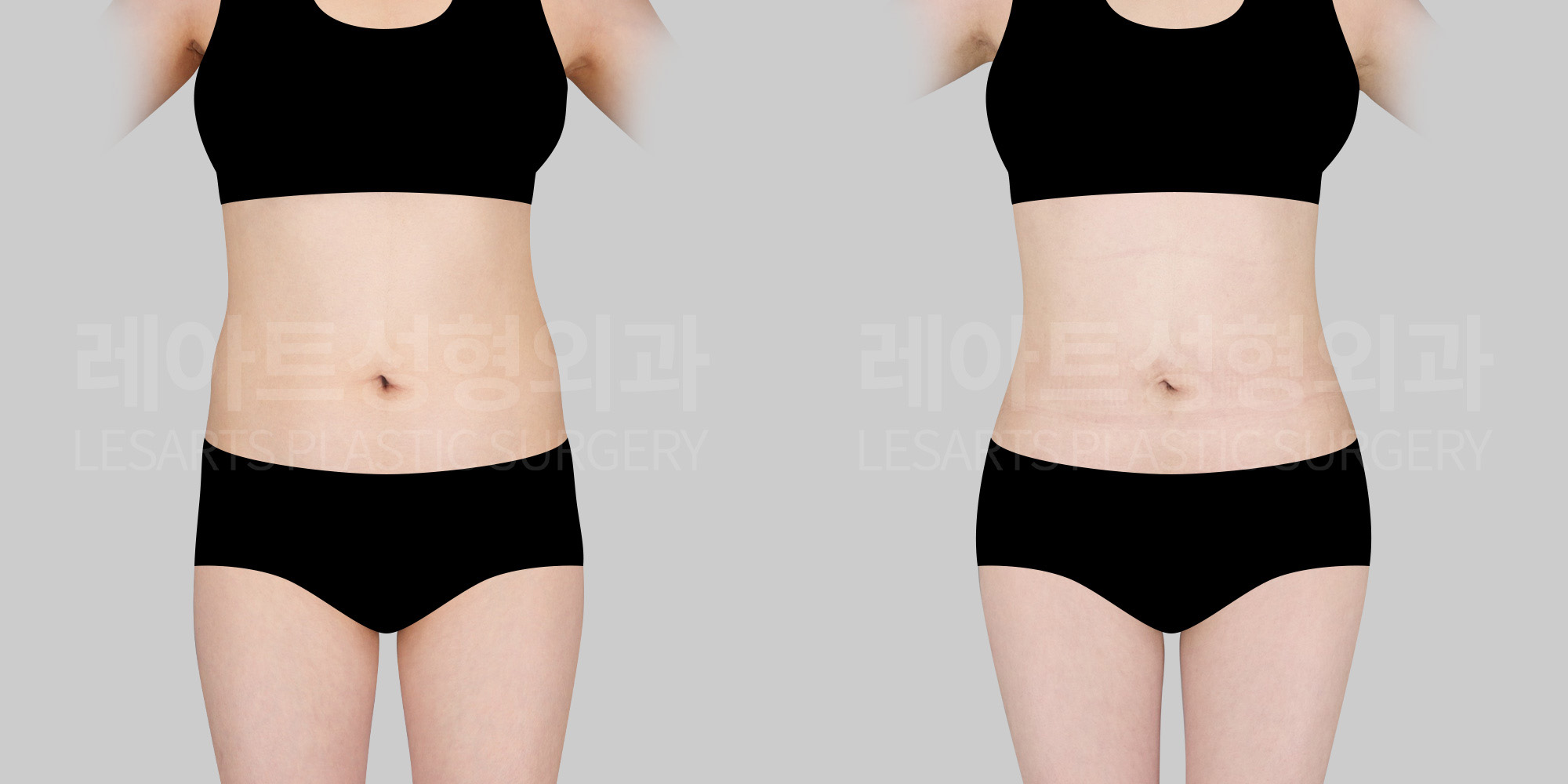
[Before & After Abdominal Liposuction + Pelvic Fat Grafting - Lesarts Plastic Surgery]
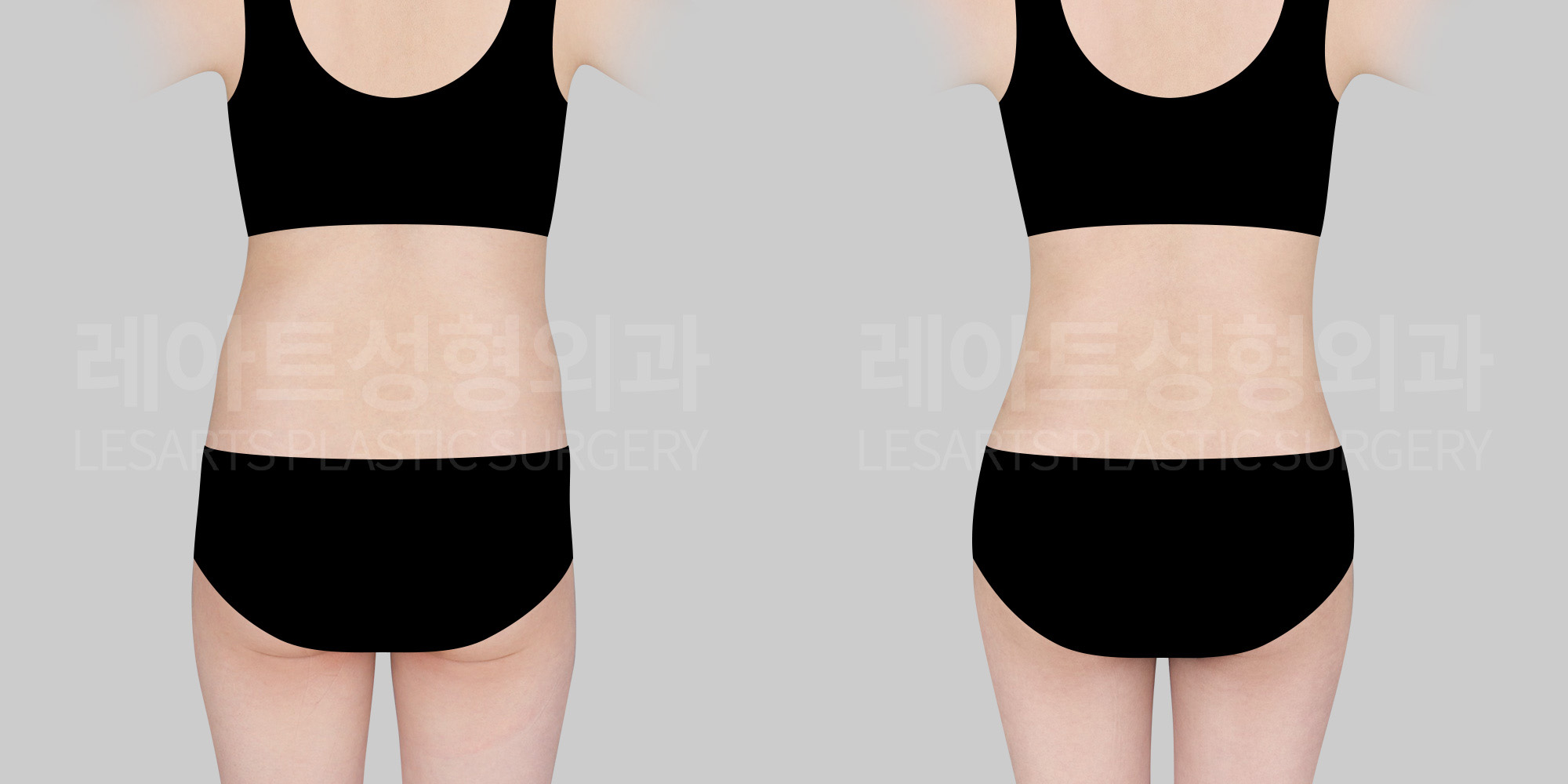 [Trochanteric Fat Grafting Combined with Flank Liposuction - Dr. Pyongrim Choi, Lesarts Plastic Surgery]
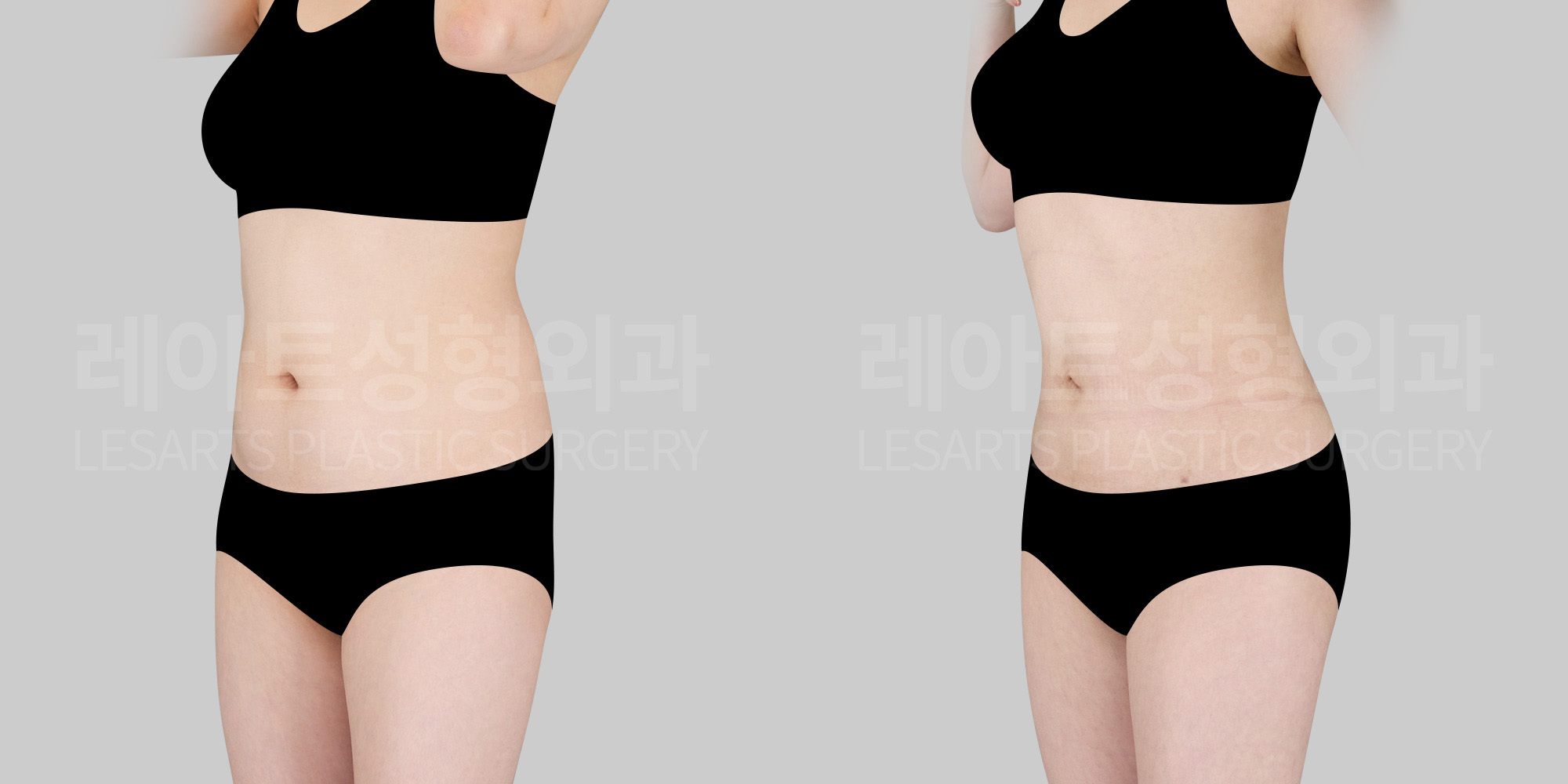
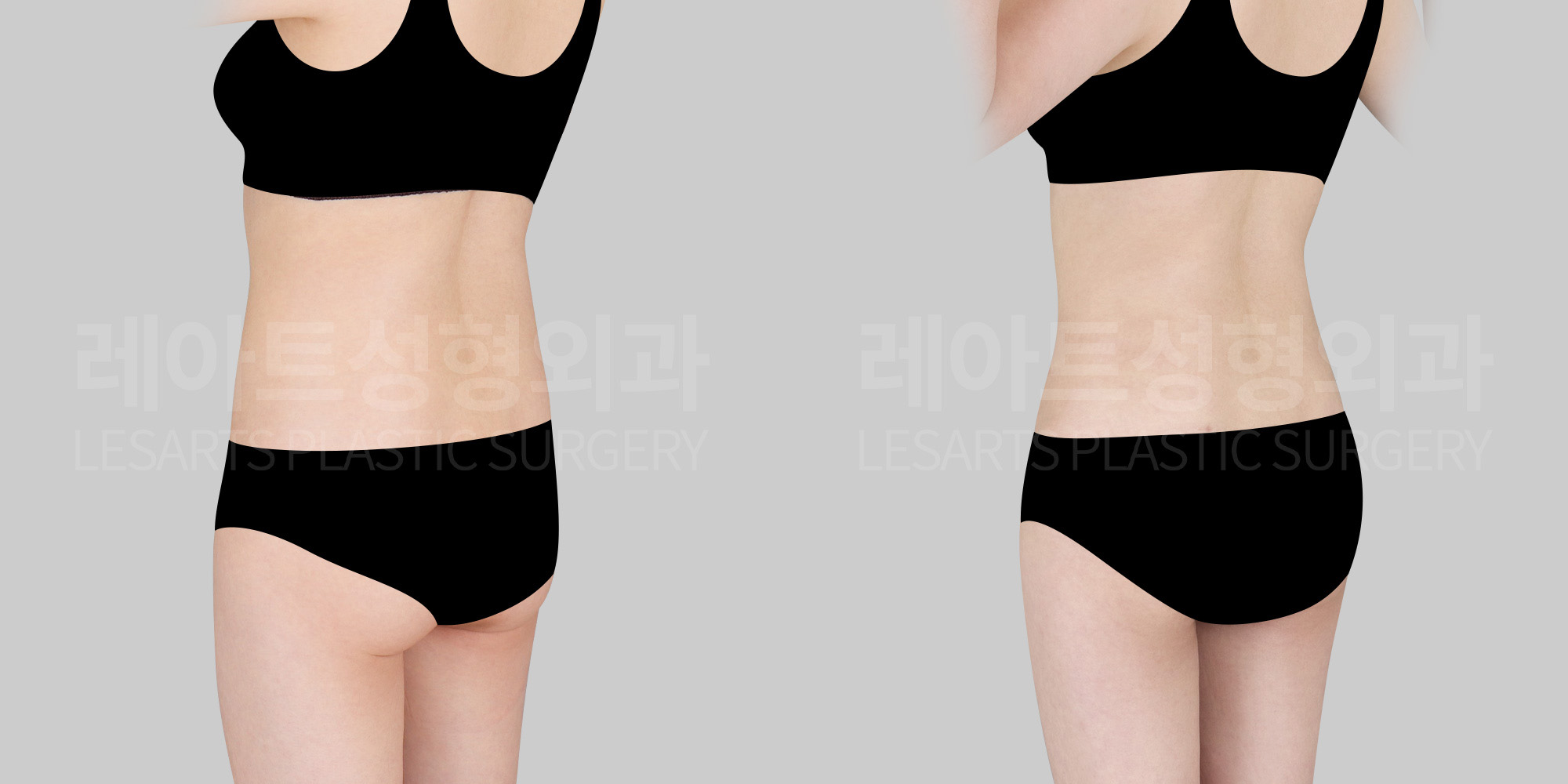
[Buttock Contouring Outcomes via Trochanteric Fat Grafting - Lesarts Plastic Surgery]
Dr. Pyongrim Choi


Cases finding
similar to my profile
Customer Diagnostics


Select the surgery and
area you are interestedto see real
before andafter changes.


we
make you,
the art
Clinic hours
MON - FRI
10 am – 7pm
SAT
10 am – 4pm
Holiday
SUN, HOLIDAY
Location
Lesarts Moon Clinic Tower 4-5F, 40, Nonhyeon-ro 168-gil,
Gangnam-gu, Seoul, Republic of Korea

Medical institution name Lesarts Plastic Surgery
Address Lesarts Moon Clinic Tower 4-5F, 40, Nonhyeon-ro 168-gil, Gangnam-gu, Seoul, Republic of Korea
Representative Moon sung jun
