




Online Consultation
Please accurately enter the information below.
Quick Cost Consultation
Quick Consultation & Reservation
Cases finding
similar to my profile






Doctor's Note
Medical columns by our surgeons
Postpartum Sagging Belly: What If Core Exercises Make No Difference?
2026-10-08
Postpartum Sagging Belly: What If Core Exercises Make No Difference?
7-Month Progress After Full Abdominoplasty
Written by Board-Certified Plastic Surgeon Dr. Kukhan Lee, Lesarts Plastic Surgery
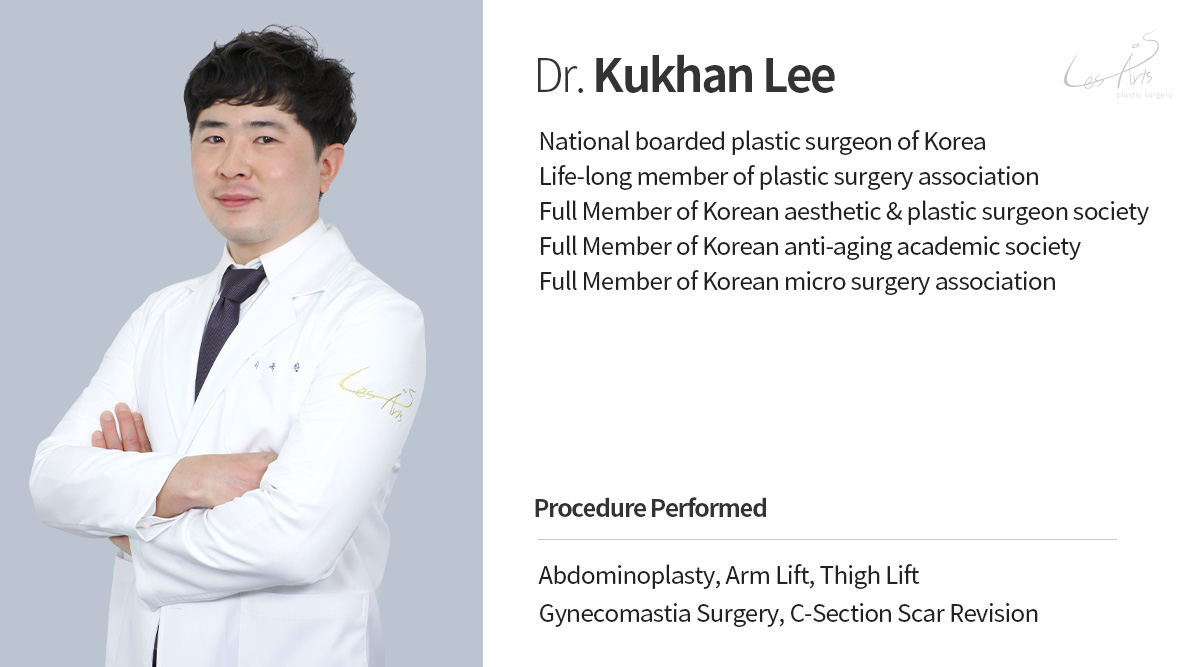
This column was authored directly by our medical staff.
※ Unauthorized copying, editing, or redistribution is strictly prohibited. ※
Q. How can postpartum sagging belly skin and lower abdominal bulging that resist diet and exercise be resolved?
When redundant abdominal skin laxity and rectus diastasis persist despite weight loss,
abdominoplasty can concurrently correct cutaneous ptosis and structural abdominal wall separation.
If laxity involves both the upper and lower abdomen, a full abdominoplasty is indicated.
[Lesarts Abdominoplasty Guide]
Following rapid and significant weight fluctuations,
the skin envelope often remains stretched and redundant even after achieving target body weight.
In particular, women undergo substantial weight gain and subsequent loss throughout pregnancy and delivery.
During this expansion, overextended skin that has lost dermal elasticity
faces clear biological limits to contracting on its own through diet or core workouts, frequently causing prolonged personal distress.
In this column, we review the clinical case of a patient who experienced rapid gestational weight gain during pregnancy
and regained a well-balanced physique through consistent workouts and weight management,
yet elected to undergo abdominoplasty because lower abdominal skin laxity and rounded protrusion persisted.
The patient was a female in her 30s presenting at 164 cm and 54 kg.
She had delivered two children via full-term vaginal delivery,
with no prior history of surgical interventions or procedures.
During her pregnancies, her body weight increased sharply, peaking at 98 kg at full term.
Through disciplined postpartum nutrition and regular workouts,
she maintained a balanced build with a BMI of approximately 22 kg/m² at presentation.
Despite these efforts, her lower abdomen remained her greatest frustration.
In particular, anterior lower abdominal bulging and
redundant skin folding over the underwear line showed no improvement with exercise,
leading her to seek surgical evaluation at our clinic.
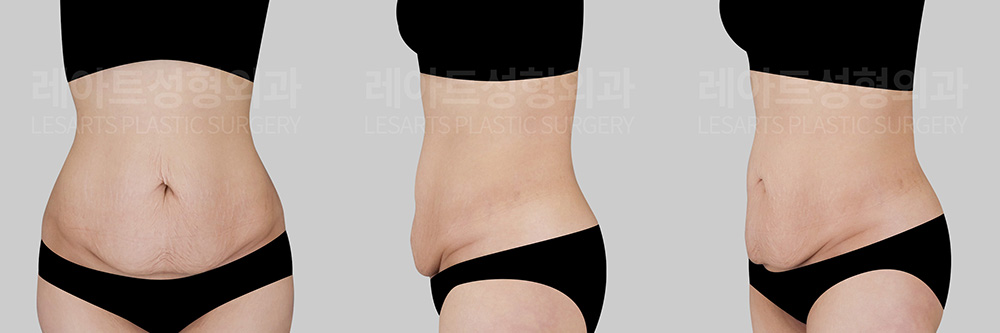
[Postpartum Weight Loss: When Sagging Belly Skin Remains - Dr. Kukhan Lee, Lesarts Plastic Surgery]
Physical examination confirmed cutaneous laxity across the entire abdomen, not just the lower segment.
In the lower abdomen, prominent folding and hanging skin over the underwear waistband was clearly visible.
This redundant fold caused the lower belly to appear visibly fuller beneath clothing than actual adipose reserves warranted.
Cutaneous laxity was also evident across the supraumbilical upper abdomen.
The umbilicus was distorted into a downward-pointing, hooded shape,
providing clear clinical evidence of significant skin laxity descending from the upper abdomen.
Widespread striae distensae (stretch marks) from pregnancy and rapid distension were present across both upper and lower zones.
This confirmed that the cutaneous envelope had expanded past its physiological elasticity threshold during gestation.
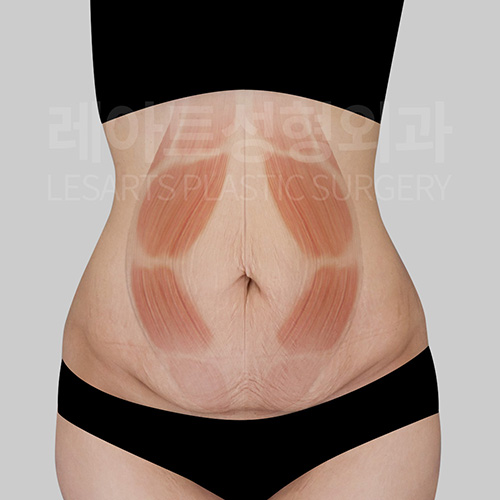
[Rectus Diastasis Resulting from Gestational Expansion]
Given these clinical findings, coexisting rectus diastasis was strongly suspected.
Manual palpation confirmed marked rectus diastasis,
revealing significant midline fascial separation across both the epigastrium and infraumbilical regions.
Conversely, her baseline body lines and frame were well balanced.
Although subcutaneous adipose volume was relatively low,
incorporating targeted liposuction was indicated
to eliminate step-offs along the margins and ensure a smooth, natural transition across the entire abdominal wall.
While the patient primarily focused on lower abdominal hanging,
examination verified substantial upper abdominal skin ptosis as well.
Thus, an M-type full abdominoplasty addressing both upper and lower zones was far more suitable than isolated mini-abdominoplasty.
We planned an M-type full abdominoplasty combined with targeted liposuction,
incorporating rectus plication to repair the separated abdominal wall and umbilicoplasty to reshape the distorted navel simultaneously.
[7-Month Postoperative Follow-Up]
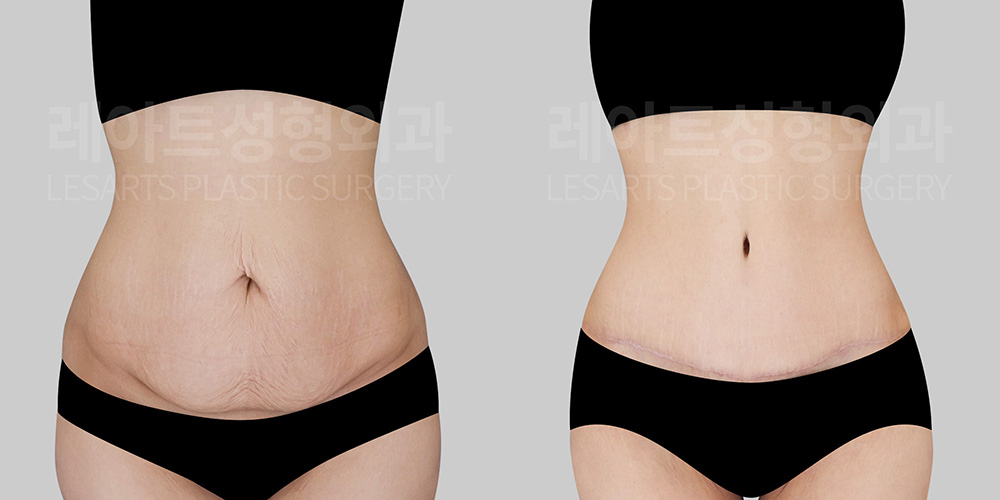
[Resolution of Postpartum Lower Abdominal Folding - Lesarts Abdominoplasty]
At 7 months postoperatively, the most apparent transformation is the complete correction of lower abdominal skin redundancy.
Redundant skin previously folding over the underwear line was excised,
flattening the lower abdomen into a smooth, seamless plane.
Because this was her foremost motivation for undergoing surgery,
she expressed high satisfaction with the dramatic structural improvement.
The umbilicus was reshaped to align with the patient's personal aesthetic preference.
Because she favored an elongated vertical configuration,
the navel was reconstructed into a slender vertical shape, achieving an outcome she appreciated.
Preoperatively, upper abdominal skin laxity had displaced the umbilicus inferiorly.
By redraping the upper abdominal flap,
the anatomical position of the umbilicus was restored naturally.
This realignment established harmonious, balanced proportions across the entire abdomen.
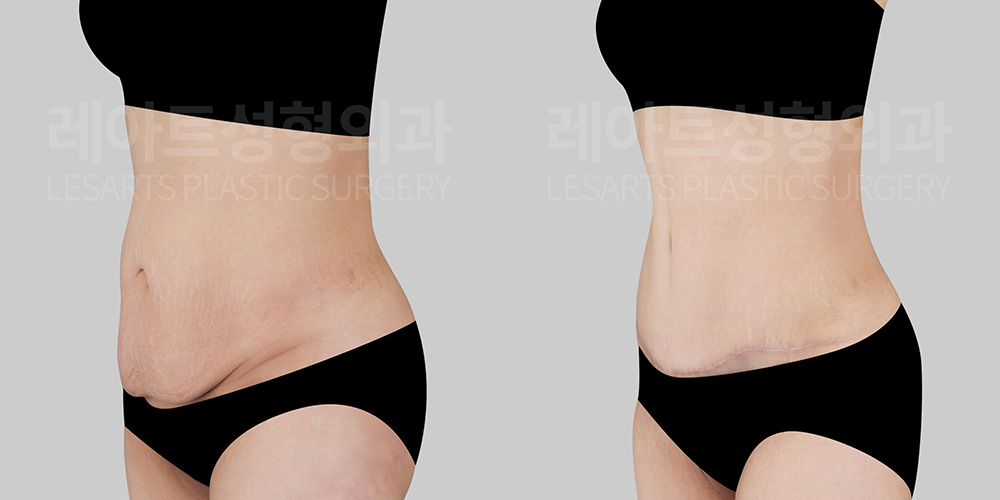
[7-Month Follow-Up Before & After - Dr. Kukhan Lee, Lesarts Plastic Surgery]
Through M-type full abdominoplasty, skin laxity across both the upper and lower abdomen was corrected cohesively.
Comparing before-and-after views reveals that on frontal, oblique, and lateral profiles,
the entire abdominal contour transformed into a firm, smooth, and toned silhouette.
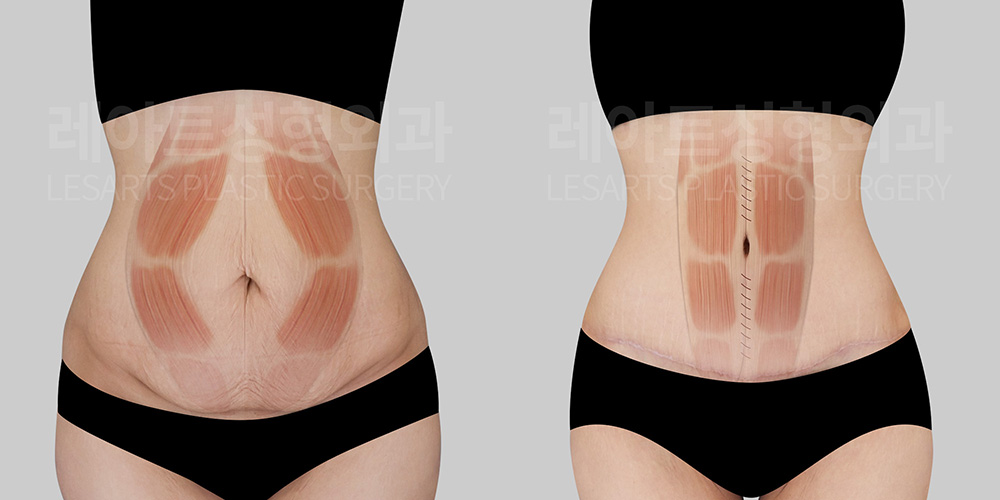
[Abdominoplasty and Rectus Plication Before & After - Lesarts Plastic Surgery]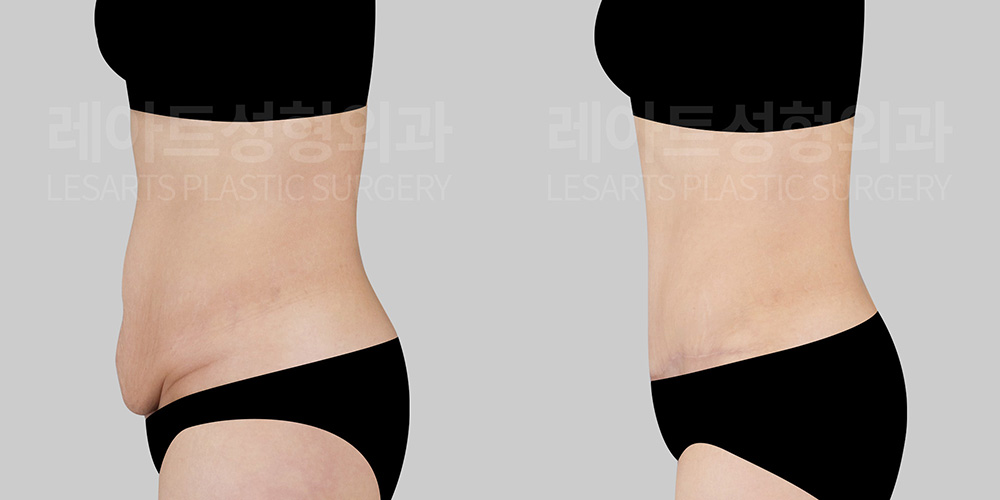
[Correction of Abdominal Bulging from Rectus Diastasis - Dr. Kukhan Lee]
Repairing the separated rectus abdominis muscles via plication was another critical structural achievement.
While the abdomen previously bulged roundedly forward due to underlying core laxity,
closing the fascial gap established a supported, flat abdominal wall.
[Scar Maturation Progression at 7 Months Post-Op]
The surgical scar reflects an active 7-month healing milestone.
Abdominoplasty scars progressively soften in texture and fade in coloration
as biological tissue remodeling continues over time.
Therefore, current 7-month presentation should not be judged
as the permanent, final appearance of the scar.
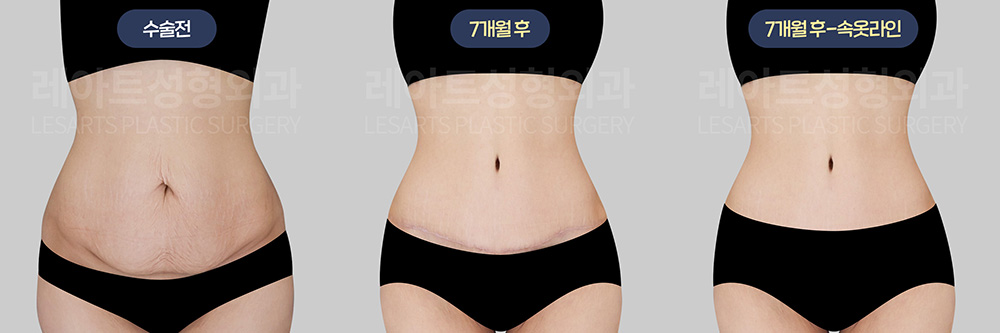
[Abdominoplasty Scar Placement - Lesarts Plastic Surgery]
With continued topical regimens and clinical scar management,
the incision line will gradually lighten toward natural skin tones,
settling into an inconspicuous state.
While the patient navigates daily activities comfortably,
reaching 7 months post-abdominoplasty does not mark the conclusion of healing.
We explain to patients that 7 months represents an intermediate milestone
within the full physiological recovery timeline.
Just as scars continue to mature, cutaneous sensation gradually returns,
and localized deep induration progressively softens.
At 7 months post-op, intermittent tightness or minor sensory blunting
may remain in select areas.
Because these symptoms improve steadily over 1 to 2 years,
allowing tissues ample time to adapt naturally
is essential rather than rushing recovery expectations.
Lesarts Abdominoplasty Before & After
View More Case Analyses
▼▼▼

[Key Considerations When Contemplating Abdominoplasty]
Abdominoplasty is not merely a procedure to tighten loose skin.
It addresses both cutaneous laxity resulting from gestation or weight loss
and structural muscular separation like rectus diastasis concurrently,
distinguishing it from isolated fat debulking modalities.
Like all surgical procedures, it presents distinct clinical benefits and trade-offs.
In particular, surgical scarring is a vital factor that every patient must weigh carefully.
During consultations, I first verify
whether surgery is genuinely indicated for the patient's condition.
If adequate improvement can be achieved through lifestyle habits or exercise alone,
surgery is not recommended.
Conversely, when redundant folds and fascial separation persist despite diligent weight control,
abdominoplasty offers definitive, foundational anatomical correction.
Even when indicated,
we thoroughly discuss achievable transformations alongside the reality of post-surgical scars.
As I frequently share with patients during consultations:
Abdominoplasty trades visible, conspicuous abdominal deformity for a scar strategically concealed in an inconspicuous location.
Ultimately, abdominoplasty restores external abdominal contours
by accepting a scar placed beneath standard swimwear and underwear lines.
Before deciding on surgery,
understanding both what can be improved and what clinical factors must be accepted is essential.
When longstanding abdominal laxity significantly impairs quality of life,
and the functional and aesthetic benefits outweigh concerns regarding scarring,
abdominoplasty delivers profound and rewarding clinical satisfaction.
If persistent postpartum skin laxity, lower abdominal folding,
or rectus diastasis cause prolonged distress,
we recommend scheduling a consultation to accurately evaluate your abdominal wall anatomy
and identify the corrective approach best suited to your needs.
FAQ
Q1. Can postpartum sagging belly skin be resolved with exercise alone?
When gestational expansion has overextended dermal elastic fibers beyond their recoil limit, exercise and weight loss face clear biological boundaries in restoring taut skin contours.
Q2. How do surgeons choose between mini and full abdominoplasty?
If cutaneous laxity and rectus separation involve both the upper and lower abdomen, an M-type full abdominoplasty is required to correct the entire abdominal wall cohesively.
Q3. Can abdominoplasty repair rectus diastasis?
Yes. Rectus plication is performed concurrently during abdominoplasty, suturing the separated abdominal wall muscles back together to establish a firm, supported, and flat core profile.
Q4. Is healing complete at 7 months post-abdominoplasty?
Seven months represents an active intermediate milestone. While swelling has largely cleared, deep tissue softening, sensory recovery, and scar maturation continue over 1 to 2 years.
Q5. How does the abdominoplasty scar mature over time?
The incision line progressively softens in texture and fades from post-surgical erythema toward pale skin tones over 12 to 24 months, designed to remain hidden beneath underwear lines.
Dr. Kukhan Lee


Cases finding
similar to my profile
Customer Diagnostics


Select the surgery and
area you are interestedto see real
before andafter changes.


we
make you,
the art
Clinic hours
MON - FRI
10 am – 7pm
SAT
10 am – 4pm
Holiday
SUN, HOLIDAY
Location
Lesarts Moon Clinic Tower 4-5F, 40, Nonhyeon-ro 168-gil,
Gangnam-gu, Seoul, Republic of Korea

Medical institution name Lesarts Plastic Surgery
Address Lesarts Moon Clinic Tower 4-5F, 40, Nonhyeon-ro 168-gil, Gangnam-gu, Seoul, Republic of Korea
Representative Moon sung jun
