[Medical Column] The Blue Marks After Surgery: A Story of Bruising, Bleeding, and Recovery
Q. If bruises formed on the chest after gynecomastia surgery travel down to the inner arm or lower abdomen, does it mean bleeding is continuing?
A. Blood components that seeped under the skin after surgery move downward or sideways
along gravity and the texture of subcutaneous tissues,
which can make the location of the bruise appear to change.
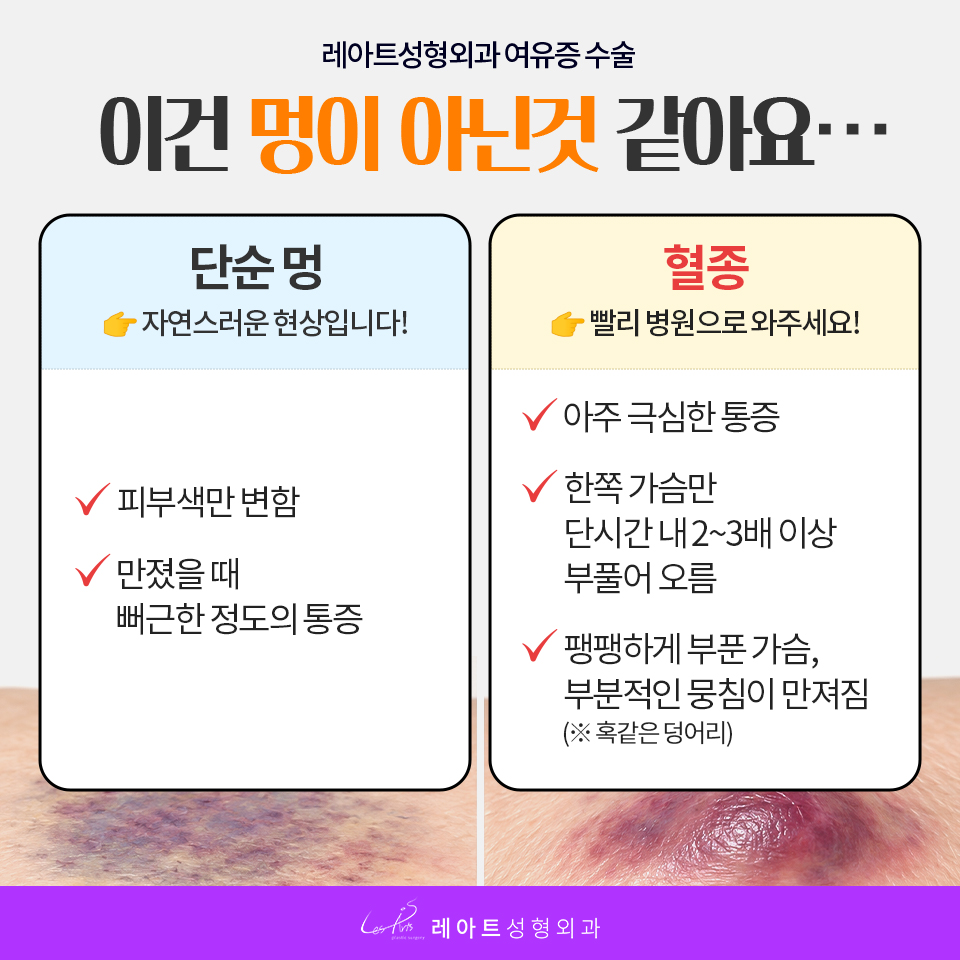
However, if one side of the chest swells rapidly in a short time, accompanied by severe pain
or a hard mass, you must inform the medical staff of your condition
to check for the possibility of a hematoma, which is different from a simple bruise.
[ Learn More About Lesarts Gynecomastia Surgery ]
Written by - Dr. Ji-hoon Moon, Lesarts Plastic Surgery
This post was written directly by the medical staff in charge.
※Unauthorized copying, editing, processing, and redistribution are prohibited※
When looking in the mirror after finishing gynecomastia surgery,
some people are surprised to see dark bruises around their chest.
The chest, which looked relatively clear right after surgery,
turns dark red after a few days, or
when bruises that started around the chest appear to spread to the inner arm or lower abdomen,
“Could it be that it's still bleeding inside?”
people naturally worry.
Today, we will explain step by step starting from
why bruises form after gynecomastia surgery to why the degree of bruising differs on each side,
the phenomenon of bruises traveling from the chest toward the arms or lower abdomen, hematomas that require careful attention,
and key points to keep in mind when using bruise creams.
1. Reasons Why Bruises Form After Gynecomastia Surgery
A bruise is a phenomenon where blood coming out of microscopic blood vessels under the skin
seeps between tissues, showing its color through the surface of the skin.

In gynecomastia surgery, fat around the chest is aspirated
and firm mammary gland tissues below the nipple and areola are removed.
During this process, small blood vessels under the skin are stimulated,
which can cause some blood to seep between tissues.
Even if surgery is performed using the same method,
the extent or color of bruising varies from person to person.

In cases where skin is thin, bruises form relatively easily,
or tissue around the mammary glands is firm, resulting in relatively greater tissue stimulation during removal,
bruises may appear somewhat wider or darker.
On the other hand, there are also those who recover
with barely noticeable bruising.
Therefore, rather than judging surgical results based solely on how much bruising occurred,
it is necessary to also consider that differences can occur
depending on individual skin and tissue reactions.
2. Why Bruising is Severe on Only One Side or Spreads to Arms and Lower Abdomen
After gynecomastia surgery, the following questions are often asked:
“The right side is fine, so why is the left side bruised so severely?”
“I had chest surgery, so why did the bruises go down to my arms or belly?”
① Reasons for different degrees of bruising on each side
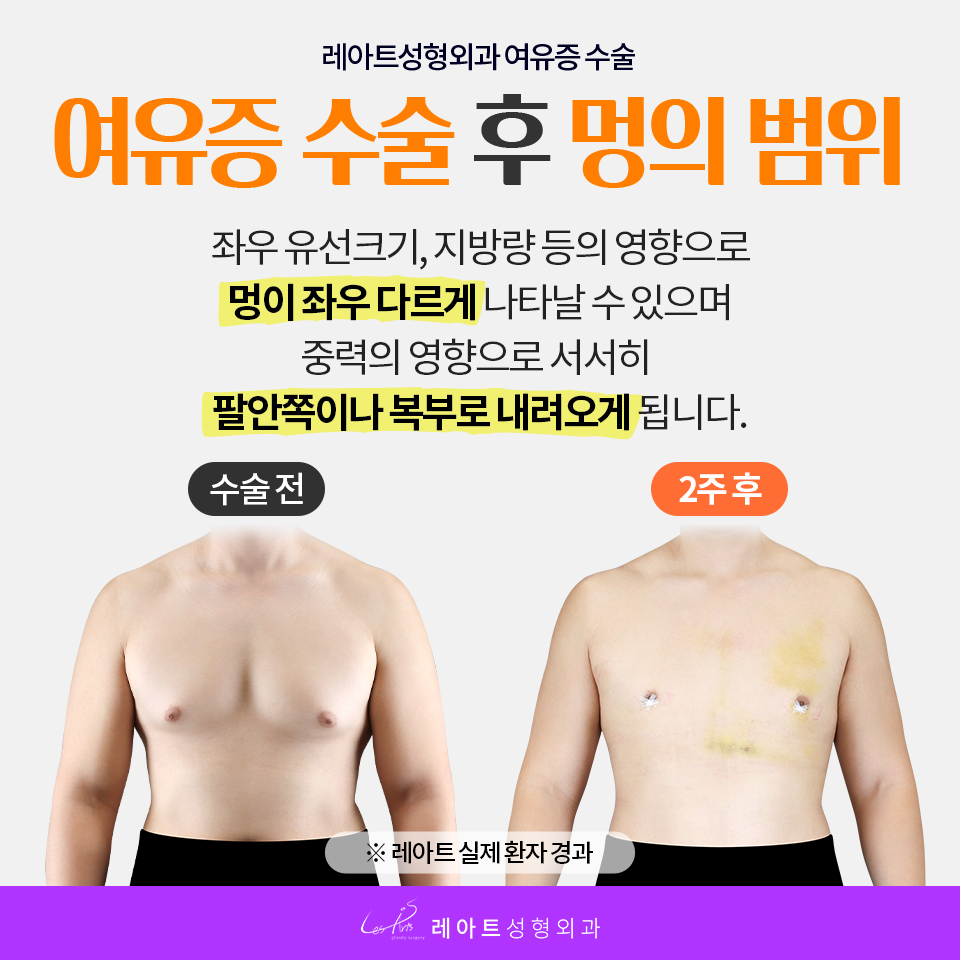
Our bodies are not completely identical on the left and right sides.
The size of mammary tissue and fat volume in both breasts can differ,
and there are also differences in the distribution of blood vessels.
Therefore, even if the same surgery is performed on both sides,
bruising on one side may appear wider or darker than on the other side.
② Reasons why chest bruises move downward or sideways
As time passes, bruises that were on the chest
may travel down along the lower abdomen, flanks, or armpits
to the inner arms.
We do not judge that new bleeding is continuing
based on this appearance alone.
This is because blood components that were already seeped under the skin
move along subcutaneous tissues under the influence of gravity,
making the location of the bruise look different.
As time spent sitting or standing increases after surgery,
components of the bruise around the chest move downward,
so color changes initially confined to the chest may appear over time
to extend to the flanks or lower abdomen.
However, if a sudden increase in volume
or severe pain occurs along with the movement of the bruise,
it is important to have your condition evaluated at the surgical clinic
to distinguish it from a simple bruise.
3. Difference Between Simple Bruises and Hematomas Requiring Treatment
When monitoring progress after gynecomastia surgery,
**simple bruises and hematomas** must be distinguished.
Simple Bruise: A condition where a small amount of blood is spread thinly between tissues under the skin.
Skin color may change to red, purple, dark red, etc.,
and discomfort to the degree of dull aching when pressed may be accompanied.
In many cases, the color gradually lightens over time.
Hematoma: A condition where blood fails to spread widely between tissues
and collects in one spot to form a lump.
Depending on the size and state of the hematoma,
pain or tense swelling may appear,
and if necessary, procedures such as needle aspiration,
hematoma removal, or additional compression may be considered.
※Please notify the clinic if you have these symptoms
✔ When one side of the chest swells rapidly in a short period of time
✔ When it feels tensed and swollen upon touch, or a specific area feels hard like a lump
✔ When severe, bursting-like chest pain persists
4. How Should Heparin Bruise Creams Be Used?
If bruises remain for a long time, wanting to reduce them even a bit faster,
some people look for bruise creams at pharmacies.
Some topical agents used to relieve bruising or swelling
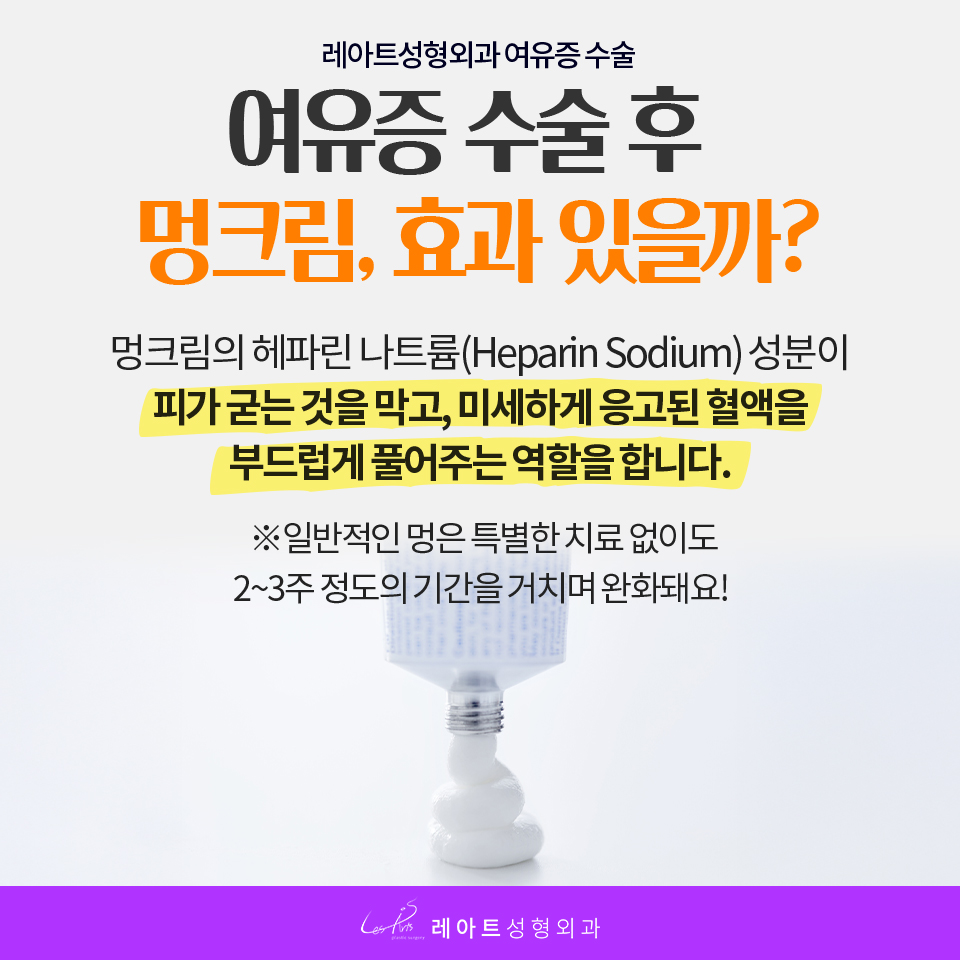
contain ingredients from the Heparin Sodium line.
Heparin Mechanism of Action
Heparin prevents blood from clotting
and gently dissolves tiny blood clots
(very small coagulated blood) clumped under the skin,
helping bruises and swelling subside quickly.
Actual Effects
Applying heparin bruise cream helps shorten the time it takes
for bruises to fade by a few days.
*Ordinary bruises disappear completely on their own
within 2 to 3 weeks without special treatment.
Precautions
Since heparin ingredients can cause wound irritation or minor re-bleeding,
it should not be applied directly onto incision wound sites with stitches.
You must apply it thinly only to bruised skin around the area, avoiding the wound site.
Conclusion
Chest protrusion has decreased after gynecomastia surgery,
but dark bruises remaining around it
may cause new concerns.
However, bruises appearing after surgery are one of the tissue reactions
that can occur during the process
of removing mammary gland tissue and fat.
The phenomenon where bruises on the chest appear to move
toward the arms, flanks, or lower abdomen under the influence of gravity
can also occur.
Over time, bruise color gradually lightens
from dark red or purple,
and as recovery progresses, skin color
naturally returns to normal.
However, if one side of the chest suddenly swells significantly, or a hard mass
and severe pain are accompanied,
it is important to notify the hospital and have your condition checked
to distinguish between a simple bruise and a hematoma.
After surgery, wear compression garments according to instructed methods,
continue daily activities within a reasonable range,
and observe how bruises and swelling change together.