




Online Consultation
Please accurately enter the information below.
Quick Cost Consultation
Quick Consultation & Reservation
Cases finding
similar to my profile






Doctor's Note
Medical columns by our surgeons
Abdominoplasty | Lower Abdominal Sagging and Shelf Deformities After C-Section and Liposuction
2026-07-24
Abdominoplasty | Lower Abdominal Sagging and Shelf Deformities After C-Section and Liposuction
Q. Why can't the skin laxity and step-off shelf deformity above a C-section or liposuction scar be resolved by liposuction alone, and how is it corrected?
A. Because the underlying issue is not merely excess fat, but structural skin redundancy and rectus diastasis (abdominal muscle separation),
definitive correction requires an abdominoplasty (tummy tuck).
Liposuction strictly debulks subcutaneous fat, which can paradoxically accentuate loose skin folds and tethered scar steps.
By releasing fibrotic adhesions from previous liposuction and excising loose lower abdominal skin to redrape it downward under tension,
an abdominoplasty (such as a mini tummy tuck) relocates the scar line lower while sculpting a smooth, flat abdominal contour.
★ Learn More About Lesarts Abdominoplasty
An unavoidable delivery method for many mothers,
a Cesarean section
frequently brings deep emotional distress—not only due to the visible scar itself,
but because of the lasting structural changes it imposes on the lower body silhouette.
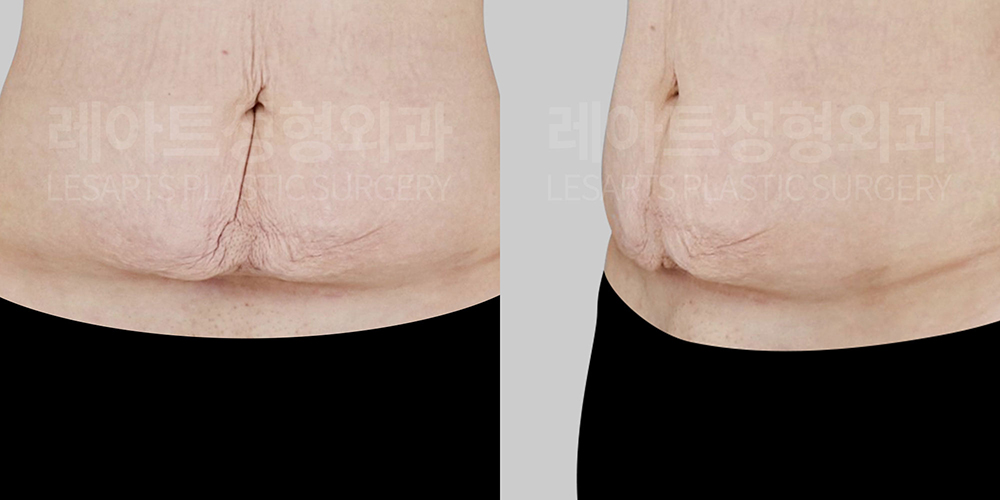
Especially for those who remember their pre-pregnancy waistline,
these postpartum abdominal deformities inflict substantial psychological stress.
Sudden gestational weight gain, compromised dermal elasticity,
and bulging subcutaneous adipose deposits that resist postpartum dieting are widespread frustrations.
Above all, the pronounced step-off shelf formed
over the tethered C-section scar serves as a persistent nuisance
whenever selecting clothing or styling outfits,
prompting many patients to seek surgical evaluation.
In this clinical article,
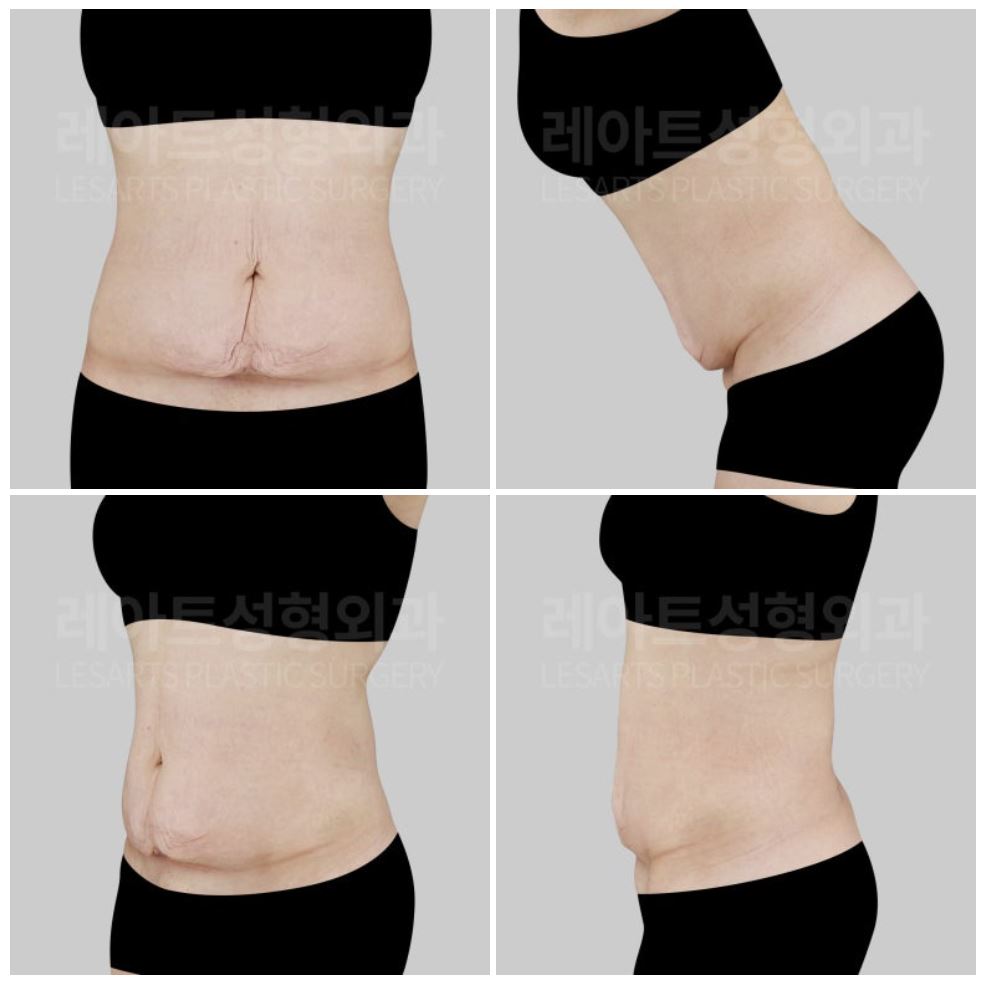
I share an actual case where a tethered C-section scar shelf deformity and
lower abdominal skin laxity were smoothly corrected through tailored abdominoplasty.

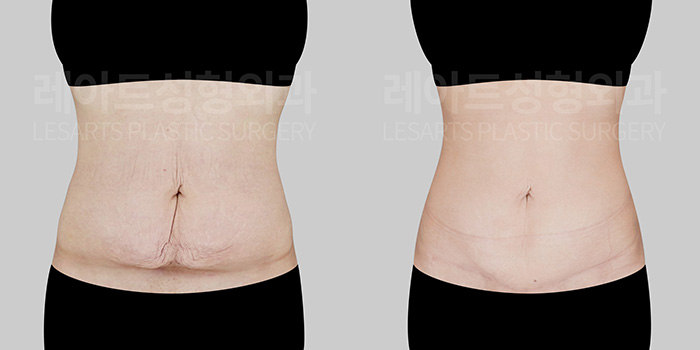
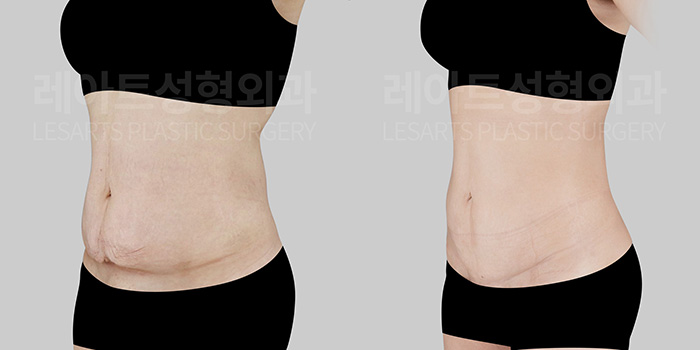
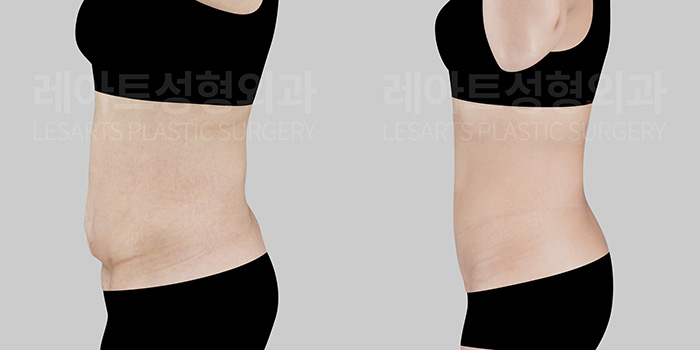
However, because this procedure deliberately focused on the lower abdomen while omitting epigastric undermining,
a subtle residual laxity remains visible across the upper abdomen,
representing the inherent anatomical limitation of a mini tummy tuck in this presentation.
This underscores why establishing realistic expectations through thorough pre-operative consultation
regarding individualized surgical scope is paramount.
If you are experiencing wardrobe frustration and silhouette distortion not only from prominent Cesarean scarring,
but from irregular tissue laxity and tethered step-off overhangs,
we encourage you to seek a specialized 1:1 consultation to establish
a personalized abdominoplasty solution tailored to your skin tone and anatomical needs.
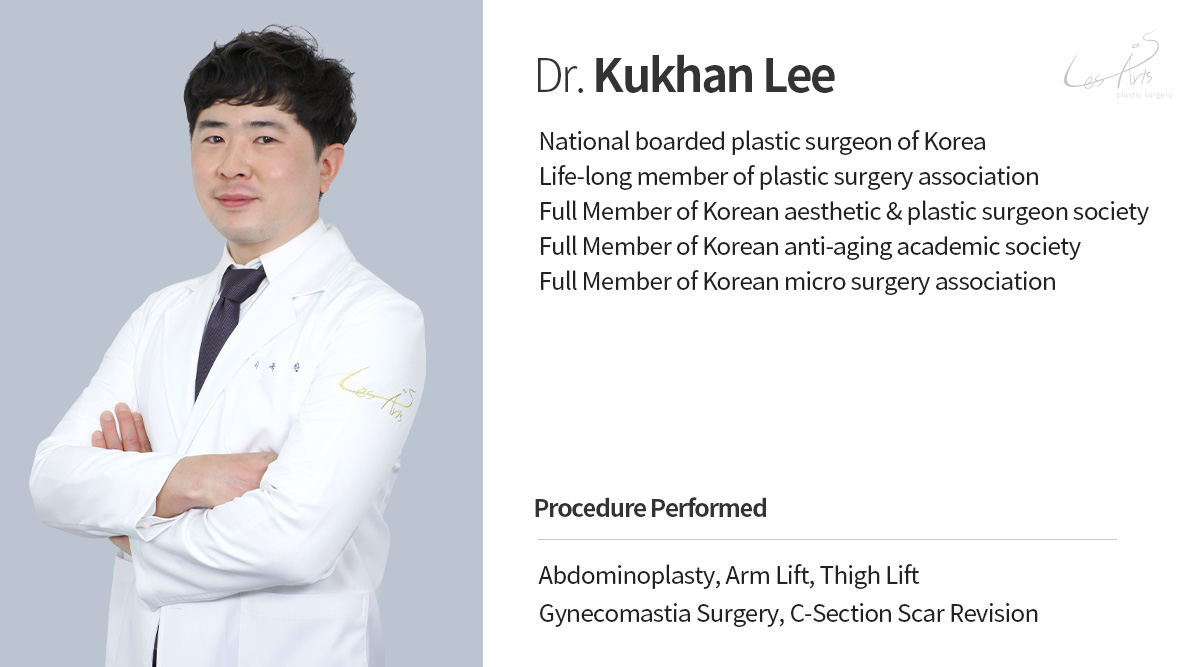
Dr. Kukhan Lee


Cases finding
similar to my profile
Customer Diagnostics


Select the surgery and
area you are interestedto see real
before andafter changes.


we
make you,
the art
Clinic hours
MON - FRI
10 am – 7pm
SAT
10 am – 4pm
Holiday
SUN, HOLIDAY
Location
Lesarts Moon Clinic Tower 4-5F, 40, Nonhyeon-ro 168-gil,
Gangnam-gu, Seoul, Republic of Korea

Medical institution name Lesarts Plastic Surgery
Address Lesarts Moon Clinic Tower 4-5F, 40, Nonhyeon-ro 168-gil, Gangnam-gu, Seoul, Republic of Korea
Representative Moon sung jun
