




Online Consultation
Please accurately enter the information below.
Quick Cost Consultation
Quick Consultation & Reservation
Cases finding
similar to my profile






Doctor's Note
Medical columns by our surgeons
Thigh Liposuction | Slipping Back into Loved Jeans: Leg Contour Changes at 5 Months [Doctor's Notes by Dr. Yongseung Seo]
2026-07-30
Thigh Liposuction | Slipping Back into Loved Jeans: Leg Contour Changes at 5 Months [Doctor's Notes by Dr. Yongseung Seo]
Can thighs that thickened with weight gain be streamlined again through liposuction?
When subcutaneous fat accumulates heavily along the inner thighs and outer saddlebags,
reducing volume in these trouble areas can reshape the entire leg line.
However, liposuction is not a substitute for weight loss,
and it is essential to design natural, continuous contours
that account for underlying muscle framework, skeletal anatomy, and skin tone.
▶ Learn More About Lesarts Thigh Liposuction
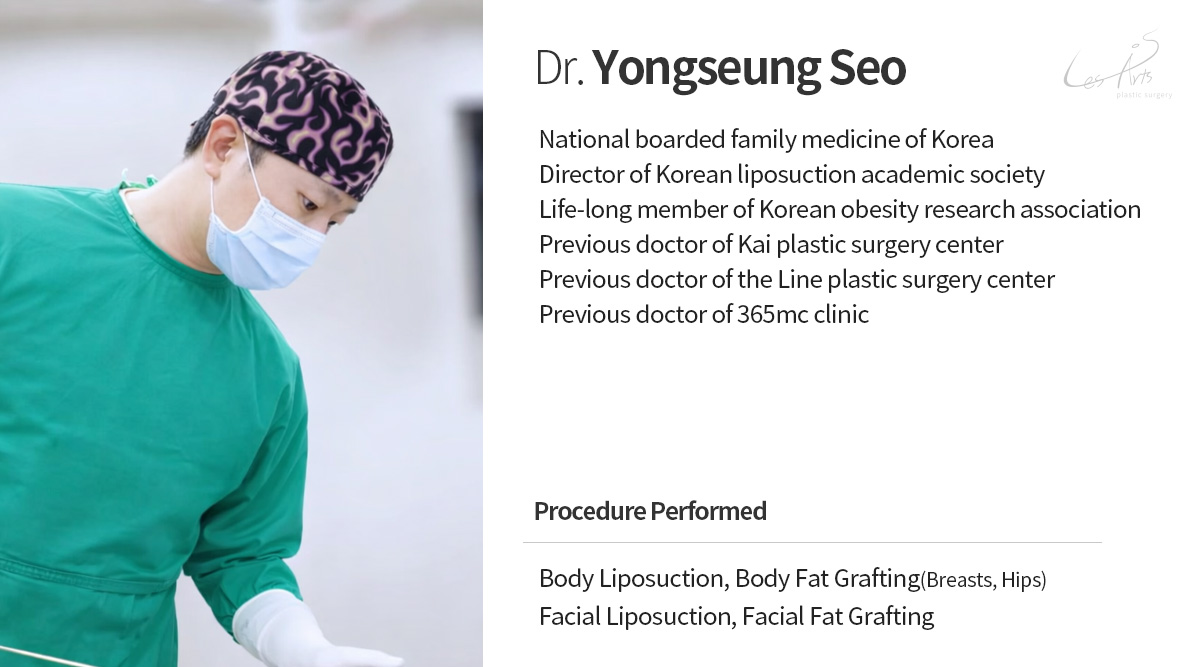
Hello, I am Dr. Yongseung Seo, Plastic Surgeon at Lesarts Plastic Surgery Clinic.
“Jeans that fit comfortably just last summer now get caught at my thighs.”
Many patients previously maintained a steady body weight and enjoyed their leg contours,
only to find that a modest weight gain over a short period
made their favorite clothes tight and uncomfortable.
Especially for those who spend long hours standing during daily routines,
lower-body swelling combined with inner thigh and saddlebag fullness
can make the legs feel and appear significantly heavier.
However, thigh liposuction
is not an operation designed merely to drop numbers on the scale.
While thighs accumulate fat relatively quickly when weight increases,
they are often the very last area to trim down during weight loss.
The purpose of liposuction is to re-sculpt this stubborn fat to fit your physique, creating your desired silhouette.
The patient featured today had experienced steady weight gain over about six months,
becoming increasingly self-conscious about her transformed leg shape.
Hoping to debulk her inner thighs and saddlebags before warmer weather arrived
and restore a light, streamlined lower-body silhouette,
she visited Lesarts.
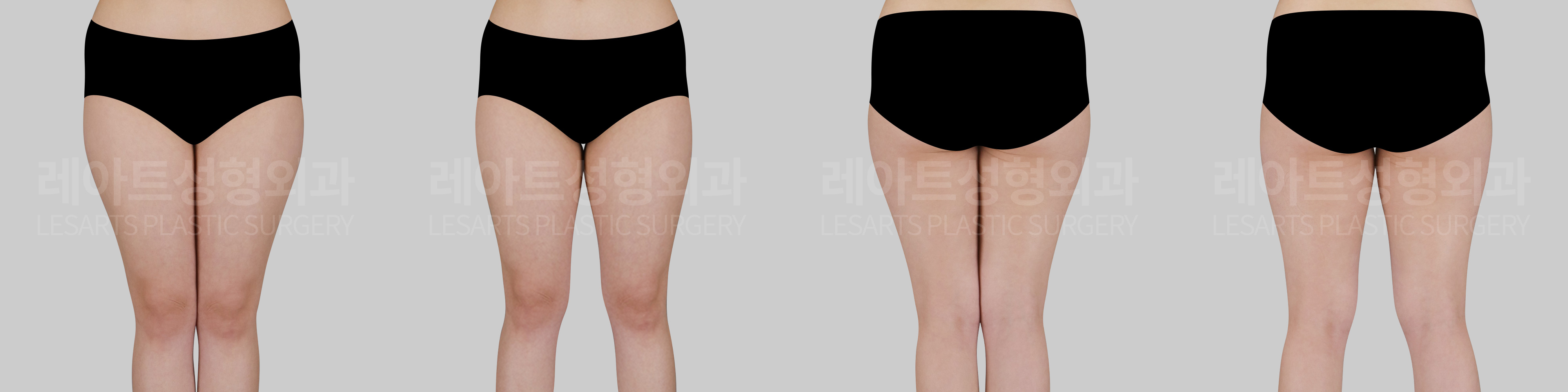
Pre-Operative Assessment for Thigh Liposuction
[Patient Profile]
Age: Late 20s
Height: 158 cm
Weight: 54.2 kg
Baseline Weight: 47–50 kg
BMI: 21.7
Body Fat Percentage: 31.3%
※ Even with similar height and weight metrics, surgical results vary individually
based on adipose distribution, muscle mass, skeletal frame, and skin tone.
The area causing the greatest discomfort
was her inner thighs.
With recent weight gain, medial volume increased notably,
causing constant friction and chafing between both thighs when walking.
In standing position with feet together before surgery,
virtually no visible space could be seen from above the knees to the proximal inner thighs.
Additionally, the lateral saddlebags flared outward in a rounded curve,
making the legs look significantly wider and shorter than their true frame.
[Adipose Depth Measured by Diagnostic Ultrasound]
Saddlebags (Lateral): 39 / 47 mm
Inner Thigh (Medial): 16 / 18 mm
Anterior Thigh: 11 / 13 mm
Knee Zone: 12 / 11 mm
While fat volume was most prominent along the inner thighs and saddlebags,
the anterior thighs and peripatellar knee zones also presented
subcutaneous deposits requiring simultaneous refinement.
▶ View Clinical Cases Similar to Yours
[Surgical Design: Sculpting a Slender, Balanced Leg Silhouette]

1. Inner Thighs (Medial Contour)
Because the inner thighs were the patient's primary concern,
we planned thorough fat extraction within safe physiological boundaries.
However, even with extensive debulking,
individual pelvic width and underlying adductor muscle mass
mean an exaggerated, wide gap across the entire leg
may not be anatomically feasible or natural.
Furthermore, over-resecting can expose harsh muscle demarcations
or create abrupt angular steps along the medial line;
thus, a thin, uniform adipose buffer was preserved
where seamless continuity was required.
The medial thigh is also anatomically susceptible
to post-surgical skin laxity or fine creasing.
When pre-existing fat volume is substantial, fine folds can appear
along the inguinal crease once volume deflates,
which was thoroughly explained prior to surgery.
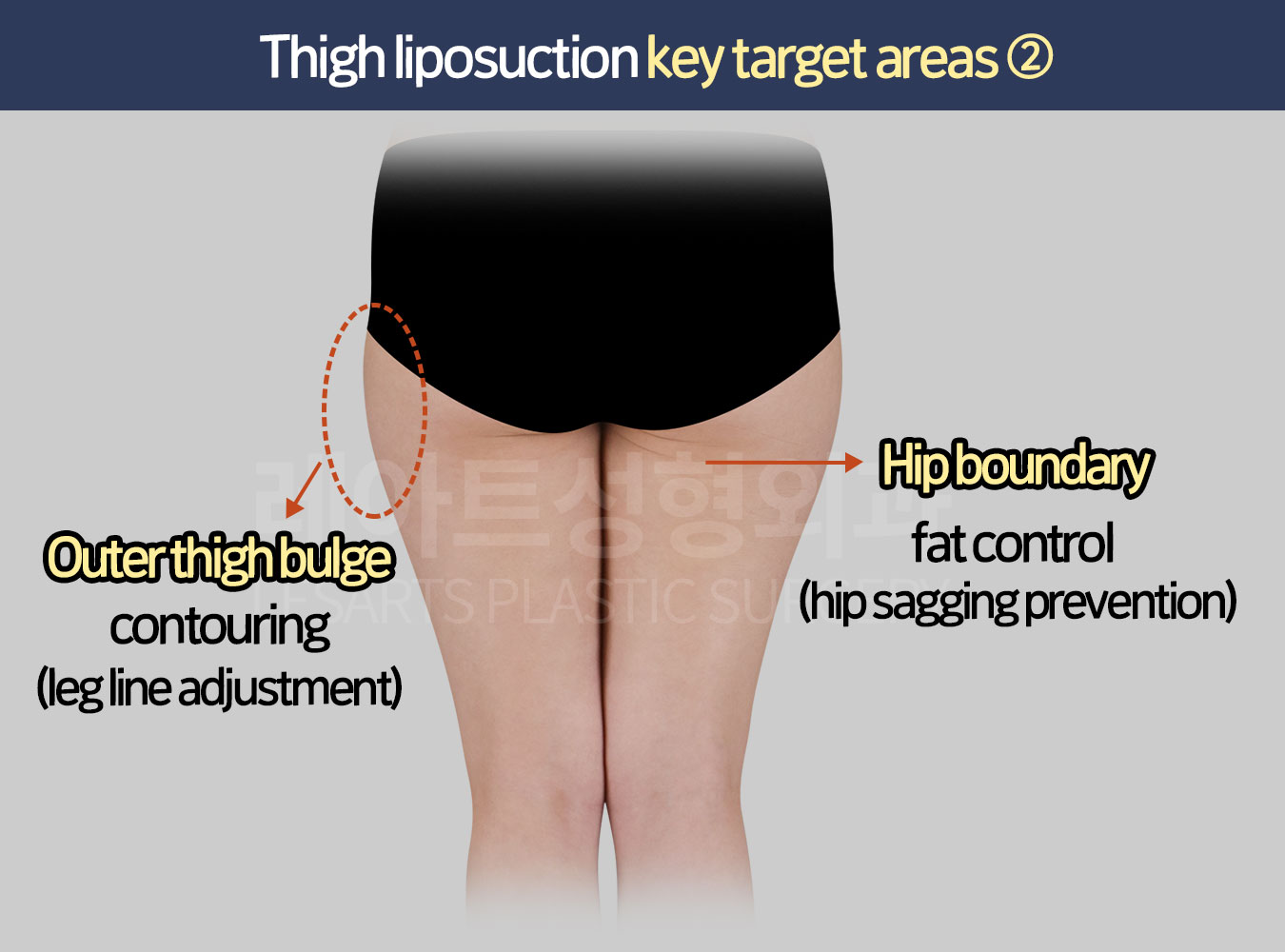
2. Saddlebags (Lateral Contour)
For the saddlebag area, the surgical plan extended from above the lateral knee
to the peak point of lateral projection
to eliminate unwanted outward curvature.
However, completely stripping all adipose tissue at the junction
between the saddlebag and buttock can cause an unnatural step-off.
When this demarcation becomes overly stark, the buttocks appear to stick out independently,
which can paradoxically make the legs look shorter.
Accordingly, while outward saddlebag projection was debulked,
essential adipose buffers were preserved at the gluteal transition
to ensure a fluid, continuous curve from hip to thigh.
3. Managing Infragluteal Support and Preventing Sagging
The patient was also concerned about the possibility
of buttock sagging after thigh liposuction.
The visual perception of buttock ptosis from posterior view
is closely tied to how long the infragluteal crease appears
relative to total thigh thickness.
To prevent this fold from extending or deepening,
the fibrous ligamentous structures supporting the lower gluteal fold must remain intact.
Furthermore, because adipose tissue directly beneath the buttock serves as a supportive cushion,
the treatment boundary was calibrated to prevent over-resection in this zone.
Even if the physical length of the infragluteal crease remains unchanged,
slimming total thigh circumference can make the crease occupy a proportionately larger share of the thigh width.
We noted pre-operatively that this optical shift can temporarily give
the impression that the buttocks sit slightly lower.
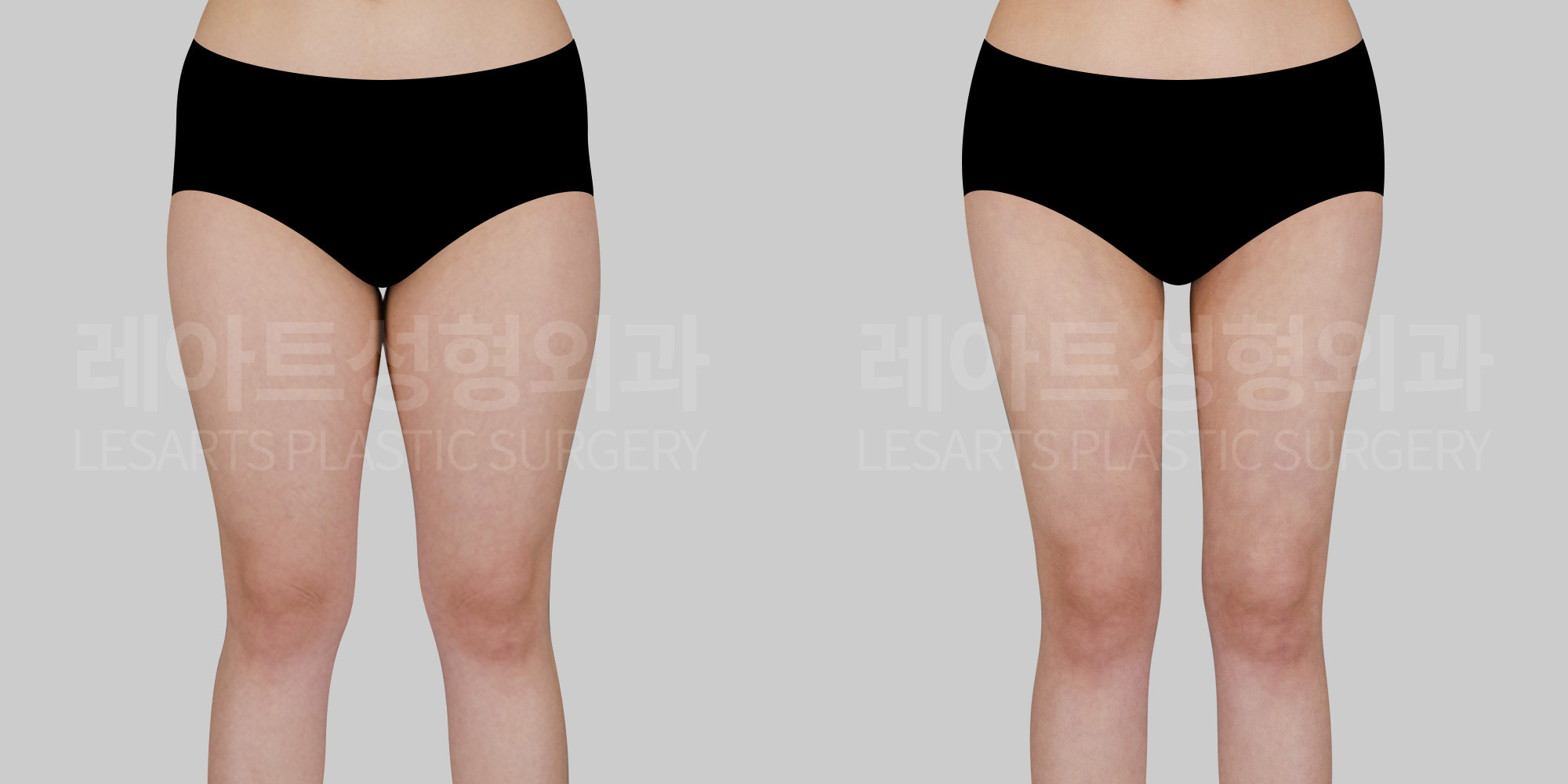
[Pre-Op vs. 5 Months Post-Op Under Standardized Conditions]
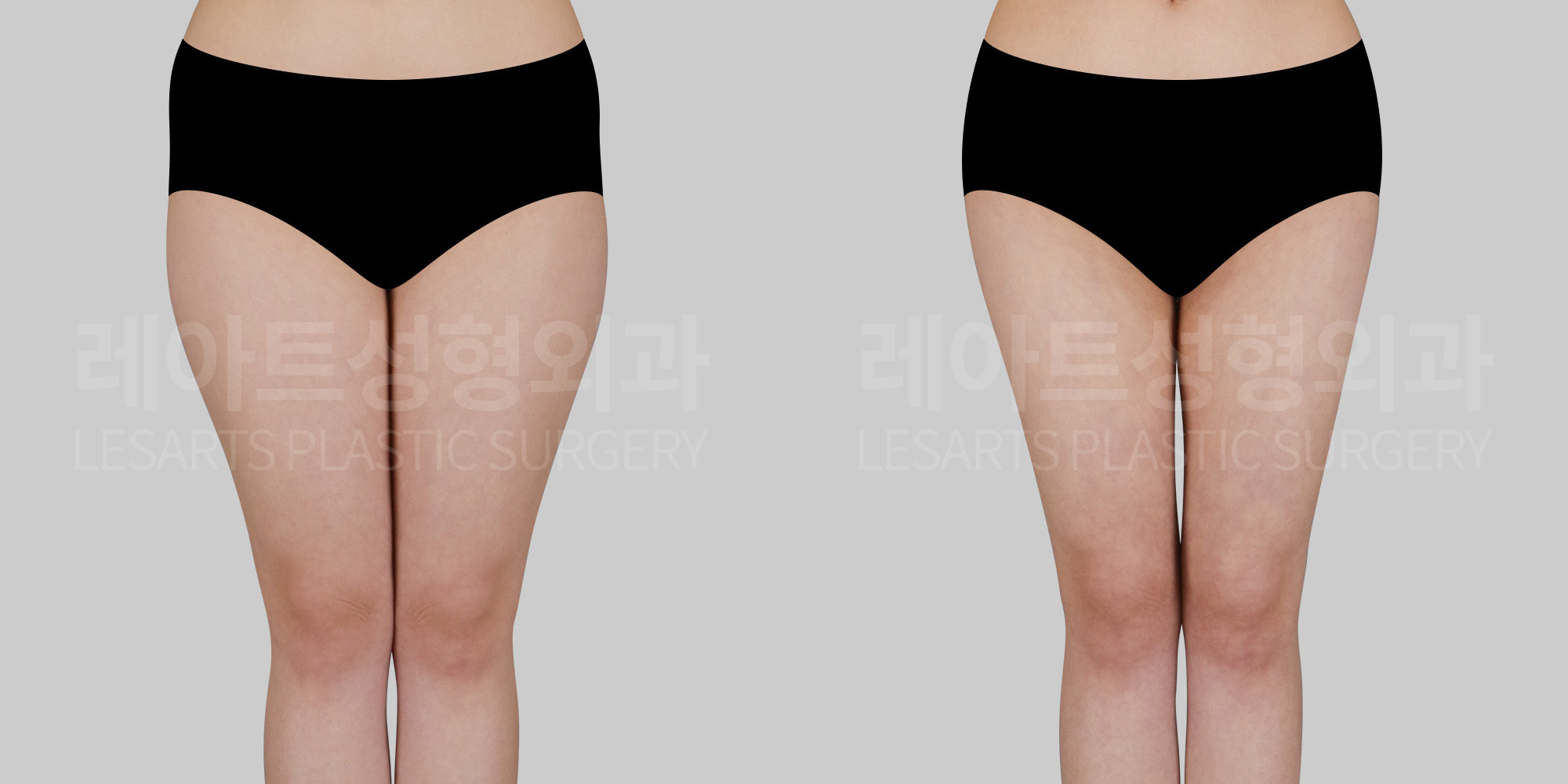
Inner Thigh and Thigh Gap Changes at 5 Months Post-Op
Pre-operatively, both inner thighs touched broadly,
leaving no open space between the legs.
Prominent outer saddlebags added lateral breadth,
making the lower body appear wide and truncated.
At 5 months post-op, debulking medial fullness
opened a clean, natural inner thigh gap.
The medial line transitions smoothly down into the knees without sharp angles,
making the legs look visibly straighter, longer, and more refined.
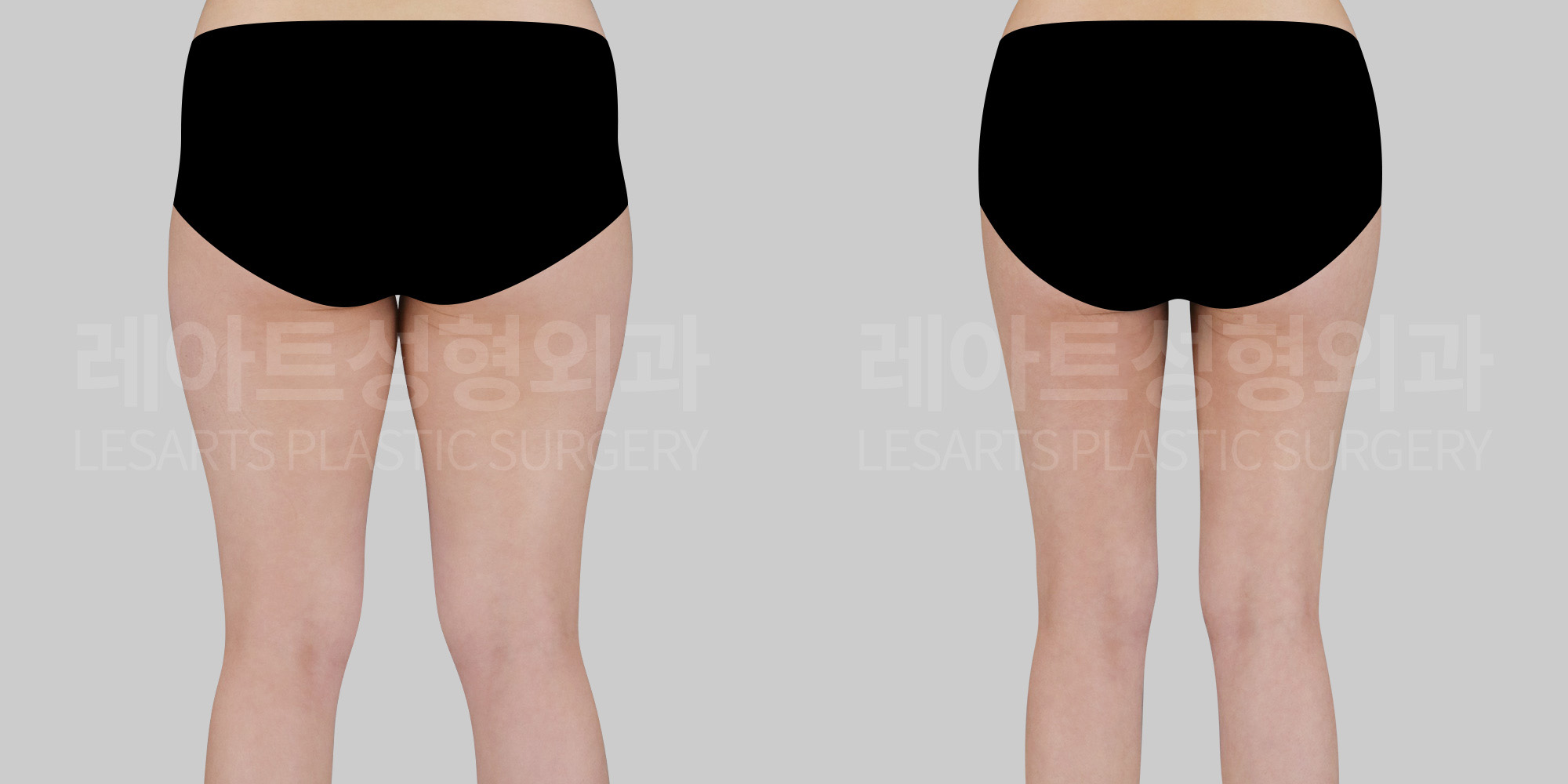
Lateral Thigh and Pelvic Transition Changes at 5 Months Post-Op
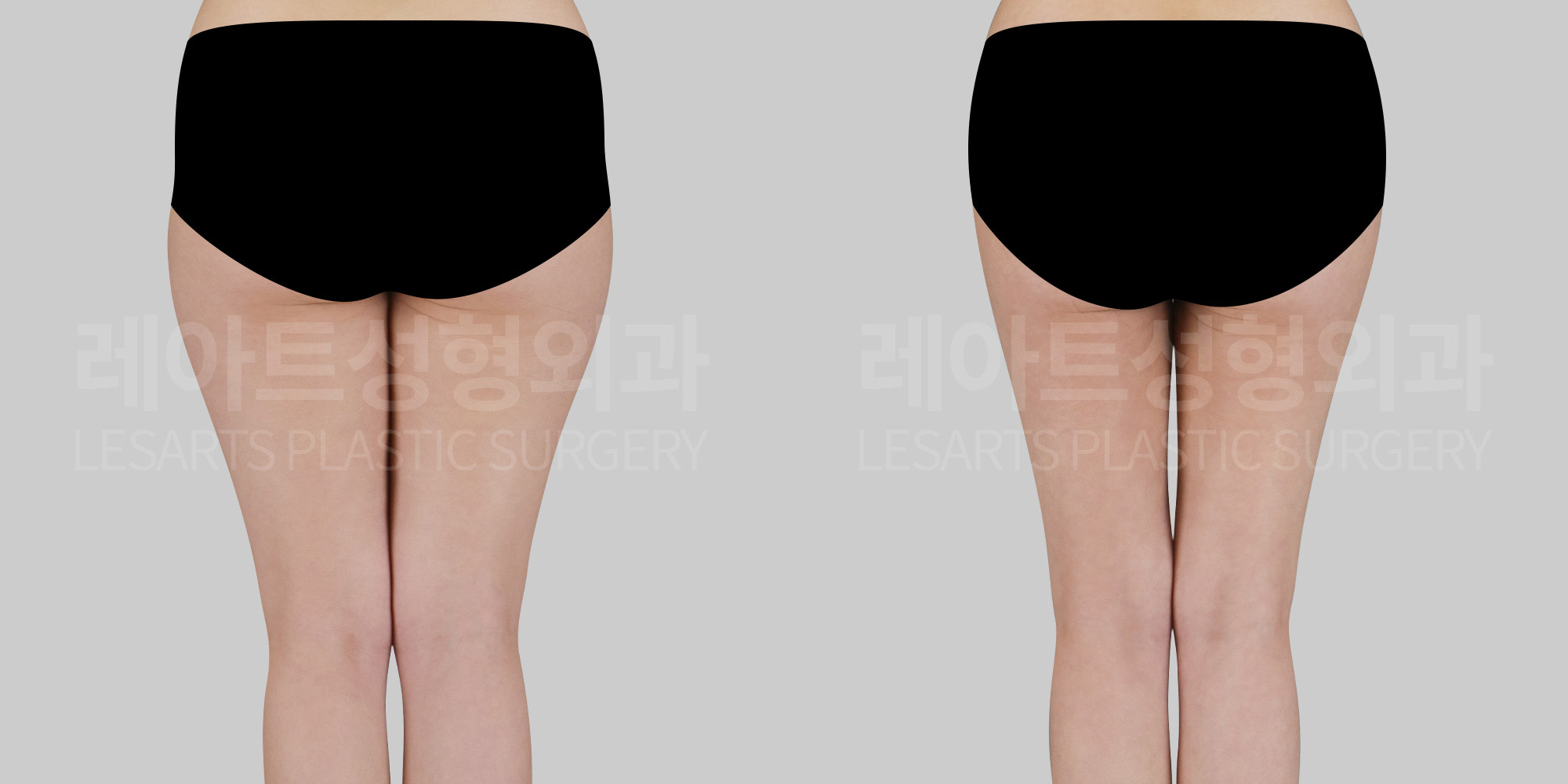
Lateral Thigh and Pelvic Transition Changes at 5 Months Post-Op
The protruding saddlebag bulges were also smoothed,
connecting the hips and thighs in a natural arc.
Before surgery, the widest point of the saddlebag rested low,
making the visual starting point of the legs appear lower than it was.
Post-operatively, streamlining the outer contour elevated the perceived widest point upward,
making the thighs appear distinctly leaner and longer.
Preserving necessary adipose buffers between the hips and thighs
prevented an artificial step-off between the two regions.
Comparing pre- and post-operative images,
the infragluteal fold itself
showed no adverse lengthening or deepening.
As anticipated, because overall thigh circumference slimmed down,
the relative proportion occupied by the crease
appeared slightly wider across the back of the leg.
However, because the patient did not have noticeable pre-existing gluteal ptosis,
no compromise to the overall lower-body contour was observed.
This confirms the benefit of preserving supportive infragluteal fat
while thoroughly debulking thigh thickness.
Ongoing Post-Operative Weight Management
Inspired by her thigh liposuction results, the patient initiated active lifestyle management
combining structured nutrition with regular exercise.
Her body weight dropped from 54.2 kg to 51.5 kg,
and body fat percentage decreased from 31.3% to 28.1%,
reflecting a 3.2 percentage point reduction in body fat.
Rather than attributing this entirely to surgery,
it is best viewed as the combined result of liposuction and her dedicated
post-operative lifestyle habits.
While liposuction does not replace weight loss,
resolving chronic trouble areas often serves as powerful motivation
to maintain long-term physical wellness.
If jeans that once fit comfortably now feel constricting around the thighs,
or if inner thigh fullness and saddlebags persist despite weight loss,
we recommend evaluating your subcutaneous fat distribution, muscle framework,
and dermal elasticity.
Rather than choosing surgery based purely on extraction volume,
consult with an experienced surgeon to design a personalized contouring plan
that harmonizes the inner thighs, saddlebags, and gluteal transitions.
▶ Learn More About Lesarts Thigh Liposuction Techniques
Thigh Liposuction FAQ
1. Can thigh liposuction create an inner thigh gap?
If fat is concentrated along the medial thighs,
debulking volume can be planned to reveal a natural space between the legs.
However, achievable separation varies depending on pelvic bone width,
knee alignment, and adductor muscle mass.
2. Should saddlebag fat be completely removed?
Aggressively stripping fat at the junction between the saddlebag and buttock
can make the gluteal fold jut out abruptly or make the legs look shorter.
Preserving necessary adipose buffers
ensures a smooth, flowing transition into the hip.
3. Can the buttocks sag after thigh liposuction?
Over-resecting fat directly beneath the infragluteal crease
or damaging supporting fibrous structures can accentuate drooping.
Evaluating gluteal support pre-operatively and setting safe extraction boundaries is crucial.
4. Can skin creasing develop along the inner thighs?
The medial thigh features thin skin
that is naturally prone to laxity.
Depending on initial fat volume and dermal elasticity,
fine creasing can appear near the groin crease as volume deflates,
which should be evaluated during consultation.
5. Is dieting still necessary after thigh liposuction?
Liposuction is not a replacement for overall weight management.
Maintaining balanced nutrition and regular physical activity post-operatively
supports long-term preservation of your refined leg contours and body weight.
Dr. Yongseung Seo


Cases finding
similar to my profile
Customer Diagnostics


Select the surgery and
area you are interestedto see real
before andafter changes.


we
make you,
the art
Clinic hours
MON - FRI
10 am – 7pm
SAT
10 am – 4pm
Holiday
SUN, HOLIDAY
Location
Lesarts Moon Clinic Tower 4-5F, 40, Nonhyeon-ro 168-gil,
Gangnam-gu, Seoul, Republic of Korea

Medical institution name Lesarts Plastic Surgery
Address Lesarts Moon Clinic Tower 4-5F, 40, Nonhyeon-ro 168-gil, Gangnam-gu, Seoul, Republic of Korea
Representative Moon sung jun
