




Online Consultation
Please accurately enter the information below.
Quick Cost Consultation
Quick Consultation & Reservation
Cases finding
similar to my profile






Doctor's Note
Medical columns by our surgeons
Abdominoplasty | Floating Umbilicoplasty Tummy Tuck 6 Months Postpartum After Natural Delivery - Checking Changes in Navel Position
2026-08-03
Abdominoplasty | Floating Umbilicoplasty Tummy Tuck 6 Months Postpartum After Natural Delivery - Checking Changes in Navel Position
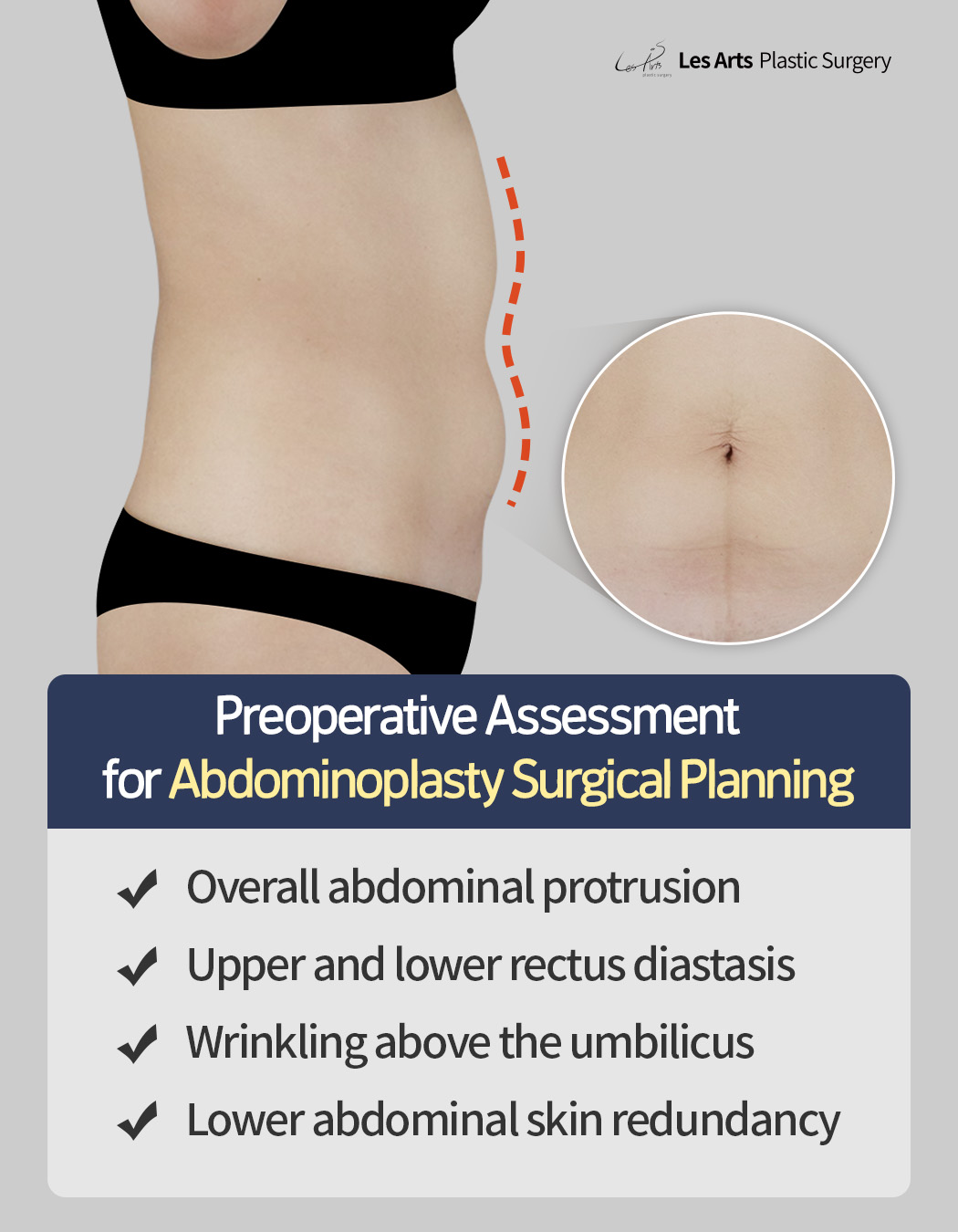
Q. If a protruding lower belly and upper navel wrinkles persist even after weight loss following vaginal delivery, what are the benefits of a floating umbilicoplasty tummy tuck?
A. It tightens separated abdominal muscles while minimizing scar burden, and slightly lowers the belly button position to simultaneously improve upper navel wrinkles and lower abdominal sagging.
Because the incision is placed lower than in a standard M-type full tummy tuck, scar visibility is significantly reduced. It flattens the rectus abdominis across both upper and lower abdomen while shifting the navel down by about 1.5–2 cm, creating a smooth finish for supraumbilical creases.
▶ Learn More About Lesarts Plastic Surgery Tummy Tuck
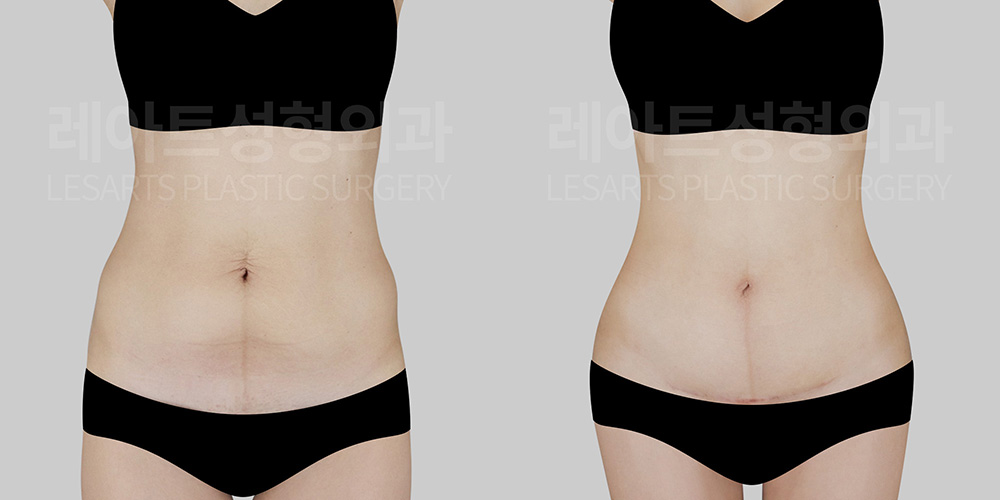
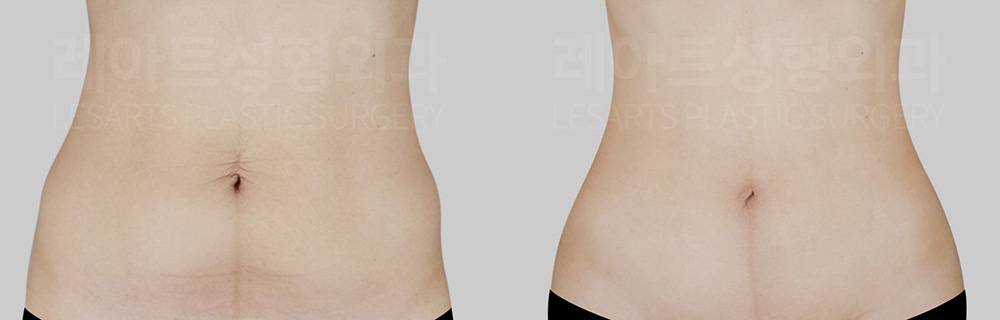

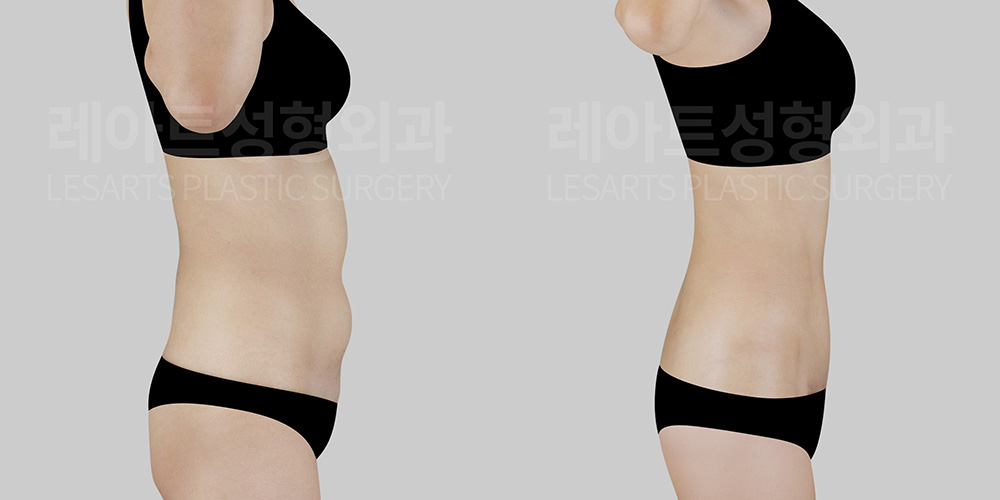

Before & After: Abdominal Lifting and Diastasis Recti Repair
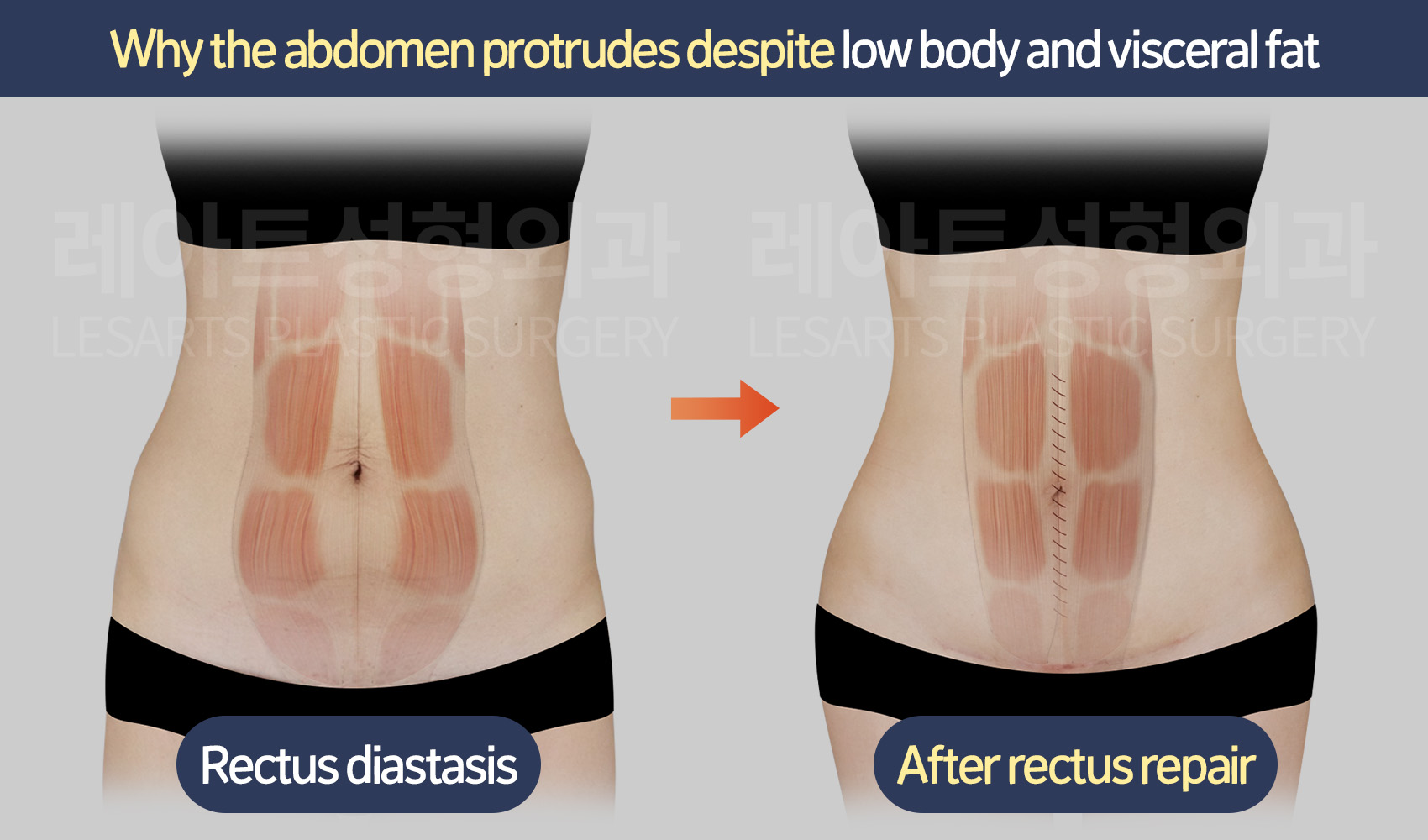
• Rectus plication across both upper and lower abdomen was securely reinforced,
significantly reducing the loose sagging effect
that previously occurred when bending forward.
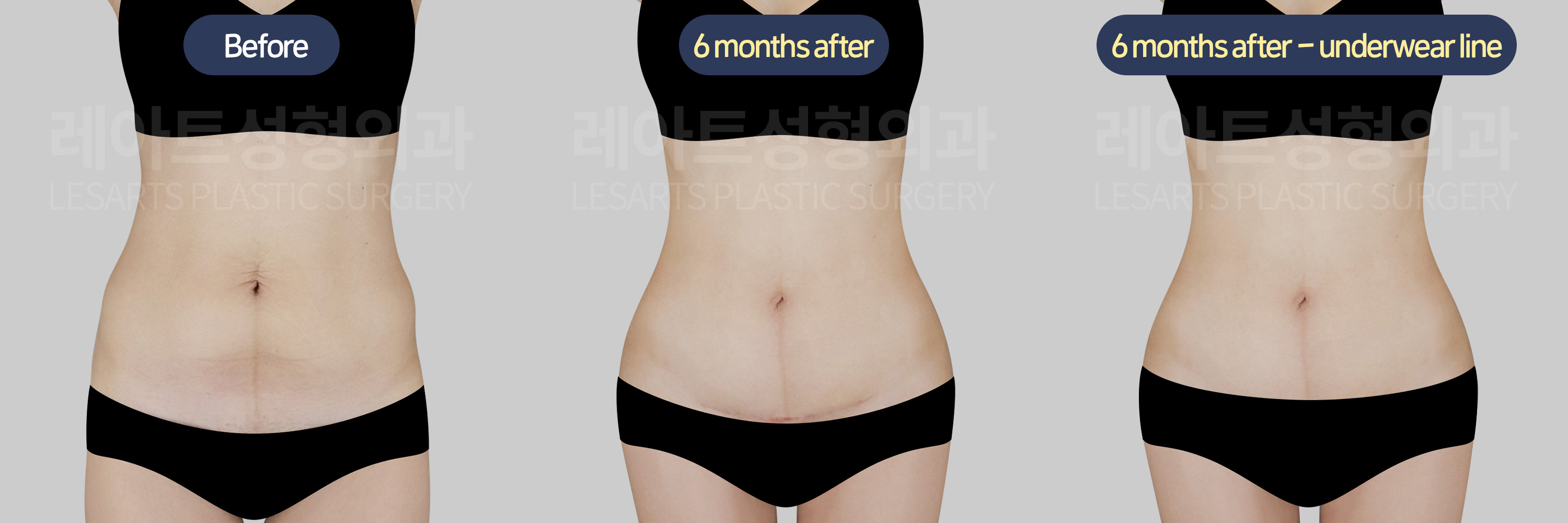
Incision Placement for Floating Umbilicoplasty Tummy Tuck
Regarding the surgical incision scar,
it demonstrates an overall stable and favorable healing course at 6 months post-op.
Mild hypertrophic scarring noted along the central section
is currently being managed through scheduled follow-up scar care.
Because post-abdominoplasty scars continue to soften and fade as tissue matures over time,
the scar is expected to settle into a much more natural skin tone over the long term.
Abdominoplasty is not merely a superficial procedure of pulling and suturing skin;
precisely choosing the right surgical technique based on individual muscle separation and elasticity
is what determines genuine postoperative satisfaction in body contouring surgery.
Since each abdominoplasty method has distinct pros and cons,
it is essential to establish an optimized, tailored plan
guided by thorough medical evaluation and expert explanation.
If you are experiencing similar postpartum abdominal concerns, we welcome you to visit our clinic
for a detailed abdominal assessment and a personalized 1:1 body contouring surgical plan.
FAQ
Q1. Why does my belly stay rounded and protruding even after weight loss and exercise post-delivery?
A. It is typically caused by weakened abdominal wall support and separated midline muscles (diastasis recti)
from pregnancy, rather than simple subcutaneous fat accumulation.
When diastasis recti occurs, the abdomen protrudes outward even without high visceral fat.
Q2. Why is the floating umbilicoplasty technique recommended over an M-type full lift for natural delivery patients?
A. In patients without severe upper abdominal laxity, an M-type full tummy tuck places
the incision line unnecessarily high, increasing scar burden.
Floating umbilicoplasty maintains the incision line low below the bikini line while repairing both upper and lower diastasis recti,
making it an ideal alternative for vaginal delivery patients without pre-existing C-section scars.
Q3. Does shifting the belly button downward look awkward or unnatural after floating umbilicoplasty?
A. Not at all. While the navel moves downward by about 1.5–2 cm,
there is no noticeable visual awkwardness. In fact, this downward shift helps smooth out
and flatten deep creases sitting directly above the navel.
Q4. Does floating umbilicoplasty improve skin folding when bending forward?
A. Yes, it does. By firmly repairing upper and lower rectus diastasis and excising loose lower abdominal skin,
the appearance of sagging, wrinkled skin when leaning forward is noticeably reduced.
Q5. How is the scar monitored and managed at 6 months post-tummy tuck?
A. At 6 months, incision lines have largely settled, but some areas may still exhibit mild erythema or slight hypertrophic scarring.
Consistent use of silicone scar gel, scar taping, and laser treatments
will help the scar gradually fade and blend into a natural tone over time.
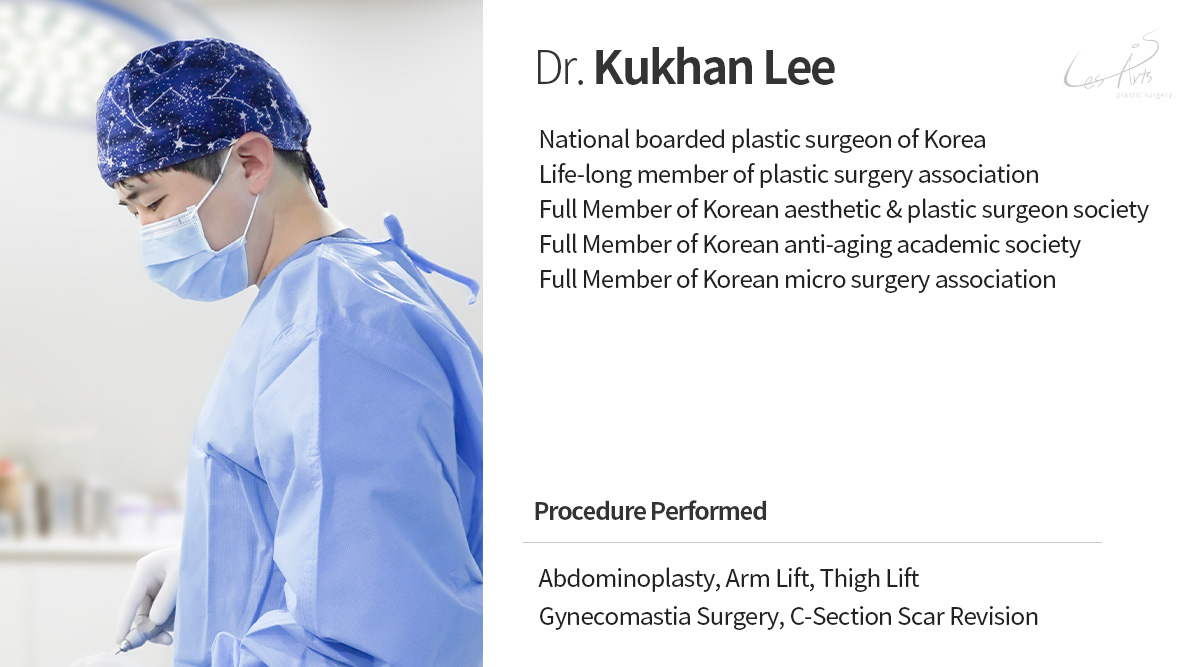
Dr. Kukhan Lee


Cases finding
similar to my profile
Customer Diagnostics


Select the surgery and
area you are interestedto see real
before andafter changes.


we
make you,
the art
Clinic hours
MON - FRI
10 am – 7pm
SAT
10 am – 4pm
Holiday
SUN, HOLIDAY
Location
Lesarts Moon Clinic Tower 4-5F, 40, Nonhyeon-ro 168-gil,
Gangnam-gu, Seoul, Republic of Korea

Medical institution name Lesarts Plastic Surgery
Address Lesarts Moon Clinic Tower 4-5F, 40, Nonhyeon-ro 168-gil, Gangnam-gu, Seoul, Republic of Korea
Representative Moon sung jun
