




Online Consultation
Please accurately enter the information below.
Quick Cost Consultation
Quick Consultation & Reservation
Cases finding
similar to my profile






Doctor's Note
Medical columns by our surgeons
Hyperhidrosis | Causes, Symptoms, and Treatment Options for Excessive Sweating in Palms, Soles, and Axillae [Doctor's Notes by Dr. Jihoon Moon]
2026-08-04
Hyperhidrosis | Causes, Symptoms, and Treatment Options for Excessive Sweating in Palms, Soles, and Axillae [Doctor's Notes by Dr. Jihoon Moon]
If you experience excessive sweating on your palms, soles, or underarms, could it be hyperhidrosis?
When repetitive, excessive sweating occurs beyond normal physiological needs and causes disruption in interpersonal relationships, professional activities,
or personal hygiene management, hyperhidrosis can be strongly suspected.
Because appropriate treatment modalities vary depending on the affected anatomical site and underlying etiology,
obtaining an accurate professional diagnosis is essential.
▶ Lesarts Plastic Surgery Clinic Official Website
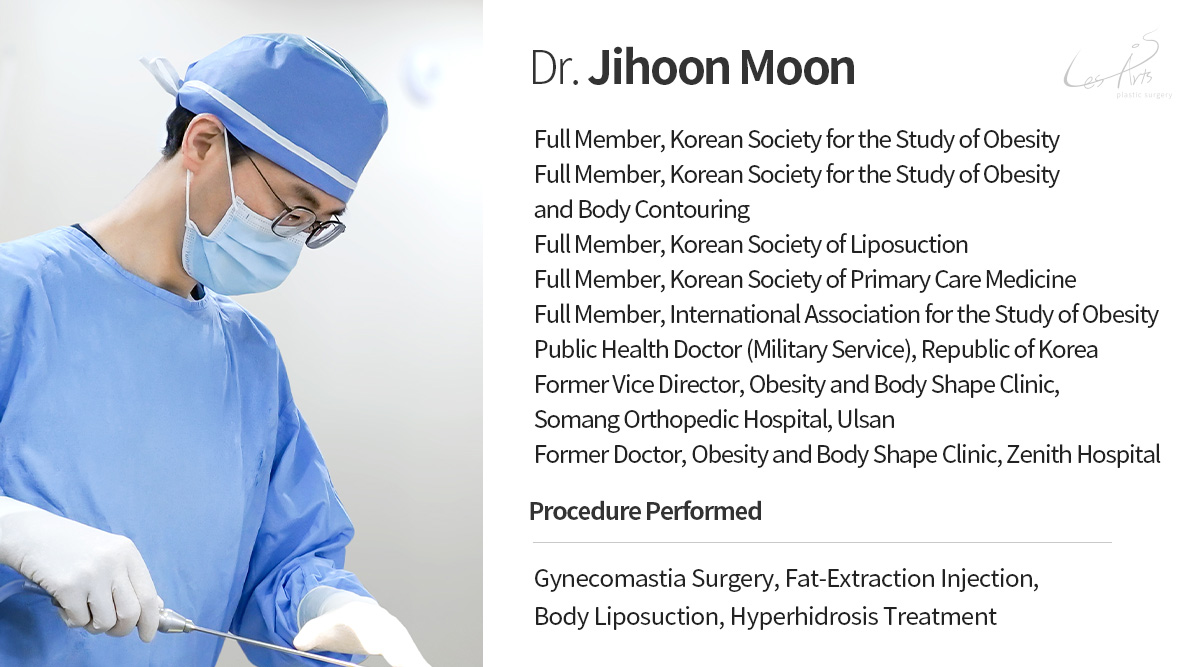
Hello, I am Dr. Jihoon Moon, Plastic Surgeon at Lesarts Plastic Surgery Clinic.
Persistently damp hands, feet, or underarms can cause daily discomfort and practical inconvenience.
Some individuals avoid handshakes out of fear of sweaty palms during moments of nervous tension,
while others must carefully select clothing colors and fabrics specifically to conceal axillary perspiration.
When symptoms become severe, rather than dismissing them as a simple personal constitution trait,
it is prudent to evaluate whether your condition meets the clinical criteria for hyperhidrosis.
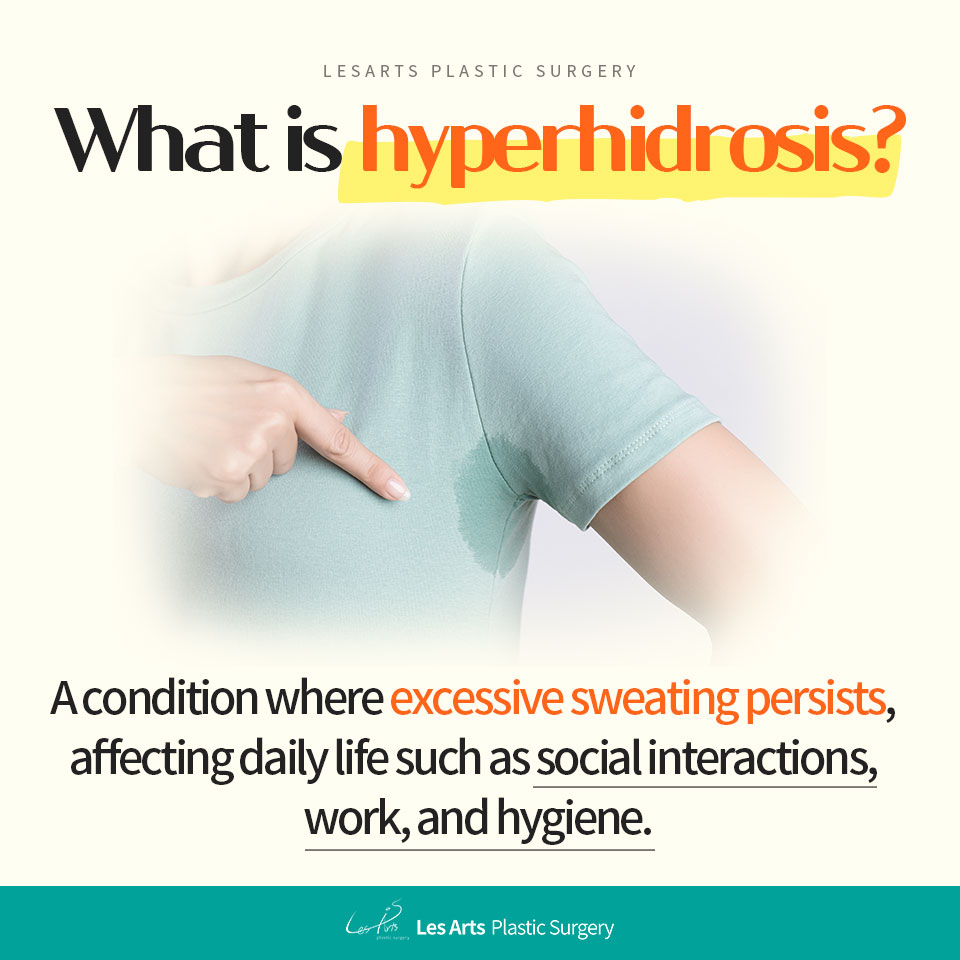
[Palmar Hyperhidrosis, Axillary Hyperhidrosis, Plantar Hyperhidrosis, Treatment Options]
What Is Hyperhidrosis?
Hyperhidrosis refers to a medical condition characterized by recurrent, excessive sweat secretion
far exceeding the physiological requirements of normal thermoregulation.
When excessive perspiration impairs interpersonal interactions, career performance, or hygiene management,
it transcends everyday inconvenience and warrants clinical intervention.
While hyperhidrosis predominantly manifests across the palms, soles, and axillae,
it can also present across multiple anatomical regions depending on the underlying cause.
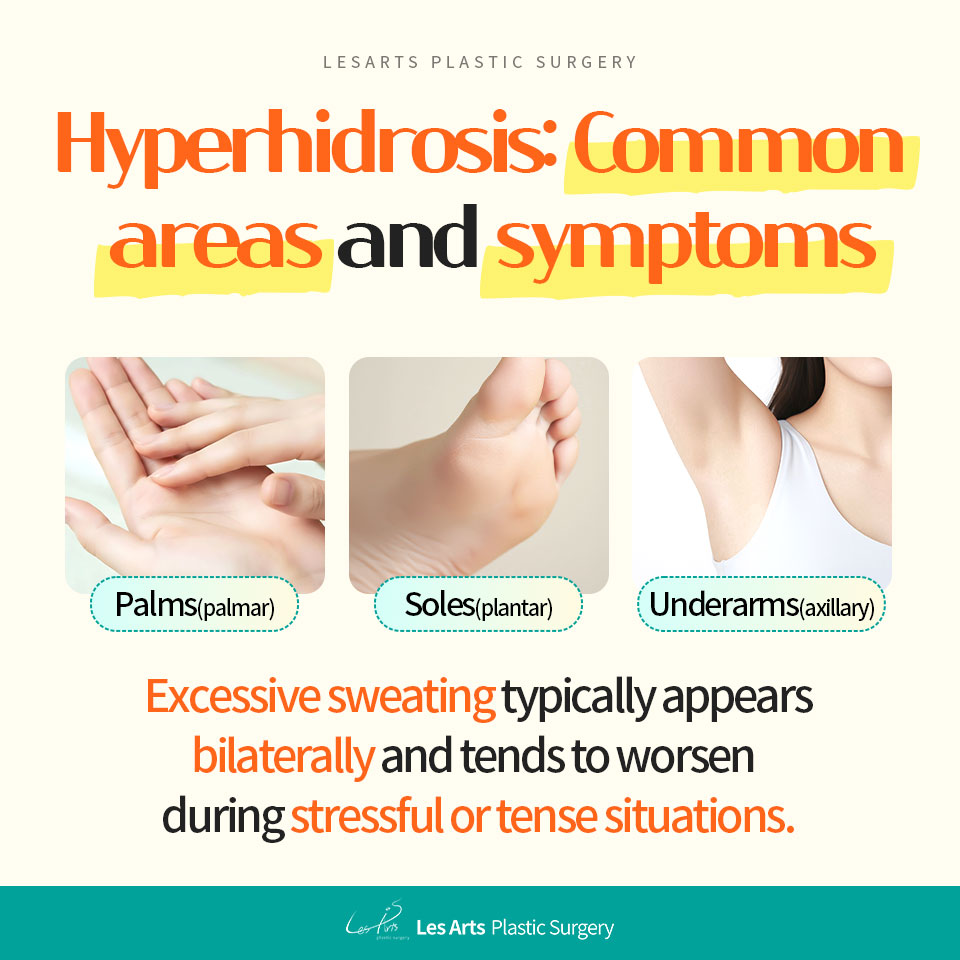
[Hyperhidrosis Presentation Sites & Symptoms]
Hyperhidrosis most frequently targets the palmar, plantar, and axillary regions,
typically presenting symmetrically on both sides of the body.
A hallmark characteristic is the exacerbation of symptoms
during episodes of anxiety, emotional stress, or nervousness.
Palmar Hyperhidrosis
Excessive palmar sweating can lead to social hesitation during handshakes
and mechanical slippage when gripping tools, instruments, or steering mechanisms.
Handling paper documents or operating electronic touchscreens
can also become frustratingly difficult.
Plantar Hyperhidrosis
Chronic moisture accumulation within footwear on the soles of the feet
creates a humid environment conducive to severe foot odor (bromhidrosis).
Prolonged dampness increases susceptibility to fungal infections such as tinea pedis (athlete's foot),
making diligent hygiene maintenance paramount.
Axillary Hyperhidrosis
Underarm hyperhidrosis manifests as visible sweat stains on clothing,
frequently inducing psychological distress and social self-consciousness.
When complicated by bromhidrosis (axillary osmidrosis),
perspiration can also cause fabric discoloration and pungent odor.
Depending on severity, patients often feel compelled to avoid bright-colored garments
or form-fitting fabrics, severely restricting personal wardrobe choices.
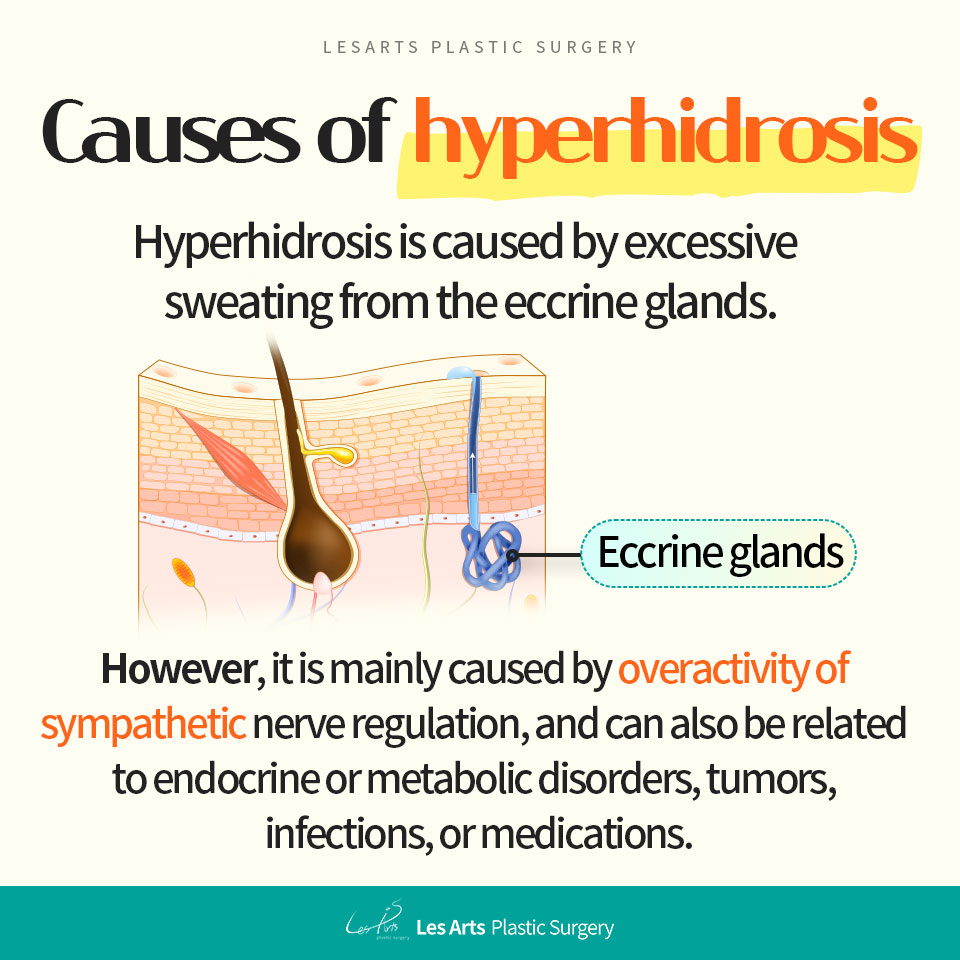
[Summer Underarm Perspiration Distress: Causes & Treatments for Hyperhidrosis]
Human sweat glands are categorized principally into eccrine and apocrine glands.
Primary hyperhidrosis stems from excessive fluid secretion
within eccrine sweat glands.
Rather than structural abnormalities in the glands themselves,
this condition is driven by sympathetic nervous system hyperactivity
unrelated to actual thermoregulatory needs.
Because sympathetic tone intensifies during emotional stress or anxiety,
high-pressure situations such as public speaking, job interviews, or social encounters
frequently trigger severe flare-ups.
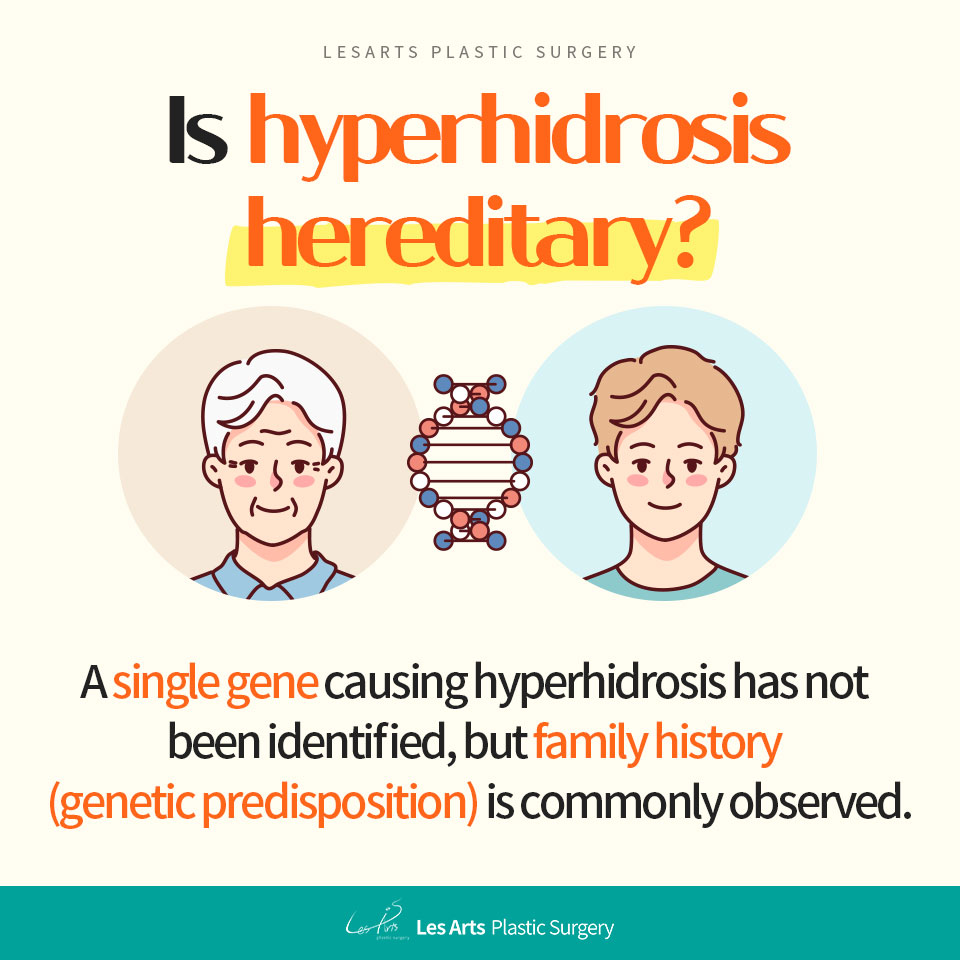
[Is Hyperhidrosis Hereditary?]
A single definitive gene directly responsible for primary hyperhidrosis
has not yet been isolated.
However, because a strong familial aggregation is frequently observed among patients,
inherited genetic predispositions are believed to play a contributory role.
Importantly, not all excessive sweating shares the same primary origin.
Secondary hyperhidrosis can be triggered by endocrine or metabolic disorders such as hyperthyroidism or diabetes,
menopause, pheochromocytoma, or chronic infectious and oncologic conditions including tuberculosis and lymphoma.
In particular, when severe nocturnal diaphoresis (night sweats) accompanies generalized perspiration and unexplained weight loss,
systemic medical evaluation is mandatory to rule out underlying pathologies.
Certain medications, including select antidepressants, can also exacerbate sweat output,
making a comprehensive review of current pharmacological history vital during clinical consultation.

[Diagnostic Approach for Hyperhidrosis]
When excessive perspiration is focal—targeting specific zones like palms, soles, or axillae symmetrically—
and presents early in life with minimal sweating during sleep,
clinical diagnosis can often be established directly through physical examination and detailed history-taking.
Conversely, when generalized diaphoresis occurs across the entire body or is accompanied by systemic flags like night sweats and weight loss,
further diagnostic laboratory testing may be required to uncover systemic drivers.
Evaluating symptom onset timing, distribution patterns, nocturnal variations, family history,
and current medications enables physicians to differentiate primary focal hyperhidrosis
from secondary systemic etiologies.

[How Is Hyperhidrosis Treated?]
Hyperhidrosis treatment strategies are tailored to the affected anatomical zone, symptom severity,
and the degree of functional impairment experienced in daily life.
Therapeutic options range from conservative topical agents and botulinum toxin injections
to energy-based device therapies and surgical interventions.
Topical Antiperspirants
Aluminum chloride-based topical solutions are frequently prescribed
as a first-line conservative measure to suppress sweat output.
They offer convenient application and low economic burden,
making them particularly useful for axillary hyperhidrosis.
However, potential cutaneous irritation can cause contact dermatitis,
and topical efficacy remains comparatively limited when applied to palmar or plantar skin.
Botulinum Toxin Injections
Botulinum toxin temporarily blocks neural signal transmission to sweat glands,
effectively subduing local perspiration.
While yielding high patient satisfaction rates in axillary hyperhidrosis,
its therapeutic duration typically spans several months,
requiring periodic repeat sessions to sustain results.
Energy-Based Device Therapy
Non-invasive or minimally invasive energy devices utilizing microwaves, lasers, or radiofrequency
deliver thermal energy transcutaneously to diminish axillary eccrine sweat glands.
While offering an incision-free modality,
energy delivery may occasionally fail to reach deeper dermal or subcutaneous fat planes
where profound sweat glands reside.
[Surgical Options for Hyperhidrosis]
When conservative treatments fail to provide adequate relief for severe symptoms,
surgical intervention can be considered.
Thoracoscopic Sympathectomy
Endoscopic thoracic sympathectomy utilizes thoracoscopic visualization
to access the sympathetic ganglion chain within the chest cavity, executing division, clipping, or electrocautery.
By interrupting sympathetic nerve signals, it substantially suppresses perspiration
and is deployed primarily for severe palmar hyperhidrosis.
However, a notable consideration is compensatory hyperhidrosis,
where sweat output diminishes in the hands but increases across alternative body regions.
Axillary Sweat Gland Curettage and Aspiration
For axillary hyperhidrosis, physical destruction and aspiration
of eccrine sweat glands embedded within the dermis and superficial subcutaneous fat is widely utilized.
When concomitant axillary osmidrosis (bromhidrosis) is present,
odorous apocrine sweat glands are targeted simultaneously.
Performed under sedation anesthesia, tiny incisions are placed along the anterior axillary fold or medial arm,
introducing specialized laser or ultrasonic cannulas to deliver thermal energy
along the dermal-subcutaneous junction.
After thoroughly ablating eccrine glands,
residual tissue and emulsified fat are evacuated using surgical suction cannulas.
Following meticulous closure, the entire procedure
requires approximately 1 hour.
Reducing active sweat gland density directly curtails underarm fluid output,
delivering durable symptom relief.
▶ Explore Lesarts Medical Consultation & Care
Hyperhidrosis is never a trivial condition limited to occasional moisture.
Avoiding handshakes, shunning bright clothing, and enduring relentless odor and hygiene struggles
exact a heavy toll on social confidence and daily well-being.
However, optimal therapeutic strategies vary significantly depending on the anatomical site,
symptom severity, and underlying etiology.
If recurrent, excessive sweating across your palms, soles, or underarms impairs your daily routine,
we invite you to seek a professional diagnosis to explore personalized treatment pathways tailored to your unique profile.
Hyperhidrosis FAQ
1. Does heavy sweating automatically indicate hyperhidrosis?
Perspiration induced by warm ambient temperatures or physical exercise
represents a normal thermoregulatory response.
However, when excessive sweating occurs repeatedly without discernible provocation
and disrupts daily life, hyperhidrosis is clinically suspected.
2. Does hyperhidrosis worsen during stress?
Yes. Emotional stress and anxiety activate the sympathetic nervous system,
frequently triggering pronounced flare-ups across palms, soles, and axillae.
3. Is hyperhidrosis hereditary?
While a single causative gene remains unconfirmed,
strong familial clustering suggests inherited genetic predispositions influence susceptibility.
4. Are axillary hyperhidrosis and bromhidrosis (osmidrosis) the same condition?
Hyperhidrosis primarily involves excessive fluid secretion from eccrine sweat glands,
whereas bromhidrosis involves pungent odors generated by bacterial breakdown of apocrine gland secretions.
Both conditions frequently co-exist in clinical practice.
5. Does surgical axillary sweat gland removal eliminate all perspiration permanently?
Surgical intervention aims to substantially reduce active eccrine gland density to curb underarm wetness.
Depending on residual gland distribution and individual physiology,
a minimal, baseline level of physiological perspiration may still occur post-op.
Dr. Jihoon Moon


Cases finding
similar to my profile
Customer Diagnostics


Select the surgery and
area you are interestedto see real
before andafter changes.


we
make you,
the art
Clinic hours
MON - FRI
10 am – 7pm
SAT
10 am – 4pm
Holiday
SUN, HOLIDAY
Location
Lesarts Moon Clinic Tower 4-5F, 40, Nonhyeon-ro 168-gil,
Gangnam-gu, Seoul, Republic of Korea

Medical institution name Lesarts Plastic Surgery
Address Lesarts Moon Clinic Tower 4-5F, 40, Nonhyeon-ro 168-gil, Gangnam-gu, Seoul, Republic of Korea
Representative Moon sung jun
