Breast Fat Transfer | Changes in Upper Breast Volume and Breast Shape After 3 Months
it is important to plan the transfer locations according to your current breast shape.
solely with their overall size.
is concentrated in the lower portion.
to fill out the upper portion.
upper breasts to improve their shape and proportions.
Before surgery, overall breast volume was lacking,
and the upper breasts in particular were flat.
Because relatively more volume remained in the lower breasts,
the center of the breasts appeared to sit low.
This made the breasts look smaller and
lower-set than they actually were,
and even when wearing a bra, the upper portion was not fully filled,
making the upper chest feel flat.
Why Autologous Fat Transfer Was Chosen Over Implants
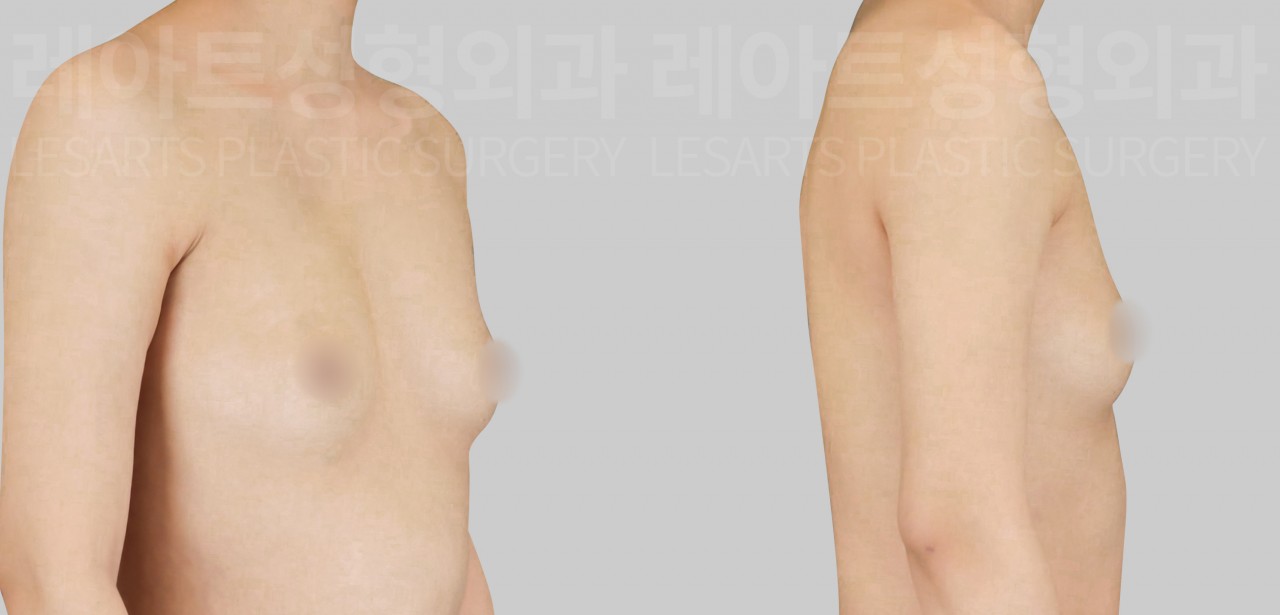 [Before Breast Fat Transfer: A Flat Upper Bust and Insufficient Overall Volume]
Although the patient wanted to increase her breast size,
rather than augmentation with implants, she preferred
adding volume naturally using her own fat.
We therefore planned breast fat transfer to enhance overall size
while also adding fullness and height
to the upper breasts.
Rather than simply placing the same amount of fat evenly across the entire breast,
we focused on restoring volume to the relatively lacking upper portion
to reduce the impression that the fullness
was concentrated too low.
We planned the transfer so that volume above and below the bust point
would connect naturally,
improving overall breast proportions and shape together.
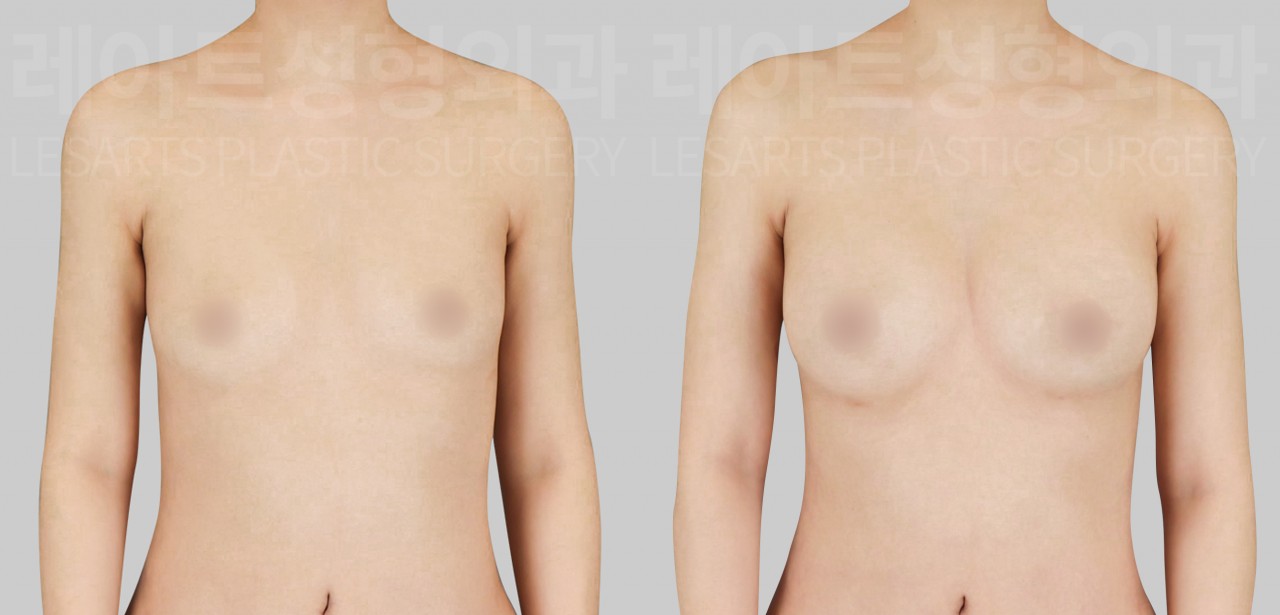 [3 Months After Breast Fat Transfer: Changes in Overall Breast Volume]
Here is her appearance 3 months after breast fat transfer.
Compared from the front, overall breast size
has naturally increased compared with before surgery,
and upper breast fullness has also been restored.
Even at the 3-month mark,
the transferred fat volume is well maintained,
and even without wearing a bra,
an upper breast contour starting from underarm level
is naturally visible.
Natural shading has also formed
in the center of the chest, making the overall
fullness much more defined than before surgery.
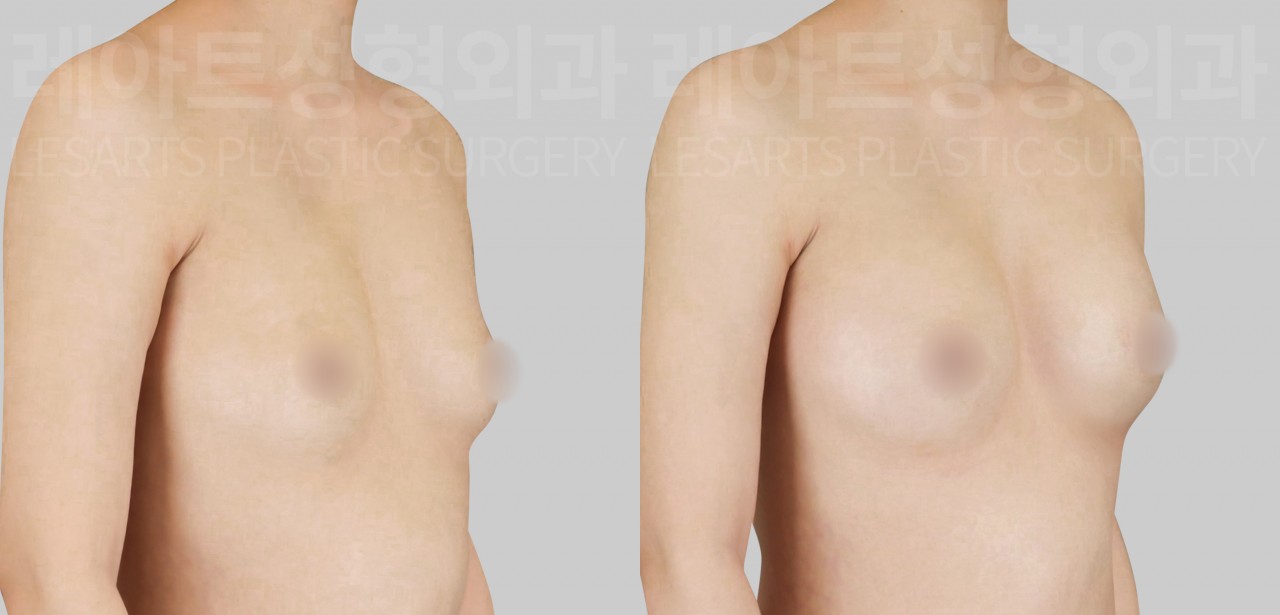
[After Breast Fat Transfer: Changes in Upper Breast and Overall Volume]
In the side view, the improvement in the upper breasts—
the patient's biggest concern—is even more clearly visible.
Before surgery, the upper breasts were flat while
lower breast volume was relatively more pronounced,
making the breasts as a whole appear to sit low.
After surgery, adding volume to the lacking upper portion
naturally raised the starting point of the breast contour.
With volume above and below the bust point
connecting evenly,
not only the size, but also the overall proportions
have become much more balanced.
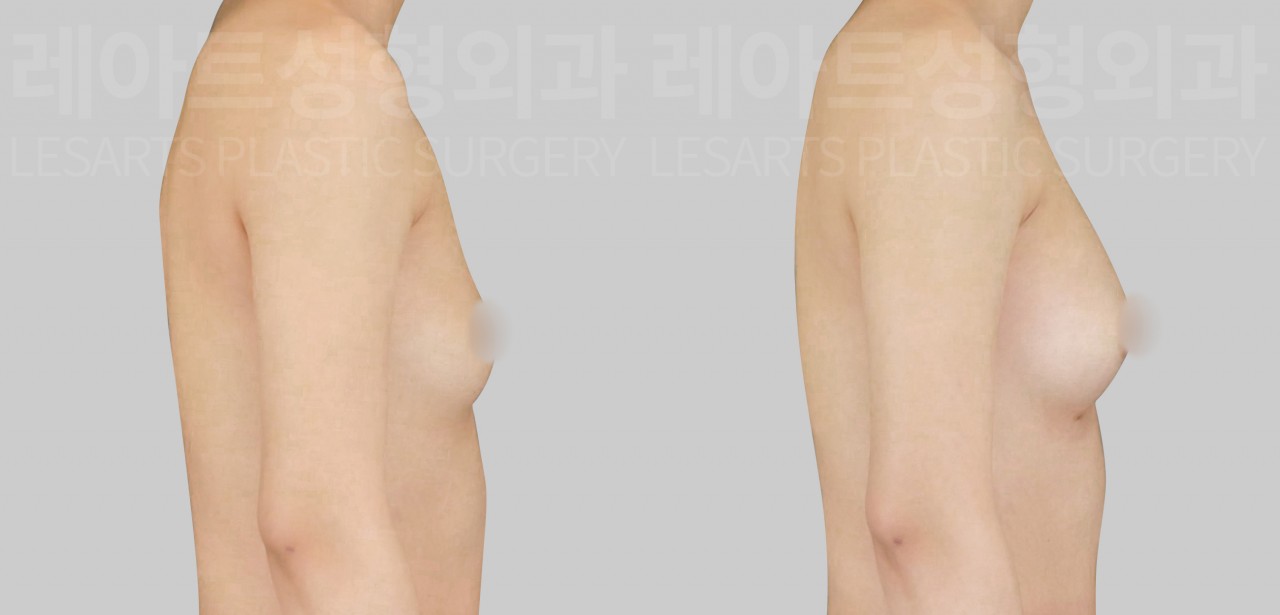
[After Breast Fat Transfer: Changes in Breast Height and Natural Curvature]
After surgery, the line flowing from the upper breast to the bust point
and down to the lower breast
appears more natural than before.
Whereas the flat upper portion previously made breast volume
appear concentrated below, after fat transfer
the entire breast flows smoothly starting from the upper bust.
While overall size increased naturally,
no single area looks overly prominent;
instead, the areas lacking volume were filled
while preserving the existing breast shape.
The patient expressed satisfaction not only with the natural-looking
increase in size and soft feel after breast fat transfer,
but also with the improvement in her previously lacking upper breast contour.
Rather than simply being a procedure
to make the breasts larger,
breast fat transfer can be seen as a method for identifying areas
that relatively lack volume and filling them
to refine overall proportions and shape.
As in this patient's case, if the upper breasts
are flat compared with the lower breasts, the breasts may appear
smaller or lower-set than they actually are.
In such cases, naturally enhancing overall size while
adding the needed volume to the upper breasts
can improve both apparent breast height and upper-to-lower proportions.
If you are concerned not only about breast size,
but also about a flat upper bust or overall breast shape,
identify which areas currently lack volume
and discuss your desired size and contour thoroughly
to plan a breast fat transfer suited to you.
Breast Fat Transfer FAQ
1. Can breast fat transfer enhance only the upper breasts?
If the upper portion of your breasts relatively lacks volume,
fat can be transferred with a focus on that area.
It is important to determine the transfer locations
while assessing overall breast size and proportions together.
2. Can a flat upper bust make the breasts look saggy?
If the upper breasts lack volume compared with the lower breasts,
the bust point can appear relatively
lower, making the breasts look like they sit lower.
3. Is the volume still maintained 3 months after breast fat transfer?
In this case, the volume of the transferred fat
was visibly maintained even at 3 months after surgery.
The degree of fat survival varies from person to person.
4. How is breast fat transfer different from implant breast augmentation?
Breast fat transfer uses your own fat
to add volume to the areas where it is needed.
The achievable size change and most suitable method
depend on your current breast condition and desired results.
5. Can breast fat transfer also change breast shape?
Enhancing not only overall size, but also areas
that relatively lack volume—such as the upper breasts—
can change apparent breast height, upper-to-lower proportions,
and overall breast shape.












