




Online Consultation
Please accurately enter the information below.
Quick Cost Consultation
Quick Consultation & Reservation
Cases finding
similar to my profile






Doctor's Note
Medical columns by our surgeons
Abdominal Liposuction | Persistent Lower Belly and Flanks After a 21 kg Weight Loss: Waistline Changes at 3 Months [Doctor's Note by Dr. Yongseung Seo]
2026-08-19
Abdominal Liposuction | Persistent Lower Belly and Flanks After a 21 kg Weight Loss: Waistline Changes at 3 Months [Doctor's Note by Dr. Yongseung Seo]
If the lower abdomen and flanks remain after losing more than 20 kg, can liposuction create a difference?
Even after significant weight loss, subcutaneous fat in specific areas
may not decrease as much as desired.
In such cases, abdominal liposuction can address the residual subcutaneous fat;
however, because visceral fat and underlying skeletal structure cannot be altered by liposuction,
an accurate preoperative assessment is essential.
▶ Learn More About Lesarts Abdominal Liposuction Surgery
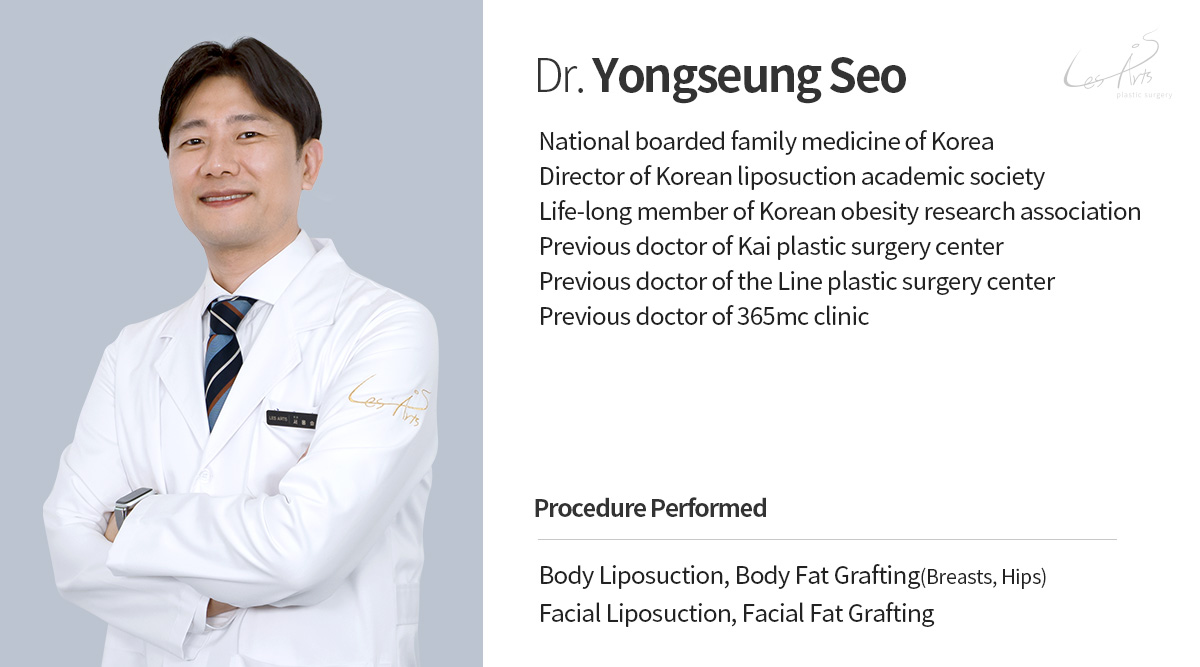
Hello. I am Dr. Yongseung Seo, Plastic Surgeon at Lesarts Plastic Surgery.
When people succeed in achieving substantial weight loss through dieting,
those around them often say their appearance has completely changed.
However, the individuals themselves may still feel dissatisfied
because of specific areas that remain unresolved.
Prime examples are the lower abdomen below the navel
and the flanks.
Even after managing diet and exercise over a long period,
these specific zones may not reduce to the desired degree,
or individuals may hesitate to pursue further weight loss
if skin elasticity appears reduced after losing substantial weight.
This patient had also consistently maintained diet and exercise routines,
losing as much as 21 kg over the preceding 6 months;
however, feeling concerned about the lower abdomen and flat waistline
that remained until the end, she decided to undergo abdominal liposuction.
Let us examine what additional refinement could be achieved through liposuction
in a patient who had already accomplished
sufficient weight loss.
[Patient Profile]
Age: Late 20s
Height: 160 cm
Weight: 59.4 kg
BMI: 23.2 kg/m²
Body Fat: 35.8%
Visceral Fat Level: 9
※ Even with a similar body frame and weight, surgical outcomes may vary
depending on fat distribution, skin elasticity, and skeletal structure.
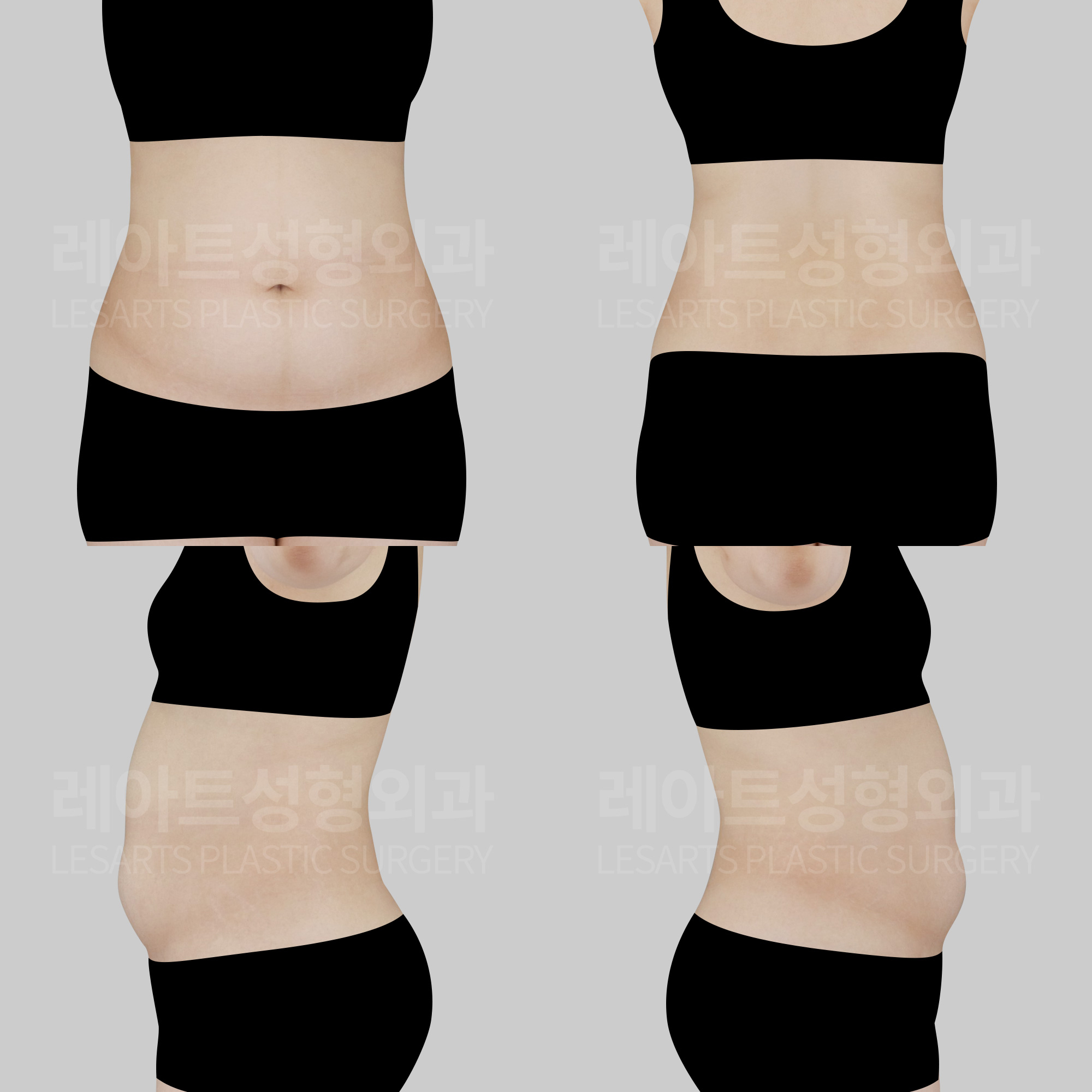 [Pre-Operative Body Contour Evaluation for Abdominal Liposuction]
The patient had lost 21 kg over the preceding 6 months.
Although her overall silhouette had changed noticeably, the lower abdomen below the navel
still projected forward, and the flanks were obscured by fat,
preventing the natural waist curve from being adequately revealed.
In the frontal view, while the waistline did not drop in a completely straight vertical descent,
her existing waist curvature was masked by subcutaneous fat.
Fortunately, despite experiencing substantial weight loss, preoperative examination confirmed
that skin elasticity did not appear severely compromised.
Ultrasound evaluation confirmed the following subcutaneous fat depths:
Upper abdomen: 30 mm
Lower abdomen: 37 mm
Flanks: 15 mm bilaterally
Love handles: 18 mm / 17 mm
In particular, because the lower abdominal fat layer was thicker than the upper abdomen,
her anatomy exhibited a heavier profile below the navel.
[Abdominal Liposuction Design to Improve Abdominal and Flank Contours]
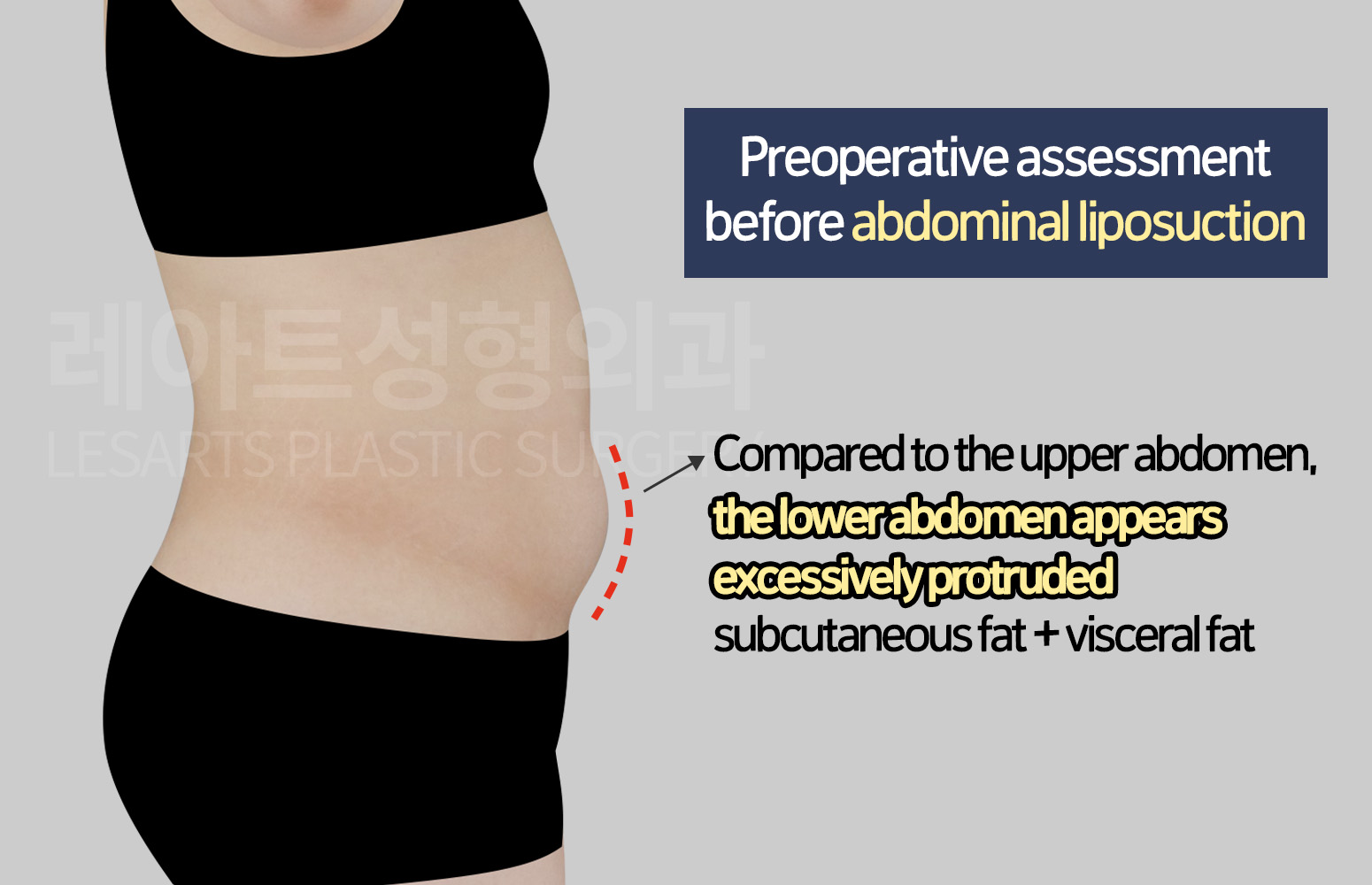
[Assessment of Abdominal Contour, Subcutaneous Fat, and Visceral Fat Level]
The primary transformation the patient desired
was not merely reducing abdominal circumference,
but lightening the area below the navel
while revealing the lateral curves of the flanks.
Therefore, rather than debulking the lower abdomen in isolation,
we established the surgical scope by evaluating the overall transition across
the upper abdomen, flanks, and love handles.
To help naturally reveal the waistline concealed by fat,
the extraction zones were designed with the proportions of the entire abdomen in mind.
Preoperatively, the lower abdomen projected forward
more noticeably than the upper abdomen.
Although ultrasound confirmed sufficient subcutaneous fat,
the abdominal protrusion could not be attributed
entirely to subcutaneous fat alone;
it was judged that visceral fat also contributed a notable influence.
What liposuction can remove is the subcutaneous fat situated beneath the skin.
Therefore, we explained that even if subcutaneous fat is sufficiently contoured,
if visceral fat remains present,
the abdomen may not become as completely flat
as the patient might envision.
Consequently, continuing post-operative lifestyle management and diet
to reduce visceral fat remained necessary.
In addition, while her baseline skin elasticity was relatively favorable,
we also advised that removing a large volume of subcutaneous fat
carries the potential for residual skin laxity.
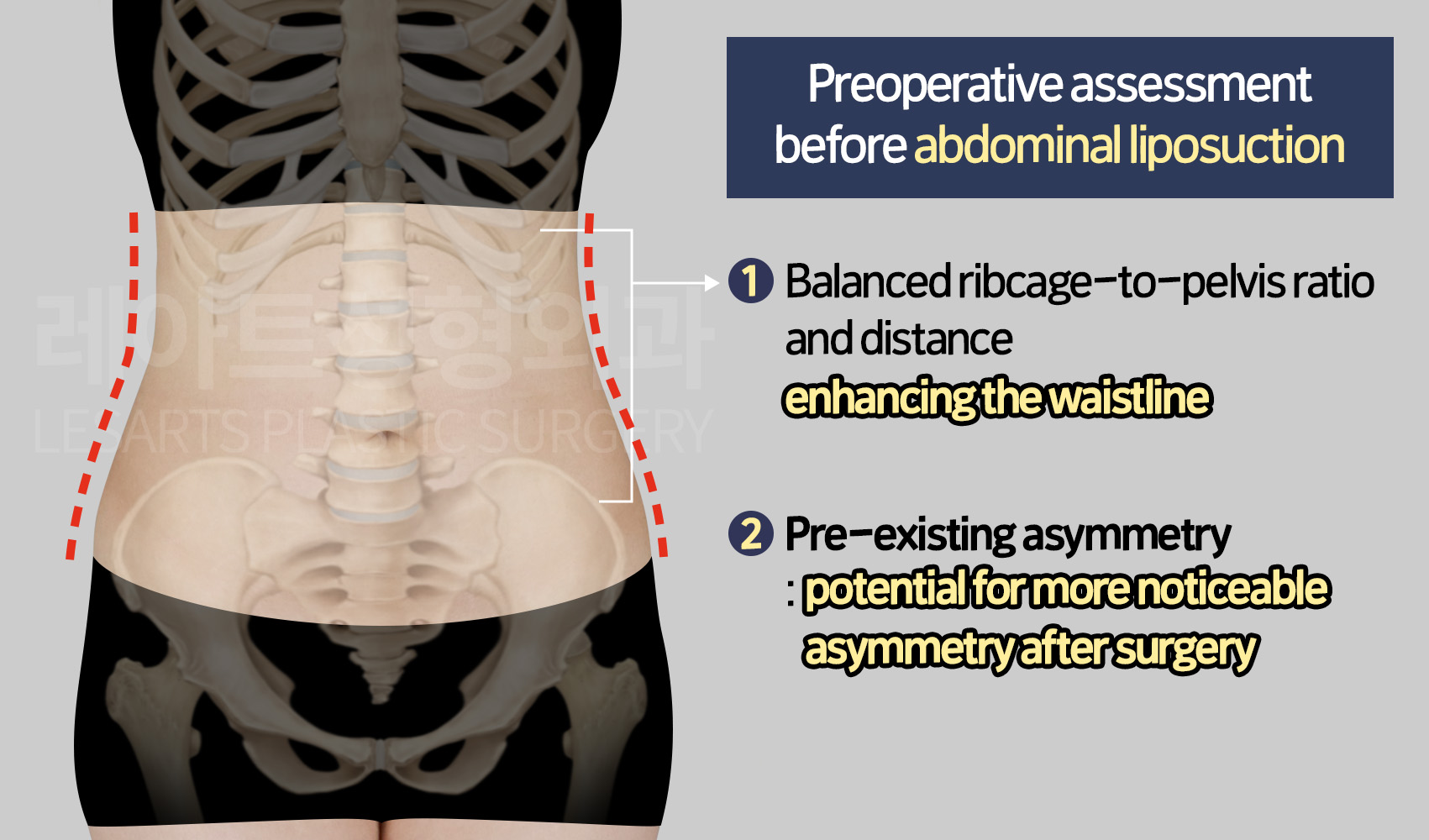
[Skeletal Assessment and Post-Operative Outcome Estimation]
Along the flanks, the distance and proportions between the ribcage and pelvic frame were favorable,
indicating that once subcutaneous fat was contoured, her waist curve
could be more clearly revealed.
However, when fat thickness decreases, pre-existing skeletal asymmetries
that were previously cushioned by soft tissue can become more discernible.
Therefore, while her waistline could appear more tapered post-operatively,
we explained in advance that pre-existing skeletal asymmetry
might become relatively more noticeable.
In contrast, the love handles presented with relatively thick skin
and sufficient subcutaneous fat volume.
In this area, even after debulking the fat that obscured waist definition,
the risk of skin thinning or irregular contour changes
was judged to be relatively low,
allowing for active extraction.
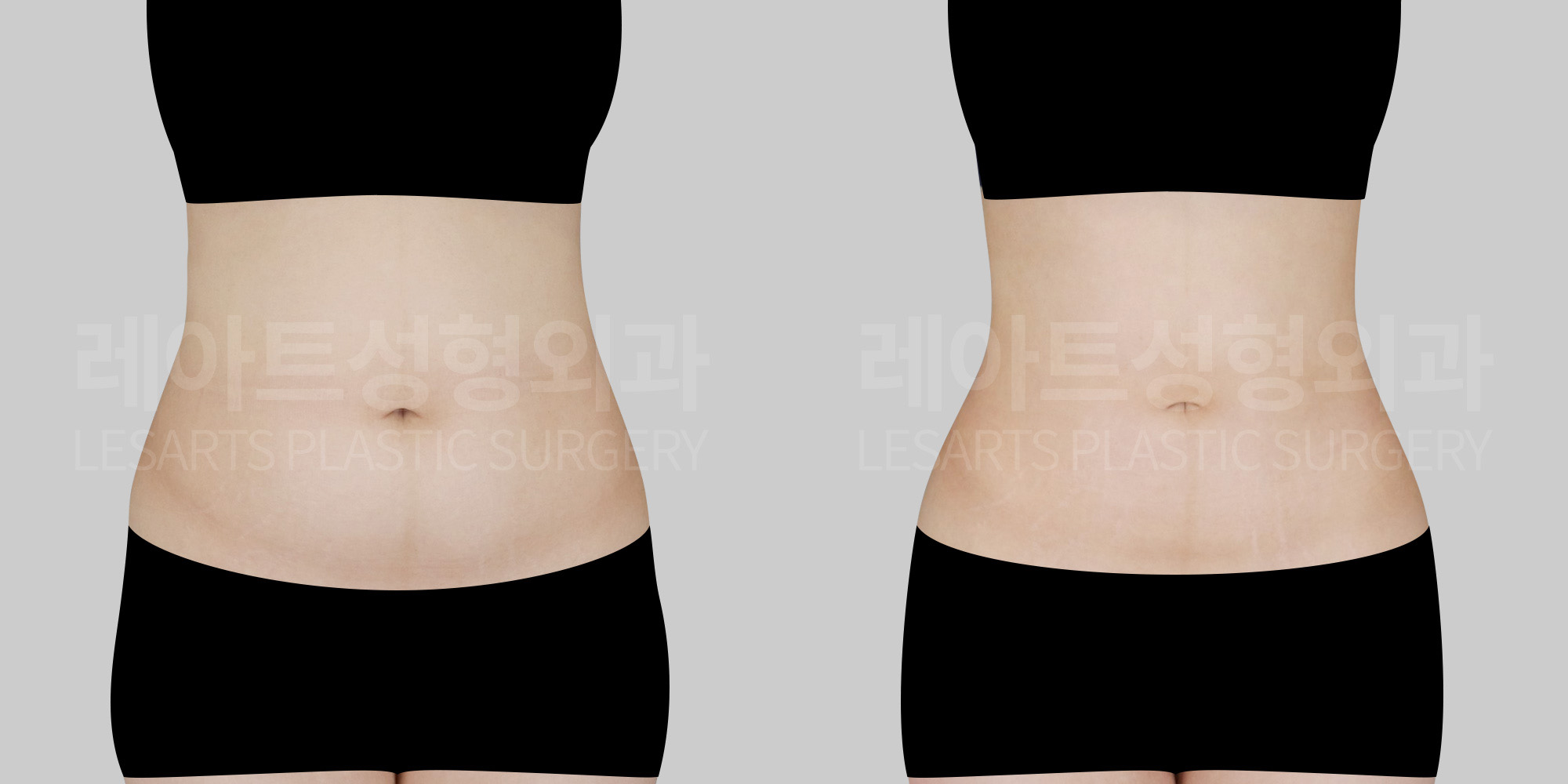 [Abdominal Liposuction Before & After Comparison - Dr. Yongseung Seo, Lesarts Plastic Surgery]
Captured 3 months post-op under standardized lighting and clinic settings
Following surgery, the refinement of the flank contours—the patient's primary goal—
is clearly visible.
While the waistline appeared relatively flat pre-op due to fat coverage,
at 3 months post-op, as flank and love handle bulk decreased,
the inward waist curve was naturally revealed.
Because overall volume had already been substantially reduced through weight loss,
concentrating extraction on the residual subcutaneous fat in targeted areas
helped highlight the underlying skeletal waistline curvature.
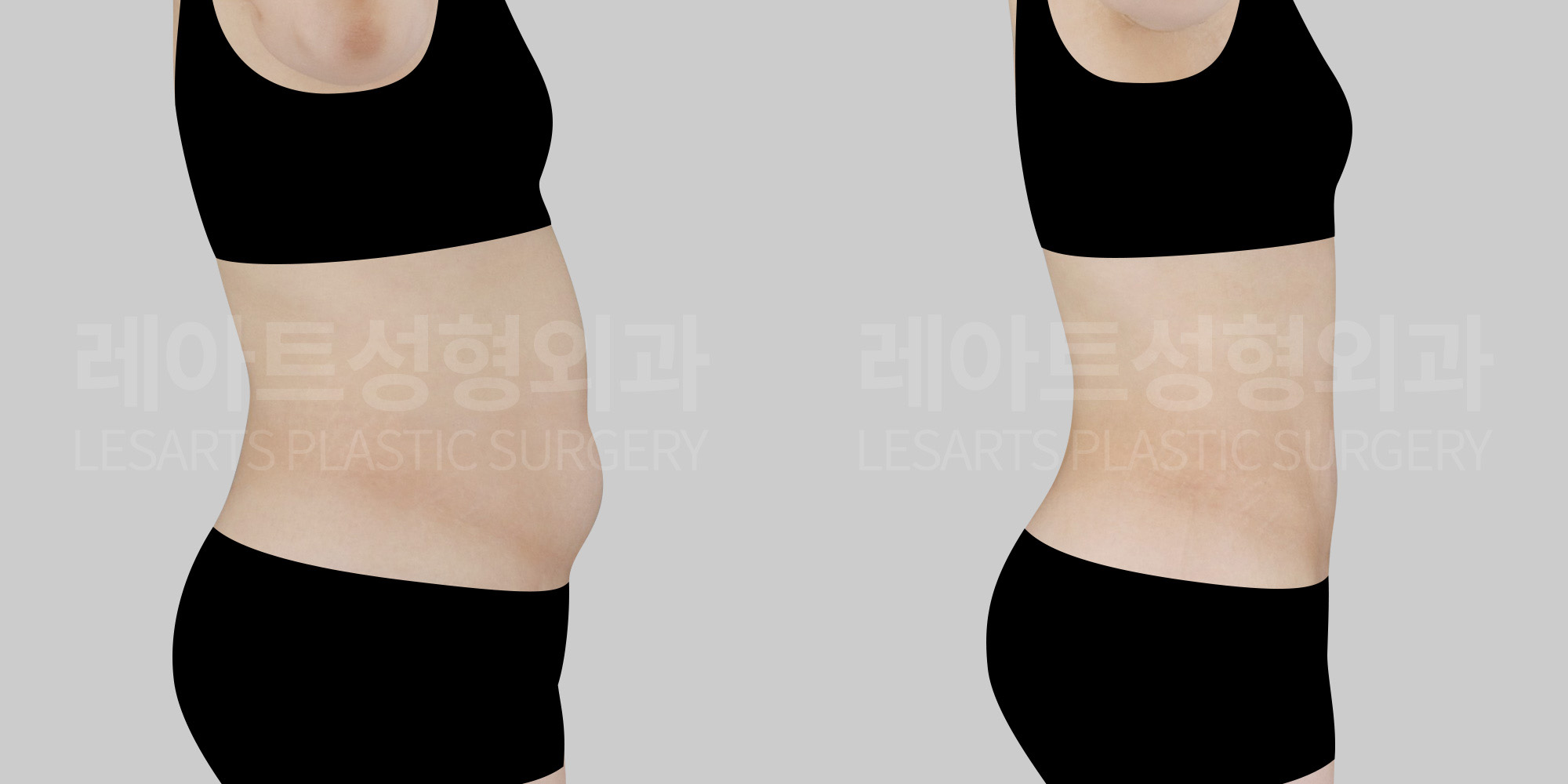
[Anterior Abdomen and Dorsal Line Changes Post-Abdominal Liposuction - Lesarts Plastic Surgery]
If only the lower abdomen is debulked while the upper abdomen is left untouched,
the vertical profile of the abdomen
can present an unnatural transition.
Therefore, in this surgery, while the thickest lower abdominal area was debulked adequately,
upper abdominal fat was also contoured in proportion to the overall balance.
In the 3-month lateral profile, the prominent projection below the navel has decreased,
and the transition from upper to lower abdomen connects in a flatter contour than before.
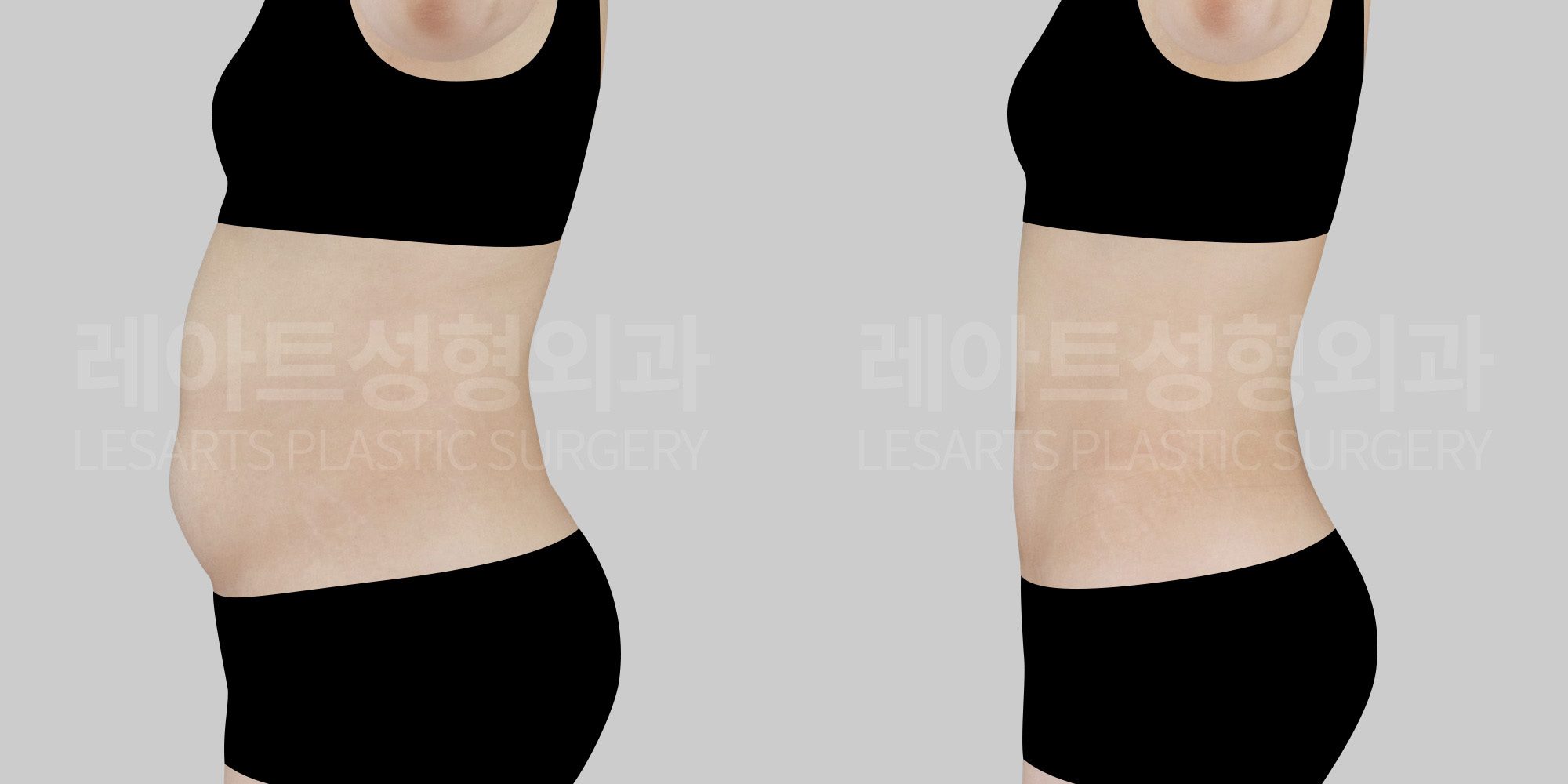 [Visceral Fat Management Post-Abdominal Liposuction - Dr. Yongseung Seo, Lesarts Plastic Surgery]
An aspect emphasized to the patient prior to surgery
was consistent management of visceral fat.
If substantial visceral fat remains after subcutaneous fat is removed via liposuction,
the lower abdomen can still be pushed outward.
At 3 months post-op, the anterior abdomen remained flatter than before,
confirming that the patient had consistently maintained dietary regulation and exercise
to manage visceral fat.
Because she had already developed consistent lifestyle habits while losing 21 kg,
she maintained these routines well after surgery,
and we advised her to continue her current weight management approach.
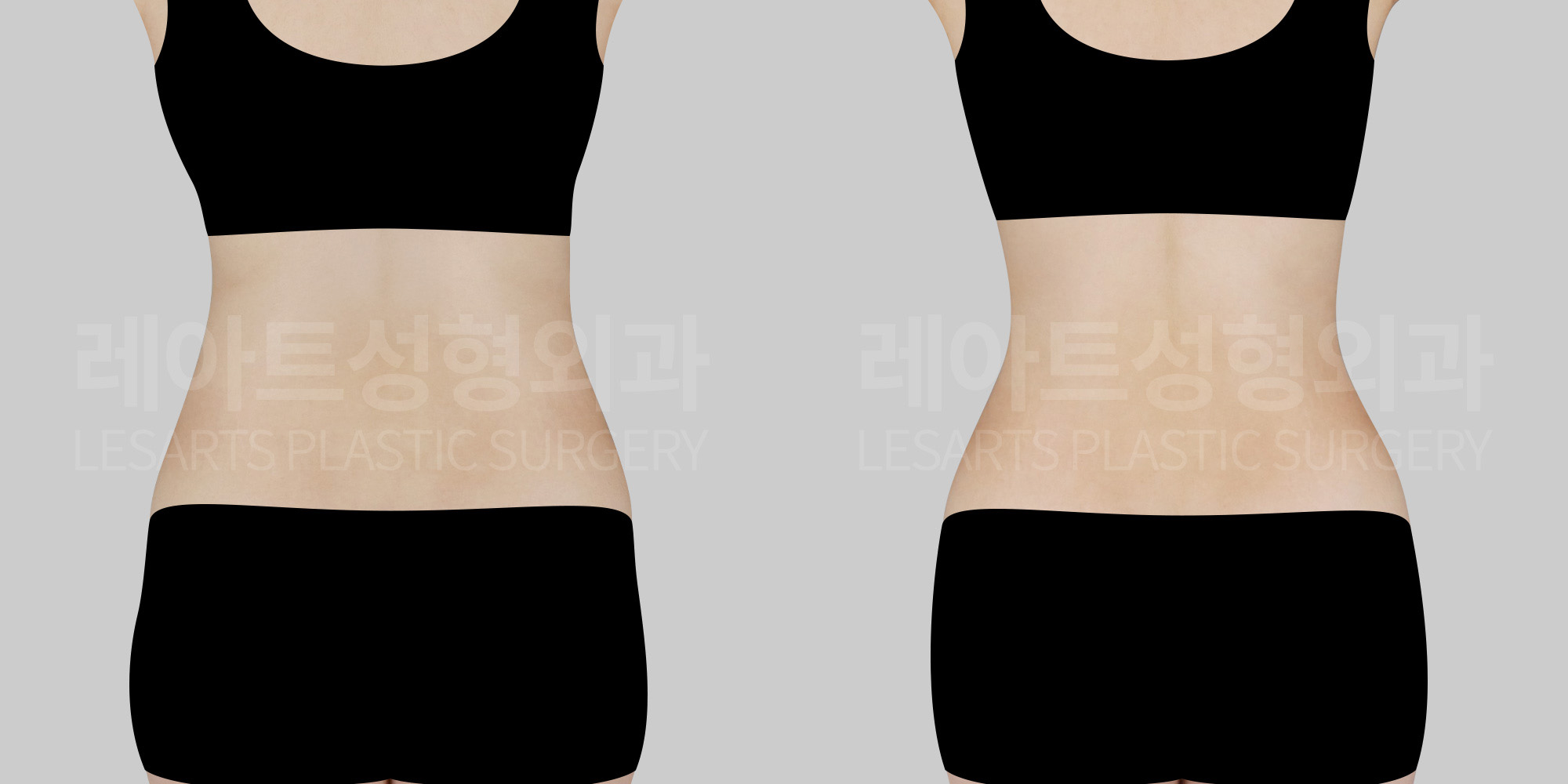 [Waistline Changes via Abdominal Liposuction - Dr. Yongseung Seo, Lesarts Plastic Surgery]
Severe skin laxity, which was a preoperative consideration, was not observed post-operatively.
Although abdominal subcutaneous fat was reduced further after substantial prior weight loss,
pronounced sagging or deep folding of the skin
did not develop at 3 months post-op.
On the other hand, as anticipated pre-operatively, subtle bilateral differences in the waistline
became somewhat more discernible than before.
This reflects the unmasking of innate skeletal asymmetry between the ribcage and pelvis
as the overlying fat layer was thinned.
Therefore, prior to abdominal liposuction,
it is necessary to anticipate and explain not only the improvements that fat removal creates,
but also the underlying skeletal landmarks that may be revealed.
Those who have engaged in long-term dieting often recognize that
as one approaches a target weight, certain stubborn deposits persist until the end.
This patient had also committed sufficient effort to reduce 21 kg over 6 months;
nevertheless, subcutaneous fat in the lower abdomen and flanks
did not reduce to the degree she envisioned.
Following abdominal liposuction, thickness below the navel decreased
and waist curvature previously hidden by the flanks emerged,
allowing the silhouette achieved through weight loss to settle into a more natural contour.
However, liposuction does not replace lifestyle dieting.
In this patient, because visceral fat also contributed to lower abdominal projection,
continuing dietary regulation and exercise remained necessary post-operatively.
Furthermore, accurately distinguishing between what surgery can modify and what it cannot—such as the reality that
pre-existing skeletal asymmetry may become more noticeable as fat thins—is essential.
If your desired waistline is not fully apparent after sufficient weight loss due to localized subcutaneous fat,
rather than pursuing further extreme weight cuts,
it is advisable to first confirm whether the remaining fullness represents subcutaneous fat amenable to liposuction.
Rather than restarting severe dieting cycles from the beginning,
we recommend evaluating your current silhouette, fat distribution, skin elasticity, and skeletal frame
to establish an appropriate, individualized abdominal liposuction plan.
▶ View More Lesarts Abdominal Liposuction Cases
Abdominal Liposuction FAQ
1. Can lower abdominal fullness remain even after losing over 20 kg?
Even when overall weight drops substantially, depending on individual fat distribution,
subcutaneous fat in the lower abdomen or flanks
may remain relatively pronounced.
2. Can abdominal liposuction remove visceral fat as well?
No. Liposuction removes the subcutaneous fat layer
located beneath the skin; visceral fat inside the abdominal cavity
must be managed through lifestyle measures
such as diet and exercise.
3. Does skin sag if liposuction is performed after substantial weight loss?
Results vary depending on baseline skin elasticity, the degree of prior weight loss,
and the volume of fat removed.
If significant weight reduction has occurred,
preoperative skin quality must be thoroughly assessed.
4. Can flank liposuction help define a waistline?
If the proportions between ribcage and pelvis are anatomically favorable for waist curvature
and extractable fat is present in the flanks,
contouring the fat can help reveal
the previously obscured waistline.
5. Can bilateral asymmetry become more apparent after liposuction?
Yes, it is possible. Bilateral skeletal differences that were less visible
when cushioned by thick fat may become relatively more noticeable
as the overlying fat layer is reduced,
unmasking underlying ribcage or pelvic asymmetry.
Dr. Yongseung Seo


Cases finding
similar to my profile
Customer Diagnostics


Select the surgery and
area you are interestedto see real
before andafter changes.


we
make you,
the art
Clinic hours
MON - FRI
10 am – 7pm
SAT
10 am – 4pm
Holiday
SUN, HOLIDAY
Location
Lesarts Moon Clinic Tower 4-5F, 40, Nonhyeon-ro 168-gil,
Gangnam-gu, Seoul, Republic of Korea

Medical institution name Lesarts Plastic Surgery
Address Lesarts Moon Clinic Tower 4-5F, 40, Nonhyeon-ro 168-gil, Gangnam-gu, Seoul, Republic of Korea
Representative Moon sung jun
